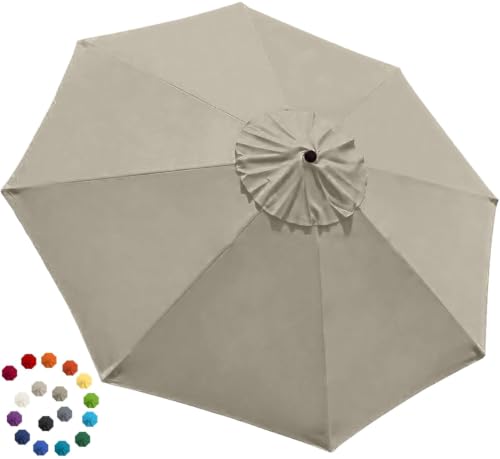
Large Outdoor Umbrella Replacement Canopy: Restore Your Shade Without Replacing the Frame
When the fabric fades but the frame is still solid, a replacement canopy is the smart upgrade. This guide explains how to match size, shape, and fabric to your existing umbrella so you can extend its life with confidence.
Why a Replacement Canopy Is Often the Best Move
A large outdoor umbrella is a long-term investment in comfort. The frame, ribs, and hub assembly are usually built to last many seasons, but the canopy fabric takes the full force of sun, rain, and wind. Over time, fading, mildew, and seam stress are normal. Rather than discarding a perfectly good frame, a replacement canopy lets you refresh the shade surface while keeping the structural components you already trust.
This approach is especially sensible for large outdoor umbrellas and large patio umbrellas, where the frame represents the bulk of the original investment. If your umbrella is a cantilever style, see our notes on large rectangular cantilever patio umbrellas for model-specific fit guidance before ordering.
How to Measure and Match a Replacement Canopy
The single most common mistake is ordering a canopy that does not match the frame. Before you shop, take three measurements:
- Rib count: Count the number of ribs radiating from the center hub. Most large umbrellas have 6, 8, or 10 ribs. The replacement canopy must have the same count.
- Span: Measure from the tip of one rib to the tip of the opposite rib across the center. This gives the canopy's diameter or width. For rectangular models, measure length and width separately.
- Shape: Confirm whether the canopy is round, square, rectangular, or octagonal. A round canopy will not fit a square frame, even if the span matches.
If your frame is a rectangular design, a dedicated large rectangular patio umbrella with stand often uses a canopy with a different attachment pattern than a round model. Check the attachment method as well: sleeve-and-pin, hook-and-loop straps, or zippered pockets are the most common. Matching both the measurements and the attachment style prevents returns and frustration.
Pro tip: Photograph your frame's hub and rib tips before ordering. Many sellers list compatible frame types, and a photo makes it easy to confirm the canopy will seat correctly.
Fabric and Material Choices for a Large Canopy
The fabric determines how the canopy looks after a season of sun and how well it sheds rain. The two dominant options are solution-dyed acrylic and coated polyester.
Solution-Dyed Acrylic
Acrylic fibers are dyed before the yarn is spun, so color is locked in throughout the fiber rather than applied to the surface. This gives excellent fade resistance and a soft hand. Acrylic is breathable, which reduces heat buildup underneath a large canopy. It is a premium-tier material and a strong long-term investment for sunny climates.
Coated Polyester
Polyester is a durable synthetic that accepts water-repellent and UV-blocking coatings well. A mid-range polyester canopy is a balanced choice: it handles rain effectively and resists fading for several seasons. Look for a canopy with reinforced seams and a protective top coat if the umbrella will stay outside year-round.
What to Look For in the Listing
- UV resistance: A stated UV-blocking finish is a baseline expectation for outdoor fabric.
- Water repellency: A canopy that beads water will dry faster and resist mildew.
- Reinforced seams: Double-stitched or taped seams reduce stress at the rib pockets.
- Air vent: A top vent or wind vent lets hot air escape and reduces lift in breezy conditions.
- Colorfastness: Solution-dyed fabrics generally hold color longer than surface-dyed ones.
If you are also refreshing the base, a lawn umbrella stand with a weighted base adds stability for a large canopy. And if you plan to use the umbrella at the beach, the considerations in our large beach umbrella guide are worth reviewing for wind and sand exposure.
Comparing Canopy Tiers: What Changes as You Move Up
Replacement canopies fall into recognizable quality tiers. The table below summarizes what each tier typically delivers, using neutral quality descriptors rather than figures.
| Tier | Typical Fabric | Best For | Durability Notes |
|---|---|---|---|
| Entry-level | Standard polyester | Seasonal shade, occasional use | Basic UV finish; may fade over several seasons |
| Mid-range | Coated polyester with reinforced seams | Everyday patio use in mixed weather | Good water repellency and solid seam construction |
| Premium | Solution-dyed acrylic | Full-sun exposure and long-term use | Excellent fade resistance and breathable comfort |
| Top-tier | Heavy-duty acrylic with upgraded hardware | Large commercial-grade or high-wind settings | Reinforced stress points and commercial-grade stitching |
Across every tier, the fit matters more than the fabric label. A premium canopy on the wrong frame will not perform well. Always prioritize rib count and span before comparing fabric options. For a broader look at umbrella styles and how they pair with seating, our large outdoor umbrella overview covers frame types and placement.
Installation Tips and Long-Term Care
Installing a replacement canopy is usually a straightforward job that takes under an hour with a helper.
- Open the frame fully on a clean, flat surface and check that all ribs move freely.
- Remove the old canopy carefully, noting how it attaches at the hub and rib tips.
- Align the new canopy with the hub first, then work outward to the rib tips one at a time.
- Secure the fasteners evenly so tension is distributed across all ribs.
- Test the open and close cycle before placing the umbrella back in its base.
For long-term care, close the umbrella during high winds and store it with the canopy dry. A mild soap-and-water wash at the start and end of the season removes pollen and prevents mildew. If your umbrella sits near a dining set, the shade pairing notes in our large outdoor dining table with umbrella hole guide can help you position the canopy for balanced coverage.
Care note: Never fold or store a canopy while it is wet. Trapped moisture is the leading cause of mildew stains on outdoor fabric.
Frequently Asked Questions
How do I know if a replacement canopy will fit my existing umbrella frame?
Measure the canopy's span across the frame from rib tip to rib tip, count the number of ribs, and match the canopy shape (round, square, rectangular, or octagonal). Most replacement canopies list the rib count and span, so compare those figures to your frame before ordering.
What fabric is best for a large outdoor umbrella replacement canopy?
Solution-dyed acrylic and high-grade polyester are the two most common choices. Acrylic offers excellent fade resistance and breathability, while polyester with a protective coating is a solid mid-tier option. Both should carry a UV-resistant finish for long-term outdoor use.
Can I replace the canopy on a cantilever umbrella?
Yes, but cantilever models vary widely. Check whether the canopy attaches with a sleeve-and-pin system, hook-and-loop straps, or a zippered pocket. Order a canopy specifically designed for your cantilever frame type to avoid fit issues.
How long should a quality replacement canopy last?
A well-made acrylic canopy in a sunny climate typically lasts several seasons with proper care. Storing the umbrella closed during high winds and cleaning it periodically will extend its usable life considerably.