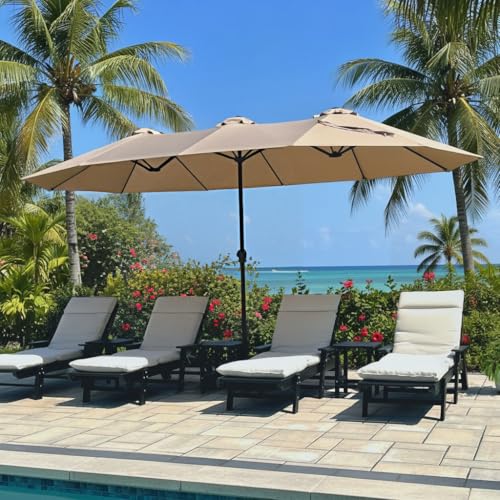
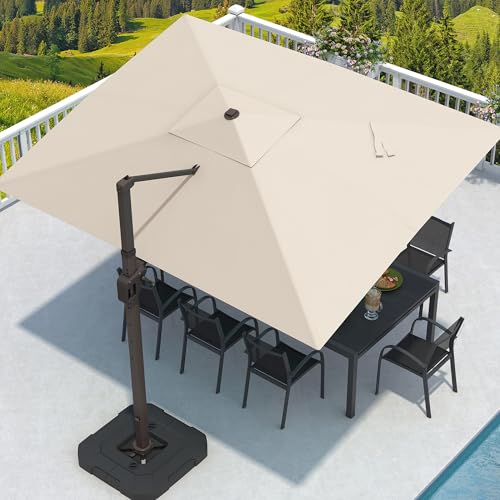
Large Rectangular Patio Umbrella with Stand: The Complete Buyer's Guide
Everything you need to know about choosing a large rectangular patio umbrella with stand — from canopy size and fabric quality to base stability and wind resistance. Make a confident, informed decision for your outdoor space.
Start Your ResearchA large rectangular patio umbrella with stand is one of the most practical shade solutions for modern outdoor living. Unlike round umbrellas, a rectangular canopy is designed to cover long dining tables, sectional seating areas, and rectangular lounge zones without wasting shade on empty space. When paired with a dedicated stand, it becomes a freestanding shade system that can be repositioned as the sun moves — a significant advantage over through-table umbrellas that are locked into a single location.
If you are furnishing a patio from scratch, this guide will help you understand what separates a dependable shade solution from one that topples in the first strong breeze. For a broader look at shade options across different shapes and mounting styles, explore our guide to large patio umbrellas and compare how rectangular canopies fit into the wider category.
Why Choose a Rectangular Umbrella with a Stand?
Rectangular canopies solve a specific problem: they match the shape of the furniture they are meant to shade. A long dining table with eight chairs, for example, needs coverage that extends along its length rather than radiating outward in a circle. Here is why a freestanding rectangular umbrella with stand deserves serious consideration:
- Superior coverage for rectangular furniture: A large rectangular canopy aligns with long tables and sectional sofas, delivering even shade across the entire seating area.
- Flexible placement: Because the stand is independent, you can position the umbrella beside the table rather than through its center, freeing up table space and allowing you to move the shade as the sun shifts.
- No table modification required: There is no need for an umbrella hole in your table, which means you can pair the umbrella with any table you already own.
- Better wind management: A heavy, well-designed stand anchors the umbrella at ground level, and many freestanding models allow the canopy to be rotated or tilted to face the sun.
- Design versatility: Rectangular umbrellas with stands suit contemporary, transitional, and traditional patios alike, and the stand can double as a visual anchor for the seating arrangement.
For homeowners who entertain frequently, the combination of a long table and a large rectangular umbrella is a natural fit. If you are still deciding on the table itself, our overview of a large outdoor dining table with umbrella hole explains how through-table setups differ from freestanding options.
How to Choose the Right Canopy Size
Canopy size is the single most important specification. A canopy that is too small leaves guests squinting in the sun; one that is too large may overpower a compact patio or catch more wind than the stand can handle. As a general rule, the canopy should extend at least 12 to 18 inches beyond the edges of your furniture on all sides to provide meaningful shade as the sun angle changes.
| Furniture Arrangement | Suggested Canopy Footprint | Best For |
|---|---|---|
| Bistro table for two to four | Compact rectangular (roughly 6 x 4 ft) | Balconies and small patios |
| Dining table for six | Mid-size rectangular (roughly 8 x 5 ft) | Standard family patios |
| Dining table for eight | Large rectangular (roughly 10 x 6 ft) | Entertaining-focused decks |
| Sectional or lounge zone | Extra-large rectangular (roughly 11 x 8 ft or larger) | Full outdoor living rooms |
Also consider canopy height. Most large rectangular umbrellas with stands offer clearance in the range of 6.5 to 7.5 feet at the lowest edge, which is comfortable for most adults. If your patio is exposed to strong crosswinds, choose a canopy that is proportionate to the stand rather than the maximum size the frame can support — an oversized canopy on an undersized base is a stability risk.
Understanding the Stand and Base
The stand is what separates a freestanding rectangular umbrella from a table-mounted one, and it deserves as much attention as the canopy. Most large rectangular patio umbrellas with stand configurations fall into one of three base categories:
1. Plate bases
These are flat, heavy plates — often steel or powder-coated metal — that sit directly on the patio surface. Plate bases are the simplest option and work well for moderate wind conditions. Entry-level plate bases typically use thinner steel and lighter plates, while premium plate bases use high-grade steel with reinforced welds. If your patio is sheltered by a house wall or fence, a plate base is often sufficient.
2. Cross bases
Cross-style bases use intersecting bars that provide a wider footprint than a single plate. Many cross bases are designed to accept weighted pavers or sandbags, which allows you to increase stability without a permanently heavy base. This is a practical choice for renters or for patios where you want the option to move the umbrella for seasonal storage.
3. Cantilever-style bases with offset arms
Some rectangular umbrellas use an offset arm that suspends the canopy from the side, with the base positioned outside the seating area. This design provides unobstructed space beneath the canopy and is particularly effective over dining tables. For a closer look at how offset designs compare with center-pole models, see our guide to the large rectangular cantilever patio umbrella.
Stability tip: Whatever base style you choose, verify that the stand is rated for the canopy size you are buying. A common mistake is pairing a large canopy with a base intended for a smaller umbrella. Mid-range and premium stands usually publish a recommended canopy range; treat that figure as a minimum, not a maximum.
If you already own a base and are looking to upgrade the canopy alone, our article on a large outdoor umbrella replacement canopy explains how to match a new canopy to an existing frame and stand.
Canopy Fabrics and Frame Materials
Durability in outdoor shade products comes down to two material decisions: the canopy fabric and the frame. Understanding both will help you judge whether a given umbrella is built for a single season or for many years of use.
Canopy fabric options
- Solution-dyed acrylic: The gold standard for outdoor canopies. The color is infused into the fibers rather than applied as a surface coating, so it resists fading under UV exposure. Premium solution-dyed acrylic canopies also repel water and resist mildew. This is the fabric to prioritize if the umbrella will be in direct sun all day.
- Polyester with UV coating: A common mid-range choice. Quality polyester can perform well for several seasons, especially when it carries a documented UV-resistant finish. It is generally lighter than acrylic and dries quickly.
- Olefin: A synthetic fiber that offers good colorfastness and moisture resistance. Olefin canopies are a solid choice for humid climates where mildew is a concern.
- Entry-level fabrics: Basic woven fabrics found on starter-tier umbrellas. They can be serviceable for light, seasonal use but typically fade faster and may not carry the same water-repellent treatments.
Frame materials
- Aluminum: Lightweight and naturally rust-resistant. High-grade aluminum frames with powder-coated finishes are the most common choice for premium rectangular umbrellas because they balance strength and portability.
- Steel: Stronger per unit of thickness than aluminum, but heavier and vulnerable to rust if the coating is compromised. Look for rust-proof finishes and reinforced joints on steel frames.
- Wood: A traditional, design-forward option. Wood frames require more maintenance — occasional sealing and indoor storage during harsh winters — but offer a warmth that metal cannot match.
Whatever frame material you choose, check the ribs (the arms that support the canopy). A large rectangular canopy places significant load on the ribs, so reinforced ribs and a sturdy hub are signs of a well-built umbrella. For more on material trade-offs across outdoor furniture generally, see our material guide.
Key Features to Look For
Beyond size and materials, several features materially affect how pleasant a large rectangular patio umbrella with stand is to live with. Prioritize the features that match your climate and how you use the space.
- Crank and tilt mechanism: A crank lift makes opening and closing a large canopy far easier than a push-up system. A tilt function — either collar tilt or a more advanced multi-directional tilt — lets you angle the canopy toward the sun as it moves across the sky. Mid-range umbrellas typically offer a smoother crank mechanism than entry-level models, and premium models often add dual-tilt or rotational controls.
- Wind vents: A vent at the top of the canopy allows hot air to escape and reduces the sail effect during gusts. Vented canopies are significantly more stable in breezy conditions.
- UV protection rating: Look for a documented UPF rating. A UPF 50+ canopy blocks the vast majority of harmful UV radiation, which matters for long, sunny afternoons.
- Rotation: Some freestanding stands include a rotation collar that allows the entire canopy to swivel without moving the base. This is a genuine quality-of-life feature on patios where the sun travels across the space.
- Storage and cover: A protective cover extends canopy life considerably, especially during off-season months. Check whether a cover is included or sold separately.
- Assembly and portability: Freestanding umbrellas with weighted bases can be heavy. If you plan to move the umbrella between a patio and a pool deck, confirm the base has wheels or handles, or plan to use a lighter cross base with removable weights.
Feature priority by tier: Entry-level umbrellas usually cover the basics — a crank, a vent, and a simple plate base. Mid-range models add tilt mechanisms and better fabric. Top-tier and commercial-grade umbrellas typically include rotational controls, solution-dyed acrylic canopies, and heavy-duty stands rated for larger canopies.
Placement, Wind Safety, and Long-Term Care
Where you place the umbrella matters as much as which umbrella you buy. Position the stand so that the base sits fully on a level, solid surface — never on grass or loose gravel, where it can sink or tip. Leave enough clearance around the base that guests will not trip over it, and keep the canopy away from overhanging branches and roof edges during high winds.
Wind is the leading cause of umbrella damage. No freestanding umbrella should be left open in a storm. Develop the habit of closing the canopy when it is not in use, and consider stowing the umbrella entirely during severe weather. If your patio is consistently windy, choose a smaller canopy relative to the stand and invest in a base that accepts additional weights.
For routine care, brush off debris from the canopy before closing it, spot-clean with mild soap and water, and allow the fabric to dry fully before storing. In winter, remove the canopy if the manufacturer recommends it and store the frame and base in a sheltered location. These simple habits dramatically extend the service life of any outdoor umbrella. For more seasonal maintenance guidance, see our weatherproofing guide.
If your patio design is still taking shape, pairing the umbrella with complementary shade and seating elements can unify the space. A large outdoor umbrella paired with a dedicated lawn umbrella stand is a common configuration for lawns and open decks, while a large outdoor table anchors the dining zone beneath a rectangular canopy. For lounge areas, a lounge chair or lounger positioned partly in shade creates a comfortable reading nook.
Comparing Umbrella Tiers at a Glance
| Tier | Typical Construction | Best For |
|---|---|---|
| Entry-level | Polyester canopy, aluminum frame, plate or cross base, basic crank | Sheltered patios, seasonal use, first-time buyers |
| Mid-range | Quality polyester or olefin canopy, reinforced aluminum frame, tilt mechanism, weighted cross base | Family patios with regular dining and entertaining |
| Premium | Solution-dyed acrylic canopy, high-grade aluminum frame, rotational or dual-tilt controls, heavy plate base | Full-sun patios, daily use, homeowners prioritizing longevity |
| Luxury / commercial-grade | Marine-grade hardware, extra-large canopy, engineered base with wheeled mobility, premium fabric | Hospitality settings, large outdoor living rooms, windy exposures |
Use this table as a starting framework, not a rigid rulebook. A well-specified mid-range umbrella can outperform a poorly built premium model, so always evaluate the specific stand rating, fabric documentation, and warranty terms of the product in front of you.
Frequently Asked Questions
What size rectangular umbrella do I need for an eight-seat dining table?
For a typical eight-seat rectangular dining table, look for a canopy in the range of roughly 10 x 6 feet. The canopy should overhang the table edges by at least 12 to 18 inches on each side so that shade reaches the end seats as the sun angle changes. Measure your table first and compare it against the canopy footprint — do not rely on seat count alone.
Can a freestanding rectangular umbrella be used without weights in the base?
Only in very sheltered conditions. Most manufacturers recommend adding weight to the base for any freestanding umbrella, and many cross bases are explicitly designed to accept pavers or sandbags. A plate base is inherently heavy, but a lightweight cross base without weights is a tipping risk in even moderate gusts. Always follow the manufacturer's stability guidance.
How do I keep a large rectangular umbrella from tipping in the wind?
Three practices make the biggest difference: choose a canopy proportionate to the stand, add weight to the base where the design allows, and close the canopy whenever it is not in use or when wind picks up. A vented canopy also reduces the sail effect. During severe weather or off-season months, remove the canopy if recommended by the manufacturer.
Is solution-dyed acrylic really better than polyester?
For long-term UV exposure, yes. Solution-dyed acrylic holds its color far longer because the pigment is part of the fiber rather than a surface treatment. Quality polyester can serve well for several seasons, particularly on shaded patios, but if the umbrella will sit in direct sun all day, solution-dyed acrylic is the more durable investment.
Can I replace just the canopy on a rectangular umbrella?
Often, yes. Replacement canopies are available for many standard rectangular frame sizes. The key is to match the replacement canopy precisely to your frame dimensions and rib count. If you are considering this route, our guide to a large outdoor umbrella replacement canopy walks through the measurement process.
Do I need a tilt function on a rectangular umbrella?
A tilt function is not strictly necessary, but it significantly improves comfort on patios where the sun moves across the space during the day. A collar tilt is adequate for most homes; a rotational or dual-tilt mechanism is a worthwhile upgrade for full-sun patios and for anyone who uses the umbrella daily.
Ready to Compare Your Options?
Now that you understand canopy sizing, stand stability, fabric quality, and the features that matter most, you are equipped to evaluate products with confidence. Browse our curated selection of large rectangular patio umbrellas with stands below.
See Recommended Models