Large Rectangular Cantilever Patio Umbrella: Complete Buying Guide
An offset shade solution that clears the space beneath it — learn how canopy size, frame gauge, base weighting, and rotation mechanisms affect comfort and durability before you choose.
EXPLORE THE GUIDEPatioFocus Research Note: A large rectangular cantilever patio umbrella solves a specific problem — shading long dining tables and lounge groups without a center pole blocking sightlines or furniture arrangement. This guide walks through the specification choices that separate a stable, long-lasting umbrella from one that fights the wind and fades within a season.
What Is a Large Rectangular Cantilever Patio Umbrella?
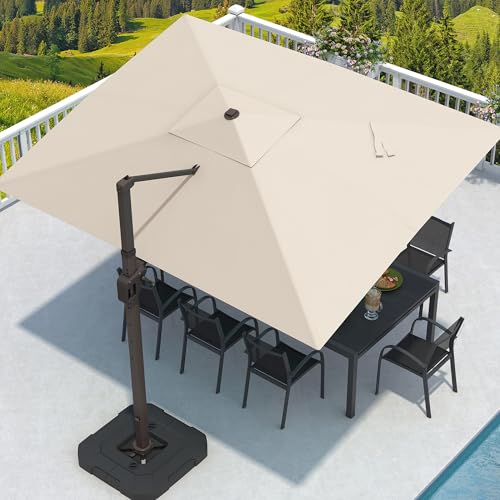
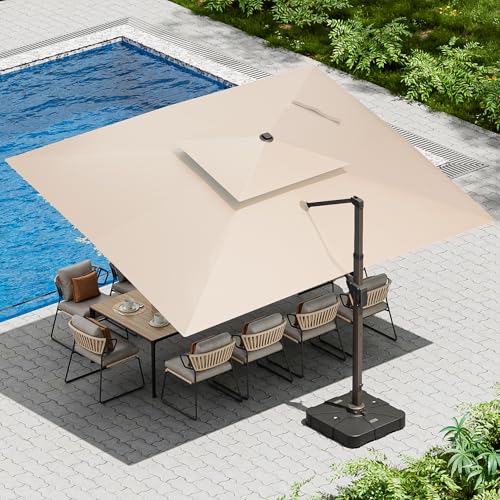
A large rectangular cantilever patio umbrella uses a side-mounted support arm instead of a central pole. The canopy is suspended from the arm, which rises from an offset pole anchored in a weighted base. Because the pole sits to the side, the entire rectangle beneath the canopy stays open — no pole intruding into the table, no need to drill through a tabletop, and no obstruction between you and your guests.
The rectangular shape is the practical partner to the cantilever design. Where a round offset umbrella creates a circular pool of shade, a rectangle mirrors the footprint of dining tables, sectional sofas, and long lounge setups. That alignment means more usable shade per square foot of canopy and fewer awkward gaps at the table ends. If your seating group is long rather than round, a rectangular canopy will almost always cover it more efficiently.
Cantilever umbrellas are also the natural companion to tables that can't accept a center pole, such as solid stone or glass-topped designs. If you're weighing whether your furniture setup suits an offset canopy, our guide to large outdoor dining tables with umbrella holes explains the center-pole alternative, while the large rectangular patio umbrella with stand overview covers conventional pole-mounted rectangular options.
Canopy Size, Shape, and Coverage Planning
The single most important decision is canopy footprint. Measure your table or seating group first, then add overhang. As a working rule, plan for one to two feet of canopy beyond the furniture edge on every side — shade shifts as the sun moves, so a canopy that exactly matches the table will leave edges exposed for much of the day.
Rectangular cantilever canopies at the high-end tier commonly span around 8x10 feet to 10x13 feet. The larger rectangles suit full dining sets for six to eight people or long sectional arrangements; the smaller rectangles are a better fit for four-to-six-seat tables and compact lounge groups. Overshooting the size isn't automatically better: a canopy far wider than your furniture catches more wind and demands a heavier base, which can make repositioning impractical.
Canopy height and clearance matter too. The lowest edge of a cantilever canopy should sit comfortably above head height for anyone walking near the table, and the arm's rise should clear the tallest person seated at the far end. Check the manufacturer's stated clearance under the canopy's lowest point, not just the peak height. For comparisons across shapes and mounting styles, see the broader large patio umbrellas guide and the large outdoor umbrella overview.
Frame Materials and Build Quality
The cantilever arm carries real leverage, so frame construction deserves more scrutiny than on a center-pole umbrella. Aluminum is the standard choice: it resists rust, stays lighter than steel, and — at the premium and luxury tiers — is often powder-coated for additional weather resistance. High-grade steel frames appear in some heavy-duty models and offer stiffness, but they require a rust-proof finish to survive seasons of rain and humidity.
Wall thickness and joint design tell you more about durability than the metal name alone. Thicker-gauge aluminum and reinforced arm hinges reduce flexing in gusts, which is what eventually fatigues cheap frames. Look for double-walled ribs, welded or bolted arm connections rather than friction-fit joints, and a hub mechanism that feels solid when you rotate or tilt the canopy. Entry-level models often use thinner tubes and simpler hubs; mid-range and high-end tiers step up to reinforced arms, smoother cranks, and better locking hardware.
If you're comparing frame materials across outdoor furniture categories more broadly, the longest-lasting outdoor furniture material analysis and the material guide provide useful context on aluminum versus steel versus composite construction.
Canopy Fabric: What to Look For
Fabric determines how the umbrella looks after two summers of sun, rain, and tree pollen. Two families dominate the market:
- Solution-dyed acrylic — pigment is added to the fiber before it's woven, so color runs through the yarn rather than sitting on the surface. It resists fading and mildew well and represents the premium tier of canopy fabric. Expect better color retention and a longer warranty against fading.
- Treated polyester — a solid mid-range choice when paired with a water-repellent finish and UV treatment. It's lighter and often crisper in appearance, but color retention and mildew resistance generally trail solution-dyed acrylic over many seasons.
Whichever fabric you choose, confirm three things: a water-repellent finish, a stated UV protection rating, and a warranty that explicitly covers fading. Ventilation matters as well — a canopy with a vent or wind escape panel reduces lift in breezy conditions and helps heat escape on still, hot afternoons. If your umbrella will live in a coastal or persistently damp climate, prioritise mildew resistance and consider a breathable cover for storage. Our weatherproofing guide covers protective routines in detail.
Base Weighting and Stability
Every cantilever umbrella is a lever, and the base is the counterweight. A canopy suspended on a long arm multiplies the force the wind applies at the base, so an undersized base is the most common cause of tipping. The base must be matched to the canopy size and the arm length — manufacturers publish minimum base weights for each model, and those figures are not suggestions.
Base styles fall into a few practical categories:
- Plate-loaded bases accept stackable weights or pavers. They're simple and stable, and the weights can be removed when you need to move the umbrella.
- Water-fillable bases are lighter to transport when empty but become heavy once filled. They're convenient for seasonal setups but check the fill capacity against the model's requirement.
- Wheeled and rotating bases combine ballast with mobility, letting you reposition the canopy without disassembling it. These sit at the premium and commercial-grade tiers and are especially useful on large patios.
Placement matters as much as weight. Set the base on a firm, level surface — pavers, concrete, or a deck with adequate support — and never under a canopy that's open in gusty conditions. On decks, spread the load with a base plate or mat. A separate lawn umbrella stand is a different solution for in-ground or lawn placement; cantilever bases are freestanding by design and should not be staked into soft ground.
Rotation, Tilt, and Adjustment Mechanisms
Shade moves through the day, and the best cantilever umbrellas let you follow it. Rotation swings the canopy across an arc — often a full 360 degrees on premium models — so you can shift shade from the morning table position to the afternoon lounge side without moving the base. Tilt adjustment angles the canopy up or down to block low sun.
Control methods vary by tier. Entry-level models may offer a simple hand lever or a single-axis tilt. Mid-range umbrellas typically add crank-driven rotation or a foot-pedal release with a locking pin. High-end and commercial-grade models pair smooth crank mechanisms with multi-position tilt and secure locks at each stop. Whichever mechanism you choose, test the lock: a canopy that creeps out of position in a breeze is worse than one that doesn't rotate at all.
Also check how the canopy closes. A crank that lowers the canopy vertically before folding is easier and safer than one that requires reaching overhead. For related shade options in fixed or pole-mounted formats, the large outdoor umbrella replacement canopy guide is useful if you already own a frame and need new fabric, and the large beach umbrella overview covers portable shade for off-patio use.
Comparing Umbrella Tiers at a Glance
| Tier | Frame & Arm | Canopy Fabric | Adjustment | Best For |
|---|---|---|---|---|
| Entry-level | Thinner aluminum tubes, basic hub joints | Treated polyester, lighter weight | Single-axis tilt, manual lock | Light seasonal use, compact patios, occasional shade |
| Mid-range | Reinforced aluminum arms, bolted joints | Heavier polyester or acrylic blend | Crank rotation with locking pin, tilt | Daily residential use, dining sets for six |
| Premium | Thick-gauge powder-coated aluminum, double-walled ribs | Solution-dyed acrylic, vented canopy | 360-degree crank rotation, multi-position tilt | Full sun exposure, large dining and lounge groups |
| Luxury / commercial-grade | Heavy-duty welded frame, professional hardware | High-grade solution-dyed acrylic, extended fade warranty | Smooth crank and pedal systems, secure multi-lock | Hospitality settings, windy sites, year-round use |
Tiers reflect relative build and feature positioning in the market, not a ranking of any specific brand. Mid-range models usually offer noticeably smoother rotation and sturdier arms than entry-level designs, while premium and commercial-grade tiers add the frame rigidity and fabric longevity that long-term outdoor exposure demands.
Setup, Placement, and Seasonal Care
Installation is straightforward if you plan the footprint first. Choose a spot where the offset pole sits at the end of — not in the middle of — your seating area, and where the arm reaches across the furniture without the canopy striking a wall, fence, or roofline. Leave clearance for the canopy to rotate. On a covered patio, confirm the peak height clears the ceiling before assembly.
Assemble the base and pole first, then attach the arm and canopy with the umbrella fully closed. Have a second person help position the canopy — large rectangular canopies are awkward to lift alone. Once assembled, open the umbrella fully and check that all locks engage, the canopy is taut without being overstretched, and the base doesn't lift when you gently push the arm.
Seasonal care is simple but non-negotiable. Close the canopy whenever winds pick up or the umbrella will be unattended for long periods. Clean the fabric with mild soap and water, rinse thoroughly, and let it dry fully open before storing. Inspect the arm joints and hub annually, tighten bolts, and touch up any coating nicks on the frame. Store the canopy and base in a dry space during the off-season, or use a fitted cover. Our outdoor care section collects maintenance routines for frames, fabrics, and hardware.
Matching a Cantilever Umbrella to Your Patio
An offset umbrella changes the furniture arrangements you can use. Without a center pole, you can push chairs all the way around a table, place a bench flush against one side, or bridge two seating zones under one canopy. If your patio is a long rectangle — a common shape for lanais and covered porches — a rectangular cantilever aligns with the architecture and shades more of the walkable area.
For narrow or enclosed spaces, check our lanai patio guidance on clearance and airflow before selecting a canopy size. If you're still assembling the wider furniture plan, the large outdoor table and large outdoor dining table with fire pit pages show how shade coverage interacts with dining and evening-use layouts. The large dining table with bench and chairs overview is a useful reference for seating footprints under a long canopy.
One final planning note: shade is only half the comfort equation. Pair the umbrella with the right seating and surface materials so the whole space works together. The luxury outdoor furniture guide and matching outdoor dining and conversation sets overview can help you keep the umbrella and furniture visually and functionally coordinated.
Pre-Purchase Checklist
- Measure your furniture footprint and add one to two feet of overhang per side.
- Confirm canopy clearance under the lowest edge, not just peak height.
- Check frame gauge and joint construction — thicker arms and bolted joints resist flexing.
- Look for solution-dyed acrylic or treated polyester with a UV rating and fade warranty.
- Verify the minimum base weight published for the model and match it or exceed it.
- Test rotation and tilt locks before buying, or check reviews on lock security.
- Plan storage: a breathable cover and a dry off-season location extend fabric life.
Frequently Asked Questions
What is a large rectangular cantilever patio umbrella?
It's an offset shade structure with a rectangular canopy supported by a side-mounted arm rather than a center pole. The cantilever design clears the space beneath the canopy, making it ideal for covering dining tables, lounge sets, and long seating arrangements.
What size rectangular cantilever umbrella do I need?
Match the canopy footprint to the furniture you want shaded. Rectangular canopies at the high-end tier typically span from roughly 8x10 feet to 10x13 feet. Measure your table or seating group and add at least one to two feet of overhang on each side for effective shade throughout the day.
How much wind can a cantilever umbrella handle?
Wind tolerance depends on frame gauge, arm design, and base weight. Entry-level models generally handle light breezes, while mid-range and high-end tiers with reinforced arms and heavy-duty bases tolerate stronger gusts. Always close the canopy during high winds or storms and confirm the manufacturer's wind rating.
Do cantilever umbrellas need a heavy base?
Yes. Because the pole is offset, the base must counterbalance the canopy's leverage. Look for bases that are plate-loaded, water-fillable, or wheeled for repositioning. Commercial-grade bases are the most stable, but mid-tier bases with proper weighting are sufficient for typical residential use.
Can a rectangular cantilever umbrella be rotated?
Many mid-range and premium models include a rotation mechanism that lets the canopy swing across an arc, often 360 degrees, to track the sun. Some also offer tilt adjustment. Check whether rotation and tilt are controlled by crank, foot pedal, or hand lever, and confirm the canopy locks securely in each position.
What canopy fabric is best for a large rectangular umbrella?
Solution-dyed acrylic and high-grade polyester are the most common choices. Solution-dyed acrylic resists fading and mildew well and sits in the premium tier, while treated polyester is a solid mid-range option. Look for water-repellent finishes, UV resistance, and a warranty that covers fading.