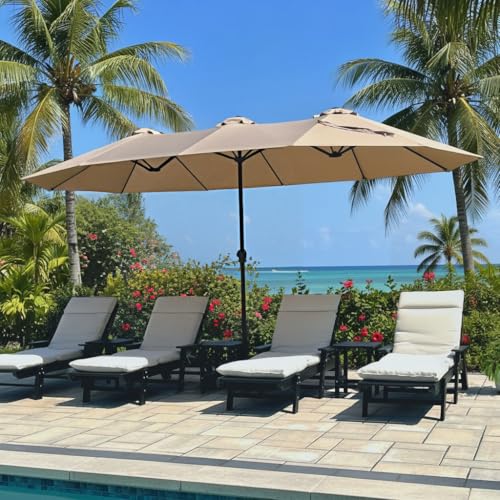
Large Patio Umbrellas: The Complete Shade Guide
Everything you need to choose the right large patio umbrella for dining tables, lounge areas, and expansive backyards — from canopy size and frame materials to wind stability and mounting options.
Explore Top OptionsWhy this guide matters: A large patio umbrella is one of the most impactful shade investments you can make. Done right, it turns a sun-baked deck into a usable living space for most of the day. Done wrong, it wobbles, fades, or fails in the first strong gust. This guide walks you through the decisions that actually matter — size, canopy fabric, frame construction, cantilever vs center pole, and base weighting — so you can buy with confidence.
How to Size a Large Patio Umbrella Correctly
Umbrella sizing is the single most common mistake buyers make. A canopy that looks generous online can leave half your table in full sun once it is assembled. The reliable rule is that the canopy should overhang the table edge by roughly two feet on every side, which is enough to keep seated guests shaded as the sun moves.
For outdoor dining, the table shape drives the canopy shape. A large rectangular patio umbrella with stand pairs naturally with long dining tables, while a large round outdoor dining table that seats 8 usually works best with a round canopy in the 10 to 11 foot range. If your table already has a center hole, measure its diameter before ordering anything — a large round patio table with umbrella hole will constrain your pole options.
Quick sizing reference
- 6-seat rectangular table: 10 ft rectangular canopy
- 8-seat rectangular table: 11–13 ft rectangular canopy
- Round table for 4–6: 9–10 ft round canopy
- Round table for 8: 10–11 ft round canopy
- Lounge or conversation area: 10–13 ft offset/cantilever canopy
Height matters too. A typical large umbrella has an 8 to 9 foot clearance at the pole, which is comfortable for standing guests. If your table is tall or your guests are tall, prioritize models with adjustable height or a higher clearance spec.
Cantilever vs Center-Pole: Which Large Umbrella Fits Your Space?
There are two dominant designs for large patio umbrellas, and the right pick depends on how you use the space rather than on which looks more modern.
Center-pole umbrellas
The classic market umbrella sits on a single pole that runs through the table or a freestanding base. They are lighter, simpler to set up, and easy to tilt in many models. The trade-off is the pole itself: it eats table surface and can obstruct sight lines during meals. For large dining tables, choose a pole that is positioned off-center through a table hole rather than through the middle of the seating plan.
Cantilever (offset) umbrellas
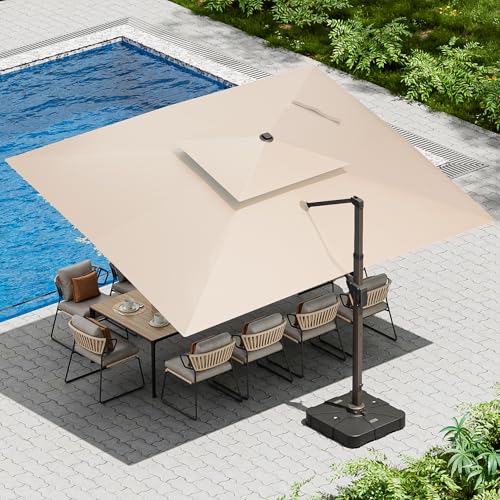
Cantilever umbrellas support the canopy from a side arm, leaving the area underneath completely open. That makes them the better choice for lounge seating, sectional arrangements, and any table where you want an uninterrupted surface. The large rectangular cantilever patio umbrella is the workhorse of this category and can shade a long dining setup without a pole blocking the middle.
Cantilever models need more attention to base weighting because the arm creates leverage. A heavier base and a frame that rotates smoothly are more important than canopy size alone. If you are shading a larger seating footprint, a large outdoor umbrella with a rotating cantilever is often the most versatile layout.
Canopy Fabrics and Frame Materials
The canopy is what you see, but the frame is what decides how long the umbrella lasts. Both deserve scrutiny before you buy a large model, because larger canopies put more stress on every component.
Canopy fabric
- Solution-dyed acrylic: The benchmark for fade resistance and UV protection. Holds color well across seasons and resists mildew when properly maintained.
- Polyester with UV coating: A common mid-range option. Lighter and more pliable, but tends to fade faster under intense sun than acrylic.
- Olefin: Good moisture and stain resistance, often used in value-oriented canopies. Durable but less colorfast than acrylic over many seasons.
Whatever fabric you choose, confirm that the canopy is vented. A vent at the top lets hot air escape and reduces wind uplift — a small detail that makes a meaningful difference on a large canopy.
Frame materials
- Aluminum: Lightweight and rust-resistant, the standard for most large patio umbrellas. Powder-coated aluminum is the most weather-durable common option.
- Steel: Heavier and very strong, but requires a rust-proof finish to survive seasons outdoors.
- Wood: Attractive in traditional settings, but needs regular sealing and is heavier to reposition.
- Fiberglass or reinforced resin ribs: Often used in wind-rated models because they flex rather than snap under gust loads.
Ribs and hubs are where large umbrellas fail first. Look for reinforced rib pockets, a metal hub rather than plastic, and a crank mechanism with a smooth, geared action. A large outdoor umbrella replacement canopy is a sensible backup plan if your frame is solid but the fabric has aged — it is often the most efficient way to extend the life of a good frame.
Wind Stability and Base Weighting
A large canopy is a sail. The bigger the span, the more leverage the wind has on the pole, the hub, and the base. Stability comes from three things working together: a vented canopy, a reinforced frame, and a base that is heavy enough for the umbrella's footprint.
For freestanding umbrellas, a lawn umbrella stand or weighted base plate is not optional — it is the difference between a stable shade structure and a tipping hazard. Cantilever models generally need the heaviest bases because the arm multiplies force. If your umbrella will sit on a deck rather than in soil, choose a base designed for hard surfaces with a wide footprint.
Practical wind rules:
- Close the canopy during storms and high-wind forecasts. No umbrella is designed to stay open in severe weather.
- Prefer vented canopies — they reduce uplift and improve airflow underneath.
- Check the wind rating if the umbrella will be in an exposed location.
- Use a base appropriate to the canopy span; a small base under a large canopy is the most common failure point.
Comparing Large Patio Umbrella Tiers
Large patio umbrellas fall into a few broad market tiers. The descriptors below are relative positions, not figures — they help you understand what each tier typically delivers in construction and longevity.
| Tier | Typical Construction | Best For | Longevity Outlook |
|---|---|---|---|
| Entry-level | Polyester canopy, aluminum frame, plastic hub, basic crank | Seasonal shade on a balcony or small deck | Short-term; may need replacement canopy within a few seasons |
| Mid-range | Solution-dyed acrylic or coated polyester, powder-coated aluminum, metal hub, tilt function | Everyday backyard dining and lounge use | Solid multi-season performance with proper care |
| Premium | Heavy-duty aluminum or steel frame, reinforced ribs, vented acrylic canopy, smooth geared crank | Large dining sets and exposed patios | Long-term investment with good wind handling |
| Commercial-grade | Reinforced frame, wind-rated canopy, heavy base system, replaceable components | Hospitality spaces, high-wind locations, large cantilever spans | Designed for continuous use and serviceability |
A mid-range model usually delivers the best balance for a typical home patio: it handles daily sun and occasional wind without the reinforcement and base requirements of commercial-grade gear. If your patio is a primary living space and the umbrella will stay open for months at a time, moving up a tier is a worthwhile long-term investment.
Setup, Placement, and Seasonal Care
Placement affects how much shade you actually get. Put the umbrella base on the sun-facing side of the seating area, and check that the canopy covers the table at the times of day you use the space most. For a dining setup, a large outdoor dining table with umbrella hole keeps the pole out of the way and centers the canopy over the table.
If you entertain on a covered lanai or a partially sheltered porch, a lanai patio setup may need less canopy coverage than a fully open deck. Size the umbrella to the open-sky portion of the space, not the total footprint.
Seasonal care keeps a large canopy looking good for years:
- Clean the canopy with mild soap and water; avoid abrasive cleaners that strip UV coatings.
- Let the canopy dry fully before closing to prevent mildew.
- Close and secure the umbrella before storms.
- Store the canopy indoors during the off-season if your climate has harsh winters.
- Inspect ribs, hubs, and the crank each season for loose fittings or rust.
Frequently Asked Questions
What size patio umbrella do I need for a large dining table?
The canopy should extend roughly two feet beyond each table edge. For a rectangular table seating six to eight, a 10 to 13 foot canopy is common. Round tables for eight usually work well with a 10 to 11 foot round canopy.
Is a cantilever umbrella better than a center-pole umbrella?
Cantilever designs are better when you want an unobstructed table or a flexible shade position for lounge seating. Center-pole umbrellas are simpler, lighter, and easier to reposition. For large dining sets, a cantilever or offset model is often the more versatile choice.
How do I keep a large patio umbrella stable in wind?
Choose a reinforced frame, a vented canopy, and a heavy-duty base suited to the canopy span. Close the canopy during high winds or storms. A wind rating helps, but no umbrella should stay open in severe weather.
Can I replace just the canopy on a large umbrella?
Yes, if the frame and ribs are in good condition. A replacement canopy is often the most efficient way to extend the life of a solid frame, and it lets you refresh the color without replacing the whole structure.
Ready to Choose Your Large Patio Umbrella?
Use the sizing rule, match the canopy to your table shape, and prioritize frame and base quality over canopy span alone. Then compare the models below to find the right fit for your space.
Compare Large Patio Umbrellas