Outdoor Day Beds: The Ultimate Buying Guide for Year-Round Relaxation
Transform your patio, poolside, or garden into a resort-inspired retreat. Learn how to choose the perfect outdoor day bed — from materials and canopies to swing frames and cushion care.
Explore Top PicksWhy an outdoor day bed deserves a spot on your patio: Unlike a standard lounge chair, a day bed invites you to stretch out fully, read for hours, nap in the shade, or share the space with someone you love. It bridges the gap between furniture and a personal retreat — and modern designs are built to handle sun, rain, and everyday use with far more grace than older models. This guide walks you through every decision you need to make before you buy.
What Exactly Is an Outdoor Day Bed?
An outdoor day bed is a wide, low-profile seating or lounging platform designed for full-body relaxation in open-air spaces. Think of it as a cross between a sofa, a chaise lounge, and a hammock — but built with weather-resistant materials and often sized for two people to share. Unlike a traditional patio sofa that keeps you upright, a day bed encourages you to recline, stretch out, and stay a while.
The category has expanded significantly in recent years. You'll now find everything from minimalist wooden platforms with a single cushion to elaborate canopy day beds with curtains, and from freestanding frames to suspended daybed swings that hang from a pergola or sturdy branch. Some models even convert between a flat lounger and an upright seat, giving you flexibility without needing two separate pieces of furniture.
What separates a true day bed from a large ottoman or a corner sofa is intent: a day bed is designed first and foremost for lying down. The cushion depth, frame proportions, and backrest angle all support that purpose. If you've been searching for a piece that makes your outdoor space feel like a destination rather than just a seating area, this is the category to explore.
Types of Outdoor Day Beds: Find Your Perfect Match
Not all day beds serve the same purpose. Before you start comparing specific models, identify which style fits your space, your climate, and the way you actually relax outdoors.
1. Freestanding Platform Day Beds
The most versatile and popular style. A freestanding frame — usually wood, aluminum, or wicker — supports a thick cushion platform that sits low to the ground. These work on patios, decks, poolside areas, and even flat lawns. They're easy to move, don't require structural installation, and pair well with a side table and an outdoor cushion guide to keep everything comfortable. If you want a day bed that doubles as a focal point for conversation, a platform model is the safest bet.
2. Canopy Day Beds
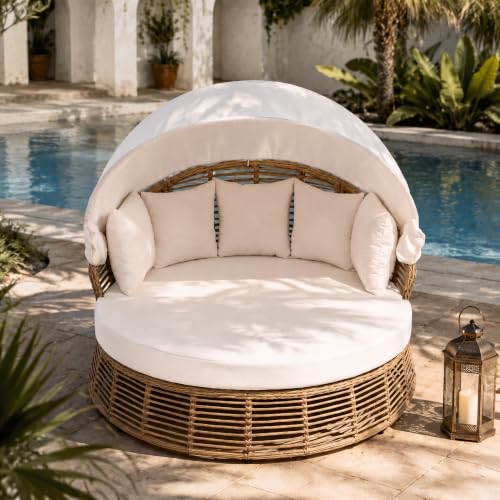
A canopy adds shade, privacy, and a distinctly resort-like feel. Most canopy day beds use a four-post frame with a fabric top, and some include sheer curtains that you can tie back or close for a private escape. This style shines in sunny climates where direct exposure makes lounging uncomfortable, and it's a natural fit for poolside or garden settings. The trade-off is more assembly and a larger footprint — measure your space carefully before committing.
3. Day Bed Swings
Suspended from a frame, pergola, or porch ceiling, an outdoor daybed swing adds gentle motion to the relaxation experience. Swings are ideal for porches and covered patios where you have a solid overhead anchor point. They require proper installation — always check the weight rating of both the swing and the mounting hardware — but the payoff is a genuinely unique lounging experience that no static piece can replicate.
4. Convertible and Multi-Position Day Beds
Some models adjust from a flat sleeping surface to an upright sofa position, often with an adjustable backrest. These are excellent for smaller spaces where one piece needs to serve multiple functions. The mechanism quality varies considerably across tiers — entry-level convertibles can feel stiff, while mid-range and premium models offer smoother, more durable adjustment hardware. If you plan to switch positions daily, prioritize the mechanism.
5. Poolside and Waterfront Loungers
Designed with quick-drying materials and often on casters or lightweight frames, poolside day beds prioritize portability and moisture resistance. Look for mesh or sling seating surfaces, aluminum frames, and cushions with drainage-friendly foam. These overlap with the outdoor deck furniture category but are specifically optimized for wet environments.
Materials Matter: What to Look For
The frame and cushion materials determine how long your day bed lasts and how much maintenance it demands. Here's how the main options compare.
| Material | Best For | Durability Notes | Maintenance Level |
|---|---|---|---|
| Powder-Coated Aluminum | Humid climates, coastal areas, poolside | Rust-proof finish, lightweight, strong | Low — wipe clean |
| Teak & Hardwood | Traditional and rustic settings | Natural oils resist moisture; ages gracefully | Medium — periodic sealing |
| All-Weather Wicker | Coastal, bohemian, and transitional styles | UV-resistant resin over a metal frame | Low to medium — clean crevices |
| Steel | High-traffic and commercial-grade use | Heavy-duty but requires rust protection | Medium — inspect for chips |
| High-Density Foam Cushions | All day beds; comfort layer | Retains shape; quick-dry variants available | Medium — store or cover when wet |
| Solution-Dyed Acrylic Fabric | Cushion covers and canopy curtains | Fade-resistant, mold-resistant | Low — machine washable on many models |
For most homeowners, powder-coated aluminum frames paired with solution-dyed acrylic cushions offer the best balance of longevity and low maintenance. Wood frames are beautiful and add warmth, but they demand more attention — especially in rainy or freezing climates. Wicker brings texture and visual interest, but check that the weave is tight and the underlying frame is rust-resistant; cheaper wicker can unravel at edges over time.
Quality Tiers: How to Read the Market
Outdoor day beds span a wide range of construction quality. Rather than thinking in terms of specific figures, use these universal tier descriptors to understand what you're getting at each level.
Entry-Level Tier
Basic frames, thinner cushions, and lighter hardware. Suitable for occasional use and covered spaces. Expect simpler assembly and fewer finish options.
Mid-Range Tier
Sturdier frames with better welds and finishes, plus thicker, higher-density cushions. A solid choice for regular seasonal use on open patios.
Premium Tier
Refined joinery, smoother convertible mechanisms, high-grade fabrics, and better weight distribution. Built for year-round exposure and daily use.
Luxury / Commercial-Grade
Resort-quality construction, reinforced frames, and top-tier cushion foam. These models are specified for hospitality use and hold up to heavy traffic.
As a rule, moving from entry-level to mid-range typically yields the biggest jump in comfort and longevity. The frame becomes more rigid, the cushion retains its shape longer, and the finish resists chipping. Moving from mid-range to premium adds refinement — smoother adjustment, better fabric hand-feel, and more precise construction — but the functional difference is smaller than the first upgrade step.
Sizing and Placement: Make It Fit the First Time
A day bed is a substantial piece of furniture, and getting the dimensions right matters more than with a chair or side table. Here's how to plan the placement.
- Measure your footprint with clearance: A typical day bed needs at least 2–3 feet of walking space on the access side. Don't just measure the frame — measure the frame plus a side table plus the path people will use.
- Check the swing radius: Convertible and swing models move. For a swing, confirm that the arc of travel doesn't collide with railings or walls. For a convertible backrest, make sure it can fully recline without hitting anything behind it.
- Account for shade: If you're not buying a canopy model, consider whether your chosen spot has natural or structural shade. Day beds that sit in full sun all day will be less inviting — and their cushions will fade faster.
- Think about anchoring: On windy decks or open lawns, lightweight frames can shift. Some models include anchoring hardware; others benefit from being placed in a sheltered corner or weighted down.
- Pair with the right side pieces: A small side table for drinks, a deck box for cushion storage, and a nearby outdoor lighting source complete the setup. If your space is tight, browse conversation sets for small spaces for layout ideas.
Quick Sizing Checklist
✔ Measure the full frame footprint, not just the cushion area.
✔ Leave at least 24–36 inches of clear walking space on the main access side.
✔ For swing models, confirm the hanging height and the swing arc clearance.
✔ Verify that the day bed's backrest (if adjustable) can fully recline in your chosen spot.
✔ Check doorways and gate widths if the day bed must pass through them during delivery.
Cushions, Comfort, and Care
The cushion is what makes a day bed actually pleasant to use, and it's also the component most likely to degrade first. Prioritize cushion quality even if it means choosing a simpler frame.
Look for high-density foam — the kind that springs back when you press it and doesn't flatten after a season. Quick-dry foam is worth seeking out if your day bed will be exposed to rain or pool splash. Fabric covers should be solution-dyed acrylic or a comparable UV-stable material; these resist fading and mildew far better than standard polyester.
Maintenance is straightforward but consistent effort pays off. Brush off debris weekly, spot-clean stains promptly with mild soap and water, and store cushions indoors or in a cushion storage box during heavy rain and off-season months. If your cushions are starting to look tired, replacement covers and outdoor couch cushions can extend the life of the frame significantly — often for far less than a new day bed.
For a deeper dive into foam types, fabric ratings, and cleaning routines, see our full outdoor cushion guide.
Style and Design: Making It Yours
An outdoor day bed is large enough to anchor the visual identity of your patio, so it's worth choosing a style that aligns with the rest of your space.
Modern and Minimalist
Low-profile aluminum frames with clean lines and neutral cushions suit contemporary patios and modern patio layouts. These designs keep the focus on the view and surrounding architecture.
Coastal and Resort
White wicker, canopy frames, and breezy fabrics evoke a beachside feel. Pair with striped or textured cushions and nearby greenery for a coastal patio vibe.
Rustic and Natural
Teak or reclaimed-wood frames with earthy cushions work well in garden settings and rustic farmhouse spaces. These pieces age beautifully and blend into planted surroundings.
Bohemian and Layered
Wicker frames, patterned textiles, and plenty of throw pillows create a relaxed, bohemian oasis. Add a canopy with sheer curtains and a few hanging planters to complete the look.
Whatever style you choose, resist the urge to over-accessorize. A day bed is already a statement piece — a few well-chosen pillows, a side table, and a rug or nearby outdoor rug are usually enough.
Common Mistakes to Avoid
- Buying for looks without checking the frame: A beautiful day bed with a flimsy frame will wobble, rust, or sag within a season or two. Inspect welds, hardware, and weight ratings before anything else.
- Ignoring the cushion spec: The frame gets the attention, but the cushion determines daily comfort. Ask about foam density and fabric type — and confirm whether covers are replaceable.
- Skipping the shade plan: A day bed without shade becomes a display piece rather than a usable one. If you're not buying a canopy model, plan for an umbrella, pergola, or natural shade nearby.
- Underestimating the footprint: Day beds are wider and deeper than they appear in photos. Measure your space, including access paths, before ordering.
- Forgetting storage: Cushions and canopies need somewhere to go during storms and off-season. Budget for a storage solution from the start.
- Overlooking assembly: Some models arrive in many pieces with complex instructions. Check assembly requirements — especially for canopy and swing models — and confirm you have the tools and help you need.
Pre-Purchase Checklist
Before You Click "Add to Cart"
☐ Confirm the frame material is appropriate for your climate (aluminum or teak for humid/wet areas; steel with rust protection for heavy-duty use).
☐ Verify the cushion fabric is UV-stable and, ideally, quick-drying.
☐ Check the weight capacity and assembly requirements.
☐ Measure your space, including walking clearance and swing/recline arcs.
☐ Confirm whether cushions and canopy curtains are replaceable.
☐ Read the warranty terms for frame and fabric separately.
☐ Plan for storage or covering during inclement weather.
Ready to Build Your Outdoor Retreat?
Browse our curated selection of outdoor day beds and compatible accessories below. Every product is chosen for build quality, comfort, and long-term durability.
View Recommended PicksFrequently Asked Questions
Can an outdoor day bed stay outside all year?
It depends on the materials and your climate. Powder-coated aluminum frames with solution-dyed acrylic cushions are designed for year-round exposure in most climates. Wood frames and standard foam cushions need protection or indoor storage during freezing or prolonged wet weather. Always check the manufacturer's exposure rating.
How do I keep cushions from getting moldy?
Choose quick-dry foam and mold-resistant fabric covers, and store cushions during heavy rain or when not in use for extended periods. If cushions do get wet, stand them on edge in the sun to dry fully before replacing them on the frame. A cushion storage solution makes this routine easier.
Is a day bed swing safe for a covered porch?
Yes, provided the ceiling structure can support the combined weight of the swing, cushions, and occupants. Consult a contractor or use a dedicated swing stand if you're unsure about the anchoring point. Always follow the manufacturer's installation instructions and weight limits.
What's the difference between a day bed and a chaise lounge?
A chaise lounge is designed for one person in a semi-reclined position, while a day bed is wider, flatter, and typically sized for one person to fully lie down or two people to sit and recline together. Day beds are generally larger and more furniture-like, while chaise lounges are more portable and pool-focused.
Can I replace the cushions on my day bed?
Most mid-range and premium day beds offer replacement cushions or at least replacement covers. Check before buying — replaceable cushions dramatically extend the usable life of the frame. Universal replacement cushions are also available if the original is no longer stocked.
Do I need a canopy on my day bed?
Not necessarily, but shade dramatically improves usability in sunny locations. If you don't choose a canopy model, place the day bed under a pergola, near a shade tree, or pair it with a large patio umbrella. A canopy also adds privacy and a resort-like feel if that's the style you're after.
Still deciding on the wider layout of your outdoor space? Browse related guides on outdoor couches, conversation sets with a fire pit table, and outdoor dining furniture to build a cohesive patio plan. For seasonal maintenance, our weatherproofing guide covers protecting frames and fabrics through every season.