Outdoor Deck Furniture: The Complete Buying & Design Guide
Everything you need to choose the right outdoor deck furniture for your space — from durable materials and smart layouts to maintenance strategies that keep your deck looking its best for years.
Start Your ResearchPatioFocus Philosophy: A well-furnished deck extends your living space and adds real value to your home. This guide is built for homeowners who already know they want to upgrade their outdoor deck furniture but need clear, trustworthy information to make the right decision — without the guesswork.
Why Outdoor Deck Furniture Deserves Careful Planning
Outdoor deck furniture is more than a collection of chairs and tables — it is the functional core of your outdoor living space. A thoughtfully chosen setup transforms a bare deck into a place for morning coffee, weekend entertaining, and quiet evening relaxation. The opposite is also true: poorly chosen pieces lead to wasted space, premature wear, and constant frustration.
Unlike indoor furniture, deck pieces face rain, UV exposure, temperature swings, and foot traffic across uneven boards. That means material selection, weight distribution, and weather resistance matter far more than style alone. Homeowners who invest time in understanding these factors end up with setups that last longer and require less upkeep.
This guide walks you through every decision point: measuring your deck, choosing the right materials, selecting furniture types for your lifestyle, and maintaining everything season after season. If you also need seating that works on patios and decks alike, our outdoor conversation sets overview is a useful companion. For ground-level setups, compare notes with our decking guide to understand how surface material interacts with furniture weight and placement.
How to Measure Your Deck and Plan the Layout
Before browsing any furniture, measure your deck carefully. Accuracy here prevents returns, overcrowding, and blocked walkways. Follow this sequence:
- Measure overall dimensions. Record length and width at the widest points. Note any bump-outs, planters, or built-in benches that reduce usable space.
- Mark traffic paths. Reserve at least 36 inches of clearance for main walkways and 24 inches for secondary paths between furniture groups.
- Identify sun and wind exposure. Track where shade falls during the hours you use the deck most. This determines umbrella placement and seating orientation.
- Sketch to scale. Use graph paper or a simple floor-plan app. Draw furniture footprints using manufacturer dimensions before ordering.
A common mistake is buying a large dining set that leaves no room to walk around it. On compact decks, a round outdoor dining set for four often works better than a rectangular option because it improves flow. For very tight spaces, explore conversation sets designed for small spaces.
Pro Tip: Leave at least 18 inches between the edge of a seating group and the deck railing. This prevents people from feeling boxed in and protects the railing from chair backs.
Choosing Materials for Outdoor Deck Furniture
Material choice is the single biggest factor in longevity and maintenance. Below is a comparison of the most common options for deck furniture.
| Material | Best For | Maintenance Level | Weather Resistance |
|---|---|---|---|
| Powder-Coated Aluminum | Lightweight, rust-free frames | Low | Excellent |
| HDPE Wicker | All-weather woven seating | Low | Excellent |
| Teak & Hardwoods | Premium natural look | Moderate (oiling) | Very Good |
| Resin / Plastic | Entry-level, easy-clean pieces | Very Low | Good |
| Wrought Iron | Heavy, traditional designs | Moderate (rust care) | Moderate |
For most homeowners, powder-coated aluminum frames paired with HDPE wicker represent the sweet spot: lightweight enough to rearrange, rust-proof, and able to handle full sun and rain without fading. Teak and other hardwoods deliver a premium look but require periodic oiling to maintain their finish. Resin and plastic pieces sit at the entry-level tier and are ideal for starter decks or temporary setups.
Cushions are a separate decision. Choose quick-dry foam wrapped in solution-dyed acrylic fabric. Our outdoor cushion guide explains thread counts, drainage, and UV ratings in detail. If you need replacements later, explore outdoor couch cushions and waterproof cushion covers.
Types of Outdoor Deck Furniture and How to Use Them
Dining Sets
The dining set anchors most decks. A complete outdoor dining set with an umbrella hole gives you shade and a central gathering point. For smaller households, a dining table and chairs for four fits comfortably on most decks. Larger families or frequent hosts should look at dining sets for six or sets for eight. If you want built-in warmth, a dining set with a fire pit table combines meals and ambiance.
Conversation & Lounge Seating
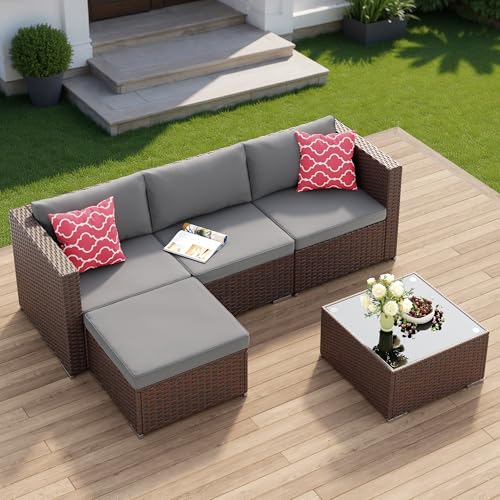
Conversation sets create the relaxed zone of your deck. Browse outdoor conversation sets for complete packages, or explore sets with swivel chairs for flexibility. A conversation set that includes a dining table works well on multi-use decks. For a focal point, consider conversation sets with a fire pit table.
Individual Seating
Mix in cushioned lounge chairs for reading corners. Outdoor dining chairs can double as extra seating when you need to expand. For head-of-table comfort, dining chairs with cushions offer a finished look.
Tables & Storage
A deck table with umbrella delivers shade and surface area in one piece. Storage matters too: an outdoor deck box keeps cushions and throws dry, while an outdoor cushion storage box protects seasonal textiles.
Layout Tip: Group furniture into zones — dining, conversation, and relaxation — rather than scattering pieces evenly across the deck. Zones make a deck feel intentional and larger than it is.
Understanding Furniture Tiers: Entry-Level to Luxury
Deck furniture generally falls into four market tiers. Understanding these helps you match expectations to construction quality without relying on fluctuating figures.
| Tier | Typical Construction | Best For |
|---|---|---|
| Entry-Level | Resin, basic steel frames, thinner cushions | Starter decks, seasonal setups |
| Mid-Range | Powder-coated aluminum, HDPE wicker, solution-dyed cushions | Year-round residential use |
| Premium | Heavy-gauge aluminum, high-density wicker, quick-dry cushions | High-use decks, coastal climates |
| Luxury | Teak, commercial-grade frames, bespoke cushions | Design-focused, long-term investment |
Mid-range pieces typically offer the best balance of durability and design variety. They handle typical residential exposure — sun, rain, and occasional freezing — without the upkeep demands of natural wood or the fragility of entry-level resin. Premium and luxury tiers make sense when your deck sees daily use or when salt air and intense UV require commercial-grade materials.
Regardless of tier, check warranty terms and hardware quality. Stainless steel fasteners and welded (not bolted) joints are markers of solid construction.
Weatherproofing and Maintaining Deck Furniture
Even weather-resistant furniture benefits from routine care. A simple seasonal routine extends lifespan significantly:
- Clean monthly. Rinse frames and wipe cushions with mild soap and water. Avoid abrasive cleaners on powder-coated surfaces.
- Protect cushions. Use cushion covers when not in use. Store textiles in a cushion storage solution during off-season months.
- Inspect hardware. Tighten bolts and check for rust spots on steel components. Touch up powder coating chips promptly.
- Anchor before storms. Secure umbrellas and lightweight chairs. Use furniture straps in windy regions.
- Treat wood annually. Teak and hardwood pieces benefit from a yearly oil application to prevent drying and cracking.
For a deeper dive into seasonal routines, see our decking care guide. If your setup includes upholstered pieces, outdoor couch care covers fabric-specific cleaning.
Common Mistakes to Avoid When Buying Deck Furniture
- Buying before measuring. Overcrowding is the most frequent regret. Always sketch to scale first.
- Ignoring wind exposure. Lightweight pieces on an elevated deck can become hazards. Choose heavier frames or plan for anchoring.
- Skipping cushion quality. Fast-drying foam and solution-dyed fabric prevent mold and fading — cheaper alternatives rarely last more than a season.
- Mismatching scale. A massive sectional overwhelms a small deck; tiny bistro pieces get lost on a large one. Match furniture footprint to available area.
- Forgetting storage. Without a deck box or cushion storage box, textiles degrade quickly in wet weather.
Frequently Asked Questions
What materials work best for outdoor deck furniture?
The best materials depend on climate and maintenance preference. Powder-coated aluminum, HDPE wicker, teak, and weather-resistant resin are top performers. Each offers different durability and care requirements — aluminum and HDPE wicker require the least upkeep, while teak delivers a premium look with annual oiling.
How do I measure my deck for furniture?
Measure the length and width of your deck, then subtract walkway clearance of at least 36 inches from all traffic paths. Map out furniture footprints on graph paper to scale before committing to a layout. Leave 18 inches between seating groups and railings.
Should I anchor deck furniture?
Yes, anchoring is recommended in windy areas. Use furniture straps, weighted bases for umbrellas, and secure any lightweight items before storms. Heavy pieces may not need anchoring but should still be positioned to minimize wind exposure.
How often should I replace deck furniture cushions?
Quality solution-dyed acrylic cushions typically last three to five years with proper care. Replace them when fabric shows cracking, foam loses resilience, or mold stains persist after cleaning. Using waterproof covers extends cushion life considerably.
Can I mix furniture styles on one deck?
Yes — mixing works when you unify materials or colors. For example, pair a teak dining table with aluminum-framed chairs in a matching tone. Avoid mixing too many finishes; two complementary materials usually read as intentional, while four or more feel chaotic.
Final Checklist Before You Buy
- Measure deck dimensions and map traffic paths.
- Define zones: dining, conversation, relaxation, storage.
- Choose a primary material based on climate and maintenance preference.
- Select pieces that fit your zone dimensions with clearance to spare.
- Confirm cushion quality: quick-dry foam, solution-dyed fabric.
- Plan storage: deck box or cushion storage.
- Review warranty and hardware quality.
- Plan anchoring for umbrellas and lightweight seating.
With these steps complete, you are ready to shop with confidence. Explore the recommended products below to find options that fit your tier and layout plan.