Outdoor Daybed With Canopy: Shaded Lounging Done Right
Turn any patio into a shaded retreat. Learn how canopy daybeds are built, which fabrics and frames hold up outdoors, and how to choose the right size for your space.
Why a canopy daybed is worth the investment: An outdoor daybed is already a significant upgrade over a regular lounge chair — it invites long afternoons, naps, and reading sessions. Adding a canopy solves the biggest practical limitation of any daybed: direct sun. The combination delivers shade, privacy, and a defined outdoor room within your patio. This guide explains how canopies are engineered, which frame and fabric combinations hold up outdoors, and the sizing and maintenance considerations that make the difference between a piece used every weekend and one that gets covered up.
What Is an Outdoor Daybed With Canopy?
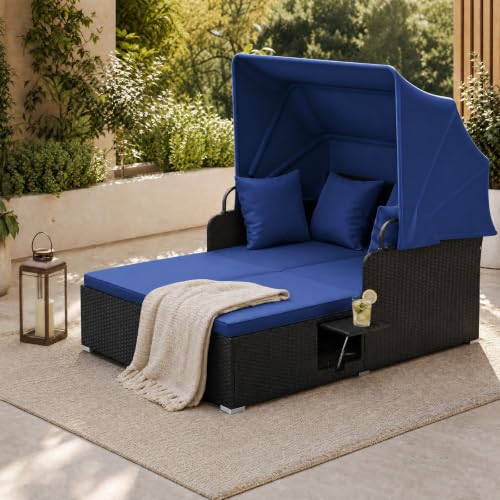
An outdoor daybed with canopy is a wide, low lounging platform designed to be used like a sofa or bed, with an integrated frame that supports a fabric canopy overhead. The canopy provides shade, and on some designs it also adds a degree of privacy from neighbors or wind. The daybed itself usually includes cushions for the seat and back, and is sized for one or two people depending on the model.
The category sits between a standard outdoor daybed and a hanging daybed swing. A freestanding canopy daybed stands on its own legs, while a swing version hangs from a frame or a tree. The freestanding design is more versatile and easier to place on any patio, so most buyers who want a canopy choose the freestanding option.
Compared to a patio couch or a cushioned loveseat, a daybed offers deeper seating and a full-flat lounging surface. That makes it a different use case rather than a replacement — the daybed is where you go to relax fully, while the sofa is where you host conversation.
Types of Canopy Daybeds
Freestanding Canopy Daybed
The most common configuration. A four-post frame or a curved arch supports the canopy fabric, and the daybed sits on a low base. This is the most versatile option because it can be placed anywhere on a patio without needing overhead support. It suits exposed patios, pool decks, and rooftop terraces where a permanent shade structure is not practical.
Cabana-Style Daybed
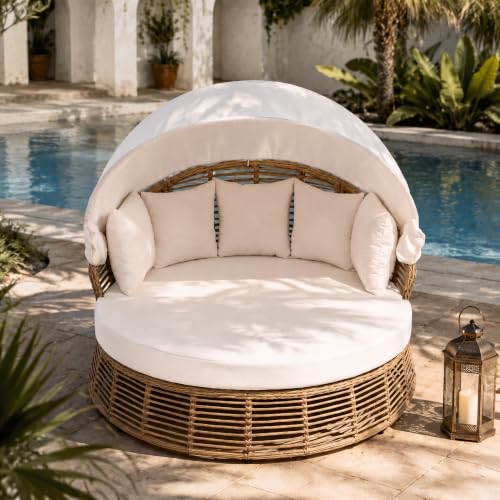
A cabana-style daybed uses a larger canopy that covers the entire platform and can include side panels or curtains. This creates a semi-enclosed retreat, useful on windy or overlooked patios. The trade-off is that cabana canopies use more fabric and are more prone to wind load, so anchoring and frame rigidity matter more. A covered patio is a natural fit for this style if the daybed will sit beneath a roof or pergola.
Swing and Hanging Canopy Daybed
A hanging version suspends from a sturdy frame with a built-in canopy. It is arguably the most relaxing form, but it requires a solid anchor point and a much larger footprint than a freestanding daybed. If this style appeals, our guide to outdoor daybed swings covers the frame and anchor requirements in more detail.
Modular Canopy Daybed
Some designs use modular components — a base platform, a backrest, and a canopy frame — that can be rearranged or expanded. These are typically the high-end tier and work well on larger patios where the daybed is part of a bigger layout. A conversation set with dining table in the same zone can complement the daybed rather than compete with it.
Frame, Fabric, and Cushion Materials
Canopy daybeds sit outdoors for long periods and are exposed to sun, wind, and rain. Material choice is the single biggest factor in how long they last. The table below maps the common builds.
| Tier | Typical Build | Best For |
|---|---|---|
| Essential tier | Light aluminium frame with standard polyester canopy and cushions | Seasonal patios, sheltered areas, occasional use |
| Balanced tier | Powder-coated aluminium with UV-stable canopy and solution-dyed cushions | Year-round patios, regular use, mixed weather |
| Top-tier | Heavy-gauge aluminium or stainless hardware with canopy frame reinforcement | Coastal areas, exposed patios, long-term use |
The frame is the critical structure because it supports both the weight of occupants and the canopy. A powder-coated aluminium frame is the most practical choice — lightweight to reposition and rust-resistant. The canopy frame is a secondary stress point; check that the uprights are reinforced where they meet the base, because wind pressure on the canopy funnels stress into these joints.
Canopy fabric is the second key element. Solution-dyed acrylic is the standard for outdoor use; it resists UV fading and holds color even after several seasons. Polyester is more common at the entry-level tier but fades faster. A canopy with a small vent at the top allows hot air to escape and reduces wind lift — this is a subtle but important detail on any daybed with a large canopy surface.
Cushions follow the same logic. Solution-dyed acrylic or marine-grade vinyl resists fading and dries quickly. If the daybed does not include cushions, our guide to outdoor couch cushions and the broader outdoor cushion guide will help you match fill and fabric to the daybed's use case. For reference on how these fabrics are engineered, our outdoor dining set buying guide covers similar material comparisons.
Sizing and Placement
A canopy daybed is a substantial piece of furniture. Most standard sizes run close to a twin or full bed footprint, and the canopy frame extends above and often slightly beyond the base. Before buying, measure both the footprint of the daybed and the ceiling clearance in the intended spot — a low pergola or a sloping roof may not accommodate a tall canopy.
Placement matters for the shade itself. The canopy shades the daybed when the sun is at higher angles, but during late afternoon or early morning, the sun can enter under the canopy from the side. If the patio is exposed on one side, either position the daybed so its solid back faces the low sun or plan supplementary shade from a nearby wall, pergola, or planting. A conversation set for small spaces can share the shaded zone without crowding the daybed.
Allow clearance on at least three sides so people can get on and off comfortably. On a small patio, the daybed often works best placed against one wall or fence, with the canopy providing visual separation from the rest of the space. For a broader layout approach, the outdoor conversation sets guide shows how lounging and seating pieces are usually arranged together.
Comfort and Everyday Use
A daybed is comfortable when the cushion depth and back angle work together. Deep cushions are inviting but can make it harder to get up, which matters on a low daybed. Mid-depth cushions with a supportive foam core are generally the best compromise. A backrest angle that reclines slightly (not fully flat) is the most versatile — it supports reading and conversation as well as lounging.
Consider whether the daybed will be used mostly solo or for two people. Single-person daybeds are typically narrower and easier to fit into a small patio; two-person daybeds need more cushion and often a stronger frame. A cushioned lounge chair is the alternative if solo use is the primary goal and space is limited.
Cushions and covers should be removable and washable. Look for zippered covers rather than sewn-in upholstery — zippered covers can be removed for cleaning or replaced if they fade, which extends the life of the daybed significantly. If storage is a concern, a cushion storage box or deck box nearby keeps cushions dry between uses.
Care and Maintenance
A canopy daybed needs more care than a simple bench because it has more fabric and more frame. A few routines keep it in good condition:
- Close or remove the canopy in strong wind: Canopies catch wind and can pull the frame. If the canopy is removable, take it down during storms. If it is fixed, position the daybed in a sheltered spot.
- Clean the canopy fabric: Brush off debris, then wipe with mild soap and water. Avoid harsh detergents, which can strip UV protection.
- Bring in or cover cushions between uses: Cushions are the first component to fade and mildew. A waterproof cover or indoor storage extends their life significantly.
- Inspect the frame joints: Check the frame once a season at the canopy uprights and at the base joints. Tighten any loose bolts promptly.
For broader seasonal preparation, see our weatherproofing guide. If the patio also has other fabric furniture, the waterproof outdoor cushion covers comparison is useful for consolidating covers into a single system.
Layout Ideas
Poolside Retreat
A canopy daybed is ideal poolside because the canopy provides shade without requiring an umbrella or pergola. Pair it with a conversation set with swivel chairs on the adjacent deck for a complete poolside layout.
Balcony Oasis
On a balcony, a compact canopy daybed can turn unused floor space into a shaded retreat. It fits neatly against a corner or a wall, and the canopy provides privacy from adjacent balconies. A conversation set without cushions nearby is a low-maintenance complement.
Garden Reading Nook
Placed at the end of a garden path or under a pergola, a canopy daybed becomes a destination rather than just a seat. Pair it with a deck table and chairs with umbrella in the same zone if the patio also serves as a dining area.
Fire Pit Lounge Extension
A daybed next to a conversation set with fire pit table creates two zones in the same patio: an active conversation area and a quieter shaded retreat. During cooler months, the daybed can sit near the fire pit for warmth.
Frequently Asked Questions
What is the best material for an outdoor daybed with canopy?
Powder-coated aluminium with a solution-dyed acrylic canopy is the most durable combination. Aluminium resists rust and is lighter to reposition, while solution-dyed acrylic resists UV fading.
Can a canopy daybed stay outdoors all year?
Balanced tier and top-tier models can stay outdoors year-round, but cushions should be brought inside or covered when not in use. In high-wind or stormy regions, remove the canopy if possible.
How much space do I need for a canopy daybed?
Allow the footprint of the daybed itself plus enough space to walk around at least three sides. The canopy sits above the daybed, so check ceiling clearance if the patio has a pergola or roof.
Do I need to anchor the daybed?
On a windy patio or rooftop, anchoring is strongly recommended. A large canopy catches wind and can tip an unanchored daybed. Use weighted bases or anchor kits appropriate to the surface.
How do I clean the canopy?
Brush off debris, then wipe with mild soap and water. Rinse thoroughly and let it dry fully before closing or folding. Avoid abrasive cleaners and pressure washing, which can damage the fabric.