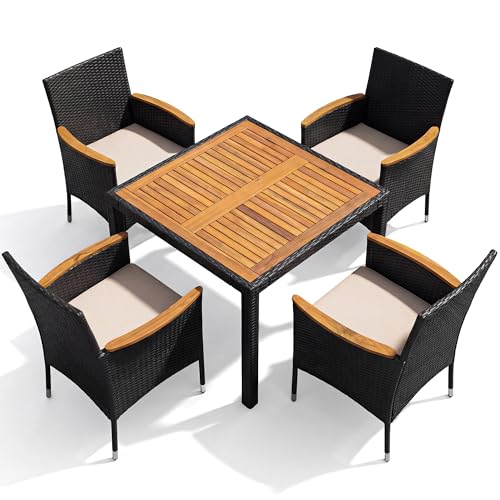
Outdoor Dining Sets for 4: The Complete Buying Guide
Everything you need to choose a four-person patio dining set that fits your space, climate, and hosting style. Compare table shapes, materials, chair designs, and practical features before you decide.
Explore the GuideQuick summary: A four-person outdoor dining set is the sweet spot for most households. It is large enough for family meals and small gatherings yet compact enough for balconies, patios, and modest decks. This guide breaks down the decisions that matter most: table shape and size, frame material, chair style, cushioning, weather resistance, and storage. By the end, you will know exactly which configuration suits your outdoor space.
Why Choose a Four-Person Outdoor Dining Set?
Four-person sets hit a practical balance that larger configurations often miss. They seat a typical family, fit comfortably on most patios, and leave room for walkways and planters. Unlike six- or eight-seat sets, a four-seat dining set rarely dominates a small outdoor area, which makes it easier to layer in a lounge zone or a fire pit.
For households that entertain occasionally, a four-seat set is also easier to maintain. Fewer chairs mean less cushion storage, quicker cleaning, and simpler winterizing. If your guest list sometimes grows, consider a set with stackable chairs or pair a four-seat table with a bench so you can add seating later without replacing the whole configuration.
If you are still deciding between a dedicated dining zone and a more relaxed layout, our outdoor dining set buying guide walks through the broader planning questions, while this page focuses specifically on four-person configurations.
Table Shape and Size: The First Decision
The table is the anchor of any dining set, and its shape determines how the whole arrangement feels. For four people, three shapes dominate: round, square, and rectangular. Each has trade-offs in seating comfort, space efficiency, and visual style.
| Table Shape | Best For | Seating Notes | Space Efficiency |
|---|---|---|---|
| Round | Compact patios, balconies, conversation-friendly meals | No head-of-table; everyone can see each other | High — fits corners and tight footprints |
| Square | Symmetrical layouts, small decks, modern styling | One chair per side; easy to center under an umbrella | High — footprint matches a round table closely |
| Rectangular | Longer decks, narrower patios, bench-and-chair combos | Two chairs per long side; benches can substitute | Moderate — requires length but works along walls |
As a rule of thumb, a round table with a diameter of roughly 40 to 48 inches seats four adults comfortably. A square table of similar dimensions works equally well. Rectangular tables in the 60-inch range by about 32 to 36 inches wide also seat four, with the advantage of extra surface area for serving dishes.
Clearance matters as much as table size. Allow at least 24 inches per chair for pulling in and out, and leave a walkway of 36 inches or more behind occupied chairs if the set sits near a door or railing. On a narrow balcony, a round table often solves the clearance problem better than a rectangular one.
If you prefer a round footprint, explore round outdoor dining sets for 4. For bench-style seating, see outdoor dining sets for 4 with a bench.
Frame Materials: Durability and Climate Match
The frame material determines how much maintenance the set demands and how long it lasts. Four common options dominate the market, and each suits a different climate and care routine.
Powder-Coated Aluminum
Aluminum is lightweight, rust-resistant, and easy to move when rearranging the patio. Powder coating adds a durable finish that resists chipping and fading. In coastal areas with salt air, aluminum is usually the safest choice. Mid-range and premium aluminum sets often use thicker gauge tubing and reinforced joints, which reduce wobble over time.
Steel and Wrought Iron
Steel frames feel substantial and hold up well in windy locations, but they need a rust-proof finish and periodic inspection. Wrought-iron styles bring a classic look, though they are heavier to move and may require touch-up painting if the finish chips. In humid climates, choose steel only if the coating is described as rust-resistant or galvanized.
Teak and Acacia Wood
Wood brings warmth and natural texture to outdoor dining. Teak is the premium choice, naturally oil-rich and resistant to rot, while acacia is a solid mid-range option when sealed and cared for. Both benefit from seasonal oiling and covers during harsh weather. Wood sets pair especially well with outdoor dining table and chairs for 4 layouts that lean toward a natural or farmhouse style.
Resin Wicker and HDPE
All-weather wicker over an aluminum frame offers a woven look without the fragility of natural rattan. HDPE lumber is heavy, fade-resistant, and virtually maintenance-free, making it a strong pick for sunny, exposed patios. These materials are common in entry-level and mid-range sets and are easy to wipe clean.
Material Checklist Before You Decide
- Match the frame to your climate — aluminum for coastal humidity, wood for covered porches, HDPE for full sun.
- Check the finish description for rust-resistant or weather-resistant coatings.
- Confirm the set can be covered or stored during off-season months.
- Look for reinforced joints and welded or bolted connections on metal frames.
- Verify that cushions and slings are quick-drying and removable.
Chair Styles: Comfort and Function
Chairs are where comfort lives, and four-person sets offer several configurations. The right choice depends on how long you typically sit and whether you value easy storage.
Stationary Dining Chairs
Standard dining chairs are the most common pairing. Look for contoured seats, breathable sling or mesh backs, and arms that fit under the table. Cushioned seats add comfort for long meals, while sling chairs dry faster after rain. If you plan to add cushions, check whether the set includes them or whether you need outdoor dining chair cushions separately.
Swivel Chairs
Swivel chairs make it easier to join conversations without pushing back from the table. They are heavier and often come with higher backs, which adds comfort for extended gatherings. A four-person set with swivel chairs can blur the line between dining and lounge seating. See outdoor dining set for 4 with swivel chairs for configurations that pair rotation with a compact table.
Stackable Chairs
Stackable chairs are a practical pick for smaller patios and seasonal storage. They are usually lighter and can be nested when not in use, freeing floor space for other activities. The trade-off is often a slightly less plush feel, so look for well-shaped seats and back support. Browse outdoor dining sets with stackable chairs if storage flexibility matters most.
Benches
A bench on one side and two chairs on the other maximizes seating in a tight footprint and creates a casual, family-style look. Benches are excellent against a wall or railing where chairs would be awkward to pull out. If you like the bench approach, see outdoor dining set for 4 with bench for layout ideas.
Shade and Umbrella Compatibility
Outdoor meals often happen in direct sun, so umbrella compatibility deserves early attention. Many four-person tables include a pre-drilled umbrella hole, but hole diameter varies. Measure your umbrella pole before buying, and confirm whether the set includes a base or whether the table has an integrated base ring.
On compact patios, a tilt umbrella or an offset cantilever umbrella can shade the whole table without a center pole blocking sightlines. If shade is a priority, browse outdoor dining set for 4 with umbrella hole or consider a set that includes the umbrella itself: outdoor dining set for 4 with umbrella.
Keep in mind that a table with an umbrella hole needs a stable base, especially on windy decks. A weighted base and a cover for the umbrella during storms will extend the life of both pieces.
Cushions, Slings, and Weather Resistance
Fabric quality separates a set that lasts from one that fades after a season. Look for solution-dyed acrylic or olefin fabrics described as fade-resistant and water-repellent. Removable, zip-off cushion covers make cleaning far easier, and quick-dry foam cores prevent the soggy-seat problem that plagues cheaper fillers.
Sling chairs skip cushions entirely and dry quickly, which suits rainy climates and low-maintenance households. If you prefer cushion comfort, plan for storage. A outdoor cushion storage box keeps cushions dry and extends their lifespan. Our outdoor cushion guide covers fabric types, filling options, and care in more detail.
For replacement needs or a style refresh, options like outdoor dining chair cushions set of 4 make it simple to update a four-chair set in one purchase.
How to Measure Your Space
Before committing to a set, sketch your patio and mark the dining zone. Measure the available length and width, then subtract clearance for chairs and walkways. A four-person set typically needs a footprint of roughly 8 by 8 feet to feel comfortable, including chair pull-out space.
- Measure the patio or deck area where the set will live.
- Mark door swing paths and grill zones so chairs do not block them.
- Allow 24 inches per chair for pull-out and 36 inches for main walkways.
- Check overhead clearance for umbrellas, pergolas, or string lights.
- Confirm the table height matches your chair seat height — standard dining tables sit around 28 to 30 inches high.
If your space is tight, our guide to round tables for four shows how curves reduce clearance conflicts. For a broader planning framework, the outdoor dining set buying guide covers proportional sizing across room layouts.
Quality Tiers: What Changes as You Move Up
Rather than focusing on numbers, it helps to understand what improves as you move between quality tiers. The descriptors below are relative, not absolute, and they help you compare sets within the same category.
| Tier | Typical Traits | Best For |
|---|---|---|
| Entry-level | Lighter frames, basic sling or thin cushions, simpler joints | Seasonal use, renters, balconies with limited exposure |
| Mid-range | Thicker aluminum or sealed wood, better fabric, reinforced connections | Year-round patios, families, regular entertaining |
| Premium | High-grade steel or teak, solution-dyed fabrics, precision joinery | Exposed locations, long-term use, design-focused spaces |
| Luxury | Commercial-grade construction, designer finishes, integrated features | High-end outdoor rooms, hospitality-style setups |
Mid-range sets usually offer the most noticeable jump in comfort and longevity: smoother chair mechanisms, denser cushion foam, and frames that resist wobble after repeated use. Entry-level sets can serve well on covered porches or for occasional use, while premium and luxury tiers make sense when the set stays outside year-round in demanding conditions.
Maintenance and Seasonal Care
Even the most weather-resistant set benefits from a simple care routine. Wipe frames with mild soap and water, rinse cushions and let them dry fully before storing, and inspect joints and fasteners at the start of each season. Wood sets need periodic sealing or oiling, while metal sets should be checked for chips that expose bare metal.
During off-season months, covers protect against debris and standing water. If you store chairs indoors, stackable designs save space. For a deeper maintenance plan, our weatherproofing guide and outdoor care section cover cleaning recipes, cover selection, and rust prevention.
Budget Planning Without the Guesswork
Planning a four-person dining set is easier when you decide what matters most before comparing options. Prioritize frame durability if the set will stay outside; prioritize cushion quality if long meals are common; prioritize compact footprint if space is tight. Bundling a table, four chairs, and an umbrella often simplifies setup, while buying components separately lets you tailor each piece.
If you are furnishing a new outdoor space from scratch, our outdoor budget guide and patio essentials checklist help sequence purchases so you do not buy overlapping pieces. And if you are comparing this set size against larger options, the outdoor dining sets hub and outdoor dining sets for 6 page show how seating needs shift with guest count.
Ready to Compare Four-Person Dining Sets?
Browse curated options that match the table shapes, materials, and features covered in this guide. Filter by frame type, seating style, and shade compatibility to shortlist sets that fit your space.
View Recommended SetsFrequently Asked Questions
What size outdoor dining set fits four people comfortably?
A round table around 40 to 48 inches in diameter or a rectangular table roughly 60 inches long by 32 to 36 inches wide comfortably seats four adults. Always leave at least 24 inches of clearance per chair for easy movement.
Is a round or rectangular table better for a four-person patio dining set?
Round tables encourage conversation and suit compact spaces because there are no corners to navigate. Rectangular tables maximize surface area and align neatly against walls or railings. Choose round for small patios and rectangular for longer decks.
Which material is most durable for an outdoor dining set for 4?
Powder-coated aluminum and high-grade steel resist rust and require minimal care. Teak and acacia are durable woods when sealed properly, while HDPE and resin wicker offer weather resistance with low maintenance. Match the material to your climate and storage habits.
Do outdoor dining sets for 4 come with an umbrella hole?
Many do, but not all. If shade matters in your space, confirm the table includes a pre-drilled umbrella hole and check the hole diameter against your umbrella pole. Some sets include the umbrella, while others leave it as an add-on.
Can I add a bench to a four-person dining set?
Yes. A bench on one side and two chairs on the other is a common configuration that maximizes seating in a tight footprint. Benches work especially well against a wall or railing where chair pull-out space is limited.