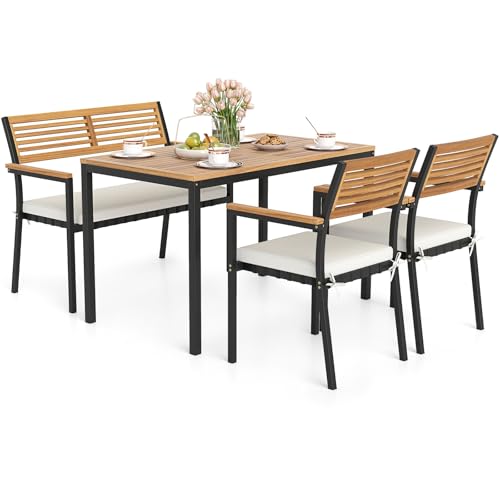
Outdoor Dining Table with Chairs and Bench: The Complete Buyer's Guide
Everything you need to know before choosing a patio dining set with bench seating — sizes, materials, layouts, and practical tips for a backyard that works as beautifully as it looks.
Why this guide matters: An outdoor dining table with chairs and bench is one of the most-used pieces of furniture in any backyard. It anchors family meals, weekend gatherings, and quiet morning coffees. But choosing the wrong size, material, or seating layout can turn a dream patio into a daily frustration. This guide walks you through every decision — clearly and practically — so you can buy with confidence.
Why a Table with Chairs and a Bench Works So Well
A bench-and-chair configuration is one of the most versatile seating arrangements for outdoor dining. Unlike a set with all individual chairs, mixing a bench on one side with chairs on the other delivers several practical advantages:
- More seating in less space. A bench seats three people along a side that would normally fit only two chairs, making it ideal for families and frequent hosts.
- Effortless entry and exit. Benches slide under the table cleanly, so walkways stay clear when the set is not in use.
- Visual balance. Pairing one bench with matching chairs creates a relaxed, symmetrical look that suits farmhouse, rustic, and modern patios alike.
- Kid-friendly seating. Children can climb onto a bench more easily than individual chairs, and there are fewer legs to trip over.
- Flexible styling. Benches double as casual seating when the table is cleared, extending the usability of your outdoor space beyond mealtimes.
If you are still comparing seating styles, our broader guide to outdoor dining table with bench and chairs covers additional configurations worth considering.
Choosing the Right Size for Your Patio
Size is the single most common source of buyer's remorse in outdoor dining furniture. A set that looks spacious in the showroom can feel cramped on a narrow patio — or overwhelming on a small balcony. Use these practical benchmarks to plan correctly:
- Seating width: Allow roughly 24 to 30 inches of table width per seated person. A bench seating three people therefore needs a table at least 72 inches long.
- Clearance: Leave at least 36 inches of open space on all sides of the table so chairs and benches can be pulled out comfortably.
- Table height: Standard dining height is 28 to 30 inches. Ensure bench seat height matches chair seat height (typically 17 to 19 inches) so everyone sits at the same level.
- Walkways: If the table sits beside a door or grill, maintain a 42-inch path for easy movement.
| Set Category | Typical Seating | Best For |
|---|---|---|
| Compact bench set | 4 to 5 people (bench + 2 chairs) | Balconies, small patios, courtyards |
| Mid-size bench set | 6 people (bench + 4 chairs) | Standard backyards, family dining |
| Large bench set | 8 or more people (bench + 6 chairs) | Entertaining patios, large decks |
| Extension-style bench set | Adapts from 6 to 10 | Hosts who alternate between daily and event use |
Measuring your space before shopping is essential. For a step-by-step approach, see our detailed outdoor dining furniture planning resource.
Material Comparison: What Lasts Outdoors
Outdoor furniture faces sun, rain, humidity, and temperature swings. The material you choose determines how long the set lasts and how much maintenance it demands. Here is how the most common options compare:
| Material | Durability | Maintenance | Best For |
|---|---|---|---|
| Teak wood | Top-tier, naturally rot- and insect-resistant | Annual oiling to preserve color | Luxury patios, long-term investment |
| Powder-coated aluminum | High-end tier, rust-proof finish | Minimal — wipe clean | Coastal areas, low-maintenance homes |
| Poly lumber | Professional-grade, weather-resistant | Soap and water only | All climates, family use |
| Acacia or eucalyptus | Mid-range, solid build | Sealant every season | Rustic and farmhouse settings |
| Steel with weather-resistant coating | Heavy-duty, reinforced frames | Check for rust touch-ups | Modern patios, high-traffic use |
| Resin wicker over metal frame | Entry-level to mid-tier depending on weave | Wipe clean; covers recommended | Casual entertaining, covered patios |
Wood remains a favorite for its warmth and natural grain, especially in rustic dining table with bench and chairs arrangements. Metal options suit modern designs, while poly lumber is the choice for homeowners who want a low-maintenance, long-term investment.
Bench vs. Chairs: How to Mix Them Effectively
Most buyers wonder whether to seat everyone on chairs, everyone on benches, or mix the two. Here is a clear breakdown:
All-Chairs Layout
Best for guests who need back support and adjustability. Individual chairs are easier to reposition and work well when the set is used for both dining and conversation.
All-Bench Layout
Maximizes seating along each side and creates a clean, streamlined look. Ideal for large families and casual gatherings. Look for benches with a slight backrest for comfort.
Mixed Bench + Chairs
The most popular configuration. A bench on one long side and chairs on the opposite side balances comfort with efficiency. It is also the easiest layout to expand when guests arrive.
Bench + Chairs + End Seats
For larger sets, adding chairs at each end extends seating without widening the table. This works particularly well on rectangular tables eight feet or longer.
If you prefer a fully chair-based setup, explore outdoor dining chairs to compare styles. For heavy-duty needs, our guide to outdoor dining chairs with 300 lb weight capacity highlights reinforced options.
Style Considerations: Matching Your Patio Aesthetic
An outdoor dining table with chairs and bench should feel like a natural extension of your home's exterior. Consider these style directions:
- Farmhouse and rustic: Choose solid wood tables with visible grain, paired with benches featuring simple slat backs. Warm, earthy finishes work best.
- Modern and minimalist: Powder-coated aluminum frames with slim profiles and neutral cushions keep the look clean and uncluttered.
- Coastal: Light-toned wood or whitewashed finishes paired with weather-resistant fabrics in soft blues and grays.
- Industrial: Metal frames with wood tops and mixed-material benches give a contemporary edge.
For rustic-leaning spaces, our rustic farmhouse table with bench and chairs guide offers detailed styling ideas. Cushion choices also matter — see our guide to outdoor dining replacement cushions for fabric and color guidance.
Functional Features Worth Considering
Modern outdoor dining sets offer several practical features that improve daily usability. Decide which matter most to you before comparing specific models:
- Umbrella hole: Essential for sunny patios. Sets with a built-in umbrella hole keep shade centered over the table. See outdoor dining table set with umbrella hole for examples.
- Fire pit integration: A central fire pit extends the dining season into cooler months. Explore outdoor dining table set with fire pit options.
- Storage: Some benches include lift-up seats or under-seat compartments for cushions and tableware.
- Extendable design: Extension tables let you seat six daily and ten for events without buying a second set.
- Weather-resistant cushions: Look for quick-dry foam and solution-dyed fabrics that resist fading and mildew.
Pro tip: If you plan to keep the set outdoors year-round, invest in a fitted cover and store cushions indoors during off-season months. This single habit can extend the life of your furniture significantly.
Maintenance: Keeping Your Set Looking New
Outdoor furniture maintenance is straightforward when you follow a simple seasonal routine:
- Wood: Clean with mild soap and water, then apply a sealant or oil once per year to prevent drying and cracking.
- Metal: Wipe down monthly and touch up any scratches in the coating to prevent rust from spreading.
- Poly lumber: Rinse with a hose and scrub occasionally with a soft brush and soapy water.
- Cushions: Brush off debris, spot-clean stains promptly, and allow to dry fully before storing.
- Covers: Use breathable covers that repel water without trapping moisture, which can cause mildew.
For a deeper dive into seasonal care, our outdoor furniture fabric resource explains which textiles stand up best to sun and rain.
Understanding Product Tiers
Outdoor dining sets vary widely in construction quality, not just appearance. Use this tier framework to align your expectations with what each class of product typically delivers:
Entry-Level Tier
Basic resin or lightweight metal frames. Suitable for covered patios and occasional use. Expect simpler joinery and shorter longevity.
Mid-Range Tier
Solid wood or reinforced aluminum builds with better finishes. Good balance of durability and design for regular family use.
Premium Tier
High-grade teak, powder-coated marine-grade aluminum, and precision joinery. Designed for year-round outdoor exposure and long-term use.
Luxury / Commercial-Grade
Flagship construction with premium materials, thicker frames, and refined detailing. Built for intensive use and lasting visual appeal.
Layout Ideas for Different Patio Shapes
Where you place the table matters as much as which table you choose. Consider these layouts:
- Rectangular patio: Place the table parallel to the longest wall with the bench facing outward toward the view. This keeps walkways open on both sides.
- Square patio: Center the table and orient the bench along the back edge, with chairs on the remaining three sides.
- Narrow deck: Use a compact table with a bench against the railing and chairs on the opposite side to preserve a clear path.
- L-shaped patio: Position the table in the wider section of the L, with the bench along the inner corner for a cozy, enclosed feel.
Small-space owners should also review outdoor furniture for small screened-in porch setups for additional space-saving ideas.
Common Buying Mistakes to Avoid
- Skipping measurements: Always measure the space and account for chair and bench pull-out before ordering.
- Ignoring material climate fit: A wood set in a humid coastal climate needs more care than powder-coated aluminum.
- Underestimating seating needs: A table that seats four comfortably today may feel tight when guests arrive. Consider an extension or larger set.
- Overlooking cushion storage: Cushions left outdoors deteriorate quickly. Plan where they will go when not in use.
- Forgetting shade: An umbrella hole or nearby shade structure makes the table usable on hot afternoons.
Frequently Asked Questions
What size outdoor dining table with chairs and bench should I choose?
A table seating four to six people typically works well for most patios. Allow roughly 24 to 30 inches of table width per person and confirm you have at least 36 inches of clearance around all sides for chairs and bench pull-out.
Is a bench better than individual chairs for outdoor dining?
Benches are space-efficient and seat more people along one side, making them ideal for families and casual gatherings. Individual chairs offer more back support and flexibility. Many homeowners pair one bench with chairs on the opposite side for a balanced layout.
Which material lasts longest for an outdoor dining table with bench?
High-grade teak, powder-coated aluminum, and poly lumber are among the most durable options. Teak and poly lumber resist rot and insects, while powder-coated aluminum resists rust and requires minimal maintenance.
How do I protect a wood dining table and bench outdoors?
Apply a weather-resistant sealant annually, use a fitted cover during off-season months, and wipe up spills promptly. Store cushions indoors when not in use to prevent mildew.
Can I mix a bench with chairs from a different set?
Yes, as long as seat heights match (typically 17 to 19 inches) and the materials are compatible for outdoor exposure. Matching finishes is not essential — coordinated tones often look more natural than perfectly matched sets.
Do I need an umbrella hole in my dining table?
If your patio receives direct sun during meal times, an umbrella hole is highly recommended. It provides centered, stable shade without a freestanding umbrella base that takes up floor space.
Final Thoughts
An outdoor dining table with chairs and bench is more than furniture — it is the centerpiece of backyard life. By measuring carefully, choosing the right material for your climate, and mixing seating to match your hosting style, you can create a space that serves your family for years. Use this guide as your checklist, compare tier-appropriate options, and prioritize durable construction over cosmetic extras. Your future self — and every guest who pulls up to the table — will thank you.