Outdoor Fire Pit with Propane Tank Inside: The Complete Guide
Everything you need to know about hidden-tank propane fire pits — how they work, why they are popular, what to check before buying, and how to use one safely on your patio or deck.
Start ReadingWhy this guide matters: If you are researching an outdoor fire pit with a propane tank inside, you already know the basic product category. What you likely still need is clarity: is a hidden tank actually safer and more convenient, how much burn time can you expect, which materials survive the elements, and what features separate an entry-level model from a premium one. This guide answers those questions in plain language so you can move from research to a confident decision.
What Is an Outdoor Fire Pit with a Propane Tank Inside?
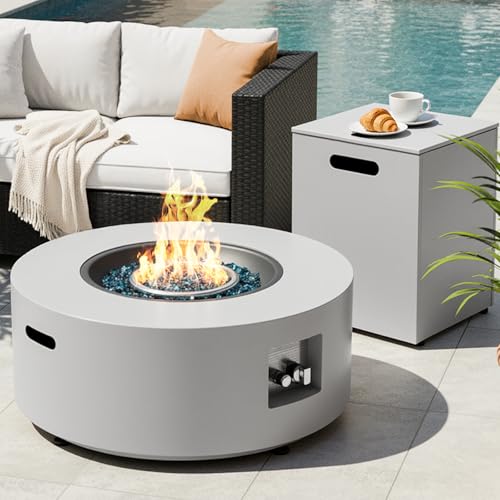
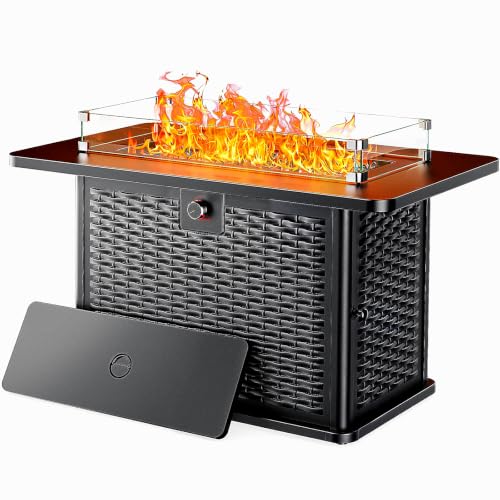
An outdoor fire pit with a propane tank inside is a gas fire feature designed with a dedicated, ventilated compartment that houses a standard propane cylinder — most commonly a 20-pound tank. Instead of routing a hose to an external tank or connecting to a home natural gas line, the fuel source is concealed within the base of the unit. The result is a cleaner silhouette, no visible hose, and a fire pit you can reposition on a patio without dragging a tank along with it.
These models are part of the broader gas fire pit family. If you are still weighing fuel types, our overview of outdoor fire pits covers wood-burning, natural gas, and propane options side by side. If you have already decided on propane but want to compare tank placement styles, the propane fire pit guide is a useful companion read.
Why Homeowners Choose a Hidden Propane Tank
Cleaner Look
No exposed hose or external cylinder cluttering your patio design. The fire pit reads as a single, intentional piece of furniture.
Simple Setup
No gas line installation required. Place the unit, secure the tank, connect the regulator, and you are ready to light it.
Deck-Friendly
Propane produces no embers or ash, so many hidden-tank models are suitable for wooden decks when used per the manufacturer's clearance guidelines.
Instant Control
Turn the flame on or off with a knob or ignition button. No kindling, no waiting for coals, no smoke management.
Portability
Because the tank travels with the unit, you can rearrange your patio layout seasonally without replumbing anything.
Consistent Heat
Steady, adjustable output makes it easier to plan an evening around the fire, from a low ambiance flame to a higher warming setting.
How the Hidden Tank System Works
Inside the base of the fire pit, a compartment — usually accessed through a hinged door or a removable panel — holds the propane cylinder upright. A regulator connects the tank to the burner assembly, and a control knob or electronic ignition module manages the flame. Ventilation slots or louvers allow any residual gas to escape safely and prevent pressure buildup.
Three details separate a well-engineered hidden-tank design from a compromised one:
- Tank retention: A strap, bracket, or molded cradle keeps the cylinder from shifting when the unit is moved.
- Ventilation: Adequate airflow around the tank compartment is a safety requirement, not a bonus feature.
- Access: A door that opens fully and stays open makes tank swaps far less frustrating.
Propane Tank Inside vs. External Tank vs. Natural Gas
| Feature | Propane Tank Inside | External Propane Tank | Natural Gas |
|---|---|---|---|
| Visual footprint | Clean, self-contained | Hose and tank visible | Clean, but tied to a fixed line |
| Installation | No gas line needed | No gas line needed | Professional connection required |
| Placement flexibility | High — move it anywhere | Moderate — tank must follow | Low — fixed location |
| Refueling | Tank swap inside the unit | Tank swap outside the unit | Continuous supply |
| Best for | Patios, decks, renters, flexible layouts | Large units, high output needs | Permanent outdoor kitchens |
If your priority is a permanent built-in setup, a natural gas model such as an outdoor fire table with natural gas may be the better fit. If flexibility matters more, a hidden-tank propane unit wins on convenience. For buyers who want the fire feature integrated into seating, an outdoor fire table with propane is worth exploring as well.
Quality Tiers: What Changes as You Move Up
Rather than anchoring this guide to fluctuating market figures, it is more useful to think in quality tiers. The descriptors below reflect relative position in the market and remain meaningful over time.
| Tier | Typical Characteristics | Best For |
|---|---|---|
| Entry-level | Basic steel or thinner gauge construction, manual ignition, simple tank compartment, shorter warranty | Occasional use, covered porches, first-time buyers |
| Mid-range | Reinforced frame, push-button ignition, better ventilation design, powder-coated finish, moderate burn output | Regular weekend use, families, mixed-material patios |
| Premium | High-grade steel or cast aluminum, electronic ignition, concealed controls, integrated cover, stronger weather-resistant coating | Frequent entertaining, exposed decks, design-focused spaces |
| Luxury / top-tier | Architectural detailing, commercial-grade burner assembly, precision flame control, premium finishes, extended warranty | Custom outdoor living rooms, high-end patios, long-term investment |
As a rule, mid-range models tend to offer a noticeably smoother ignition and more consistent flame than entry-level units, while premium and luxury tiers focus on material longevity and refined aesthetics. A well-specified mid-range fire pit is often the balanced choice for homeowners who entertain regularly but do not need commercial-grade hardware.
Materials and Weather Resistance
Because the unit lives outdoors year-round, materials matter as much as burner performance. Common construction options include:
- Powder-coated steel: Durable and widely used; look for a rust-proof finish and touch up chips promptly.
- Stainless steel: Excellent corrosion resistance, especially in coastal climates; heavier and typically a premium-tier material.
- Cast aluminum: Lightweight and rust-resistant, often used for decorative bases and table-style units.
- Composite or stone-look enclosures: Provide a masonry aesthetic without the weight of real stone; check that the tank compartment remains accessible.
If your patio is fully exposed to sun, rain, and salt air, prioritize a weather-resistant coating and a burner rated for outdoor exposure. A fitted cover is a worthwhile companion purchase — our guide to outdoor furniture covering explains what to look for in protective covers. For broader durability context across outdoor pieces, see outdoor furniture that can withstand weather.
Key Features to Check Before Buying
- Ventilated tank compartment: Non-negotiable. Confirm the design includes airflow around the cylinder.
- Ignition system: Push-button or electronic ignition is more convenient than a manual match-light design.
- Flame control: A knob with a wide adjustment range lets you shift between ambiance and warmth.
- Burn time: A standard 20-pound tank generally delivers roughly 8 to 12 hours at a moderate setting.
- Heat output: Match the rated output to your space; larger patios benefit from higher-output burners.
- Included accessories: Lava rock, fire glass, or ceramic logs affect the look and heat distribution.
- Safety certification: Look for recognized testing marks and a clear user manual.
- Warranty: Burner and structural warranties vary widely across tiers.
Safety Considerations for Hidden-Tank Fire Pits
Use It Safely
- Always keep the propane cylinder upright and secured in its bracket.
- Check the connection for leaks before the first use of the season and after every tank swap.
- Never place the unit under a low roof, awning, or enclosed structure without confirming clearance requirements.
- Maintain the manufacturer's clearance from combustible surfaces, especially on wooden decks.
- Do not store spare propane tanks indoors or in a hot vehicle.
- Turn off the gas supply when the fire pit is not in use.
- Keep children and pets at a safe distance, and never leave a lit fire pit unattended.
Safety is the single most important filter when comparing hidden-tank models. A unit with a well-ventilated compartment, a secure tank bracket, and clear documentation is a far better choice than one with a sleeker look but ambiguous safety design.
Where a Hidden-Tank Fire Pit Fits in Your Patio Layout
A fire pit is rarely a standalone purchase. It anchors a seating zone, and the surrounding furniture determines how usable the space feels. Common pairings include:
- Conversation sets: A fire pit at the center of a lounge arrangement creates a natural focal point. Explore outdoor furniture conversation sets with fire pit for ready-made layouts.
- Dining integration: If you want to combine dining and fire, an outdoor fire pit dining table and chairs keeps the footprint efficient.
- Sectional seating: A sectional with a fire pit works well on larger patios where the fire feature sits inside the seating curve.
- Swivel chairs: An outdoor furniture set with fire pit and swivel chairs offers flexible orientation around the flame.
For a broader planning framework, the outdoor essentials checklist helps you sequence seating, shade, lighting, and fire features so the patio works as a whole. If you are still choosing the table side of the layout, the outdoor dining table guide and the outdoor dining table with fire pit overview are both relevant next steps.
Common Mistakes Buyers Make
- Ignoring ventilation details: A hidden tank only works safely when the compartment breathes. Do not assume all designs are equal.
- Underestimating burn time: If you entertain for long evenings, plan for a spare tank or a model with a larger cylinder capacity.
- Overlooking clearance: Deck and roof clearances are stated for a reason; measure before placing the unit.
- Choosing by appearance alone: A stylish enclosure with a thin burner assembly will disappoint over time.
- Skipping the cover: A cover is one of the simplest ways to extend the life of any outdoor fire feature.
Ready to Compare Hidden-Tank Fire Pits?
Review the recommended models below and match each one to your patio size, seating plan, and desired flame style. Use the tier descriptions above to decide how much capability you actually need.
Explore Recommended ModelsFrequently Asked Questions
Is it safe to store a propane tank inside a fire pit?
Yes, when the fire pit is purpose-built with a ventilated compartment and the tank is properly secured and connected. Always follow the manufacturer's instructions, keep the tank upright, and check for leaks before each use.
How long does a propane tank last in a fire pit?
A standard 20-pound propane tank typically provides roughly 8 to 12 hours of burn time at a moderate flame setting. Higher flames and colder weather reduce burn time.
Can I use an outdoor fire pit with a propane tank inside on a wooden deck?
Many propane fire pits are suitable for decks because they produce no embers or ash. However, always confirm the model is rated for deck use, maintain clearance from combustible surfaces, and never place it under a low roof.
What should I look for in a hidden-tank fire pit?
Prioritize a ventilated tank compartment, a secure tank strap or bracket, a reliable ignition system, weather-resistant materials, and a clear safety certification. A hinged access door and built-in cover also add convenience.
Does a hidden-tank fire pit produce smoke?
No. Propane combustion produces essentially no smoke or ash, which is one of the main reasons these units are popular for patios and decks.
Final Takeaway
An outdoor fire pit with a propane tank inside is a practical, design-friendly way to add warmth and ambiance to a patio, deck, or backyard seating zone. The key is to look past the silhouette and evaluate the engineering: ventilation, tank retention, ignition quality, flame control, and material durability. Choose a tier that matches how often you entertain, confirm the safety documentation, and pair the fire pit with seating and surfaces that suit your space. With those checks complete, the purchase becomes a straightforward decision rather than a gamble.