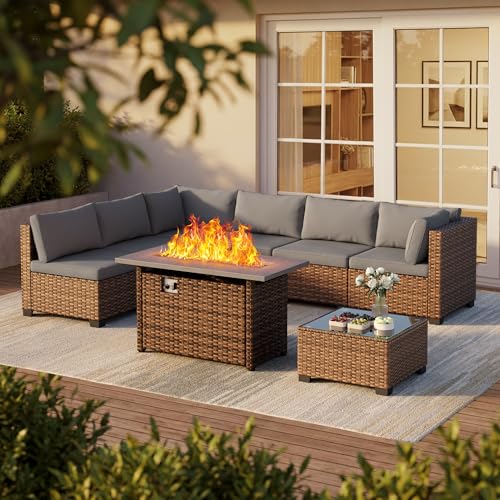
Outdoor Furniture Sectional with Fire Pit: The Complete Guide
Everything you need to choose, arrange, and care for a sectional-and-fire-pit setup that turns your patio into a year-round gathering space.
Explore Recommended OptionsAn outdoor furniture sectional with fire pit combines two of the most requested backyard upgrades into a single, cohesive seating zone. Instead of treating the sofa and the fire feature as separate purchases, this pairing invites you to think about flow, clearance, materials, and comfort as one design decision. If you are in the research stage, this guide walks through layout planning, material choices, fire pit types, cushion care, and the practical details that separate a setup you enjoy for years from one you outgrow in a season.
Quick takeaway: Prioritize clearance and material compatibility before style. A sectional that fits the fire pit's safe zone and survives your local climate will always outperform a beautiful set that is too large, too exposed, or built from the wrong frame material.
Why a Sectional-and-Fire-Pit Setup Works So Well
A sectional is inherently a conversation shape. When you pair it with a fire pit, the fire becomes the natural focal point, and the sectional wraps around it to create an intimate, enclosed feeling. This arrangement works across a wide range of spaces, from compact urban patios to expansive decks. It also simplifies furniture shopping: one anchor piece, one heat source, and a small number of supporting items such as a coffee table or side table.
The pairing also extends the usable season. A fire pit adds warmth on cool evenings, which means the seating area stays in use well beyond the warmest months. For homeowners who want a single zone that handles morning coffee, afternoon reading, and evening entertaining, this combination is hard to beat. If you are still comparing broad categories, the outdoor furniture conversation sets with fire pit overview is a useful companion read, and the dedicated outdoor fire pits guide covers fuel types and safety in more depth.
Layout and Clearance: The Numbers That Matter
Before you fall in love with a shape, measure your space and plan the safe zone around the flame. Clearance is the single most important planning variable, and it is the one most often overlooked.
- Seating-to-fire clearance: Keep the front edge of the sectional at least 24 to 36 inches from the fire pit edge. More clearance is better for wood-burning units.
- Walkway space: Leave 24 to 36 inches behind the sectional for traffic flow and for pulling chairs in and out.
- Table placement: A coffee table between the sectional and the fire pit should still preserve the clearance above; a narrow table or a lift-top design helps in tighter spaces.
- Overhead check: Confirm that umbrellas, pergolas, and string lights sit well above the flame and follow the fire pit manufacturer's clearance guidance.
Shape matters as much as size. A curved sectional naturally hugs a round fire pit, while an L-shaped sectional defines a corner and leaves the open side for a walkway or a view. If your patio is narrow, a two-piece L-shaped arrangement usually fits better than a deep U-shape.
Popular Layouts at a Glance
L-Shaped Corner Layout
Best for square and rectangular patios that need a defined corner.
- Efficient use of corners
- Leaves one long open edge for circulation
- Pairs well with a rectangular or square fire pit
Curved / U-Shaped Layout
Best for larger spaces and round fire pits.
- Strong conversation circle
- Works with a round fire pit as the centerpiece
- Requires more floor area
Compact Two-Piece Layout
Best for balconies and small patios.
- Modular pieces reconfigure easily
- Keeps clearance manageable
- Often pairs with a small round or square fire bowl
If you are weighing shape options more broadly, the guides on L-shaped patio furniture and outdoor circular sectional patio furniture go deeper into the trade-offs. The direct comparison of L-shaped outdoor couch with fire pit configurations is also helpful if you have already narrowed the field.
Choosing the Right Frame Material
Frame material determines how the sectional handles sun, rain, humidity, and temperature swings. The best choice depends on your climate and how much maintenance you are willing to do.
| Frame Material | Weather Resistance | Maintenance | Best For |
|---|---|---|---|
| Powder-coated aluminum | Excellent; rust-resistant | Low; wipe clean | Humid climates, coastal areas, low-maintenance setups |
| High-grade steel | Good with a quality coating | Moderate; inspect for chips | Structured, heavy-duty frames in covered spaces |
| Teak and hardwood | Good when sealed | Moderate; reseal periodically | Natural-look patios with some seasonal care |
| Wicker and rattan (synthetic) | Good; UV-stabilized weaves last longer | Low to moderate | Textured, traditional or coastal styling |
| Resin and recycled plastic | Excellent | Very low | Rainy climates and casual family use |
If you prefer a woven look, read the most comfortable outdoor wicker furniture guide for weave quality and comfort details, or compare wicker patio furniture with blue cushions for a ready-styled look. For a broader materials comparison, the site's materials guide is a solid starting point.
Fire Pit Types and How They Pair with a Sectional
The fire pit is the engine of this setup, and its fuel type affects safety, ambiance, and how close the seating can sit.
- Gas fire pits: Instant ignition, adjustable flame, no ash or smoke. They are the easiest match for upholstered sectionals because there are no embers or sparks to manage. A propane or natural gas unit is often the practical choice for covered patios.
- Wood-burning fire pits: Traditional crackle and aroma, but they produce sparks, smoke, and ash. Increase clearance, use a spark screen, and keep cushions well away from the flame.
- Fire tables: A fire element built into a table surface. They combine the coffee-table function with the fire feature, which can simplify a tight layout.
- Portable fire bowls: Flexible placement and easy storage. They suit renters and small patios but usually provide less heat output than built-in units.
If you like the idea of a movable heat source, the portable fireplace outdoor guide covers placement and safety. For a dining-focused variation on the same idea, see the outdoor dining set with gas fire pit overview.
Cushions, Fabrics, and Comfort
Cushions are where a sectional earns its comfort reputation, and they take the most abuse from sun, rain, and repeated use. Look for water-resistant, quick-drying foam wrapped in solution-dyed acrylic or a comparable performance fabric. Removable, machine-washable covers make routine care far easier.
- Fabric: Solution-dyed acrylic resists fading and mildew better than standard cotton blends.
- Foam: Quick-dry foam with a drainage-friendly core keeps cushions from staying soggy after rain.
- Fit: Confirm that replacement cushions are available for the specific sectional model before you commit.
- Storage: A water-resistant outdoor storage cabinet or a waterproof outdoor storage container keeps cushions dry and extends their life.
For deeper guidance, the outdoor cushion guide and the outdoor cushions overview cover fabric ratings and fit. If you already own a curved model, the outdoor curved sectional replacement cushions page is a practical reference. Note that if you ever change the sectional shape, the sectional with sleeper and L-shaped couch that turns into a bed guides explain how convertible designs compare.
Protecting the Setup from Weather
Even weather-resistant furniture lasts longer with a simple protection routine. Covers are the first line of defense during heavy rain, snow, and long stretches of non-use. Choose a cover that fits the sectional's exact dimensions and includes vents to reduce condensation.
- Use weatherproof outdoor furniture covers for extended storage and off-season protection.
- Use waterproof outdoor furniture covers during rainy periods when the sectional stays outdoors.
- Bring cushions indoors or into a waterproof outdoor box when heavy weather is forecast.
- Check the fire pit's own cover requirements; many gas units ship with a fitted cover.
If your patio has additional furnishings, the same care principles apply across the board. The waterproof outdoor furniture cushions and cushion storage guides are useful references, and a weather-resistant outdoor bench can add flexible extra seating around the fire.
Design and Styling Tips
Once the functional pieces are settled, styling the area is mostly about anchoring the fire pit and softening the hard edges. An outdoor rug defines the zone and makes the seating feel like a room. Side tables hold drinks and lanterns, and a small amount of lighting extends the evening.
- Center the rug on the fire pit and let the sectional sit on it for a unified look.
- Use a vintage wrought iron side table or a coffee table that raises to a dining table for flexibility.
- Add rattan chairs outdoors or wicker seating as accent pieces when the sectional leaves an open side.
- Keep a clear path to the fire pit controls and any fuel shut-off.
If you are building the wider patio plan, the outdoor decking guide and the fire pits overview help you coordinate hardscape and heat source. For seating beyond the sectional, the outdoor furniture loveseat and outdoor couches pages offer alternatives that complement the main arrangement.
See Recommended Sectional and Fire Pit OptionsTier-Based Comparison: What to Expect at Each Level
Rather than focusing on figures, it helps to understand how sectionals and fire pits differ by market tier. The descriptors below describe relative positioning and typical build quality.
| Tier | Typical Frame and Fabric | Fire Pit Partner | Best For |
|---|---|---|---|
| Entry-level | Basic powder-coated frames, standard cushions | Portable fire bowl or compact gas unit | First patios, renters, occasional use |
| Mid-range | Aluminum or steel frames, performance fabric cushions | Mid-size gas fire pit or fire table | Most family patios and regular entertaining |
| Premium | Reinforced frames, quick-dry foam, solution-dyed fabric | Larger gas fire table or built-in fire feature | Frequent use, exposed locations, long-term ownership |
| Luxury / commercial-grade | Heavy-duty frames, custom upholstery, modular systems | Custom or built-in fire feature | Statement patios, hospitality-style outdoor rooms |
Mid-range models typically offer smoother modular connections and better cushion support than entry-level pieces, while premium and commercial-grade tiers focus on longevity and repairability. The right tier depends on how often the space will be used and how much weather exposure it receives.
A Practical Buying Checklist
- Measure the patio and confirm the clearance around the fire pit before choosing a shape.
- Match the frame material to your climate and maintenance preferences.
- Confirm that replacement cushions and covers are available for the specific model.
- Check the fire pit's fuel type, clearance requirements, and local regulations.
- Plan storage for cushions and covers during the off-season.
- Review assembly requirements and delivery logistics for large modular pieces.
For broader shopping context, the online retailers guide and the conversation sets overview are helpful companions as you compare options across stores.
Frequently Asked Questions
What size outdoor sectional works best with a fire pit?
Aim for at least 24 to 36 inches of clearance between the sectional seating and the fire pit edge. A curved or L-shaped sectional that wraps around the fire pit usually works best in medium and large yards, while compact two-piece sectionals suit smaller patios.
Is a gas or wood-burning fire pit better for a sectional setup?
Gas fire pits offer instant, controlled flames with no ash or smoke, making them a good match for upholstered sectionals. Wood-burning fire pits create a traditional ambiance but require more clearance, spark protection, and regular cleaning.
Can an outdoor sectional with a fire pit stay outside year-round?
Yes, if the frame is powder-coated aluminum or high-grade steel and the cushions are water-resistant. Use weatherproof covers during heavy rain, snow, or long periods of non-use to extend the life of both the furniture and the fire pit.
How much clearance is needed around a fire pit?
Keep furniture at least 24 to 36 inches from the fire pit edge for safety and comfort. Check local guidelines and the manufacturer's instructions, and always keep flammable materials well away from open flames.