Outdoor Glass Table: The Complete Buyer’s Guide
Everything you need to know about glass patio tables — tempered glass, frame materials, safety, care, and how to pick the right one for your outdoor space.
An outdoor glass table brings a crisp, open feel to patios, decks, and balconies. The transparent top reflects light, makes small spaces feel larger, and pairs naturally with almost any chair style. But glass patio furniture also raises practical questions: Is it safe? Does it get too hot? How do you clean it? Which frames work best?
This guide answers those questions with clear, research-backed advice. You’ll learn how tempered glass differs from ordinary glass, which frame materials pair best with a glass top, how to care for your table through every season, and how to choose the right size and shape for your space. By the end, you’ll be ready to shop with confidence.
Why Choose an Outdoor Glass Table?
Glass-top outdoor tables have stayed popular for decades, and for good reason. A glass surface is easy to wipe clean, resists stains and odors, and won’t warp, crack, or fade the way some other materials can. It also creates a visually light look that keeps compact patios from feeling crowded.
Beyond aesthetics, glass tables offer practical advantages for entertaining. Spills bead up on the smooth surface and wipe away in seconds. The reflective quality bounces light around shaded areas, making evening gatherings feel brighter. And because glass doesn’t absorb moisture, it won’t harbor mold or mildew the way porous surfaces can.
The key is understanding what you’re buying. Not all glass is created equal, and the frame underneath matters just as much as the top. The sections below break down each component so you can evaluate options on your shortlist.
Tempered Glass vs. Ordinary Glass
The single most important safety feature of any outdoor glass table is tempered glass. Tempered glass is heat-treated during manufacturing, which makes it significantly stronger than standard annealed glass. If it does break, tempered glass shatters into small, blunt pebbles rather than sharp shards — a critical difference for furniture used by families and pets.
Most reputable outdoor furniture makers use tempered glass exclusively. When shopping, look for explicit mentions of “tempered glass” in the product description or specifications. Avoid any glass table that doesn’t state its glass type, especially from unknown sellers. Thickness matters too: thicker tempered glass panels feel more solid and resist flexing, while thinner panels may rattle in wind or feel less stable under heavy dishes.
Quick check: Tempered glass usually carries a small stamp or etching in one corner. If you can inspect the table in person, look for it. Online, rely on the stated specifications and buyer reviews mentioning durability.
Frame Materials That Work Best with Glass Tops
The frame determines how stable, durable, and weather-resistant your table will be. Glass tops are relatively heavy, so the frame must be engineered to support the weight evenly. Here are the most common frame materials you’ll encounter:
Powder-Coated Aluminum
Aluminum is lightweight, rust-resistant, and the most popular choice for glass patio tables. A powder-coated finish adds scratch and UV resistance. Aluminum frames are easy to move, making them ideal for balconies and small decks. Mid-range and premium aluminum tables often feature thicker gauge tubing and reinforced joints for extra rigidity.
Stainless Steel
Stainless steel offers excellent strength and a modern look. It resists rust well, though lower-grade stainless can develop surface corrosion in coastal environments. Steel frames are heavier than aluminum, so they stay put in windy conditions — a plus for exposed patios.
Wrought Iron and Cast Aluminum
These materials deliver a classic, ornate aesthetic. Wrought iron is very heavy and durable but requires occasional touch-ups if the finish chips. Cast aluminum mimics the look of iron with less weight and better rust resistance. Both pair beautifully with glass tops for traditional or bistro-style settings.
Wood and Rattan
Wood frames with glass inserts create a warm, transitional look. Teak, acacia, and eucalyptus are common choices because they resist moisture naturally. Rattan and wicker frames offer a relaxed, coastal feel. In both cases, check that the glass is properly seated with rubber gaskets or bumpers to prevent stress cracks.
If you’re comparing frame types across a broader range of furniture, our guide to weather-resistant outdoor furniture covers materials in more depth.
Glass Table Shapes and Sizes: What Fits Your Space
Shape affects both traffic flow and seating capacity. Here’s a quick breakdown of the most common configurations:
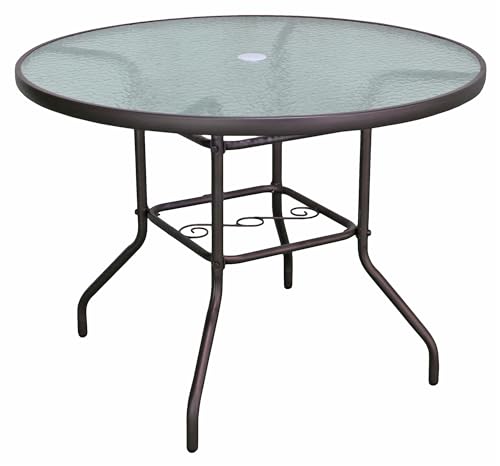
- Round glass tables: Best for compact spaces and casual conversation. No corners means easier movement around the table, and round tables fit well on small balconies.
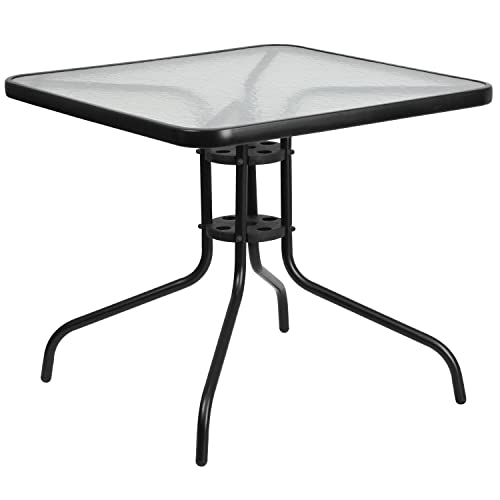
- Square glass tables: Efficient for four-person seating and works well in defined patio zones. Square tables maximize surface area in a compact footprint.
- Rectangular glass tables: Ideal for larger families or entertaining. Rectangular tables seat six or more and pair naturally with bench seating.
- Oval glass tables: A softer alternative to rectangular, offering generous surface area without sharp corners.
As a rule of thumb, allow about 24 inches of table edge per seated person and leave at least 36 inches of clearance between the table and walls or railings for comfortable chair movement. If your space is tight, consider a folding side table with a glass top as a flexible companion piece.
How Glass Tables Pair with Seating and Accessories
One advantage of a glass top is its versatility. Because the surface is neutral and reflective, it works with nearly any chair material and color. Consider these pairings:
- Glass + metal chairs: A clean, modern combination that suits contemporary patios and small balconies.
- Glass + wicker or rattan: A relaxed, coastal look that softens the glass’s sleekness.
- Glass + wood benches: A warm, farmhouse-inspired pairing. A dining table with bench and chairs works well when the table is rectangular.
- Glass + umbrella: Many glass tables include a center hole for shade. Look for a glass dining table with an umbrella hole if sun coverage matters.
For larger gatherings, rectangular glass tables pair well with stackable chairs for easy storage, or folding chairs when flexibility is a priority. If you’re building a full dining set, browse our overview of outdoor dining table sets to compare configurations.
Glass Table Quality Tiers: What to Expect
Outdoor glass tables vary widely in construction quality. Instead of focusing on specific figures, it helps to understand how features scale across market tiers. The table below summarizes what distinguishes each tier.
| Tier | Glass & Frame Characteristics | Best For |
|---|---|---|
| Entry-level | Thinner tempered glass; lighter aluminum frame; basic powder coating; simple assembly. | Occasional use, renters, small balconies. |
| Mid-range | Thicker tempered glass with polished edges; reinforced aluminum or steel frame; better UV-resistant finish; rubber gaskets. | Regular family use, everyday dining, covered patios. |
| Premium | Heavy-gauge tempered glass; welded or reinforced joints; rust-proof hardware; scratch-resistant coatings; tighter tolerances. | Frequent entertaining, exposed decks, long-term use. |
| Luxury / commercial-grade | Architectural-grade glass; precision-engineered frames; marine-grade finishes; design-forward detailing. | High-end patios, hospitality settings, design-focused spaces. |
Mid-range models often represent the sweet spot for most households: they offer noticeably better stability and finish quality than entry-level tables without the design premiums of top-tier pieces. If you’re furnishing an entire patio at once, our guide to outdoor essentials can help you prioritize where to invest.
Safety, Heat, and Weather Considerations
Glass tops are safe when properly manufactured and installed, but a few practical points deserve attention:
Heat Build-Up
Dark-tinted glass absorbs more heat than clear glass, and metal frames can become hot in direct sun. Light-colored or clear glass stays cooler. Placing the table under a pergola, umbrella, or shade sail reduces surface temperature and makes the table more comfortable for bare arms and plates.
Wind and Stability
A heavy glass top actually helps anchor a lightweight frame in breezy conditions, but the table should still sit level and firm. Rubber feet or weighted bases improve stability on decks. On exposed rooftops, choose a heavier steel frame or add a weighted base designed for the table.
Impact and Chips
Tempered glass resists impact well, but the edges are the vulnerable point. Avoid dragging heavy objects across the surface and use coasters or placemats for hot dishes. If a chip appears along the edge, replace the glass panel rather than continuing to use it — edge damage can compromise the panel over time.
Cleaning and Maintenance for Glass Patio Tables
One of the biggest advantages of glass is how little maintenance it needs. A simple routine keeps the surface clear and the frame in good condition:
- Weekly wipe-down: Use a microfiber cloth and mild dish soap diluted in water. Avoid abrasive pads, which can scratch the surface.
- Glass cleaner for streaks: A standard ammonia-free glass cleaner works well. Spray, wipe with a microfiber cloth, then buff with a dry cloth.
- Frame care: Wipe aluminum or steel frames with a damp cloth. Touch up any chips in powder coating promptly to prevent corrosion.
- Seasonal deep clean: Remove the glass panel if the design allows, clean underneath, and check rubber gaskets for wear.
- Winter prep: If you live in a freezing climate, store or cover the table. Freeze-thaw cycles and heavy snow loads can stress glass panels.
For a broader maintenance routine covering cushions, frames, and covers, see our weatherproofing guide. If you want to protect the whole set during the off-season, explore outdoor furniture covering options.
Common Mistakes to Avoid When Buying a Glass Outdoor Table
- Ignoring glass thickness: Very thin panels can flex and rattle. Look for substantial tempered glass with finished edges.
- Skipping the umbrella question: If you want shade, confirm the table includes a pre-drilled hole and a stable base for the umbrella.
- Overlooking frame weight: Lightweight frames are easy to move but may shift in wind. Match frame weight to your exposure level.
- Forgetting chair clearance: Measure your space before ordering. Glass tables look larger in person than in photos.
- Buying without checking the finish: Powder-coated finishes vary in quality. Read reviews about chipping and fading, especially for tables left in direct sun.
If you’re still deciding between a glass top and other materials, comparing a glass table with a wooden table and chairs set or a round table and chairs configuration can clarify which look and maintenance level suits you best.
Frequently Asked Questions
Is tempered glass safe for outdoor furniture?
Yes. Tempered glass is the standard for outdoor tables because it withstands heat and impact far better than ordinary glass, and it breaks into small, blunt pieces if damaged. Always confirm the product specifies tempered glass.
Does a glass table get too hot in the sun?
Clear glass stays relatively cool, while dark-tinted glass can absorb more heat. Placing the table under shade or using an umbrella significantly reduces surface temperature. Metal frames may also heat up, so consider light-colored finishes for sunny spots.
Can I leave a glass patio table outside all year?
Modern tempered glass handles rain and sun well, but freezing temperatures and heavy snow can stress the panel. In cold climates, cover the table or store it during winter. In mild climates, year-round outdoor use is generally fine with routine cleaning.
How do I remove scratches from a glass table top?
Light surface scratches can sometimes be polished out with a specialized glass polishing compound, but deep scratches are best left alone or addressed by a professional. Prevention is easier: use placemats and avoid abrasive cleaners.
What size glass table seats four people comfortably?
A round table typically seats four comfortably, and a small rectangular table also works well for four. Allow roughly 24 inches of table edge per person and at least 36 inches of clearance for chairs.
Ready to Choose Your Glass Patio Table?
Review your space, confirm the glass is tempered, match the frame to your climate, and pick a shape that fits your seating needs. Our recommended products below are a good starting point.