Why Six Chairs Is the Practical Choice for Most Patios
A set of six outdoor dining chairs balances seating capacity with spatial efficiency. Compared to a four-chair configuration, six chairs handle everyday family meals and small gatherings without forcing you to store extra folding chairs. Compared to eight or more, six keeps the dining zone from overwhelming a mid-sized patio, deck, or balcony.
Before committing to six, measure your table carefully. A 60-inch round table seats six comfortably with roughly two feet of elbow room per person. Rectangular tables around 70 to 78 inches long also accommodate six. If you are still choosing your table, our guide to a outdoor furniture table and chairs with umbrella covers table sizing in more depth.
Six chairs also pair naturally with popular dining configurations. If you prefer a taller setup, look at a bar height outdoor dining set for 6 or a 5-piece high top outdoor dining set for comparison. For a more traditional arrangement, a 7-piece outdoor dining set round table typically bundles six chairs with a table and umbrella.
Frame Materials: The Decision That Defines Durability
Frame material is the single most important factor in how long your set of six will last and how much maintenance it will demand. Each material carries trade-offs in weight, feel, weather tolerance, and upkeep.
Aluminum
Aluminum is the most popular choice for mid-range and premium outdoor dining chairs. It resists rust naturally, stays light enough to move around, and holds powder-coated finishes well. High-grade aluminum frames with a rust-proof finish are a solid long-term investment for humid or coastal climates. The main drawback is that very light aluminum can feel less substantial, so check frame thickness on entry-level models.
Steel
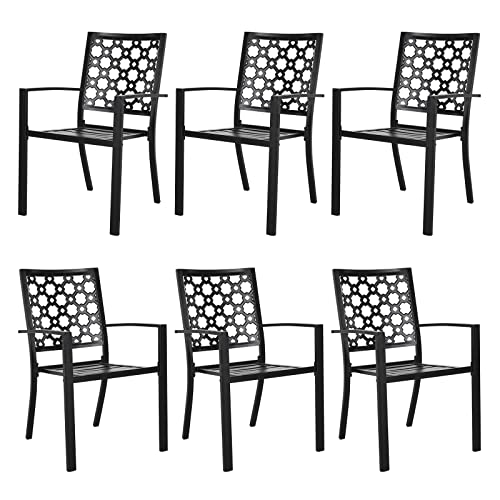
Steel offers a solid, heavyweight build that many people find reassuring. The key requirement is a weather-resistant coating — untreated steel rusts quickly outdoors. High-grade steel with a quality powder coat is durable and stable, making it a good fit for windy patios where lighter chairs might shift. These chairs are heavier to rearrange, which some owners prefer and others find inconvenient.
Teak and Hardwood
Teak is the classic premium choice. It weathers to a silver-gray patina if left untreated or keeps a warm honey tone with occasional oiling. Solid teak chairs are heavy, remarkably durable, and repairable. Look at teak garden chairs if you appreciate natural wood grain and are prepared for light seasonal maintenance. Less dense hardwoods may require more frequent sealing.
Resin Wicker and Rattan
All-weather resin wicker wraps a metal frame and delivers a woven, textured look that suits coastal, bohemian, and transitional styles. Modern resin wicker is engineered to resist fading and moisture. Browse all weather wicker outdoor dining chairs for examples of how this material performs across seasons. The weave can trap dust in crevices, so a quick rinse every few weeks keeps it looking fresh.
Plastic and Resin
Molded plastic and resin chairs sit at the entry-level tier. They are lightweight, easy to clean, and genuinely weatherproof. The trade-off is a shorter service life and a less refined look. For a set of six used mainly during summer weekends, they are a practical starter choice.
Material Quick Reference
- Aluminum: rust-resistant, lightweight, holds finish well — strong mid-range pick.
- Steel: solid build and stability, needs quality coating — ideal for windy spots.
- Teak: premium durability and natural beauty — long-term investment.
- Resin wicker: textured style with good weather resistance — check weave care.
- Plastic/resin: entry-level, weatherproof, easiest to clean.
Stackable vs. Fixed: Storage and Flexibility
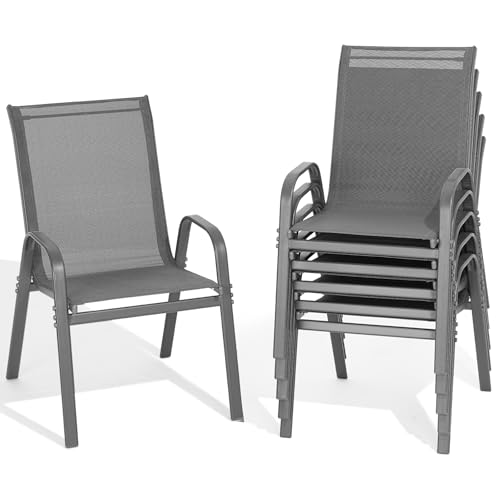
For a set of six, stackability is a practical consideration many buyers overlook. Stackable chairs let you nest four to six chairs into the footprint of one during winter storage or when you need open floor space for entertaining. Entry-level and mid-range stackable sets are widely available and work well for seasonal patios.
Fixed-frame chairs usually offer sturdier construction and more design variety, but they demand dedicated storage space off-season. If storage is tight, prioritize a stackable set. If your patio is covered and you leave chairs out year-round, fixed frames with weather-resistant coatings are perfectly viable. Related: stackable lawn chairs for lighter-duty alternatives.
Comfort Features That Actually Matter
Outdoor dining chairs are used for long, lingering meals, so comfort deserves real attention. Consider these elements when comparing sets of six:
- Seat height and depth: Standard dining height is around 17 to 18 inches at the seat. Deeper seats suit taller diners; shallow seats suit smaller frames.
- Contoured seats and backrests: A gently curved seat pan distributes weight better than a flat one, especially without cushions.
- Armrests: Armrests add comfort and help older guests rise from the table, but they can prevent chairs from tucking fully under the table.
- Cushion compatibility: If you plan to add cushions, verify the seat dimensions match standard cushion sizes. Quick-dry foam and solution-dyed fabrics resist mildew and fading best.
- Weight capacity and stability: Check manufacturer ratings and look for chairs with leveling feet or wider leg spans on uneven patio surfaces.
If you prefer a maintenance-light setup, our guide to outdoor furniture that doesn't need cushions explores designs with built-in comfort. For broader seating ideas, see outdoor patio dining set with swivel chairs to compare motion seating against fixed dining chairs.
Weather Resistance and Climate Considerations
How your chairs perform outdoors depends heavily on where you live. Match the material to your climate for the best results.
- Humid and coastal climates: Prioritize aluminum or resin wicker with rust-proof finishes. Salt air accelerates corrosion on steel unless the coating is high-grade.
- Hot, sun-intensive climates: Choose fade-resistant fabrics and powder-coated metal frames. Light-colored finishes stay cooler to the touch. Our guide to best outdoor furniture for hot climates goes deeper.
- Rainy and windy regions: Heavier steel frames resist tipping, and quick-drying materials prevent moisture buildup. Sloped seats help water run off.
- Cold winters: Stackable chairs that store indoors off-season preserve their finish. Teak handles freezing temperatures well when properly maintained.
Regardless of climate, use fitted covers during extended disuse and clean frames regularly to remove pollen, dust, and debris that trap moisture.
Quality Tiers: How Sets of Six Compare
Outdoor dining chairs generally fall into three broad quality tiers. Understanding what each tier delivers helps you align your set of six with your expectations.
| Tier | Typical Construction | Best For | Longevity Expectation |
|---|---|---|---|
| Entry-level | Molded plastic or thin aluminum frames, basic powder coating | Seasonal weekend use, renters, starter patios | Several seasons with basic care |
| Mid-range | High-grade aluminum or coated steel, resin wicker weave, reinforced joints | Year-round family use, covered patios, mixed climates | Many seasons with routine maintenance |
| Premium | Solid teak, heavy-gauge aluminum, commercial-grade welds, premium finishes | Full-sun exposure, coastal homes, design-forward patios | A decade or more with proper care |
Mid-range models usually offer the best balance for a set of six: smoother mechanisms, better coatings, and more consistent welds compared to entry-level chairs, without the premium tier's upkeep demands. If you want the widest choice, explore top outdoor furniture brands before finalizing your shortlist.
Matching Six Chairs to Your Table and Space
Chair dimensions must work with your table, not just your patio footprint. As a rule of thumb, allow 24 inches of table edge per diner and at least 30 inches between the table edge and walls or railings so chairs can slide out. Round tables of 60 inches and rectangular tables of 70 to 78 inches are the most reliable pairings for a set of six.
If your patio is compact, consider a 30 inch round patio table and chairs for a secondary bistro zone, or review outdoor lounge furniture for small spaces for layout ideas. For dedicated dining, a 9-piece outdoor dining set with umbrella hole shows how six chairs integrate with shade and table hardware.
Shade planning matters too. Six chairs arranged around a table need an umbrella sized to cover the full seating footprint — our 60 inch round patio table with umbrella hole guide explains how table and umbrella sizing interact.
Maintenance and Care for a Set of Six
Consistent care is the difference between a set that lasts several seasons and one that lasts a decade. A simple routine keeps six chairs looking sharp:
- Weekly: Wipe or rinse frames to remove pollen and dust; check for standing water after rain.
- Monthly: Clean crevices on wicker chairs with a soft brush; inspect bolts and tighten as needed.
- Seasonally: Apply teak oil to wood frames, touch up powder-coat chips on metal, and launder or store cushions.
- Off-season: Stack chairs indoors or cover tightly if they remain outdoors; remove cushions to prevent mildew.
For a deeper dive into protective products and seasonal routines, read our weatherproofing guide.
Common Mistakes to Avoid
- Buying chairs before measuring the table: Confirm seat height compatibility — standard dining chairs pair with standard dining tables, while counter or bar chairs need matching high-top tables.
- Ignoring storage reality: Six fixed chairs require considerable off-season space; stackable designs solve this.
- Overlooking wind: Light chairs on exposed patios tip in gusts; heavier frames or stackable designs with weighted bases perform better.
- Choosing style over coating quality: A beautiful finish fails fast without a rust-proof underlayer.
- Forgetting the umbrella: Six diners need real shade coverage, not a token parasol.
Frequently Asked Questions
What materials are best for an outdoor patio dining chairs set of 6?
Aluminum, teak, resin wicker, and high-grade steel are the most durable options. Aluminum resists rust and stays lightweight, teak ages gracefully, resin wicker combines style with weather resistance, and high-grade steel offers a solid build for heavier use.
Are stackable patio dining chairs a good choice for a set of 6?
Yes. Stackable chairs are excellent for a set of six because they simplify storage during off-season months and make cleaning the patio easier. Entry-level and mid-range stackable sets are widely available and well-suited for seasonal use.
How can I protect a set of 6 outdoor dining chairs from weather damage?
Choose chairs with rust-proof finishes and weather-resistant coatings, use fitted covers during long periods of disuse, and store cushions indoors. Regular cleaning and applying sealant to wood or metal frames will extend the lifespan of your set.
Do I need cushions for outdoor dining chairs?
Cushions add comfort for long meals but are not mandatory. Many chairs are designed with contoured seats that work well without cushions. If you prefer cushions, look for quick-dry foam and solution-dyed fabric that resist mildew and fading.
Final Checklist Before You Buy
- Measure your table and confirm standard dining seat height compatibility.
- Verify your patio can fit six chairs with 30-inch clearance around the table.
- Match the frame material to your climate and maintenance willingness.
- Decide between stackable and fixed based on off-season storage.
- Check weight capacity, leveling feet, and joint reinforcement.
- Plan shade coverage for the full seating footprint.
- Confirm warranty terms and return policy for the whole set.
With six well-chosen chairs, your outdoor dining area becomes the most-used room of the house during warmer months. Take your time comparing materials and configurations — then explore the recommended options below to find the set that fits your patio.