Outdoor Wood Table: The Complete Buying & Care Guide
Everything you need to choose a wooden patio table that fits your space, climate, and lifestyle — from wood species and construction to finishes, sizing, and long-term care.
Explore Wood TypesWhy an outdoor wood table deserves careful thought: A wooden patio table is one of the longest-lasting and most visually rewarding investments you can make for your backyard. Unlike metal or resin, wood brings warmth, natural grain, and a timeless character that blends with almost any outdoor design style.
However, not all wood is created equal. Species, grain, joinery, finish, and climate all influence how your table will age. This guide walks you through the key decisions so you can buy with confidence — whether you're furnishing a compact balcony, a family dining patio, or a large entertaining deck.
Best Wood Species for Outdoor Tables
The wood species is the single most important factor in durability, maintenance, and appearance. Here are the most common options, ranked by their general market positioning:
Teak
The gold standard for outdoor furniture. Teak contains natural oils that repel water and resist rot, insects, and UV damage. It weathers gracefully to a silver-gray patina if left untreated.
Best for: Long-term investment pieces and high-exposure patios.
Acacia
A dense, hard hardwood with striking grain patterns. Acacia is naturally water-resistant but benefits from periodic oiling. It's a popular choice for modern and rustic tables alike.
Best for: Style-focused buyers who want durability without the top-tier positioning of teak.
Eucalyptus
A fast-growing, sustainable hardwood with excellent density. Eucalyptus resists moisture well and takes finishes nicely. It can develop small surface cracks if left unsealed in dry climates.
Best for: Eco-conscious buyers seeking a durable mid-tier option.
Cedar
Naturally rot-resistant and lightweight, cedar offers a warm reddish-brown tone and a pleasant aroma. It's softer than teak or acacia, so it dents more easily, but it handles moisture well.
Best for: Covered patios and buyers who prefer a lighter, more traditional look.
Wood Species Comparison at a Glance
| Wood Species | Market Tier | Weather Resistance | Maintenance Level | Best For |
|---|---|---|---|---|
| Teak | Premium / Luxury | Excellent | Low | Long-term investment, high-exposure patios |
| Acacia | Mid-range to Premium | Very Good | Moderate | Style-driven buyers, modern and rustic tables |
| Eucalyptus | Mid-range | Very Good | Moderate | Sustainable sourcing, balanced performance |
| Cedar | Entry-level to Mid-range | Good | Moderate to High | Covered patios, traditional aesthetics |
Styles and Shapes for Every Patio
The shape and style of your outdoor wood table should match both your space and how you entertain. Here are the most common configurations:
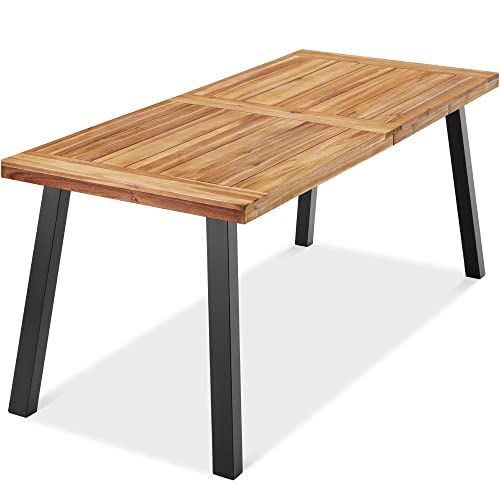
- Rectangular dining tables: The most versatile choice for family meals and gatherings. Look for models with an umbrella hole if you plan to add shade — a feature commonly found on outdoor wood dining tables with umbrella holes.
- Round and oval tables: Better for conversation and tighter spaces. An oval outdoor dining table softens the look of a rectangular patio and encourages eye contact among guests.
- Bar-height and high-top tables: Great for casual entertaining and smaller footprints. Pair them with matching stools for a cohesive look — similar to the setup found in wooden high-top table and chair sets.
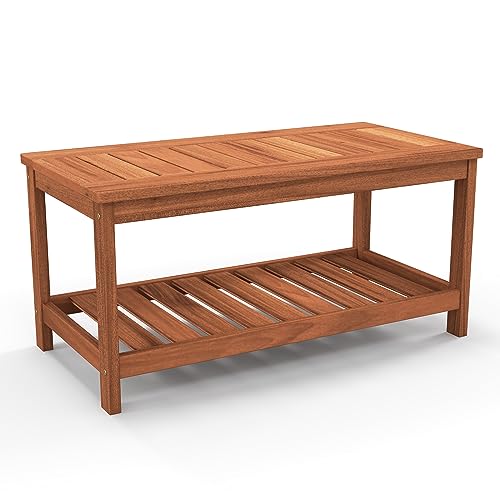
- Side and accent tables: A smaller outdoor wood side table is perfect for drinks, books, or a lantern beside a lounge chair.
- Benches and companion seating: Pair your table with a wooden outdoor bench for a relaxed, communal feel, or mix with chairs for flexibility.
Construction Details That Matter
Two tables made from the same wood species can differ dramatically in longevity. Pay attention to these construction cues:
- Joinery: Look for mortise-and-tenon or doweled joints on premium and luxury pieces. Screwed and bracketed joints are common on entry-level and mid-range tables but are more prone to loosening over time.
- Hardware: Stainless steel or galvanized hardware resists rust far better than standard steel. This is critical for coastal and humid climates.
- Slat spacing: Wider gaps drain water more effectively and reduce standing moisture on the tabletop.
- Finish: Factory-applied oil or water-based sealants offer better protection than untreated wood. Some premium tables use a UV-inhibiting topcoat to slow fading.
- Weight and stability: Heavier tables resist wind uplift better. For exposed patios, a wood fire pit or heavy table anchors the space visually and physically.
Caring for Your Outdoor Wood Table
With the right routine, a quality wooden table can last for many seasons. Follow these practical steps:
- Clean regularly: Wipe down with mild soap and water. Avoid harsh chemicals that strip natural oils.
- Oil or seal annually: Teak, acacia, and eucalyptus benefit from a fresh coat of appropriate oil once a year, especially before the outdoor season begins.
- Protect from standing water: Use coasters, and ensure the table surface has slight drainage or a breathable cover during heavy rain.
- Store cushions separately: A waterproof outdoor storage box for cushions keeps fabrics dry and prevents mildew.
- Winter protection: In harsh climates, cover the table with a breathable waterproof cover, or move it to a sheltered area. For electronics and accessories nearby, an outdoor weatherproof cabinet for electronics is a smart companion.
- Inspect hardware: Tighten bolts and check for rust at the start and end of each season.
Sizing Your Table to Your Space
Getting the size right is just as important as choosing the wood. As a rule of thumb:
- Allow 24–30 inches of clearance around the table for chairs to pull out comfortably.
- For four diners, a 36–48 inch round or a 60-inch rectangular table works well.
- For six diners, a 60–72 inch rectangular table or a 54–60 inch round table is a solid choice.
- For eight or more, consider a 84–96 inch rectangular table or an oval design.
If you're working with a compact area, a small patio layout guide can help you map the space before you buy. For larger open patios, an outside patio design overview will help you plan zones for dining, lounging, and cooking.
Coordinating Your Outdoor Wood Table With the Rest of Your Patio
A wood table rarely stands alone. Consider these pairings to create a cohesive outdoor room:
- Seating: Wicker and wood are a classic combination. Browse outdoor wicker chairs or a full wicker dining chair set of 6 for a natural, textured look.
- Shade: Pair your table with a patio umbrella that fits your table's umbrella hole, or opt for a umbrella with LED lights and stand for evening ambience.
- Storage: Keep cushions and accessories organized with an outdoor vertical storage cabinet or a waterproof storage box with wheels.
- Ambiance: A wood fire pit or a conversation set with a fire pit table extends the usable hours of your patio into the evening.
- Comfort: Add outdoor pillows and cushions to soften wooden seating and tie the color palette together.
Protecting Your Wooden Table Year-Round
Wood is a living material that responds to humidity, sun, and temperature changes. A proactive approach to care will keep your table looking its best:
- Use a waterproof material for garden furniture covers rather than non-breathable plastic, which can trap moisture and encourage mold.
- In coastal areas, rinse salt spray off the table regularly and inspect metal hardware for corrosion.
- Sand minor scratches with fine grit and re-oil to blend the finish.
- For heavy-use tables, consider a professional-grade or commercial-grade sealant for maximum protection.
Frequently Asked Questions About Outdoor Wood Tables
What is the most durable wood for an outdoor table?
Teak is widely considered the most durable wood for outdoor tables because of its natural oils and tight grain. Acacia, eucalyptus, and cedar are also excellent choices, each offering different balances of hardness, weather resistance, and maintenance needs.
Does an outdoor wood table need to be sealed?
It depends on the wood species and the finish you want. Teak can be left untreated to develop a silver-gray patina, while acacia and eucalyptus benefit from periodic oiling or sealing. Cedar is naturally rot-resistant but still benefits from a protective finish to extend its life.
How do I protect my wooden patio table in winter?
Clean and dry the table thoroughly, apply a fresh coat of oil or sealant if recommended for the species, and use a breathable, waterproof cover. In harsh climates, storing the table indoors or in a sheltered area is the safest option.
Can an outdoor wood table stay outside all year?
Yes, most outdoor wood tables are designed to stay outside year-round, but performance depends on the species and finish. Teak and cedar handle the elements best, while acacia and eucalyptus require more consistent maintenance to prevent cracking and fading.
Ready to Choose Your Outdoor Wood Table?
Compare top-rated wood tables, styles, and coordinating pieces to complete your patio. Explore our recommended picks below and find the perfect centerpiece for your outdoor space.
View Recommended Wood Tables