Plastic Bench That Turns Into a Picnic Table: What to Know Before You Choose
A single piece of outdoor furniture that adapts to your day — a bench for everyday lounging, a full picnic table when friends and family arrive. Here is how convertible plastic designs actually work and what to check before you commit.
Explore the GuideWhy this guide exists: Convertible outdoor furniture sounds simple in a product listing, but the difference between a design that lasts for seasons and one that rattles after a month usually comes down to hinge quality, resin density, and locking mechanism design. This guide walks you through the mechanics, the materials, and the practical trade-offs so you can evaluate any model with confidence.
How a Convertible Plastic Bench Actually Works
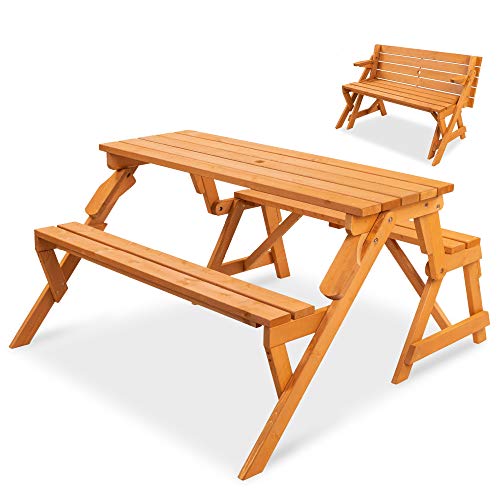
The core idea behind a plastic bench that turns into a picnic table is a folding panel system built around a central frame. In bench mode, two large panels sit vertically as a backrest and horizontally as the seat surface. A locking bar or latch keeps the panels rigid so the unit behaves like a standard outdoor bench.
To convert, you release the locking mechanism and rotate the panels outward. The backrest panel swings down and outward to become one side of the tabletop, while the seat panel unfolds to form the opposite side. The two side benches — which were folded underneath in bench mode — drop into place as seating. The result is a complete picnic table setup with integrated benches on both sides.
Most models use a pin-and-slot latch or a spring-loaded clip. Premium designs add a secondary safety lock that prevents accidental folding while the table is loaded. Entry-level models often rely on a single friction latch, which is the first component to wear over time. When comparing options, look for metal-reinforced hinges rather than all-plastic pivot points — this is the single most important structural detail.
Materials: What "Plastic" Really Means
Not all plastic outdoor furniture is built the same. The term covers several distinct materials, and the choice affects weight, UV resistance, and how the bench feels in daily use.
High-Density Polyethylene (HDPE)
HDPE is the benchmark for durable plastic outdoor furniture. It is dense, does not absorb moisture, and holds color well when UV stabilizers are added. HDPE benches feel solid rather than hollow and resist cracking in cold weather. This is the material used in premium and mid-range convertible models.
Reinforced Resin
Resin blends are common in entry-level and mid-tier picnic tables. They are lighter than HDPE and easier to move, but thinner panels can flex under weight. Quality resin models include fiberglass or mineral reinforcement that improves rigidity. If you choose a resin model, check the wall thickness of the tabletop panels — thicker is better.
Polypropylene
Polypropylene is lightweight and resistant to moisture, often used for folding mechanisms and secondary components. It is less UV-stable than HDPE on its own, so it is usually combined with stabilizers or used in non-structural parts. A table made primarily of polypropylene is best suited to occasional use and covered storage.
For a broader look at how these materials compare across outdoor furniture categories, the plastic and resin furniture guide covers durability, maintenance, and long-term performance in more detail.
Convertible Bench Tiers Compared
Convertible plastic picnic tables fall into three broad market tiers. Use this table to understand what each tier typically delivers and which one matches your intended use. No numeric figures are shown because construction quality, not a specific figure, is what determines long-term satisfaction.
| Tier | Frame & Hinge | Best For | Typical Lifespan |
|---|---|---|---|
| Entry-Level | All-plastic hinges, single friction latch, thinner panels | Occasional use, renters, seasonal setups | One to two seasons with careful storage |
| Mid-Range | Metal-reinforced hinges, dual latch, thicker resin panels | Regular family use, covered patios, weekend hosting | Three to five seasons with routine care |
| Premium | Stainless or powder-coated steel hinges, secondary safety lock, HDPE panels | Year-round outdoor exposure, frequent entertaining, heavy use | Five or more seasons with basic maintenance |
A mid-range model usually offers the most balanced combination of smooth folding action, panel rigidity, and weather resistance. Entry-level designs are a reasonable starting point if the bench will be stored indoors between uses. Premium models make sense when the piece will live outdoors permanently and be used often.
Advantages and Trade-Offs of Convertible Designs
What Works Well
- One footprint serves two functions — a bench and a full picnic table
- Ideal for small decks, balconies, and patios where space is limited
- No separate storage needed for a second piece of furniture
- Plastic surfaces wipe clean and resist stains from food and drinks
- Most models are lightweight enough for one person to reposition
- Weather-resistant materials handle rain and sun without rust
What to Watch For
- Hinges are the weakest point — quality varies widely between tiers
- Folding mechanisms add weight compared to a fixed bench
- Thin resin panels can flex under heavier users
- Some designs require two people to convert smoothly
- Prolonged direct sun can fade lower-grade plastic over time
- Snow and ice loads should be removed before folding
Where a Convertible Bench Makes the Most Sense
The convertible format shines in specific settings. Matching the product to the environment is the fastest way to avoid disappointment.
Small Decks and Balconies
A bench that becomes a table frees up floor space for planters or a small side table. When the table is not needed, the unit returns to a compact bench profile that does not dominate the area.
Casual Family Dining
Weekend lunches, birthday gatherings, and everyday meals are the natural use case. The integrated bench seating keeps the setup stable and encourages everyone to sit together.
Rental Properties and Cabins
One piece of furniture that covers two needs is easier to store, transport, and maintain. Plastic construction tolerates occasional neglect better than wood or metal frames.
Camping and Tailgating
Folding models that lock flat are portable enough for vehicles with cargo space. Look for built-in handles and a compact folded profile if portability matters.
If the primary goal is traditional picnic seating without conversion, a dedicated folding picnic table that converts into a bench or a standard plastic picnic table may be a simpler fit. The convertible format is most valuable when you genuinely need both modes on a regular basis.
Features to Check Before You Commit
- Hinge construction: Metal-reinforced or stainless hinges last far longer than all-plastic pivots. Check that the hinge is riveted or bolted, not molded into the panel.
- Locking mechanism: A dual-latch or secondary safety lock prevents accidental folding. Test that the latch engages firmly in both bench and table modes.
- Panel thickness: Thicker tabletop and seat panels resist flex. A panel that bows under moderate weight will worsen over time.
- Weight rating: Confirm the per-bench and total load rating. Premium and mid-range models typically publish clearer ratings than entry-level listings.
- UV stabilization: Look for explicit UV-stabilized resin or HDPE. Unstabilized plastic fades and becomes brittle after prolonged sun exposure.
- Folded footprint: Measure the folded dimensions against your storage area or vehicle cargo space if portability matters.
- Assembly requirements: Most models need some assembly. Check whether hinges arrive pre-installed or require alignment during setup.
- Drainage and surface texture: A slightly textured surface reduces slipping when wet. Slatted or channeled designs drain better than flat panels.
Care and Maintenance for Long-Term Performance
Plastic convertible benches are low-maintenance, but the folding mechanism needs periodic attention to stay smooth. A few simple habits make a meaningful difference.
- Rinse the hinge area with clean water every few weeks to remove grit that accelerates wear.
- Apply a silicone-based lubricant to metal hinges once per season — avoid oil-based products that attract dust.
- Wipe food and drink spills promptly to prevent staining on textured surfaces.
- Store the unit folded and covered during extended off-season periods, or use a fitted cover.
- Clear snow and ice before attempting to fold or unfold the table.
- Inspect latches and locking pins at the start of each season for looseness or corrosion.
For broader guidance on protecting outdoor furniture through the seasons, the weatherproofing guide covers covers, sealants, and storage strategies in more depth. A patio storage box is also a practical companion for storing cushions or small accessories when the table is in bench mode.
Common Mistakes Buyers Make
Most frustrations with convertible picnic tables trace back to a small number of avoidable decisions. Keeping these in mind will save time and disappointment.
- Choosing purely on folded dimensions without checking the unfolded table size against the available space.
- Overlooking hinge quality because the panels and color look good in the listing photos.
- Leaving the unit permanently exposed to harsh sun without UV-stabilized materials or a cover.
- Assuming all plastic materials behave the same — HDPE, resin, and polypropylene differ significantly.
- Skipping the weight rating check, then discovering the bench flexes under heavier users.
- Storing the unit folded while wet, which traps moisture around hinges and latches.
Ready to Compare Convertible Options?
Browse our curated selection of plastic benches that turn into picnic tables, organized by tier and use case, so you can evaluate features side by side.
Explore Plastic BenchesFrequently Asked Questions
How does a plastic bench that turns into a picnic table work?
Is a plastic convertible picnic table sturdy enough for everyday use?
Can a plastic bench that turns into a picnic table stay outside year-round?
How many people can a convertible plastic picnic table seat?
Is assembly difficult for a folding plastic picnic table?
What is the main difference between HDPE and resin convertible benches?
For related outdoor seating and dining options, browse our guides on picnic benches, plastic folding picnic tables with benches, and picnic tables that turn into two benches to compare convertible formats across categories.