Picnic Table That Turns Into Two Benches: Complete Buying Guide
One piece of furniture, two configurations. Learn how convertible picnic tables work, what to look for, and how to choose the right model for your backyard, deck, or campsite.
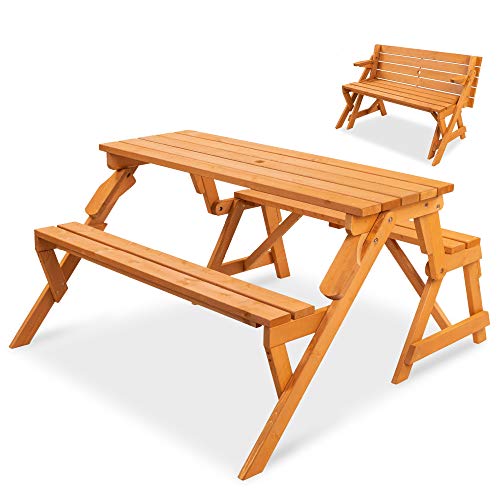
A picnic table that turns into two benches solves a common outdoor problem: limited space and the need for flexible seating. Instead of storing a fixed table and separate benches, a single convertible unit adapts to the occasion. In table mode, it handles meals, games, and group gatherings. In bench mode, it opens up floor space and provides casual seating for smaller groups or quiet afternoons.
This guide explains the conversion mechanism, compares materials and tiers, and walks through the practical details that matter before you commit. If you are still weighing fixed versus folding designs, the broader picnic table guide covers the full category, while this page focuses specifically on the two-in-one bench conversion.
How a Convertible Picnic Table Works
The core of any picnic table that turns into two benches is its hinge and locking system. The tabletop is typically split into two panels, and each panel is hinged to a bench seat. When the locking pins or latches are released, the tabletop panels fold downward, and the bench seats rotate outward until they rest flat on the ground as independent benches.
The reverse motion restores the table. Most designs use steel or aluminum hinges with locking pins, while premium models add spring-loaded latches and reinforced brackets at stress points. The smoother the mechanism, the less effort it takes to convert, and the longer the hardware holds up to repeated use.
Two configuration styles dominate the market:
- Fold-down tabletop design: The top folds down between the benches, and the benches slide or rotate outward. This is the most common and compact style.
- Swing-out bench design: The benches pivot outward on hinged arms while the tabletop stays fixed or drops slightly. This style often feels more stable in bench mode.
If you want to compare the folding variant specifically, the picnic table that folds into a bench page covers a related single-bench design. For the classic fixed setup, the picnic bench guide is a useful reference point.
Materials and Build Tiers
Convertible tables fall into three broad tiers. The tier reflects build quality, hardware durability, and material grade rather than any specific figure. Use these tiers to match a model to your intended use.
Entry-Level Tier
Usually resin or lightweight plastic with basic pin hinges. These models convert with more effort and have simpler locking hardware. Best for occasional use, small patios, and buyers who need a portable option. Good value for its tier when the hinge system is reinforced.
Mid-Range Tier
Often aluminum frames with composite tops or treated wood. The hinge mechanism is smoother, with spring latches and better stress-point reinforcement. A solid choice for regular family use. Mid-range models usually offer a more refined conversion motion than entry-level units.
Premium Tier
HDPE, cedar, or teak with heavy-duty stainless hardware. These models feel solid in both modes, resist weather well, and carry longer structural coverage. Best for year-round outdoor use and households that convert the table frequently. A long-term investment for a permanent patio.
Material choice matters as much as tier. Wood gives a classic look and a solid build but needs periodic sealing. HDPE resists rot, insects, and fading with almost no maintenance. Aluminum is lightweight and rust-resistant, which makes it a natural fit for portable or folding designs. For a deeper comparison of synthetic versus natural surfaces, the plastic and resin materials guide explains the trade-offs.
What to Look For Before You Buy
Conversion tables are only as good as their weakest component, which is almost always the hinge. Check these features before committing:
- Locking mechanism: Look for locking pins or latches that engage with a clear click. A table that shifts or wobbles in either mode is a safety concern.
- Hinge material: Stainless steel or powder-coated steel resists rust. Cheap zinc-plated hinges corrode quickly in humid climates.
- Weight and portability: A convertible table is heavier than a fixed bench because of the hardware. If you plan to move it often, aluminum frames are lighter than solid wood.
- Seating capacity: Standard models seat four to six in table mode and two to three per bench in bench mode. Measure your space and your usual group size.
- Surface finish: A weather-resistant coating or sealed top prevents moisture absorption and makes cleaning easier.
- Storage footprint: In bench mode, the unit takes up less floor space, which is the main advantage for small decks and balconies.
For small spaces, pair the convertible table with a compact layout plan. The small deck table and chairs guide has measurement tips that apply directly to bench-mode setups. If shade is part of your plan, review patio shade options before finalizing placement, since a convertible table needs clearance to fold open.
Space Planning and Placement
A picnic table that turns into two benches needs clearance on both sides for the benches to swing or slide outward. Leave at least two feet of open space on each side in bench mode. In table mode, allow room for people to sit and pull their legs in and out.
On a deck, place the table away from railings so the benches have room to unfold. On grass or gravel, check that the bench feet sit level; uneven ground can stress the hinges when the unit is converted. If your patio surface is stone or pavers, the paver patio guide covers surface prep that helps furniture sit flat.
Storage is another consideration. In bench mode, the folded unit is narrow and easier to tuck against a wall or under a cover. A patio storage box nearby keeps cushions and small accessories organized when the table is in its compact form.
Best Use Cases for a Convertible Table
The two-in-one format suits several outdoor scenarios:
- Small patios and balconies: Switch to bench mode when the table is not in use to free up walking space.
- Family backyards: Table mode for meals, bench mode for kids' activities or reading corners.
- Campsites and RVs: A portable convertible table replaces two separate pieces of gear.
- Entertaining: Bench mode creates casual lounge seating around a fire pit or garden.
If you entertain often, the picnic chairs guide explains how to mix bench seating with individual chairs for larger groups. For a fixed alternative with a classic look, compare the standard picnic table format.
Care and Maintenance
Convertible tables need slightly more attention than fixed benches because of the moving parts. Keep the hinges clean and lubricate them once or twice a season with a silicone spray. Inspect locking pins for wear and replace them if they no longer engage firmly.
Wood models should be resealed annually to prevent moisture damage. HDPE and aluminum models need only a rinse with mild soap. During winter or long off-seasons, cover the table or store it in a dry spot. If you plan to leave it outside year-round, the weatherproofing guide covers protective coatings and covers in detail.
Frequently Asked Questions
How does a picnic table that turns into two benches work?
A convertible picnic table uses a hinged or folding mechanism. The tabletop and bench panels are connected with locking hinges. When unlocked, the tabletop folds down and the bench seats fold outward, splitting the unit into two separate benches. Reversing the motion restores the full table configuration.
What materials are best for a convertible picnic table?
Pressure-treated wood, cedar, and weather-resistant HDPE are the most common materials. Wood offers a classic look and solid build, while HDPE resists rot, insects, and fading. Aluminum frames with composite tops are a lightweight mid-range option that balances durability and portability.
Can a convertible picnic table stay outside year-round?
Most weather-resistant models can remain outdoors year-round, but protection extends their lifespan. Use a fitted cover during off-seasons, inspect hinges and locking mechanisms for rust, and apply a sealant to wood models annually. HDPE and aluminum models require the least maintenance.
How many people can sit at a picnic table that turns into two benches?
In table mode, a standard convertible picnic table seats four to six adults. In bench mode, each separated bench typically seats two to three people, so the two benches together accommodate the same four to six people with more relaxed spacing.