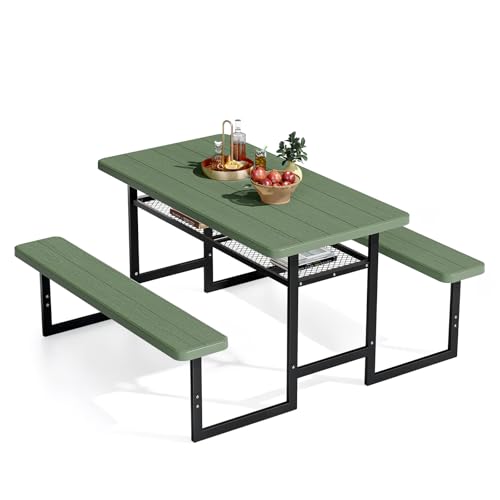
Picnic Table Buying Guide: Sizes, Materials & Styles
Everything you need to choose the right picnic table for your backyard, deck, or garden. Compare materials, seating capacities, folding designs, and umbrella-ready options before you decide.
Start the GuideWhy a picnic table belongs in every outdoor space: A picnic table is one of the most versatile pieces of outdoor furniture you can own. It serves as a dining table, a workspace, a game station, and a gathering point for family and friends. Unlike a standard patio table, the integrated bench seating makes it self-contained — no separate chairs required. This guide walks you through the key decisions: material, size, seating style, portability, and shade, so you can pick a model that fits your space and your lifestyle.
Why a Picnic Table Is a Smart Outdoor Investment
A picnic table delivers a combination of function and durability that few other outdoor furniture pieces match. Because the benches are attached to the table frame, everything stays aligned and stable — even on uneven grass or gravel. That makes picnic tables ideal for lawns, campsites, orchards, and casual backyard setups where a formal patio table might feel out of place.
Beyond dining, a picnic table doubles as a prep surface for outdoor cooking, a craft table for kids, and a sturdy base for board games and cards. Many families treat it as the social anchor of the yard — the place where summer meals, birthday parties, and evening conversations happen. If you are building out a broader outdoor living area, it pairs naturally with a picnic bench or a patio swing for relaxed seating nearby.
From a practical standpoint, picnic tables are also easy to maintain and easy to store when the season ends. Folding and convertible designs collapse flat, which makes them a smart choice for garages, sheds, and small decks. That flexibility is why they remain one of the most popular categories in outdoor furniture year after year.
Picnic Table Materials Compared
The material you choose affects weight, maintenance, lifespan, and how the table looks in your space. Here is how the main options compare.
Wood Picnic Tables
Wood is the classic picnic table material and remains a favorite for good reason. A solid wood table offers a warm, natural look that fits rustic, farmhouse, and traditional patio styles. Cedar, pine, and fir are common, with cedar being the most rot-resistant of the group. High-end tier wooden tables often use thicker boards, galvanized hardware, and sealed joinery for long-term outdoor exposure.
The trade-off is maintenance. Wood needs periodic sealing or staining to resist moisture, UV fading, and insects. If you are willing to commit to an annual touch-up, a wooden picnic table can last many seasons and develop a pleasing weathered character. If you prefer a hands-off approach, consider a plastic outdoor furniture that looks like wood as a low-maintenance alternative.
Plastic and Resin Picnic Tables
Plastic and high-density polyethylene (HDPE) picnic tables are the practical choice for year-round outdoor use. They resist rot, rust, insects, and moisture, and they wipe clean with soap and water. Entry-level and mid-range plastic models are lightweight and easy to move, while premium resin tables use thicker walls, UV-stabilized color, and reinforced legs for a more solid build.
A popular subcategory is the plastic picnic table, which often comes in folding configurations. These are excellent for families who need flexible seating that can be stored away in winter. If you want the convenience of plastic but prefer a more traditional silhouette, a plastic outdoor furniture set may also fit your needs.
Metal Picnic Tables
Powder-coated steel and aluminum picnic tables offer heavy-duty strength and a modern look. They are common in commercial settings, parks, and public spaces because they resist vandalism and heavy use. For residential use, a metal table is a strong pick if you want a permanent fixture that will not blow over in wind. Look for rust-proof finishes and sealed welds if the table will be exposed to rain.
Metal tables can get hot in direct sun, so pairing them with a shade solution is wise. A picnic table with umbrella or a nearby patio shade structure keeps the surface comfortable during summer afternoons.
Material Comparison at a Glance
| Material | Market Tier | Best For | Maintenance | Weight & Portability |
|---|---|---|---|---|
| Wood (Cedar / Pine) | Entry-level to premium | Rustic yards, campsites, traditional homes | Annual sealing or staining | Moderate to heavy |
| Plastic / Resin (HDPE) | Entry-level to mid-range | Families, small decks, seasonal use | Wipe clean; no sealing | Light to moderate |
| Powder-coated Steel | Mid-range to commercial-grade | Permanent setups, windy areas, heavy use | Occasional cleaning; check for chips | Heavy; not easily moved |
| Aluminum | Mid-tier to premium | Modern patios, poolside, humid climates | Low; rust-resistant | Light to moderate |
Choosing the Right Size Picnic Table
Size is the single most important decision after material. A table that is too small forces guests to squeeze in; a table that is too large overwhelms a small deck. Use this guide to match capacity to your space and typical guest count.
Standard Sizes and Seating Capacity
| Table Length | Typical Seating | Best For |
|---|---|---|
| 4 feet | 4 adults | Small decks, balconies, kids' tables |
| 6 feet | 6 adults | Standard family backyard use |
| 8 feet | 8 adults | Large families, entertaining, group gatherings |
When to Choose a Smaller or Larger Model
If your outdoor area is compact, a four-foot table or a folding design makes more sense than a full-size model. A picnic table that folds into a bench is especially useful for small patios because it collapses into a narrow footprint. For larger yards and frequent entertaining, an eight-foot table gives you room to seat a full group without pulling out extra chairs.
Another option is a convertible design — a picnic table that turns into two benches — which gives you flexible seating arrangements for parties, movie nights, or yard games. These are well-suited to households that host often but do not want a permanent large table.
Picnic Table Styles and Configurations
Picnic tables come in several configurations, each with a distinct use case. Choosing the right style depends on how often you will move the table, whether you need shade, and how much storage space you have.
Standard A-Frame Tables
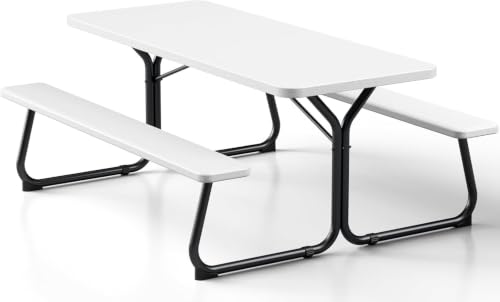
The classic A-frame picnic table features angled legs and attached benches on both sides. It is the most stable design and the most common choice for permanent backyard setups. Standard A-frame tables are available in wood, plastic, and metal, and they handle uneven ground better than most other styles.
Folding Picnic Tables
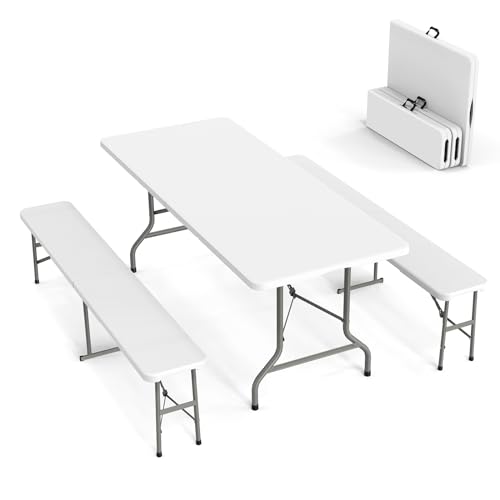
Folding tables collapse flat for storage and transport. They are ideal for camping, tailgating, and households that need to reclaim deck space in the off-season. A plastic folding picnic table with benches is a popular choice because it is lightweight, weather-resistant, and easy to set up. If you need a table that doubles as a bench, look at convertible folding models.
Picnic Tables with Umbrella Holes
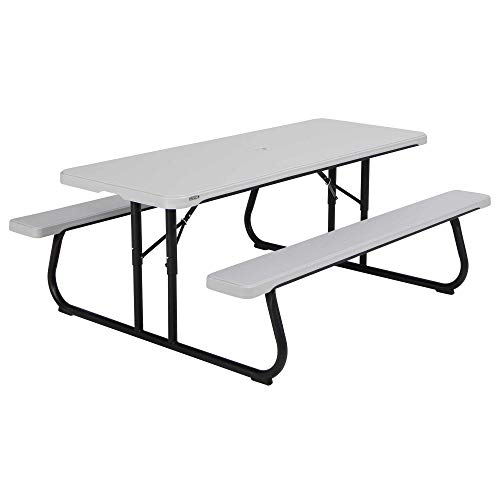
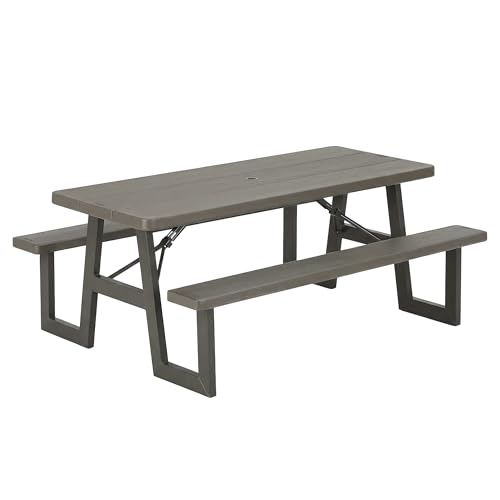
An umbrella hole lets you add shade without a separate freestanding base. This is a major advantage if your table sits in full sun with no trees nearby. When shopping, check the hole diameter — most standard umbrellas use a 1.5-inch to 2-inch pole, and you will want a matching base for stability. A picnic table with umbrella is a convenient all-in-one solution, while a table with a pre-drilled hole pairs well with a patio umbrella with weighted base included.
Convertible and Space-Saving Designs
Convertible tables are designed for flexibility. Some fold into a bench; others split into two benches; some include storage compartments under the seats. A plastic bench that turns into a picnic table is a smart pick for small yards, garages, and apartments with balconies. These designs are typically mid-range in market position and offer good value for their tier if you need multi-use furniture.
Shade, Comfort, and Accessories
A picnic table is more enjoyable when it is comfortable and shaded. Consider these add-ons as part of your overall setup.
- Umbrella or shade sail: Essential for tables in open sun. A table with an umbrella hole simplifies the setup, and a weighted base keeps the umbrella stable in breeze.
- Cushions: Bench pads and backrest cushions make long meals more comfortable, especially for older guests. Look for quick-dry foam and fade-resistant fabric.
- Table covers: A fitted cover protects the surface from pollen, bird droppings, and rain when the table is not in use.
- Lighting: String lights or a small lantern hung above the table extend usable hours into the evening.
- Side table or serving cart: A small patio side table keeps drinks and condiments off the main surface.
If your picnic table sits on a patio rather than grass, an outdoor rug underneath helps define the dining zone and keeps feet comfortable. And if you plan to serve meals family-style, a lazy Susan or a patio table lazy Susan with umbrella hole can make passing dishes much easier.
Picnic Table Buying Checklist
Before you commit to a model, run through this checklist to make sure it fits your space and routine.
- Measure your space: Confirm table length plus 3 feet of clearance on all sides.
- Decide on seating capacity: Match table length to your typical guest count, not your maximum.
- Choose material based on maintenance tolerance: Wood for classic looks with upkeep; plastic or aluminum for low-maintenance durability.
- Check the weight: Heavy tables stay put in wind but are hard to move; folding tables trade stability for portability.
- Plan for shade: Choose a table with an umbrella hole if your yard lacks natural shade.
- Confirm storage: If you will store the table in winter, verify the folded dimensions fit your garage or shed.
- Inspect hardware and finish: Look for galvanized or stainless hardware on wood tables, and rust-proof coatings on metal tables.
- Review the warranty: A longer warranty often signals a more durable build, especially for resin and metal models.
Placement and Care Tips
Where you place your picnic table matters as much as which one you choose. On grass, set the table on a level patch or add a gravel pad to prevent sinking. On a deck, use furniture pads under the legs to protect the surface. On a patio, a patio stone base or a set of paver stones can create a stable, defined footprint.
For care, follow the material-specific guidance: reseal wood annually, wipe plastic with mild soap, and touch up metal chips promptly to prevent rust. In winter, store folding tables indoors and cover permanent tables with a breathable cover. If you want to extend the life of adjacent furniture, a patio storage box is a handy place to keep cushions and small accessories dry.
Frequently Asked Questions
What size picnic table seats eight people?
An eight-foot rectangular picnic table with attached benches typically seats eight adults comfortably, with four on each side. Six-foot models generally seat six, while four-foot models work best for four people or small spaces.
Is wood or plastic better for a picnic table?
Wood offers a classic look and solid build but requires periodic sealing and maintenance. Plastic and resin models resist rot, insects, and moisture with minimal upkeep, making them a practical choice for year-round outdoor exposure.
Can a picnic table fold into a bench?
Yes. Convertible designs fold flat into a bench for compact storage, and some models transform into two separate benches. These are ideal for garages, small decks, and seasonal use.
Do picnic tables need an umbrella hole?
An umbrella hole is useful if the table sits in full sun without natural shade. Pair it with a weighted umbrella base for stability. If your table lacks a hole, a freestanding umbrella or a shade sail can provide coverage instead.