Picnic Table With Umbrella: The Complete Buying Guide
Everything you need to choose a shaded picnic table that fits your backyard, patio, or garden — from umbrella compatibility and table materials to seating capacity and long-term care.
Why a picnic table with umbrella? A picnic table with an integrated umbrella hole combines two backyard essentials in one footprint: a gathering place for meals and a source of reliable shade. For families who entertain outdoors, it eliminates the need for separate shade structures and keeps the table usable through midday sun. This guide walks you through the decisions that matter most so you can buy with confidence.
What to Know Before You Buy
A picnic table with umbrella is more than a table plus a canopy. The umbrella hole, table proportions, and material finish all work together to determine how comfortable and durable the setup will be. Buyers researching this category typically already know they want a shaded outdoor dining surface; the remaining questions are about fit, material, and umbrella pairing.
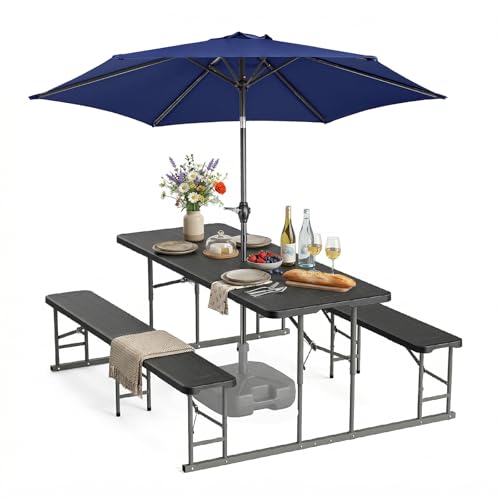
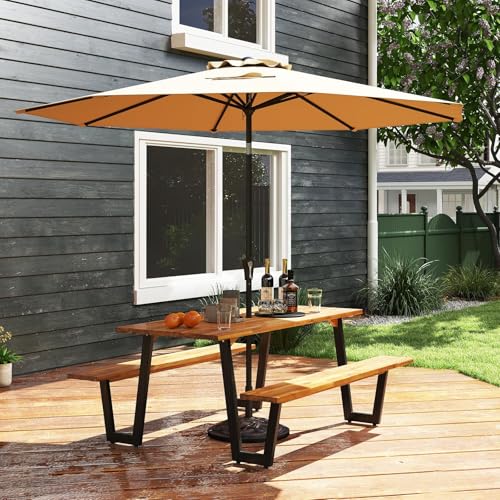
The most common configuration is a rectangular table with an integrated center hole that accepts a standard umbrella pole. Some models include a stabilizing collar or a built-in base, while others rely on the tabletop alone. If you plan to leave the umbrella up for extended periods, a weighted base is a worthwhile addition — browse patio umbrella bases to understand your options. For tables without a pre-drilled hole, a patio table with umbrella hole is the alternative route, though picnic tables are purpose-built for this use.
Shade coverage is the next consideration. A 7-foot to 9-foot canopy is typical for a standard six-foot picnic table, while larger tables may warrant a 9-foot to 11-foot umbrella. The table's hole diameter matters too: most accept 1.5-inch to 2-inch poles, but not all are universal. Confirm both measurements before pairing a table with a canopy.
Picnic Table Materials Compared
Material choice affects weight, maintenance, weather resistance, and the overall look of your outdoor space. The table below summarizes the main options using quality-tier descriptors rather than numeric figures.
| Material | Best For | Durability Tier | Maintenance Level |
|---|---|---|---|
| Pressure-Treated Wood | Classic look, natural warmth, DIY-friendly | Essential tier to mid-tier | Seasonal sealing recommended |
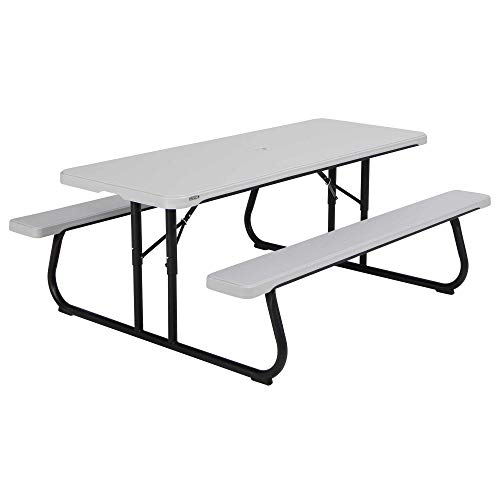
| High-Grade Resin / Plastic | Low-maintenance family use, all-weather exposure | Mid-tier to high-end tier | Wipe-down cleaning only |
| Powder-Coated Steel | Heavy-duty use, commercial-grade settings | High-end tier to commercial-grade | Occasional inspection for rust |
| Aluminum | Portability, rust-proof finish, modern styling | Premium to luxury tier | Minimal; wipe clean as needed |
| Recycled Plastic Composite | Eco-conscious buyers, long-term investment | Premium tier | Low; UV-stable finishes resist fading |
If you are comparing across the broader category, the picnic table guide covers structural differences in more depth, while plastic picnic tables are worth exploring if low maintenance is your priority. For buyers who want a table that doubles as seating when not in use, picnic table that folds into a bench is a useful reference point.
Pairing the Right Umbrella
The umbrella is the defining feature of this setup, so it deserves as much attention as the table itself. Three factors matter most: canopy size, pole diameter, and stability.
Canopy Size
Match the canopy to the table footprint. A 7-foot to 9-foot umbrella suits most six-foot tables; larger tables need a 9-foot to 11-foot canopy for full coverage.
Pole Diameter
Confirm the table hole diameter and the umbrella pole diameter. Most tables accept 1.5-inch to 2-inch poles, but variance exists across brands.
Stability
A weighted base or stabilizing collar keeps the umbrella upright in breezy conditions. For exposed yards, a patio umbrella that won't blow over is the safer choice.
If you are selecting an umbrella separately, the patio table umbrella guide covers fabric grades and tilt mechanisms. Buyers who want a complete matched set may prefer a patio table and chair set with umbrella over a picnic-style bench configuration. For a dedicated picnic setup, a picnic table with umbrella remains the most cohesive option.
Heavy-duty umbrellas are worth considering in windy regions — see patio umbrella heavy duty for construction details. If you plan to move the table periodically, a lighter aluminum pole and a portable base simplify repositioning.
Sizing and Seating Capacity
Picnic tables with umbrella holes come in several footprints, and the right size depends on how many people you regularly seat and how much room your yard or patio allows.
- Standard rectangular tables typically seat four to six adults and pair naturally with a 7-foot to 9-foot umbrella.
- Large rectangular tables seat six to eight and benefit from a 9-foot to 11-foot canopy for balanced shade.
- Octagonal and round tables seat six to eight with more even shade distribution and easier conversation flow.
- Compact tables suit four adults or two adults with children, ideal for small decks and patios.
Measure the table's length and width against your available space, and account for bench pull-out room. On smaller patios, a patio table and chairs for small deck may be a better fit than a full-size picnic table. If you are seating a crowd, picnic tables for sale often includes larger configurations worth comparing.
Setup and Placement Checklist
Before your first use, confirm the following:
- Table is level and benches are secure before installing the umbrella.
- Umbrella pole passes cleanly through the table hole without forcing.
- A weighted base or stabilizing collar is in place for windy locations.
- Canopy fabric is fully opened and secured with the locking pin or crank.
- Table is positioned to avoid overhanging branches or low rooflines.
- Seating clearance allows guests to move without tripping over bench supports.
- Umbrella is closed or removed during high winds and off-season storage.
- Wood tables receive a protective sealant before the first wet season.
Care and Maintenance
Longevity depends as much on care as on the original build quality. Resin and aluminum tables need little beyond periodic wiping, while wood tables benefit from an annual sealant refresh. Umbrellas should be closed when not in use for extended periods and stored during the off-season to protect the fabric and frame.
For broader maintenance guidance, the outdoor care section covers cleaning routines and protective covers. If you plan to leave the table outdoors through winter, a fitted cover protects both the tabletop and the umbrella mechanism.
Choosing by Quality Tier
Rather than shopping by numeric figures, it helps to think in tiers. The table below maps common buyer profiles to a quality tier and the features that typically define it.
| Buyer Profile | Recommended Tier | Typical Features |
|---|---|---|
| Occasional weekend use, first outdoor table | Entry-level / starter tier | Resin or basic wood construction, standard umbrella hole, simple bench supports |
| Regular family meals, all-season exposure | Mid-range / balanced tier | Reinforced frame, weather-resistant coating, stabilizing collar, UV-stable finish |
| Frequent entertaining, long-term ownership | Premium / high-end tier | High-grade steel or composite, heavy-duty bench brackets, integrated base options |
| Commercial or community settings | Commercial-grade | Solid build, rust-proof finish, reinforced umbrella mount, tamper-resistant hardware |
Mid-tier models usually offer the best balance of durability and setup simplicity for most households. Buyers who plan to keep the table in place year-round should lean toward the premium tier for longer service life. For broader context on matching a table to your overall outdoor design, the patio styles guide is a helpful companion read.
Ready to Compare Picnic Tables With Umbrellas?
Browse recommended models and explore availability through our curated product section below.
View Recommended ProductsFrequently Asked Questions
What size umbrella fits a picnic table with an umbrella hole?
Most picnic tables with umbrella holes accommodate a 1.5-inch to 2-inch pole. A 7-foot to 9-foot canopy is typical for a standard six-foot table, while larger tables may suit a 9-foot to 11-foot umbrella. Always confirm the hole diameter and recommended canopy size before pairing.
Do I need a separate umbrella base for a picnic table?
Many picnic tables with built-in umbrella holes are designed to hold the pole through the tabletop, but a weighted base is still recommended for stability in windy conditions. Some tables include a base or stabilizing collar; otherwise, a dedicated patio umbrella base is a worthwhile addition.
What materials are best for a picnic table with umbrella?
Wood offers a classic look and natural warmth but requires seasonal sealing. High-grade plastic and resin are weather-resistant and low-maintenance. Metal frames, particularly powder-coated steel or aluminum, deliver durable construction for long-term outdoor use.
Can a picnic table with umbrella stay outside all year?
It depends on the material and finish. Weather-resistant resin and powder-coated metal tables handle year-round exposure well, while wood benefits from a protective cover during harsh seasons. Umbrellas should generally be closed or stored during high winds and off-season to extend their lifespan.
How many people can a picnic table with umbrella seat?
Standard rectangular picnic tables with umbrella typically seat four to six adults. Larger models can accommodate eight, and some octagonal or round designs seat six to eight comfortably. Consider elbow room and bench length when planning for gatherings.