Playsets for Outside: The Complete Backyard Buying Guide
Everything you need to know before choosing an outdoor playset — structure types, materials, safety features, space planning, and long-term care for a backyard your kids will love.
Why this guide matters: A playset is one of the largest and most consequential outdoor purchases you will make for your family. This guide walks you through the decisions that matter most — so you can choose a structure that fits your yard, suits your children's ages, and holds up through many seasons of active play.
Understanding the Main Types of Outdoor Playsets
Before comparing features or materials, it helps to understand what kind of playset matches your yard and your family's stage of life. Most playsets for outside fall into a handful of recognizable categories, each with distinct strengths.
Swing Sets and Swing Frames
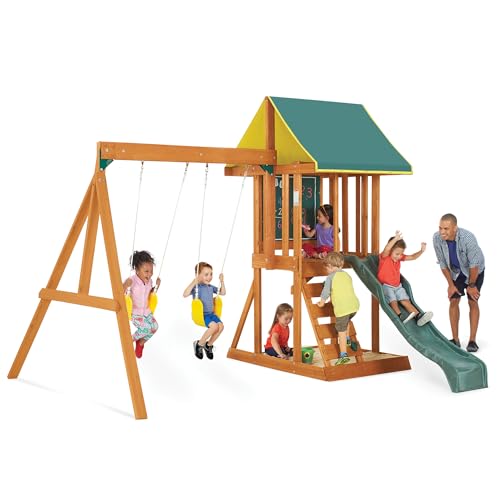
A classic swing set remains the backbone of most backyard play areas. These structures typically feature an A-frame or multi-post frame supporting two to four swings, sometimes with a glider or toddler bucket seat. Swing sets are the simplest entry point into outdoor play equipment and are generally the most compact option for smaller yards.
Climbing Frames and Geodesic Domes
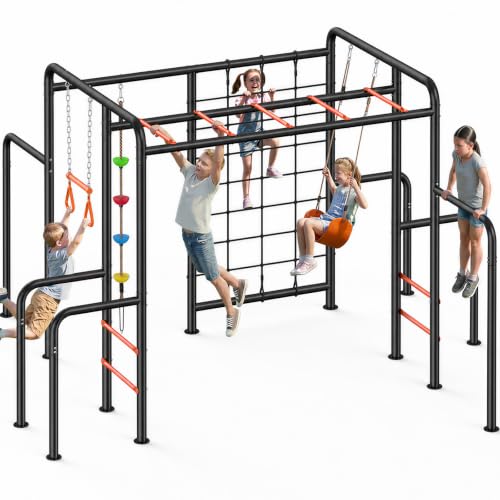
Climbing-focused structures emphasize vertical play and physical challenge. Wooden climbing frames with ladders, cargo nets, and rock walls suit older children, while geodesic domes and low climbing arches serve younger children safely. These structures often pair well with a dedicated play area that includes outdoor seating for supervising adults.
Multi-Level Playsets with Towers and Slides
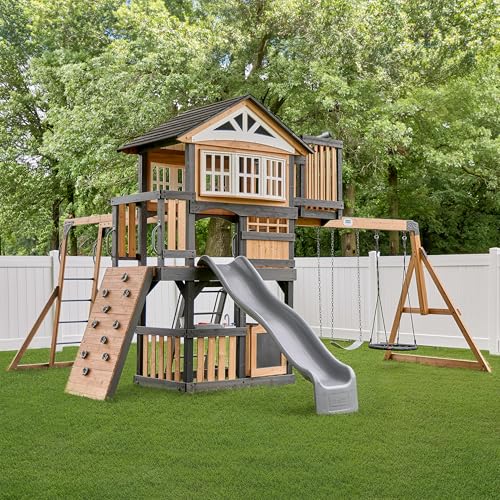
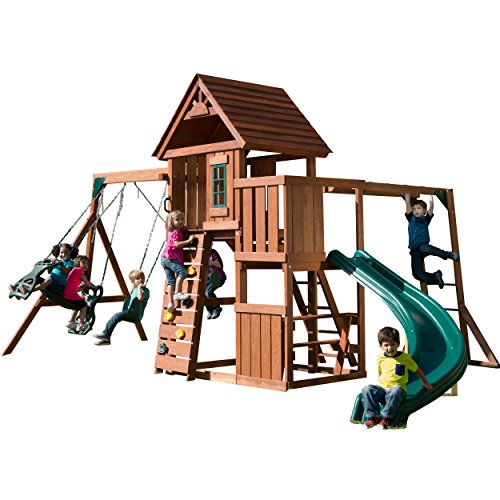
The most elaborate category combines a raised tower, slide, climbing wall, swing beam, and sometimes a sandbox or picnic area beneath. These all-in-one structures deliver the widest range of activities but demand more footprint and a more careful installation. Many families position them near a patio or patio furniture arrangement so adults can relax while children play.
Compact and Toddler Playsets
For small yards, balconies, or families with very young children, compact playsets offer a lower platform height, shorter slide, and simplified climbing elements. These are ideal starter structures that can later be supplemented as children grow — for example, adding a lounge area for parents nearby to create a comfortable supervision zone.
Market Tiers: Finding the Right Fit for Your Family
Playsets vary widely in build quality, material grade, and feature depth. Rather than focusing on numbers, it helps to think in terms of market tiers. The descriptions below use a consistent classification you can apply to any brand or model you encounter.
Entry-Level Tier
Starter Structures
Simpler frames, fewer accessories, and lighter materials. Best for younger children or families testing how much use a playset will actually get. Typically feature basic swing beams and shorter slides.
Mid-Range Tier
Balanced Structures
The sweet spot for most families. Mid-range playsets add reinforced joints, higher platforms, and multi-activity features such as climbing walls and steering wheels. Solid choice for the tier.
Premium Tier
Flagship Structures
Heavy-duty construction, premium timber or high-grade steel, and extensive accessory packages. Designed as a long-term investment for families with multiple children and years of active use ahead.
Comparing Playset Materials
The material of your playset determines its longevity, maintenance routine, and visual character in your yard. Each option carries distinct trade-offs that are worth understanding before you commit.
| Material | Best For | Durability | Maintenance Needs |
|---|---|---|---|
| Wood (Cedar, Pine, Fir) | Classic look, customizable builds, natural backyard integration | High with proper sealing; cedar naturally rot-resistant | Periodic staining or sealing; inspect for splinters and insect damage |
| Steel and Aluminum | Low-maintenance families, windy regions, modern aesthetics | Very high; rust-proof finish on quality models | Minimal; occasional cleaning and hardware checks |
| High-Density Polyethylene (HDPE) | Coastal climates, humid regions, families wanting zero-finish upkeep | Excellent; resistant to rot, insects, and moisture | Wipe-down cleaning only; no sealing required |
| Composite and Recycled Plastic | Eco-conscious buyers, long-term outdoor exposure | High; resists cracking and fading | Minimal; annual inspection recommended |
Safety Features to Prioritize
Safety is the single most important factor when choosing playsets for outside. The features below are worth verifying on any model you consider, regardless of tier.
- Stable footing and anchoring: Ground anchors or concrete footings prevent tipping during vigorous play.
- Rounded edges and capped bolts: Exposed hardware should be recessed or capped to prevent scrapes and snags.
- Age-appropriate platform height: Higher platforms require guardrails and are best suited for older children.
- Non-slip climbing surfaces: Rock walls, ladders, and steps should have textured grips.
- Safe fall zones: A perimeter of shock-absorbing surfacing (mulch, rubber, or engineered wood fiber) around the structure.
- Weight and age ratings: Confirm the stated user limits and recommended age range for each component.
- Compliance labeling: Look for recognized safety standard markings on the product and packaging.
Planning the Space Around Your Playset
A playset is only as useful as the space around it. Before installation, consider how the structure will integrate with the rest of your yard. Families often pair a playset zone with adjacent adult spaces — for instance, a side table placed between two chairs gives supervising parents a natural spot to sit with a drink while keeping children in view.
If your yard has a patio or deck nearby, think about how the playset zone connects to your existing furniture layout. Many homeowners find that a small outdoor loveseat or a pair of outdoor rocking chairs with cushions creates a comfortable watch point without crowding the play area. For larger yards, a patio conversation set can anchor a separate relaxation zone while the playset occupies its own quadrant.
Shade is another key consideration. A playset positioned in full afternoon sun can become uncomfortably hot, particularly on metal slides. If natural shade is limited, consider pairing the playset area with a shade solution or positioning it near an existing tree canopy. For families with uncovered patios, patio covering options can help extend usable outdoor time across the seasons.
Finally, think about storage. Loose play accessories, sports equipment, and seasonal items benefit from a dedicated storage solution. An outdoor storage box placed near the playset keeps small items organized, while larger families may consider an outdoor vertical storage cabinet with shelves for toys and gear.
Matching Playsets to Your Child's Age
Toddlers (Ages 1–3)
Prioritize low platform heights, enclosed bucket swings, short slides, and gentle ramps. Avoid tall climbing walls and open platforms without guardrails. Compact toddler playsets are often the safest choice, and many can be upgraded later.
Young Children (Ages 4–7)
This is the ideal age window for a full-featured playset. Children can safely navigate climbing walls, ladders, and moderate slide heights. Swings with standard belts, gliders, and small climbing elements all become viable at this stage. Mid-range tier playsets are typically well-matched here.
Older Children (Ages 8–12)
Play patterns shift toward physical challenge. Higher towers, rope nets, trapeze bars, and longer slides sustain interest. Premium tier playsets with robust frames and reinforced joints are the natural fit. Many families in this stage also add adjacent activity zones — a game area or a dining table with bench and chairs for snack breaks.
Installation and Site Preparation
Proper installation is what separates a playset that lasts a decade from one that wobbles after the first season. The key steps are consistent regardless of the tier you choose.
- Level the ground: A flat, well-drained surface prevents uneven settling and extends the life of the frame.
- Clear overhead obstacles: Ensure no power lines, branches, or roof overhangs interfere with swing arcs and climbing heights.
- Plan for anchoring: Ground anchors, stakes, or concrete footings are essential in all but the most sheltered yards.
- Add safety surfacing: A fall zone of mulch, rubber tiles, or engineered wood fiber around the structure reduces injury risk.
- Follow manufacturer guidance: Assembly manuals exist for good reason — use the specified hardware and tightening sequence.
If your yard includes a screened-in deck or porch, be aware that playsets typically need open sky above the swing arc. A screened-in deck can be an excellent spot for a small play table or craft area, but the main playset should sit in the open yard.
Long-Term Care and Seasonal Maintenance
Playsets for outside live through rain, sun, and frost. A simple seasonal routine keeps them safe and functional for years.
- Spring inspection: Check all hardware, tighten bolts, and look for splinters, rust spots, or cracked plastic components.
- Wood care: Reapply a child-safe sealant or stain every one to two years depending on your climate.
- Metal care: Touch up any chipped paint or rust spots with manufacturer-approved touch-up paint.
- Hardware checks: Loose bolts are the most common cause of playset wobble — inspect monthly during heavy-use seasons.
- Winter prep: Remove swings and loose accessories before winter storms; cover or store detachable components.
- Surfacing refresh: Top up mulch or rubber surfacing annually to maintain the recommended fall-zone depth.
Families with nearby patio furniture should also consider the same seasonal care rhythm. Our guides on rust removal and outdoor waterproof materials for garden furniture offer useful companion advice for keeping the entire backyard in good shape.
Frequently Asked Questions
How much yard space does a playset need?
It depends on the configuration. Compact swing sets can fit in a footprint of roughly ten by twelve feet, while multi-level playsets with towers and slides typically need at least twenty by twenty feet, plus a clear fall zone around the perimeter. Measure your available space before shopping and account for the swing arc on both sides.
Is wood or metal better for a backyard playset?
Both have merits. Wood offers a classic look, natural integration with landscaping, and easy customization, but requires periodic sealing. Metal is low-maintenance and highly durable, particularly in humid or coastal climates, but can become hot in direct sun. High-density polyethylene is an increasingly popular third option for families wanting zero-finish upkeep.
How long does a playset typically last?
An entry-level tier playset with basic care typically serves a family for several years. Mid-range structures with proper seasonal maintenance often last a decade or more. Premium tier playsets built from cedar or high-grade steel can remain functional for fifteen years or longer, especially when anchored properly and cared for each season.
Can I install a playset myself?
Many compact and mid-range playsets are designed for DIY assembly, typically requiring two adults and a full day of work. Larger multi-level structures benefit from professional installation or at least careful pre-assembly planning. Always follow the manufacturer's manual and use the specified hardware.
What safety surfacing should I use under a playset?
Engineered wood fiber, rubber mulch, and rubber tiles are the most common choices. The recommended depth varies with the fall height of the structure — taller platforms require deeper surfacing. Check the manufacturer's guidance and local safety recommendations for the specific model you choose.
Should I pair a playset with other backyard furniture?
Absolutely. Many families create a supervision zone adjacent to the playset using a small patio conversation set for small spaces or a pair of swivel rocking chairs with cushions. This makes outdoor play time more comfortable for parents and encourages longer use of the yard.
Ready to Explore Your Options?
Now that you understand the main types, materials, safety features, and space planning considerations, you are well equipped to evaluate specific models. The product recommendations below are organized to help you compare playsets for outside at a glance — from compact starter structures to premium multi-level designs.
If your backyard planning extends beyond the playset itself, you may also want to review our guides on outdoor dining furniture and outdoor umbrellas to create a complete outdoor living space that serves the whole family.