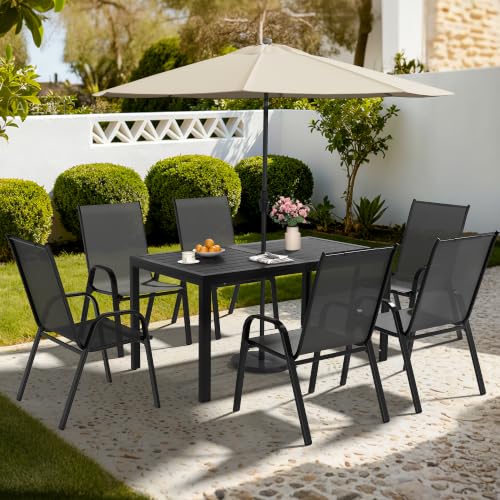
Table and Chair Patio Set with Umbrella: The Complete Guide
Everything you need to know before choosing an outdoor dining set with built-in shade — materials, sizing, umbrella compatibility, and long-term care.
Explore the GuideWhy this guide matters: A table and chair patio set with umbrella is one of the most practical outdoor purchases you can make. It combines dining space, seating, and sun protection in a single coordinated package. But the wrong choice — an unstable base, a mismatched umbrella hole, or a frame that rusts within a season — can turn a smart purchase into a recurring headache. This guide walks you through every decision point so you can buy once and enjoy for years.
Why a Table and Chair Patio Set with Umbrella Makes Sense
Outdoor dining is one of the great pleasures of owning a patio, deck, or backyard. A coordinated set that includes a table, chairs, and an umbrella solves three problems at once: it gives you a stable dining surface, comfortable seating for family and guests, and reliable shade during the hottest part of the day. Unlike buying each piece separately, a matched set removes the guesswork around proportions, color harmony, and umbrella compatibility.
These sets are also remarkably versatile. A compact table and chairs dining set for 4 fits neatly on a small balcony or apartment patio, while larger configurations can anchor a full outdoor kitchen and entertainment area. If your space is tight, a table and chair set for front porch offers the same benefits in a footprint that suits a narrow entryway or covered porch.
The umbrella is the unsung hero of the set. A quality canopy blocks harmful UV rays, keeps food and beverages cooler, and extends the usable hours of your patio. When the umbrella is engineered as part of the set — with a properly reinforced hole and a stable base — the entire package performs better than a table with an aftermarket umbrella bolted on.
Key Buying Factors for a Table and Chair Patio Set with Umbrella
1. Table Shape and Size
Round tables encourage conversation and fit well in square or circular spaces. Square tables maximize seating per square foot and pair naturally with square outdoor table covers and accessories. Rectangular tables are the best choice for long, narrow patios and for families who like to serve platters and side dishes. Before you commit, measure your space and leave at least 30 inches of clearance between the table edge and any wall, railing, or planter so chairs can pull out comfortably.
If you plan to seat a larger group, a square outdoor dining table for 8 with umbrella hole offers generous seating without the awkward corners of a rectangular design. For everyday use, a 4- to 6-person set is the sweet spot for most households.
2. Umbrella Hole and Canopy Compatibility
Not all umbrella holes are created equal. Standard holes measure 1.5 to 2 inches in diameter, but some imported sets use metric sizes. Confirm the hole diameter before buying an umbrella, and check whether the table includes a stabilizing ring or collar that holds the pole upright. A square glass patio table with umbrella hole typically includes a reinforced metal ring, which reduces wobble and protects the glass edge. If you prefer a metal top, a square metal patio table with umbrella hole is more forgiving in windy conditions and easier to clean.
Umbrella canopy size should extend at least two feet beyond the table edge on all sides. A 9-foot canopy suits most 48-inch round or square tables; a 10- to 11-foot canopy is better for larger rectangular tables. Also consider tilt and crank mechanisms: a push-button tilt lets you angle the shade as the sun moves, while a crank-lift system makes opening and closing easier for shorter users.
3. Frame Material and Finish
The frame determines how long your set lasts. Powder-coated aluminum is the most balanced choice: it is lightweight, rust-proof, and holds color well. Steel is heavier and more resistant to wind, but it must have a high-grade rust-resistant coating to survive outdoor exposure. Wood, especially teak, offers timeless warmth and natural weather resistance, though it requires periodic sealing. Wicker and resin sets are comfortable and lightweight but should be checked for UV stabilization to prevent fading and cracking.
Look for welded joints rather than bolted connections at stress points, and inspect the underside of the table for a full perimeter frame. A solid build with reinforced corners will resist wobble and stay stable on uneven patio surfaces.
4. Chair Comfort and Stackability
Chairs are where you and your guests spend the most time, so prioritize seat depth, back height, and armrest comfort. If you entertain often, stackable outdoor chairs simplify storage and make it easy to clear the patio after a gathering. For a more polished look, stackable outdoor dining chairs combine comfort with a clean silhouette that suits most table styles.
If your set will live on a lawn or mixed surface, consider chairs with wide feet or glides that prevent sinking. And if you plan to move the set seasonally, weight matters: aluminum chairs are far easier to relocate than steel or solid wood.
Comparing Patio Dining Set Tiers
The table below uses universal tier descriptors rather than numeric figures, so it stays useful regardless of market conditions.
| Tier | Frame & Materials | Umbrella Included | Best For |
|---|---|---|---|
| Entry-level | Powder-coated steel or basic aluminum; resin or plastic tabletop | Often included; manual tilt | Balconies, rental patios, seasonal use |
| Mid-range | Powder-coated aluminum; tempered glass or high-density resin top | Included; crank-lift with tilt | Family patios, regular entertaining |
| Premium | Heavy-gauge aluminum or stainless steel; teak or stone-look top | Included or sold as matched add-on; wind vent | Full outdoor dining rooms, high-wind areas |
| Luxury | Solid teak, cast aluminum, or marine-grade stainless; reinforced joinery | Premium canopy with wind vent and heavy base | Permanent outdoor kitchens, design-focused spaces |
Space Planning: Matching the Set to Your Patio
Before you fall in love with a particular design, sketch your patio to scale. Mark the table footprint, then add 30 inches on every side for chair pull-out and walking space. On a small patio, a space-saving furniture approach — such as a bistro-style set or a drop-leaf table — can preserve circulation without sacrificing dining function. If you are comparing a compact set against a larger investment, our splurge vs save breakdown helps you decide where extra spending genuinely improves daily use.
Also think about sun exposure. A table placed in full afternoon sun will need a larger canopy or a strategically placed sun shade for patio coverage. If your patio is partially covered, a smaller umbrella may suffice, and you can redirect the saved space toward a side table or serving cart.
Umbrella Base and Wind Stability
The umbrella base is the most overlooked component of a patio dining set, yet it is the one that keeps the entire setup safe. A 9-foot canopy needs a base rated at 50 pounds or more; larger canopies require proportionally heavier bases or weighted plates. A standing umbrella base with a wide footprint distributes load more effectively than a narrow pedestal, especially on windy decks.
If your table has a thick top or a central support beam, confirm that the umbrella pole can pass through without binding. Some sets include a table-integrated stabilizer ring; if yours does not, add one. In exposed locations, consider a vented canopy that lets gusts pass through rather than catching the wind like a sail.
Care and Maintenance for Long-Term Performance
A patio dining set is an investment in outdoor living, and a simple maintenance routine will keep it looking and performing well for years. Here is a practical checklist:
Seasonal Care Checklist
- Weekly during use: Wipe down the tabletop with mild soap and water; brush debris from chair joints and umbrella mechanism.
- Monthly: Check all bolts and fasteners; tighten any that have loosened from temperature swings. Lubricate the umbrella crank with silicone spray.
- Before storing: Clean and dry the entire set; remove cushions and store them indoors; close and secure the umbrella or remove the canopy entirely.
- Winter: Use a breathable, waterproof cover sized for the table and chairs. A square patio table cover with umbrella hole lets you keep the umbrella pole in place while protecting the tabletop.
- Annual: Inspect the frame for scratches or rust spots; touch up powder coating with a matching paint pen to prevent corrosion from spreading.
Wood furniture benefits from an annual application of outdoor-grade sealant, while metal frames should be rinsed and dried after exposure to salt air or pool chemicals. Cushions should be stored indoors when not in use, and a dedicated storage bin for outdoor furniture cushions keeps them dry and free of pests.
Matching the Set to Your Lifestyle
Your patio set should reflect how you actually use the space. If you host casual weeknight dinners, a table and chairs with umbrella for outside in a mid-range tier offers the right blend of durability and comfort. If you entertain larger groups, consider a set with a square outdoor dining table with umbrella hole that seats six to eight without dominating the patio.
For a more relaxed, lounge-oriented backyard, a table and chairs pairing with stackable chairs allows you to reconfigure the space quickly. And if you prefer the warmth of natural materials, a teak furniture set with a matching umbrella creates a cohesive, high-end look that ages gracefully.
Finally, think about how the set interacts with the rest of your outdoor decor. A neutral frame color gives you flexibility to change cushions, rugs, and accessories seasonally. If you plan to add lighting, our string lights guide explains how to layer ambient light without cluttering the dining area.
Frequently Asked Questions
What size umbrella do I need for a patio dining table?
A general rule is to choose an umbrella that is at least 2 feet wider than your table on all sides. For a 48-inch round table, a 9-foot umbrella works well. For a 60-inch table, consider a 10-foot or 11-foot umbrella. Always confirm your table's umbrella hole diameter to ensure compatibility.
Is aluminum or steel better for a patio table frame?
Aluminum is lighter, rust-proof, and easier to move, making it ideal for most residential settings. Steel is heavier and more durable for high-wind areas but requires a rust-resistant finish. Powder-coated aluminum is the most balanced choice for long-term outdoor use.
How do I protect a table and chair patio set in winter?
Clean and dry the set thoroughly, apply a protective sealant to wood or metal surfaces if recommended, and use a breathable, waterproof cover sized specifically for your table and chairs. Store cushions indoors and remove the umbrella canopy to prevent wind damage and mold.
Can I use a patio umbrella on a windy day?
Only if your umbrella base is rated for the wind conditions and the canopy is made of breathable or vented fabric. In strong gusts, always close the umbrella and secure it. A heavy-duty base, at least 50 pounds for a 9-foot umbrella, is essential for safety.
What is the best chair type for a dining-height patio table?
Chairs with a seat height of 17 to 19 inches pair correctly with standard 28- to 30-inch dining tables. Stackable outdoor chairs are a practical choice for flexibility, while armchairs offer more comfort for long meals. Always test the chair-to-table height ratio before finalizing your set.
Final Buying Checklist
- Measure your patio and confirm at least 30 inches of clearance around the table.
- Verify the umbrella hole diameter and whether a stabilizer ring is included.
- Choose a frame material suited to your climate (aluminum for humid areas, steel for windy sites, teak for natural warmth).
- Confirm the umbrella canopy size extends at least two feet beyond the table edge.
- Check chair weight rating and stackability if you plan to store the set seasonally.
- Review the warranty and confirm availability of replacement parts.
- Plan for a base that matches your umbrella size and local wind conditions.
- Budget time for seasonal care — a few minutes each month extends the life of the set significantly.
With the right set, your patio becomes a genuine extension of your home — a place for morning coffee, weekend lunches, and evening gatherings under the shade of a well-chosen umbrella. Use this guide as your reference, and you will be ready to compare options with confidence.