
Wood Adirondack Chairs: The Complete Buying Guide
Learn how to evaluate wood species, construction quality, comfort geometry, and long-term care so you can choose an Adirondack chair that fits your outdoor space and lifestyle.
Explore OptionsWhy this guide matters: Wood Adirondack chairs are a long-term investment in comfort and craftsmanship. Whether you are furnishing a porch, a poolside deck, or a garden seating zone, the right chair combines supportive posture with a timeless profile. This guide walks you through every decision point — from wood type to finishing — so you can buy with confidence.
What Defines a Wood Adirondack Chair
The Adirondack chair is instantly recognizable by its wide, slanted backrest, deep seat, gently curved seat pan, and broad armrests. Originally designed in the early twentieth century for the Adirondack region of New York, the design has evolved into a symbol of relaxed outdoor living. Wood remains the most traditional material, and it continues to dominate the category because it balances natural beauty with structural rigidity.
A genuine wood Adirondack chair typically features a fan-shaped back made of vertical slats, a five- to seven-board seat, and armrests wide enough to hold a drink or a book. The rear legs are often shaped from a single continuous piece of wood, which is a hallmark of sturdy construction. Understanding these design cues helps you recognize quality even before you examine the joinery.
Because wood is a natural material, small variations in grain, tone, and texture are expected. These variations are not flaws — they are part of the character that makes timber furniture so appealing. A well-made chair will highlight these features rather than conceal them with heavy coatings.
Choosing the Right Wood Species
The wood species determines durability, maintenance needs, weight, and appearance. The three most common options in the market fall into distinct tiers: entry-level softwoods, mid-range hardwoods, and premium rot-resistant hardwoods. Each tier suits a different set of priorities.
| Wood Species | Market Tier | Natural Rot Resistance | Best For |
|---|---|---|---|
| Cedar | Entry-level / essential tier | Good (aromatic oils help repel insects) | Homeowners who want lightweight chairs and accept periodic finishing |
| Pine or Fir | Starter tier | Low without treatment | Painted finishes or covered porches |
| Teak | Premium / luxury tier | Excellent (natural silica and oils) | Long-term outdoor exposure with minimal upkeep |
| Mahogany or Ipe | High-end tier | Very good to excellent | Coastal climates and high-humidity environments |
| Acacia | Mid-range tier | Good when properly sealed | Balanced performance for covered patios |
Cedar: The Practical Choice
Cedar is the most common wood for Adirondack chairs because it is lightweight, naturally aromatic, and reasonably resistant to rot. It holds finishes well and is easy to repair. Cedar chairs are a solid choice for homeowners who do not mind reapplying a protective coat every one or two seasons. Entry-level cedar models often use thinner stock, so inspect board thickness and joint reinforcement before committing. If your patio receives heavy, direct sun, cedar will gradually weather to a silver-gray tone unless you seal it.
For a broader look at how cedar fits into outdoor furniture construction, the wood furniture care guide covers sealing schedules and repair techniques that apply directly to cedar Adirondack chairs.
Teak: The Low-Maintenance Investment
Teak sits in the premium tier and is widely regarded as the gold standard for exposed outdoor timber. Its dense grain and natural oils make it highly resistant to moisture, insects, and rot. A teak Adirondack chair can remain outdoors year-round in most climates with only occasional cleaning. Left untreated, teak develops a graceful silver patina; if you prefer the warm honey tone, apply a teak sealer annually. Because teak is heavy, these chairs are less portable — a consideration if you plan to rearrange seating frequently.
Mahogany, Ipe, and Acacia: The Middle Ground
Mahogany and ipe offer excellent density and rot resistance, often at a more accessible position in the premium tier than teak. Acacia is a mid-range option that performs well when sealed properly, though it can be more prone to movement if exposed to rapid moisture cycles. Regardless of species, the finish quality and joinery matter as much as the wood itself. A well-constructed acacia chair will outperform a poorly built chair made from a premium species.
Construction Quality: What to Inspect
Two chairs made from the same wood can differ dramatically in lifespan. Construction details determine whether a chair stays rigid for a decade or loosens within two seasons.
Joinery
Look for mortise-and-tenon joints, doweled joints, or reinforced pocket screws. Staples and nails alone are a warning sign of entry-level construction. High-quality chairs often use stainless steel or galvanized hardware to prevent rust staining on the wood. Where bolts are visible, check that they are recessed and paired with washers to distribute stress.
Board Thickness
Seat and back slats should be at least three-quarters of an inch thick, with structural members (legs, arms, and back supports) closer to one inch or more. Thicker stock resists warping and cupping. If you plan to leave chairs outdoors year-round, heavier stock is a meaningful advantage.
Contoured Seat and Back
A proper Adirondack chair has a subtly contoured seat pan and a backrest angled between roughly 100 and 110 degrees. This geometry distributes weight across the thighs and lower back rather than concentrating it at the hips. Flat seats are easier to manufacture but noticeably less comfortable during long sitting sessions. Premium models often add a slight curve to the armrests as well.
Weight and Stability
A quality wood chair should feel substantial. Lightweight chairs tend to flex when you push back, which stresses joints over time. Wider rear legs and a lower center of gravity improve stability on uneven patio surfaces. If your patio has a slope, consider chairs with adjustable or angled feet.
Finish and Protective Coating
Factory finishes vary from penetrating oils to polyurethane and marine-grade varnish. Penetrating oils are easier to refresh but require more frequent application. Film-forming finishes offer stronger protection but can crack if moisture enters beneath the surface. For high-exposure environments, a marine-grade finish is the most protective option. Whatever the factory finish, plan on periodic maintenance — the wood sealants guide explains how to choose and apply a sealer that suits your chair.
Comfort and Sizing Considerations
Adirondack chairs are not one-size-fits-all. Seat height, seat depth, and back height vary considerably between models. A chair that fits one person may feel oversized or cramped to another.
- Seat height: Standard models sit low, typically 13 to 15 inches from the ground. Lower seats are ideal for lounging but can be difficult to rise from for those with mobility concerns. Consider a taller variant if ease of entry and exit matters.
- Seat depth: Deeper seats accommodate taller users, but overly deep seats can leave shorter users without lower-back support. A back cushion can bridge the gap.
- Armrest width: Wide, flat armrests are a defining comfort feature. They should comfortably hold a mug or a small plate without wobbling.
- Weight capacity: Reinforced frames are available for users who need additional support. Check the manufacturer's stated capacity rather than assuming.
If you plan to pair chairs with a side table for drinks or a book, the wicker side table guide explains how to select a complementary table height. Matching seat height to table height improves the practical usability of your seating group.
Placement and Pairing with Other Furniture
Wood Adirondack chairs are versatile. They work as standalone reading seats on a porch, as a pair flanking a fire feature, or as part of a larger conversation zone. Because the chairs recline, they need more depth than upright dining chairs. Allow at least 24 to 30 inches behind the chair for the backrest to tilt without colliding with a wall or railing.
If you are building a seating group, consider pairing Adirondack chairs with a low coffee table or a fire pit table. The wood outdoor coffee table with umbrella hole guide discusses how to anchor a seating zone while adding shade. For a more traditional porch look, the wooden porch swing page shows how swings and Adirondack chairs can coexist in the same outdoor room.
Colour coordination matters as well. Natural wood tones pair well with earthy cushions and neutral textiles. If you want a stronger visual statement, the yellow and white striped outdoor cushions guide illustrates how bold patterns can energize a timber seating group without overwhelming it.
Long-Term Care and Maintenance
Wood Adirondack chairs reward a small amount of routine attention. The exact schedule depends on your climate, exposure, and finish type, but the following practices apply broadly.
- Clean regularly: Wash with mild soap and water, then rinse thoroughly. Avoid harsh detergents that strip oils from the wood.
- Inspect joints: Tighten any loose bolts or screws at the start and end of each outdoor season. Replace rusted hardware with stainless steel equivalents.
- Refresh the finish: Reapply oil or sealer when water stops beading on the surface. In high-UV climates, this may be annual; in covered areas, every two years is often sufficient.
- Store during extreme weather: If you live in a region with heavy snow or prolonged freezing, move chairs to a shed or cover them with breathable furniture covers. Trapped moisture is more damaging than cold alone.
- Address cracks early: Small surface checks are normal, but deep cracks at joints should be filled and sealed to prevent water intrusion.
For a broader maintenance framework that covers all timber outdoor furniture, the wood furniture care guide and wood sealants guide provide detailed product categories and application steps.
How to Evaluate Market Tiers
Wood Adirondack chairs span a wide range of construction quality. Rather than focusing on numeric figures, use the following tier framework to set expectations.
- Starter tier: Lightweight softwood frames, basic fasteners, and simpler finishes. Suitable for occasional use on covered porches. Expect to refinish more often and inspect joints regularly.
- Essential tier: Cedar or acacia construction with reinforced joints and a factory-applied sealer. A solid choice for seasonal outdoor use with routine maintenance.
- Mid-range tier: Thicker stock, better joinery, and upgraded hardware. These chairs often include contoured seats and more refined finishes. Good value for its tier and well-suited to year-round exposure in moderate climates.
- Premium tier: Teak, mahogany, or ipe construction with mortise-and-tenon joinery, stainless hardware, and marine-grade finishes. These chairs are a long-term investment and require minimal upkeep.
- Luxury or commercial-grade tier: Thick premium hardwood, precision joinery, and finishes engineered for high-use or hospitality environments. Feature-rich for its class and built to withstand continuous exposure.
Whatever tier you choose, prioritize joinery and board thickness over cosmetic details. A well-built mid-range chair will outlast a poorly built premium one. If you are comparing wood to other materials, the wood patio furniture guide and wooden outdoor chairs pages provide useful context.
Frequently Asked Questions
Are wood Adirondack chairs comfortable for long periods?
Yes, when the chair has a properly contoured seat and an appropriately angled backrest. The wide armrests and deep seat are designed for extended lounging. Adding a thin seat cushion can improve comfort further, especially on models with flatter seat pans.
Which wood is best for humid climates?
Teak, ipe, and mahogany offer the strongest natural rot resistance and perform best in humid or coastal environments. Cedar and acacia can work well if they are sealed regularly and placed on a covered patio.
How often should I refinish a wood Adirondack chair?
It depends on exposure and finish type. In direct sun and rain, annual refinishing is common. On a covered porch with a quality sealer, every two years may be sufficient. Check for water beading — when water stops beading, it is time to refresh the finish.
Can I leave wood Adirondack chairs outside in winter?
Teak and ipe can generally remain outdoors in mild winters. In regions with heavy snow or freeze-thaw cycles, storing chairs in a shed or covering them with breathable covers is recommended to prevent moisture damage and joint stress.
What is the difference between a standard and a taller Adirondack chair?
Taller variants raise the seat height, making it easier to sit down and stand up. They are a good option for users with mobility concerns or for pairing with taller tables. Standard models sit lower and offer a more reclined lounging position.
Ready to Choose Your Wood Adirondack Chair?
Review the recommended models below, compare construction details, and select the chair that fits your patio, climate, and comfort preferences.
View Recommended OptionsRecommended Wood Adirondack Chairs
⚠️ AFFILIATE DISCLOSURE: This website contains affiliate links. As an Amazon Associate, we earn from qualifying purchases. If you make a purchase through these links, we may receive a small commission at no additional cost to you. Read our full affiliate policy.

Outdoor Folding Adirondack Chair Set of 2,Wooden Patio Chairs,Light Brown | Pre-Assembled Backrest,Foldable Design,Premium Solid Wood,Ergonomic Comfort,Suitable for Garden Backyard Porch Pool Deck
Check price on Amazon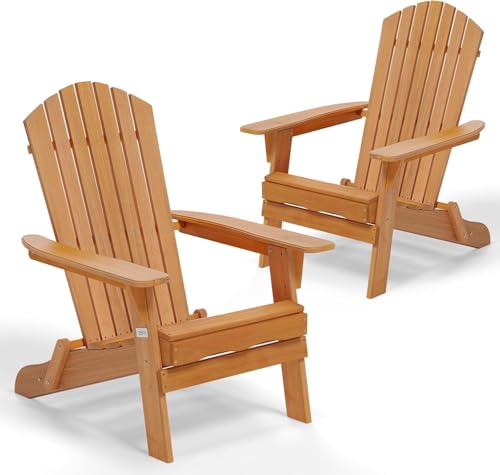
VINGLI Folding Adirondack Chairs Set of 2, Wood Adirondack Chair for Outdoor, Foldable Fire Pit Chairs for Patio, BBQ, Porch, Yard, Pool
Check price on Amazon
SoliWood Outdoor Wooden Folding Adirondack Chair Set of 4 with Pre-Assembled BackRest, Wood Patio Chair for Garden Backyard Porch Pool Deck Firepit
Check price on Amazon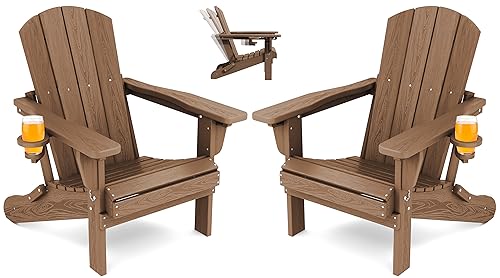
SERWALL Folding Adjustable Adirondack Chairs Set of 2, Cup Holders, Brown | Adirondack Chair with 3 Recline Positions, All Weather HDPE Outdoor Adirondack Fire Pit Chairs for Balcony Porch Deck Garden
Check price on Amazon
SoliWood Outdoor Wooden Folding Adirondack Chair Set of 2 with Pre-Assembled BackRest, Wood Patio Chair for Garden Backyard Porch Pool Deck Firepit
Check price on Amazon
Shine Company Westport Wood Adirondack Chair, Natural | Solid Cedar Wood, Outdoor Patio Firepit Chairs, Back & Seat Pre-Assembled
Check price on Amazon
Casafield Oversized Folding Adirondack Chair, Set of 2 Cedar Wood Outdoor Fire Pit Lounge Chairs for Patio, Deck, Yard, Lawn and Garden Seating, Partially Pre-Assembled - Natural
Check price on Amazon