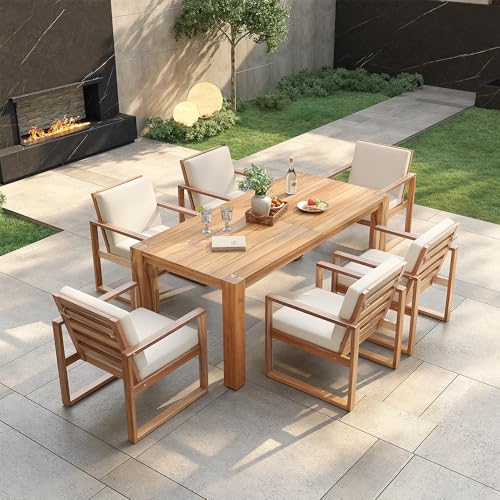
Wood Outdoor Dining Set with Umbrella Hole: Complete Buying Guide
Everything you need to know before choosing a shade-ready wooden dining set for your patio, deck, or garden. Compare wood species, table sizes, umbrella compatibility, and maintenance requirements to make a confident, long-term investment.
START THE GUIDEWhy a Wood Outdoor Dining Set with an Umbrella Hole Makes Sense
A wood outdoor dining set with an umbrella hole solves one of the most practical problems in backyard living: combining generous dining space with reliable shade. Unlike freestanding umbrellas that consume floor area and require wide bases, a table-integrated umbrella hole keeps the canopy centered over the dining surface, leaving chairs and walkways unobstructed. For households that entertain regularly, this configuration is one of the most efficient ways to create a comfortable al fresco dining zone.
Wood remains a popular material for these sets because it brings warmth and visual texture that metal and resin cannot replicate. A well-built wooden dining table with an umbrella hole anchors the patio visually, pairs naturally with surrounding greenery, and can be refinished over time rather than replaced. If you are still exploring broader material options, our wood patio furniture overview explains how different wood categories compare across durability and climate suitability.
This guide is written for buyers in the research phase. You already know you want a wooden dining set with shade capability. The sections below break down what separates a set that lasts a decade from one that shows wear after two seasons, so you can evaluate listings with a clear checklist in hand.
Choosing the Right Wood Species for an Outdoor Dining Set
Not all wood behaves the same way outdoors. Moisture absorption, oil content, grain density, and dimensional stability determine how a dining set ages under sun and rain. The table below summarizes the most common species used for outdoor dining sets with umbrella holes, organized by market tier rather than any numeric figure.
| Wood Species | Market Tier | Natural Weather Resistance | Best For |
|---|---|---|---|
| Teak | Premium to luxury | Excellent — high natural oil content | Long-term investment sets in full-sun, rainy climates |
| Shorea | Mid-range to premium | Very good — dense hardwood with natural oils | Balanced choice for families wanting teak-like performance |
| Acacia | Entry-level to mid-range | Good — dense grain, benefits from periodic sealing | Starter tier sets with solid build quality |
| Eucalyptus | Mid-range | Good — naturally rot-resistant when finished | Transitional styles and slatted table designs |
| Cedar | Entry-level to mid-range | Moderate — aromatic and lightweight | Covered patios and seasonal-use dining sets |
| Pine / Fir | Entry-level | Low to moderate — requires regular sealing | Casual or temporary setups with protective storage |
Hardwoods such as teak, shorea, and acacia are the most common choices for dining tables that stay outside year-round. If you want to understand broader furniture care principles before narrowing down a species, the wood furniture care guide covers cleaning, oiling, and seasonal protection in detail.
Umbrella Hole Compatibility: What to Verify Before Buying
The umbrella hole is a small feature with outsized importance. A poorly sized hole or missing base clearance can turn a promising dining set into a frustrating one. Before committing to any model, verify these four points:
- Hole diameter: Most sets accommodate a 1.5-inch to 2-inch pole. Confirm the exact measurement so your existing umbrella fits, or plan to purchase a compatible canopy.
- Table thickness at the hole: A thicker tabletop stabilizes the pole better. Thin tabletops may require an additional collar or insert for a snug fit.
- Under-table clearance: The umbrella base sits beneath the table. Check that leg braces and crossbars do not obstruct base placement.
- Recommended canopy size: A six-seat table generally pairs with a 9-foot canopy, while eight-seat tables typically call for 10- or 11-foot canopies. Oversized canopies on undersized tables create tipping risk.
If you are comparing table styles, the wood outdoor dining table with umbrella hole page focuses specifically on the table component, including how rectangular and round tops differ in shade coverage. For coordinated lounge areas nearby, the wood outdoor coffee table with umbrella hole offers a matching approach for low seating zones.
Table Size, Shape, and Seating Capacity
The right dimensions depend on your patio footprint, typical guest count, and whether the umbrella will be deployed during meals. As a general planning framework:
- Four-seat sets: Compact square or small round tables suit balconies and narrow patios. Umbrella canopies in the 7.5- to 9-foot range usually fit without overwhelming the space.
- Six-seat sets: Rectangular tables are the most space-efficient for six diners, with benches on the long sides and chairs at the ends. This is the most common configuration for wood outdoor dining sets with umbrella holes.
- Eight-seat sets: Larger rectangular tables require generous clearance for chair pull-out. An 11-foot umbrella is often necessary to shade the full surface.
If bench seating appeals to you, the wood dining table with bench guide explains how bench-and-table pairings affect seating comfort and storage. For sets that blend bench and chair seating, the wooden dining table with bench and chairs overview is a useful companion read.
Construction Details That Signal Quality
Wood species gets most of the attention, but joinery and hardware determine how long a dining set stays stable. Use these checkpoints when evaluating any model:
- Joinery type: Mortise-and-tenon and doweled joints outperform stapled or screwed butt joints. Visible hardware should be minimal on quality pieces.
- Hardware material: Stainless steel or galvanized bolts resist rust. Standard steel hardware may corrode within a few seasons in humid climates.
- Finish: A factory-applied sealant or oil finish is preferable to raw wood. Finishes should be described as weather-resistant rather than merely decorative.
- Slat spacing: Even spacing with rounded edges prevents water pooling and reduces splinter risk.
- Umbrella hole reinforcement: A metal or plastic collar around the hole prevents water intrusion into end grain, which is the most vulnerable point on any wooden tabletop.
For a broader comparison of outdoor furniture materials beyond wood, the wood patio section covers how wood sets fit into mixed-material patio layouts.
Maintenance and Weather Protection
A wood outdoor dining set with an umbrella hole is a long-term investment, and its service life depends heavily on routine care. The good news is that maintenance is straightforward:
- Clean regularly: Wipe the table with mild soap and water after meals. Avoid abrasive cleaners that strip finish.
- Seal annually: Apply an outdoor wood sealant or furniture oil once or twice per year, depending on climate exposure. The wood sealants guide explains how to choose between oil-based and film-forming products.
- Protect the umbrella hole: Keep the hole clear of leaves and debris. When the umbrella is removed, insert a plug if one is provided.
- Cover during extended disuse: A fitted cover protects against UV fading and standing water during off-season months.
- Store cushions separately: Cushions trap moisture against wood. Bring them inside during rain or store them in a ventilated container.
If your patio includes other wooden pieces, such as seating or accent tables, the care routine can be consolidated into a single seasonal maintenance session. The wooden garden furniture set guide discusses whole-set maintenance planning.
Matching a Wood Dining Set to Your Patio Style
Wood dining sets with umbrella holes are available in styles ranging from rustic farmhouse to clean modern lines. Consider how the set will relate to surrounding elements:
- Rustic and farmhouse: Heavier profiles, visible grain, and bench seating suit naturalistic gardens and cottage-style homes.
- Modern and minimalist: Slim slats, squared legs, and lighter wood tones work well on contemporary decks and balconies.
- Coastal: Weathered finishes and whitewashed tones pair with nautical accents and light-colored cushions.
- Traditional: Turned legs and classic silhouettes complement formal patio layouts and mature landscaping.
For smaller spaces, a round table can soften the layout and improve flow. The wooden garden table and chairs overview includes round and compact configurations that still accommodate an umbrella.
Final Buying Checklist
Before finalizing any purchase, run through this checklist to confirm the set fits your space and habits:
- Measure your patio and confirm clearance around the table for chair pull-out and walkways.
- Verify the umbrella hole diameter matches your pole or planned canopy.
- Confirm the table has under-surface clearance for a weighted umbrella base.
- Check the wood species and its natural weather resistance rating.
- Inspect hardware material for rust resistance.
- Review whether a sealant or finish is factory-applied.
- Decide between bench, chair, or mixed seating based on guest flow.
- Plan storage for cushions and a cover for off-season protection.
With these factors confirmed, you can evaluate listings with confidence and choose a set that delivers shade, durability, and visual harmony for years of outdoor dining.
Frequently Asked Questions
What size umbrella fits a wood outdoor dining set with an umbrella hole?
Most sets accommodate a standard 1.5-inch to 2-inch pole. A six-seat table typically pairs with a 9-foot canopy, while an eight-seat table usually calls for a 10- or 11-foot canopy. Always confirm the hole diameter before purchasing an umbrella separately.
Which wood species is best for an outdoor dining set with an umbrella hole?
Teak, shorea, acacia, and eucalyptus are the most weather-resistant hardwoods for outdoor dining sets. Teak and shorea offer natural oil content that resists moisture and rot, while acacia and eucalyptus provide solid durability at a mid-range tier. Cedar and pine suit entry-level sets that receive seasonal protection.
Do I need a separate umbrella base for a wood dining set with an umbrella hole?
Yes. The umbrella hole only stabilizes the pole laterally. A weighted umbrella base placed underneath the table is essential for wind resistance and safety. Choose a base rated for your canopy size and confirm the table has enough clearance underneath.
How do I maintain a wood outdoor dining set with an umbrella hole?
Clean the table with mild soap and water, then dry it thoroughly. Apply a wood sealant or outdoor furniture oil once or twice per year. Keep the umbrella hole clear of debris, and use a fitted cover during extended periods of disuse or harsh weather.
Ready to Compare Wood Dining Sets?
Browse recommended wood outdoor dining sets with umbrella holes below. Each option is selected for construction quality and shade compatibility, so you can move from research to a confident decision.
VIEW RECOMMENDED SETS