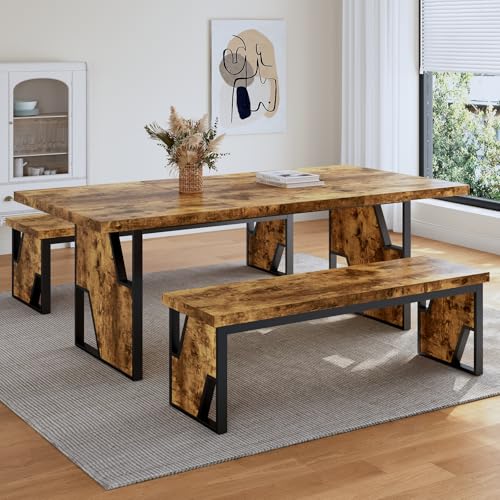
Wood Dining Table With Bench: The Complete Buying Guide
Everything you need to know about choosing a wooden table and bench set — from wood species and bench seating capacity to finish care, layout planning, and matching chairs. Research first, then buy with confidence.
START WITH THE BASICSWhy a table-and-bench combo works: A wood dining table with bench is one of the most space-efficient and sociable arrangements for patios, decks, and gardens. Benches tuck fully under the table when not in use, they seat more people per linear foot than individual chairs, and they bring a relaxed, communal feel that suits family meals and casual gatherings alike. This guide walks you through sizing, wood selection, finishes, comfort, and care so you can pick a set that fits your space and lasts for seasons.
Key Buying Factors to Evaluate Before You Purchase
Shopping for a wood dining table with bench is really about matching three variables: the wood species, the size of your space, and how much maintenance you are willing to commit to. Buyers who get these three right rarely regret their choice; buyers who skip them often end up with a set that is too small, too exposed, or too demanding to keep looking good.
- Wood species and natural durability: Dense, oily hardwoods such as teak and acacia resist moisture and insects far better than softwoods. Entry-level softwood sets can work well, but they rely on a protective finish rather than the wood itself.
- Bench seating length: A bench seats people shoulder to shoulder, so length matters more than on a chair-based set. Aim for at least 24 inches of bench run per adult diner.
- Table height and bench height pairing: Standard dining height tables pair with benches around 17–19 inches tall. Bar-height tables need matching high benches — mixing heights is the most common comfort mistake.
- Frame joinery and fasteners: Look for mortise-and-tenon or doweled joints, and stainless or galvanized hardware. Reinforced corner blocks and cross-bracing on long benches prevent the wobble that plagues lightweight builds.
- Finish type: Oil finishes are easy to refresh but need periodic reapplication; film finishes such as polyurethane offer more surface protection but may need sanding when they wear. Choose based on your climate and tolerance for upkeep.
- Umbrella compatibility: If your patio is exposed to direct sun, check for a pre-drilled umbrella hole and a stable base. Many sets designed for outdoor use include this feature.
- Storage and cover options: Benches that slide fully under the table make winter storage and off-season covering significantly easier — an important practical detail for smaller patios.
Wood Species Compared: Which Timber Suits Outdoor Dining?
The species of wood determines how a set ages, how often it needs attention, and how well it handles rain and sun. Use this comparison table to align species with your climate and maintenance expectations. Tiers below describe relative market positioning, not any specific figures.
| Wood Species | Market Tier | Natural Weather Resistance | Best For |
|---|---|---|---|
| Teak | Luxury / top-tier | Excellent — natural oils, dense grain | Year-round exposure in humid or coastal climates |
| Acacia | Premium / high-end tier | Very good — dense hardwood, tight grain | Family patios needing a durable, character-rich table |
| Eucalyptus | Mid-range to premium | Good — naturally rot-resistant | Balanced choice for mixed climates and regular outdoor use |
| Cedar | Mid-range | Good — aromatic oils deter insects | Covered patios and porches with moderate sun exposure |
| Pressure-treated pine | Entry-level / essential tier | Moderate — requires regular sealing | Starter sets in sheltered spaces or seasonal use |
| Reclaimed or mixed hardwood | Varies by build quality | Variable — depends on species mix and finish | Rustic aesthetics where character matters more than uniformity |
If your priority is minimal upkeep, top-tier species with natural oils are the most efficient in the long run because they need less frequent refinishing. If you prefer a rustic, lived-in look, a mid-range species sealed with a quality product can deliver excellent results. For a deeper dive into material behavior, see our guide to wood furniture care and selection.
Sizing & Seating Capacity: Matching the Set to Your Space
Bench seating is efficient, but it is not infinitely flexible — people cannot easily squeeze in the way they can with individual chairs. Use the benchmarks below to plan realistic seating.
| Table Length | Bench Length (per side) | Comfortable Adult Seating | Typical Use Case |
|---|---|---|---|
| 4 ft (48 in) | 48 in | 2 per bench | Small balconies, breakfast nooks, couples |
| 5 ft (60 in) | 60 in | 2–3 per bench | Compact patios, family of four |
| 6 ft (72 in) | 72 in | 3 per bench | Most popular size for family dining outdoors |
| 8 ft (96 in) | 96 in | 4 per bench | Larger decks, entertaining, multi-generational households |
Two other measurements matter just as much as length. First, table width: 30–36 inches is standard for dining, and wider tables feel generous but reduce bench reach for children and older guests. Second, bench depth: 14–16 inches is typical; deeper benches are more comfortable but consume more patio floor space and are harder to tuck under the table. If your space is tight, a bench that slides completely under the tabletop is a major advantage.
Bench vs. Chairs: Weighing the Trade-Offs
Many buyers ask whether a bench-only set is the right call or whether a mixed arrangement — bench on one side, chairs on the other — is more practical. There is no universal answer, but the trade-offs are predictable.
A wooden table and bench combination maximizes seating density and creates a clean visual line that makes small patios feel less cluttered. Benches are also easier to move and store as a single unit and are typically more stable for children. On the downside, benches lack back support, and getting in and out requires sliding rather than pushing back a chair — which matters for guests with limited mobility.
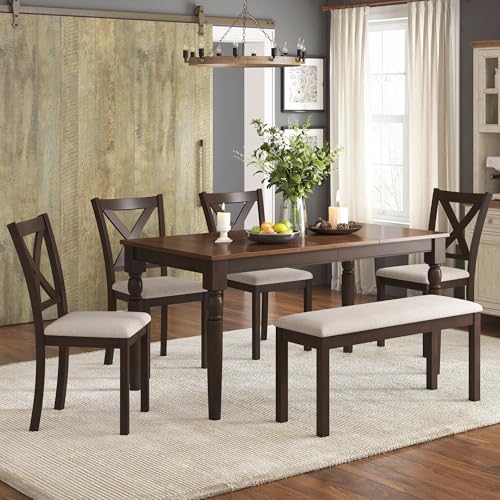
Mixed sets solve those issues while keeping the aesthetic. A popular configuration pairs a bench on the long side facing the view with chairs on the opposite side, or benches on both long sides with chairs at the table ends. If you are leaning toward a mixed arrangement, explore our guide to wooden dining table with bench and chairs for configuration ideas. A wood kitchen table with bench and chairs format also translates well to covered outdoor spaces.
Bench back support is another variable. Backless benches are the classic look and tuck neatly under the table, while benches with backs — similar in spirit to a wooden bench with back for dining table — offer more comfort for long meals at the cost of storage space.
Design & Layout Tips for Outdoor Table-and-Bench Sets
A wood dining set anchors the social zone of a patio. Treat it as the centerpiece and arrange the surrounding elements around it rather than the reverse.
Placement: Position the table so the bench side with the best view faces outward, and keep at least one long side clear of walls or railings so guests can slide in easily. On narrow patios, orient the table lengthwise along the longest dimension to preserve walking paths.
Shade: Direct afternoon sun makes bare wood hot to the touch and uncomfortable to sit on. A central umbrella through the table or a cantilever model positioned beside it solves this elegantly. For covered spaces, consider the broader family of wood patio furniture to coordinate the set with loungers and storage pieces.
Surrounding pieces: Keep the perimeter light. A side table, a small console, or a storage bench for cushions completes the arrangement without crowding the dining zone. If you plan to add a seating area nearby, our overview of wood patio design covers how to balance dining and lounging zones.
Lighting and ambiance: String lights overhead or a few ground-level lanterns extend the usability of the table into the evening. Wind chimes and planters add sensory interest without consuming floor space.
Consistency of finish: If you add companion pieces later, match the finish tone rather than the exact species. A slightly different wood tone reads as intentional layering; a mismatched stain reads as an afterthought.
Care & Maintenance: Keeping Wood Beautiful Outdoors
Wood outdoors is a maintenance commitment, but a predictable one. The core routine is simple: clean regularly, inspect for finish wear, and reseal before damage occurs.
Routine cleaning: Wipe the tabletop after meals and wash the set with mild soap and water a few times per season. Avoid harsh detergents, which strip protective oils, and skip pressure washing on finished surfaces. A soft brush is sufficient for textured grains and bench slats.
Finish inspection: Water beading on the surface is a good sign; water soaking in immediately signals that the finish is due for renewal. Address small worn patches early — spot repairs are far easier than full refinishing. Our wood sealants guide explains how to choose between oil-based and film-forming products.
Seasonal protection: In harsh winters or prolonged rainy seasons, cover the set with a breathable cover or store benches and table indoors where possible. Breathable covers prevent trapped moisture, which is more damaging than rain itself.
Hardware checks: Tighten bolts and inspect joints at the start and end of each season. Loose fasteners accelerate joint wear, and catching them early keeps the bench stable and safe.
Frequently Asked Questions
What wood is best for an outdoor dining table with a bench?
Teak, acacia, and eucalyptus are the strongest performers outdoors thanks to their density and natural oils. Cedar is a reliable mid-range option, while pressure-treated pine is an entry-level choice that stays serviceable with regular sealing. Match the species to your climate — humid and coastal areas reward naturally oily hardwoods most.
How much seating space do I need per person on a bench?
Plan for roughly 24 inches of bench length per adult. That means a six-foot bench seats three adults comfortably and an eight-foot bench seats four. Children need less, but building in a little extra room prevents the shoulder-to-shoulder feel that makes bench dining tiring.
Can a wood dining table with a bench stay outside year-round?
It depends on the species and finish. Teak and acacia sets can handle year-round exposure in mild climates, especially when treated periodically. In regions with hard freezes or heavy snow, storing the set or using a breathable cover will significantly extend its service life.
Should I choose a bench-only set or mix benches with chairs?
Bench-only sets maximize seating density and suit casual, family-oriented spaces. Mixed sets with chairs on one side or at the ends offer back support for guests who need it. If your household includes older adults, a mixed configuration is usually the safer long-term choice.
How do I keep a wooden bench from wobbling on uneven patio surfaces?
Choose benches with cross-bracing and reinforced legs, then use adjustable furniture feet or thin shims to level the set on pavers and stone. Stable, even footing also protects the joints from uneven stress over time.
Related Reading
Final Buying Checklist
- Confirm the bench length gives at least 24 inches per adult diner.
- Verify table and bench heights are a matched pair for comfortable seating.
- Choose a wood species appropriate to your climate and maintenance tolerance.
- Check joinery, cross-bracing, and hardware quality before committing.
- Decide whether backless benches or a bench-and-chair mix better suits your guests.
- Plan shade — umbrella hole or overhead cover — before the set arrives.
- Confirm the benches tuck under the table if floor space is limited.
- Budget time for seasonal cleaning, inspection, and resealing.
When these eight points are settled, you have everything you need to buy with confidence. A well-chosen wood dining table with bench becomes the most-used piece of furniture on your patio — a durable, low-fuss centerpiece for everyday meals and long summer evenings alike.