Wood Picnic Table Buying Guide: Materials, Styles & Setup
Everything you need to choose a wood picnic table that fits your backyard, your climate, and your family's routine — from wood species and sizing to sealing, maintenance, and layout planning.
Start With Wood TypesIn This Guide
Why Choose a Wood Picnic Table
A wood picnic table is one of the most versatile anchors you can add to an outdoor space. It works equally well as a family dining surface, a prep station for grilling, a homework spot on a shaded patio, or a gathering point for neighborhood cookouts. Unlike many metal or resin tables, wood brings a natural warmth that blends with lawns, gardens, and rustic or farmhouse-style patios.
Wood also offers practical benefits. It is repairable — a scratched or faded surface can often be sanded and refinished rather than replaced. It can be customized with stains and paint colors. And because wood is a natural insulator, it stays comfortable to the touch in both cool mornings and hot afternoons, which matters when kids and guests are climbing in and out all day.
If you are still deciding between material families, our broader overview of wood outdoor furniture explains how wood compares with metal and wicker across durability, maintenance, and style. For a full backyard layout plan, it also pairs well with the ideas covered in our wood patio design guide.
Comparing Wood Species
The species of wood determines how your table ages, how often it needs attention, and how it looks after a few seasons outdoors. There is no single "best" wood — the right choice depends on your climate, your tolerance for maintenance, and the look you want.
Cedar
Cedar is a classic choice for outdoor tables. It contains natural oils that resist moisture and insects, and it is relatively lightweight compared to denser hardwoods. Cedar develops a silvery-gray patina over time if left untreated, which many homeowners find attractive. It is a strong fit for homeowners who want a natural look with moderate upkeep.
Teak
Teak is a high-end option known for its density and natural oil content. It resists rot and weathering exceptionally well and can last for decades with basic care. Teak is heavier than cedar and typically sits in the premium or luxury tier of the market. It is a long-term investment for homeowners who want a table that ages gracefully with minimal intervention.
Acacia
Acacia has become popular for outdoor furniture because it balances density and weather resistance at a mid-range position in the market. It has a rich, warm grain pattern that suits contemporary and rustic settings alike. Acacia benefits from regular sealing, especially in climates with freeze-thaw cycles.
Pine and Pressure-Treated Pine
Pine is the traditional picnic table wood, and pressure-treated pine is a common entry-level option. It is easy to work with, readily available, and takes paint and stain well. The trade-off is that pine requires more frequent sealing and is more susceptible to warping if water sits on the surface. With consistent maintenance, a pressure-treated pine table can serve a family well for many seasons.
Oak and Other Hardwoods
Oak and similar dense hardwoods offer serious durability but are heavy and can be more prone to cracking if not properly finished. They often appear in premium or commercial-grade picnic tables intended for parks and heavy public use. For residential backyards, they are a strong choice if you want a table that can stay put for a very long time.
| Wood Species | Market Tier | Weather Resistance | Maintenance Level | Best For |
|---|---|---|---|---|
| Pressure-Treated Pine | Entry-level | Moderate — needs sealing | Frequent | Family backyards and casual use |
| Cedar | Mid-range | Good — natural oils | Moderate | Natural look with moderate upkeep |
| Acacia | Mid-range | Good — dense grain | Moderate | Contemporary and rustic patios |
| Teak | Premium / Luxury | Excellent — high oil content | Low | Long-term investment, minimal care |
| Oak / Hardwood | Premium / Commercial-grade | Excellent when finished | Low to moderate | Heavy-duty residential or public use |
If you are comparing picnic tables with other wood seating styles, our guide to wooden table and bench sets covers how bench-and-table configurations differ in comfort and footprint.
Styles and Configurations
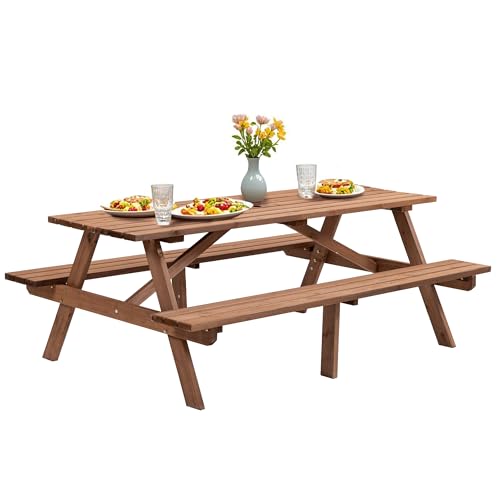
Wood picnic tables come in several configurations, and the right one depends on how you plan to use the space. The classic A-frame table with attached benches is the most recognizable and is a strong default for lawns and family yards. It is stable, seats a crowd, and keeps benches aligned with the table.
Attached-Bench Tables
Attached-bench designs are convenient because guests never need to reposition seating. They are excellent for families with children and for casual gatherings where people move around frequently. The trade-off is that they are harder to store and can be less flexible if you want to pull one bench away for extra standing room.
Detached-Bench Tables
Detached benches offer more flexibility. You can slide benches under the table for storage, move one to the side for a buffet setup, or pair the table with different seating. This configuration suits patios where the table doubles as a general-purpose outdoor surface.
Folding and Convertible Designs
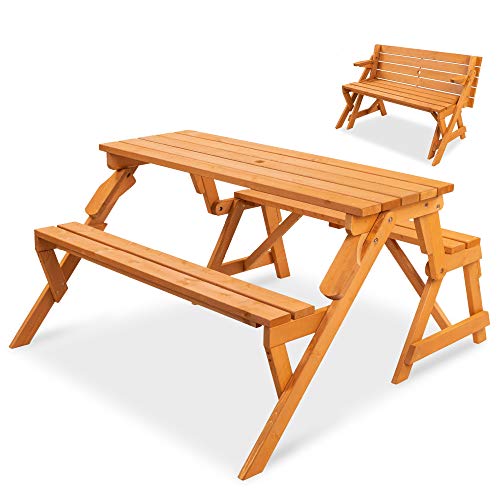
Folding picnic tables are useful for renters, small yards, and seasonal setups. Some convertible designs let a bench fold into a table or vice versa, which is handy for compact spaces. If this flexibility appeals to you, our article on a wooden bench that turns into a picnic table explains how these mechanisms work in practice.
Hexagonal and Round Tables
Round and hexagonal picnic tables encourage conversation because everyone faces the center. They work well on patios and in gazebos where a rectangular table would feel awkward. They tend to have a larger footprint per seat, so measure your space carefully before choosing one.
Sizing and Seating Capacity
Picnic table sizing is usually expressed in length, and the relationship between length and seating capacity is fairly predictable. As a general planning rule, allow roughly 24 inches of bench length per adult, and add a little extra for children or for guests who like elbow room.
- Four-seat tables: Typically around 60 to 72 inches long. A good fit for a family of four or a couple who hosts occasionally.
- Six-seat tables: Usually around 72 to 84 inches. Comfortable for family dinners plus a guest or two.
- Eight-seat tables: Often 96 inches or longer. Best for households that entertain regularly or host extended family.
Height matters too. Standard dining-height picnic tables place the tabletop around 28 to 30 inches from the ground, with benches around 17 to 18 inches. Some designs use a slightly higher table and bench height for easier seating, which can be helpful for older guests. If you plan to use the table with standard dining chairs instead of benches, check the compatible chair height in our wooden bench with back for dining table guide.
Finally, think about clearance. Leave at least 30 inches of open space around the table so people can slide in and out comfortably. On a deck, that clearance also protects the table from bumping against railings.
Market Tiers and What to Expect
Wood picnic tables generally fall into three broad market tiers. Understanding what each tier typically delivers helps you set realistic expectations before you start comparing specific models.
Entry-Level Tier
Entry-level tables are usually built from pressure-treated pine or a lighter softwood. They are a solid choice for first-time buyers, seasonal use, or households that expect to replace the table within a few years. Construction is generally simpler, and the surface typically requires sealing soon after assembly. These tables are well-specified for casual backyard use but may show wear faster under heavy daily exposure.
Mid-Range Tier
Mid-range tables often use cedar, acacia, or a higher-grade pine. You can usually expect better joinery, thicker boards, and more thoughtful hardware — such as galvanized or coated fasteners that resist rust. These tables are a balanced choice for most families and typically deliver the best combination of durability and manageable maintenance.
Premium and Luxury Tiers
Premium tables are commonly made from teak or dense hardwoods. They feature tighter grain, heavier construction, and finishes that hold up over many seasons. Luxury and commercial-grade tables are built for heavy use and often include reinforced frames or hardware designed for public or park settings. These are long-term investments that reward consistent basic care with decades of service.
For a broader comparison of how wood tables fit into a full patio setup, our wood outdoor dining table with umbrella hole guide explains how shade options integrate with table design.
Sealing and Weather Protection
No wood picnic table is fully maintenance-free, but a good protective routine dramatically extends its life. The two main approaches are sealing with a clear water-repellent finish and staining with a pigmented product that also blocks UV light.
Choosing a Finish
Clear sealants preserve the natural color of the wood but need reapplication more often. Pigmented stains and exterior oils provide better UV protection and slow the graying process. If you want to keep the original tone, look for a finish labeled UV-resistant. Our guide to wood sealants covers the differences between oil-based, water-based, and film-forming products.
Application Basics
- Clean the surface thoroughly and let it dry completely.
- Sand lightly if the wood feels rough or has raised grain.
- Apply the finish in thin, even coats, following the manufacturer's directions.
- Pay extra attention to end grain and joints, where water tends to enter.
- Reapply annually, or more often in harsh climates.
Ongoing Care and Maintenance
Routine care for a wood picnic table is straightforward. Wipe the surface after meals, especially after greasy or acidic foods, and sweep off debris that can trap moisture. Once or twice a year, inspect the hardware and tighten any loose bolts — a wobbly table puts stress on joints and accelerates wear.
If the surface develops mildew or dark spots, a diluted mild detergent and a soft brush usually resolve it. Avoid harsh pressure washing, which can raise the grain and strip finishes. For deeper cleaning, a dedicated wood cleaner designed for outdoor furniture is a safer choice than household bleach solutions.
At the end of the season, clean and dry the table before covering it. A cover that traps moisture against the wood can do more harm than good, so choose a breathable cover or store the table in a dry space if possible.
Placement and Backyard Setup
Where you place the table affects both its usability and its lifespan. A flat, well-drained surface is essential — a table that sits on uneven ground will rock and stress its joints over time. On a lawn, consider setting the table on a gravel pad or a level patch of ground rather than directly on soft turf.
Shade is another key consideration. A table placed in full afternoon sun can become uncomfortable, especially for children. Pairing the table with a shade sail, a nearby tree, or an umbrella-compatible design keeps the space usable through the hottest part of the day. Our guide to a wood outdoor coffee table with umbrella hole explains how umbrella integration works in adjacent seating areas.
If your picnic table sits within a larger patio layout, it can anchor a dining zone while other furniture defines lounging and cooking areas. Our wood patio furniture overview covers how dining, seating, and storage pieces can be combined for a cohesive look.
For smaller yards or balconies, consider a compact table paired with wooden outdoor chairs instead of fixed benches. This keeps the footprint flexible and lets the table double as a workspace or a serving surface when not in use for meals.
Buying Checklist
Before you commit to a specific wood picnic table, run through this checklist to make sure the model fits your space and your routine:
- Wood species: Matches your climate and maintenance preference.
- Seating capacity: Fits your household plus expected guests.
- Footprint: Leaves at least 30 inches of clearance on all sides.
- Hardware: Galvanized or coated fasteners that resist rust.
- Finish: Pre-sealed or ready for your own sealant application.
- Bench type: Attached, detached, or folding — based on your storage and flexibility needs.
- Umbrella compatibility: If shade is a priority, confirm the table has a pre-drilled hole or accepts an umbrella base.
- Assembly requirements: Check whether tools are included and how much setup is required.
If you are comparing a picnic table against other dining configurations, our guide to a wood dining table with bench covers how fixed dining sets differ from picnic-style designs in comfort and formality.
Frequently Asked Questions
What is the best wood for a picnic table?
Cedar, teak, and acacia are popular choices for their natural weather resistance. Pressure-treated pine is a solid entry-level option when properly sealed. Each wood type balances durability, maintenance needs, and appearance differently, so match it to your climate and care routine.
How do I protect a wood picnic table from weather?
Apply a UV-resistant sealant or exterior-grade stain at least once a year, and reapply after harsh winters. Cover the table during off-season storage and ensure water drains away from joints to prevent rot and warping.
What size picnic table fits a family of four?
A table around 60 to 72 inches long comfortably seats four adults. If you plan to host larger gatherings, consider a table that seats six to eight, and allow roughly 24 inches of bench width per person.
Can a wood picnic table stay outside all year?
Yes, provided it is built from a weather-resistant species and protected with a quality sealant. In extreme climates, seasonal storage or a fitted cover will extend the table's lifespan significantly.