Extendable Outdoor Table with Umbrella Hole: The Complete Buying Guide
Flexible seating, reliable shade, and a smarter patio layout. Everything you need to know before choosing an extendable outdoor dining table with a built-in umbrella hole.
Start ReadingWhy an Extendable Outdoor Table Makes Sense
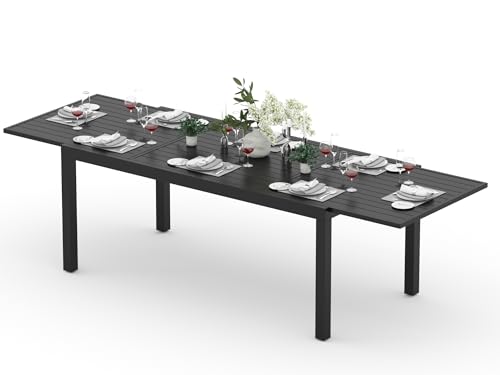
An extendable outdoor table with an umbrella hole solves two of the most common patio problems at once: limited space and limited shade. On an ordinary day, you keep the table compact so it fits comfortably on a small deck or balcony. When guests arrive, you pull out the extension leaves and seat six, eight, or more without buying a second table. Meanwhile, the center umbrella hole lets you mount a patio umbrella directly into the table, giving you overhead shade exactly where people sit.
This flexibility is why extendable designs have become a cornerstone of modern patio planning. If you are still mapping out your overall outdoor layout, our patio styles guide and small patio ideas are useful companions to this article. For households that entertain often, pairing an extendable table with a matching outdoor patio dining set creates a cohesive look that adapts to every occasion.
Key takeaway: The combination of an extension mechanism and a pre-drilled umbrella hole makes a single table serve as both a compact everyday surface and a full-size entertaining centerpiece.
How the Extension and Umbrella Hole Work Together
An extendable outdoor table uses one of two broad approaches to grow in length. The first is a leaf-based system, where one or more separate leaves are stored elsewhere and inserted into the middle of the table. The second is a self-storing mechanism, where the leaves fold or slide underneath the tabletop and are revealed by pulling the ends apart. Both types can accommodate an umbrella hole, but the details matter.
Butterfly leaf designs
In a butterfly-leaf table, the two halves of the tabletop fold outward and the leaves unfold in the middle. When the table is fully open, the umbrella hole sits precisely at the center seam. Because the hole is split across the leaves, it must be perfectly aligned when the table is extended. Most quality models use a locking mechanism that guarantees alignment, but it is always worth testing this in person or reading owner feedback.
Separate-leaf designs
Here, the umbrella hole is typically positioned in the fixed central section of the table, and leaves are added to either side. This design keeps the hole solid and unchanging regardless of extension, which is a genuine advantage for frequent umbrella users. The trade-off is that you need somewhere to store the leaves when they are not in use.
Sliding and drop-leaf designs
Sliding mechanisms move the table ends outward along metal tracks and reveal a central panel. Drop-leaf tables fold down at the sides instead of extending lengthwise. Both can include an umbrella hole, though drop-leaf tables are usually better suited to compact spaces and lighter use. If your priority is a fixed umbrella position with maximum simplicity, a model like an expandable patio table with umbrella hole may be a better fit than a full leaf system.
Sizing and Seating Capacity
Sizing is where many buyers make their first mistake. An extendable table is defined by two measurements: its compact length and its fully extended length. Both matter, because the compact size determines whether the table fits your everyday space, while the extended size determines how many people you can host.
As a practical rule of thumb, allow about 24 inches of table width per seated person along each side. A table that extends to 8 feet can comfortably seat three people per side plus one at each end, for a total of eight. A table that extends to 10 feet can accommodate four per side plus the ends, for ten seats.
| Extended Length | Typical Seating | Best For |
|---|---|---|
| Around 6 feet | 4 to 6 people | Small patios, couples, occasional guests |
| Around 8 feet | 6 to 8 people | Families, regular entertaining |
| Around 10 feet | 8 to 10 people | Large decks, holiday gatherings |
| Over 10 feet | 10 or more people | Commercial-grade or banquet-style setups |
Also consider the clearance around the table. You want roughly 36 inches between the table edge and any wall, railing, or planter so chairs can pull out comfortably. If your space is tight, our dining table with bench for small spaces guide covers compact alternatives that still leave room for an umbrella.
Bench seating can be a smart match with an extendable table because benches scale naturally with length. Explore dining table and bench sets and dining sets with bench to see how a bench-and-table pairing can seat more people in less footprint.
Materials and Frame Construction
The extension mechanism places additional stress on the table frame, so material quality matters more than on a fixed table. A wobbly fixed table is annoying; a wobbly extendable table can be a safety concern. Focus on the frame first, then the tabletop.
Aluminum frames
Powder-coated aluminum is the most popular choice for extendable outdoor tables. It is lightweight enough to move when needed, resistant to rust, and generally the most reliable material for sliding mechanisms. Look for reinforced cross-bracing under the tabletop and a powder-coated finish described as rust-proof.
Steel frames
Steel offers a solid, heavy-duty feel and excellent stability for larger tables. The trade-off is weight and the need for a high-grade rust-resistant coating. If you live in a humid or coastal area, inspect welds and coating coverage carefully. Many premium models combine a steel frame with an aluminum or composite top for the best balance.
Wood and eucalyptus
Wood tables bring warmth and a natural look, and eucalyptus in particular is valued for its density and weather resistance. Wooden extension tables typically use wooden slides or metal tracks; both can work well, but they require more seasonal maintenance. Re-sealing the surface and lubricating moving parts annually will keep the mechanism smooth.
Tabletop options
- Slatted metal or composite: drains rainwater well and resists warping.
- Glass: easy to wipe down, but heavier and more fragile during extension.
- Solid wood or faux wood: warm appearance, requires sealing.
- HPL or laminate: practical, scratch-resistant, and easy to maintain.
Whatever material you choose, confirm that the umbrella hole is reinforced with a collar or grommet. This small detail prevents water intrusion and reduces wear around the pole. If you are comparing broader material options, our durable outdoor furniture guide is a helpful reference.
Umbrella Compatibility and Shade Planning
An umbrella hole is only useful if the umbrella you pair with it is the right size and properly supported. Two numbers matter most: the pole diameter and the canopy size.
Pole diameter
Most patio umbrellas use a pole between 1.5 and 2 inches in diameter. Check the hole diameter on the table before buying an umbrella, and use a reducer ring if the hole is slightly larger than the pole. A snug fit reduces wobble and protects the hole edge.
Canopy size
For shade coverage, the canopy should extend roughly 2 feet beyond the table edge on every side. A 9-foot umbrella is a common match for tables up to about 8 feet long. If your table extends to 10 feet or more, consider a 10-foot or 11-foot canopy. An extra-large patio umbrella with base is a practical option for larger extended tables.
Base and stability
An umbrella mounted through a table hole still needs a weighted base beneath the table. Wind can create significant leverage on the pole, so choose a base rated for the canopy size. On exposed decks, consider a cantilever umbrella as an alternative, since it keeps the tabletop clear and shifts the load to a side base.
Pro tip: If you entertain in the evening, look at umbrellas with built-in LED lighting. It removes the need for separate overhead fixtures and keeps the tabletop free of clutter.
Extension Mechanisms Compared
The extension mechanism is the defining feature of this table type, and it is where quality differences show up most clearly. Here is how the main options compare.
| Mechanism | How It Works | Best For | Considerations |
|---|---|---|---|
| Butterfly leaf | Tabletop halves fold outward and a hinged leaf unfolds in the middle | Frequent expanders who want self-storage | Umbrella hole is split across leaves; alignment must be precise |
| Separate leaf | One or two leaves are inserted into the center of the table | Households that need maximum extension occasionally | Requires storage space for the leaves |
| Sliding track | Table ends slide outward along metal rails | Heavy-duty use and large tabletops | Tracks need periodic lubrication |
| Drop-leaf | Side panels fold down from the main surface | Compact spaces and light use | Less extension range than other systems |
Whichever mechanism you choose, test the action before committing. A smooth mechanism should glide without binding, lock firmly in both positions, and show no flex at the seams when pressure is applied to the middle of the table. For additional context on how extended tables compare with other configurations, see our guides on the extendable outdoor dining table with umbrella hole and the extendable patio table with umbrella hole.
Market Tiers at a Glance
Extendable outdoor tables with umbrella holes fall into a few recognizable tiers. Rather than tracking specific figures, it helps to understand what each tier typically delivers so you can match the product to your intended use.
Entry-level tier
Entry-level tables usually feature lightweight aluminum frames, simpler sliding or folding mechanisms, and basic powder-coated finishes. They suit occasional use, balconies, and lighter entertaining. The umbrella hole is present but may not be reinforced with a metal collar. These models are a reasonable starter choice for renters or first-time patio owners.
Mid-range tier
Mid-range models step up to heavier gauge frames, smoother track systems, reinforced umbrella collars, and better hardware. This is often the sweet spot for families who entertain regularly. You can expect more consistent alignment on butterfly-leaf designs and a more rigid feel at full extension.
Premium tier
Premium tables emphasize frame rigidity, high-grade coatings, and refined mechanisms that operate with a single hand. Tabletop materials may be thicker, and hardware is often stainless steel. These models are a long-term investment for a primary outdoor dining space.
Luxury and commercial-grade tiers
At the top end, tables are built for heavy-duty use with solid construction, oversized bases, and mechanisms rated for frequent cycling. Commercial-grade units are often found in hospitality settings and pair with large umbrellas. For most residential patios, premium tier already covers the durability needs of daily family life.
Care, Storage, and Longevity
An extendable table has more moving parts than a fixed one, so a little routine care goes a long way. These habits will keep the mechanism smooth and the surface looking sharp.
Routine cleaning
- Wipe the tabletop with mild soap and water after meals; avoid abrasive pads on coated metal and glass.
- Clear debris from the umbrella hole and the leaf seams so it does not work its way into the mechanism.
- Rinse and dry the table after heavy rain, especially if the top is slatted.
Mechanism maintenance
- Lubricate metal tracks and hinges once or twice a season with a silicone-based lubricant.
- Tighten bolts and screws at the start of each season and after moving the table.
- Open and close the table fully a few times after winter storage to confirm smooth operation.
Seasonal protection
- Use a fitted cover during the off-season, and store separate leaves in a dry location.
- Remove the umbrella before storms or high winds to protect both the canopy and the table hole.
- Re-seal wooden tabletops annually to prevent moisture damage.
If you are setting up a full outdoor dining zone, our weatherproofing guide and outdoor care hub cover protective covers, rust prevention, and seasonal routines in more detail.
Buying Checklist
Before you commit to a specific extendable table, run through this checklist. It covers the details that are easy to overlook and hard to fix after delivery.
- Measure both configurations. Confirm the compact and extended lengths against your patio dimensions, including clearance for chairs.
- Check the umbrella hole position. Decide whether you prefer a fixed central hole or a split-leaf design, and confirm the hole diameter matches your umbrella pole.
- Inspect the frame. Look for reinforced cross-bracing, welded joints, and a coating that is described as rust-resistant.
- Test the mechanism. If possible, extend and retract the table; it should glide smoothly and lock firmly.
- Plan shade coverage. Match the canopy size to the fully extended length, and choose a base rated for wind conditions in your area.
- Account for storage. Self-storing leaves are convenient; separate leaves need a dry storage spot.
- Consider seating. Benches scale naturally with extension, while chairs offer more flexibility for mixed seating. See our dining bench seat guide if you are weighing the options.
- Review delivery and assembly. Larger tables ship in multiple boxes; our delivery and assembly guide explains what to expect.
Ready to Explore Your Options?
Browse our recommended extendable outdoor tables with umbrella holes and compare features side by side.
View Recommended ProductsFrequently Asked Questions
What is an extendable outdoor table with an umbrella hole?
An extendable outdoor table with an umbrella hole is a patio dining table whose length can be increased using extension leaves or a sliding mechanism, while also featuring a pre-drilled center hole that accommodates a patio umbrella pole for shade.
Do extension leaves interfere with the umbrella hole?
On well-designed models, the umbrella hole remains centered and accessible whether the table is extended or compact. On some butterfly-leaf designs, the hole is split across the leaves and aligns perfectly when the table is fully open, so always confirm the mechanism before buying.
What size umbrella fits an extendable patio table?
As a general rule, choose an umbrella canopy that overhangs the table by roughly 2 feet on each side. For a table that extends from about 6 feet to 8 feet, a 9-foot umbrella is a common match; larger extended tables may call for a 10-foot or 11-foot canopy.
How do I maintain an extendable outdoor dining table?
Clean the surface regularly with mild soap and water, lubricate metal extension tracks periodically, tighten hardware each season, and use a fitted cover during off-season storage. Wood tables benefit from re-sealing, while metal tables should be checked for scratches that could lead to corrosion.
Can I use a cantilever umbrella instead of a table-mounted umbrella?
Yes. A cantilever umbrella keeps the tabletop clear and shifts the load to a side base, which can be useful on windy decks or when you want unobstructed table space. The trade-off is that cantilever bases often need more floor area than a standard table-mounted base.
Related Reading
If you are still refining your outdoor dining plan, these guides may help: extendable outdoor dining table, expandable patio table, eucalyptus folding deck table, and dining table with bench and chairs. For larger gatherings, explore dining tables with 10 seats and dining table sets for 8 with bench.