Why a Farmhouse Dining Table with Bench Seating Deserves Your Attention
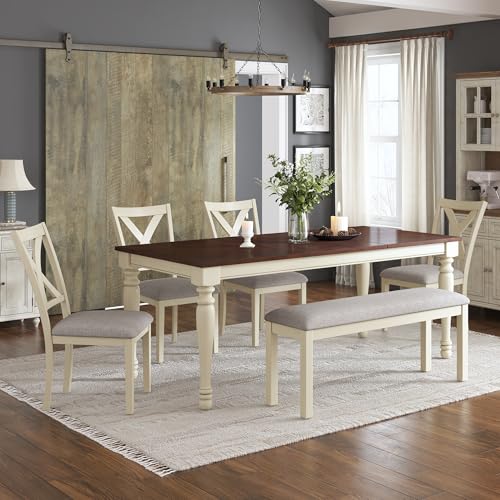
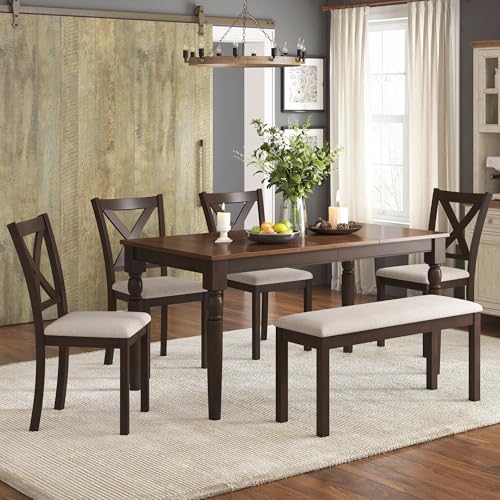
A farmhouse dining table with bench seating combines rustic character with practical function. The look is warm and grounded — thick tabletop, sturdy legs, natural wood grain — while the bench invites people to slide in together rather than claim individual chairs. For families and hosts, this layout does more than look good: it improves flow around the table and makes room for one more guest without rearranging the whole room.
Bench seating also solves a common dining-room problem. Chairs take up visual and physical space on both sides of the table; a bench tucks neatly underneath and keeps sightlines open. In an open-plan home, that visual calm matters. If you are furnishing a farmhouse dining area and want the bench to feel integrated rather than added on, a dedicated dining table and bench set is the most reliable route — the proportions are already matched.
Before committing, it helps to understand where bench seating fits within the wider category. Our overview of dining bench seats explains how bench dimensions, seat depth, and clearance interact with standard table heights, which is useful context before you shop a specific farmhouse set.
Wood Types and Materials: What Holds Up Over Time
The material determines how the table ages, how much maintenance it needs, and how heavy it feels in the room. Farmhouse style leans toward solid wood, but engineered and mixed-material options deserve a fair look, especially in homes with humidity swings or heavy daily use.
Solid Pine and Reclaimed Wood
Pine is the classic farmhouse choice: warm tone, visible grain, and a softness that takes a distressed finish well. It is lighter than oak, which makes a large bench easier to move. Reclaimed wood brings the most authentic rustic look, with knots, nail holes, and color variation that no factory finish can imitate. The trade-off is that reclaimed planks can be uneven, so check that the tabletop is properly joined and sealed.
Oak, Acacia, and Hardwood Blends
Oak and acacia sit in the durable middle ground. They resist dents better than pine and hold a crisp edge profile, which suits farmhouse tables that lean toward a cleaner, more modern rustic look. Acacia is particularly common in bench-and-table sets because it handles outdoor-to-indoor transitions and seasonal humidity reasonably well. If you want a set that doubles as patio furniture, compare it against our guide to durable outdoor furniture construction standards before assuming an indoor set will survive outside.
Engineered Wood and Veneer
Engineered cores with a real wood veneer give you a stable tabletop that resists warping — a real advantage in apartments with forced-air heating. They sit at the entry-level and mid-range tiers of the market. The trade-off is that a deep scratch cannot be sanded out the way it can on solid wood. For a formal farmhouse dining room, solid wood is usually the better long-term investment; for a starter home or rental, a well-built veneer set is a sensible, stable choice.
| Material | Market Tier | Best For | Maintenance Level |
|---|---|---|---|
| Solid pine | Entry to mid-range | Casual family dining, distressed finishes | Moderate — reseal periodically |
| Reclaimed wood | Mid-range to premium | Authentic rustic character, statement pieces | Moderate to high — uneven planks need care |
| Oak / acacia hardwood | Mid-range | Daily heavy use, cleaner rustic lines | Low to moderate |
| Engineered wood with veneer | Entry-level | Apartments, climate-controlled rooms | Low — avoid deep scratches |
| Metal frame with wood top | Mid-tier | Industrial farmhouse look, high-traffic homes | Low |
Bench Styles: Backless vs. With Back vs. Corner Configurations
The bench is where most buying decisions go wrong. A backless bench looks cleaner and tucks away, but it offers less support for long dinners. A bench with a back is more comfortable for older guests and lingering meals, but it takes up more visual and physical space. Neither is universally better — it depends on who sits there and for how long.
Backless Benches
Backless benches are the most versatile. They slide fully under the table, work on either side, and can be pulled to a wall as extra seating. They suit casual weeknight meals and homes where the dining table doubles as a workspace. The main limitation is lumbar support — fine for a quick breakfast, less ideal for a three-hour holiday dinner. For sets built around this layout, a dining table with bench and chairs gives you the best of both: backless bench on one side, supportive chairs on the other.
Benches with a Back
A bench with a back converts the bench into a proper seat. It works well along a wall or in a corner, and it keeps guests comfortable during long meals. If your household includes grandparents or anyone who needs back support, prioritize this style. Our guide to the dining table with bench with back and chairs covers how these sets are typically proportioned and where they fit best.
Corner and Banquette Benches
Corner benches wrap around two sides of the table and make the most of a nook, a bay window, or an open corner. They are the most space-efficient option for small rooms and the most social, because everyone faces inward. The trade-off is fixed placement — you cannot easily reconfigure the room. For tight footprints, a dining set with corner bench and chairs can turn an awkward corner into the best seat in the house. If you are working with a narrow room, the layout advice in our dining table with bench for small spaces guide is worth reading before you commit.
Sizing and Seating Capacity: Getting the Numbers Right
Most farmhouse dining table problems come down to size, not style. A table that is too wide makes conversation hard; a bench that is too tall relative to the tabletop makes seating uncomfortable. Use the following benchmarks as your starting point.
Table Height
Standard dining tables sit around 30 inches high. The bench seat should land roughly 10 to 12 inches below the tabletop, which puts a comfortable bench seat height at about 18 inches. If the gap is smaller, knees hit the apron; if it is larger, guests feel like children at the grown-ups' table.
Table Length and Seating
- A 60-inch table seats four comfortably with a bench on one side.
- A 72-inch table seats six — three per bench side or a bench-plus-chairs mix.
- An 84-inch table seats eight with two benches.
- Allow about 24 inches of table edge per seated person for elbow room.
If you regularly host larger groups, an extendable dining table with bench and chairs lets you keep a compact footprint day to day and open up for holidays. Sets configured for specific headcounts — such as a dining table set for 6 with bench or a dining table set for 8 with bench — are already proportioned so the bench length matches the table length, which removes a lot of guesswork.
Bench Depth and Clearance
Bench seat depth between 14 and 16 inches suits most adults; deeper than that and shorter guests cannot reach the table comfortably. Leave at least 30 inches of clearance between the bench edge and the nearest wall or counter so people can slide in and out without asking the whole table to move.
Matching Table and Bench Length
A bench should be slightly shorter than the table so it tucks in without overhang. If the bench is longer, it catches shins and blocks circulation. If you are buying pieces separately rather than as a set, measure the table's apron-to-apron length and look for a bench that sits 4 to 8 inches shorter.
Table Shape and Finish Options
Farmhouse style is not limited to rectangular tables, though rectangular is the most common and the easiest to pair with benches. Understanding the alternatives helps you match the table to the room rather than forcing the room around the table.
Rectangular Tables
The default farmhouse shape. A rectangular top pairs naturally with a long bench, seats the most people for a given footprint, and suits long, narrow dining rooms. Trestle-leg and turned-leg bases are both traditional; trestle bases give more legroom along the bench side, which matters if the bench is backless.
Round and Oval Tables
Round tables improve conversation and work well in square rooms, but benches are less natural on a round top — a curved bench is a specialty item. Oval tables split the difference: they soften the farmhouse look while still accommodating a straight bench along the long axis.
Finish Choices
- Natural and light oak finishes keep a small room feeling airy and suit coastal-farmhouse blends.
- Walnut and espresso stains add formality and hide everyday marks better.
- Whitewashed and two-tone finishes (painted base, natural top) are the most recognizably farmhouse and pair well with bench seating that has a painted frame.
- Distressed and rubbed-through finishes hide wear by design — a practical choice in homes with kids.
Comfort and Ergonomics: Making Bench Seating Work for Long Meals
Bench seating has a reputation for being less comfortable than chairs, and that reputation is earned when the bench is poorly specified. A few details close the gap.
- Seat cushions: A 2-inch tie-on cushion transforms a hard wooden bench for long dinners. Choose a cushion with a non-slip base if the bench is smooth-finished.
- Slight seat contour: Some benches have a gently scooped seat; this distributes weight better than a flat plank.
- Footrest or stretcher: A lower stretcher bar gives shorter guests something to rest their feet on and stops legs from dangling.
- Back support where it counts: Put the bench with a back on the side where the most comfort is needed, and use chairs elsewhere.
If the bench side will be used by the same people every night, it is worth testing the seat height against the table height before buying. A bench that is 2 inches too tall is the single most common comfort complaint in farmhouse dining sets.
Small Spaces and Layout Tips
Bench seating is one of the best tools for a small dining room, because it removes the chair-back clearance that normally eats into circulation space. The key is to treat the bench as built-in seating rather than movable furniture.
- Push the bench against a wall or window and slide the table toward it; this frees the walkway on the opposite side.
- Use a corner bench in a nook to seat four in the footprint of a two-person table.
- Choose a bench with storage underneath if the room doubles as a homework or craft space.
- Keep the bench backless on the open side of the room so the table does not read as a wall.
For a compact farmhouse set that is already proportioned for tight rooms, a 3-piece dining set or a dining table set for 4 with bench is a good starting point. If the room has an awkward corner, a dining table corner set makes better use of it than a rectangular table floating in the middle.
Styling a Farmhouse Dining Set
The farmhouse look depends on restraint. A few well-chosen elements do more than a crowded tablescape.
- Mix bench and chairs deliberately: A bench on one long side and chairs on the other is the most balanced arrangement and the easiest to live with. Sets like a dining table with bench and 4 chairs are built around exactly this layout.
- Add texture, not clutter: A linen runner, a wooden bowl, and simple stoneware are enough.
- Lighting: A linear pendant over the table's centerline suits rectangular farmhouse tables better than a round chandelier.
- Seating contrast: If the table is natural wood, consider a painted bench or vice versa — the two-tone contrast is a farmhouse signature.
If you want the full coordinated look, a farmhouse dining table with bench and chairs removes the guesswork of matching finishes. Sets sized for specific households, such as a farmhouse dining table set for 6 with bench, are worth comparing against your room dimensions before you decide on a configuration.
Care and Maintenance
A farmhouse table is meant to be used, so choose a finish you are willing to maintain rather than one you are afraid to touch.
- Wipe spills promptly — standing water is the main enemy of solid wood tabletops.
- Use coasters and trivets; heat marks are hard to remove from oiled finishes.
- Re-oil or re-wax oiled finishes once or twice a year, depending on use.
- Keep the table out of direct, prolonged sunlight to slow color shifts.
- Check bench hardware and tighten bolts seasonally — benches take more lateral stress than chairs.
- Use felt pads under benches on hardwood floors to prevent scratching.
Reclaimed and distressed finishes are forgiving, but they still need sealing to prevent stains from setting into the grain. If the set will live in a humid climate, confirm the maker uses a moisture-resistant finish on both the top and the underside.
Buying Checklist: What to Confirm Before You Commit
By this point you have narrowed the field. Use this checklist to verify the details that are easy to overlook in a product listing.
- Seat height vs. table height: Bench seat about 10–12 inches below the tabletop.
- Bench length: Slightly shorter than the table so it tucks in cleanly.
- Seat depth: 14–16 inches for most adults.
- Clearance: At least 30 inches from bench edge to the nearest wall.
- Material and finish: Confirm solid wood vs. veneer, and whether the finish needs periodic re-oiling.
- Assembly: Check whether the bench and table ship flat-packed and what tools are required. Our delivery and assembly guide explains what to expect from large furniture shipments.
- Configuration: Decide whether you want bench-plus-chairs, two benches, or a corner bench before comparing sets.
- Household fit: Match the seating count to how many people actually eat at the table on a normal night, not to holiday maximums.
If you are still deciding between a bench-centric layout and a chair-centric one, compare a bench set against a dining room set with bench and chairs and a traditional dining table and 4 chairs and bench configuration side by side. The difference in daily usability is usually obvious once you picture your own family at the table.
Frequently Asked Questions
Is a farmhouse dining table with bench seating comfortable for long meals?
Yes, if the bench is correctly sized and cushioned. The two essentials are a seat height about 10–12 inches below the tabletop and a 2-inch cushion. For very long dinners, put a bench with a back on one side and chairs on the other.
How many people can sit at a farmhouse table with a bench?
A 60-inch table seats four comfortably; a 72-inch table seats six; an 84-inch table seats eight with two benches. Allow roughly 24 inches of table edge per person and keep the bench slightly shorter than the table.
Should the bench be longer or shorter than the table?
Shorter. A bench that is 4 to 8 inches shorter than the table tucks in without overhang, so it does not catch shins or block circulation around the table.
Backless bench or bench with a back — which should I choose?
Choose backless on the open side of the room for a cleaner look and easier tucking. Choose a bench with a back where guests will sit longest, or along a wall or in a corner, for better support.
Can a farmhouse dining set with a bench go in a small room?
Yes — bench seating is one of the most space-efficient options because it removes chair-back clearance on one side. A corner bench in a nook is the most efficient layout of all.
What is the best wood for a farmhouse dining table?
Solid pine and reclaimed wood give the most authentic rustic character; oak and acacia resist dents better for daily heavy use. Engineered wood with a veneer is a stable choice for climate-controlled rooms, but it cannot be sanded out the way solid wood can.