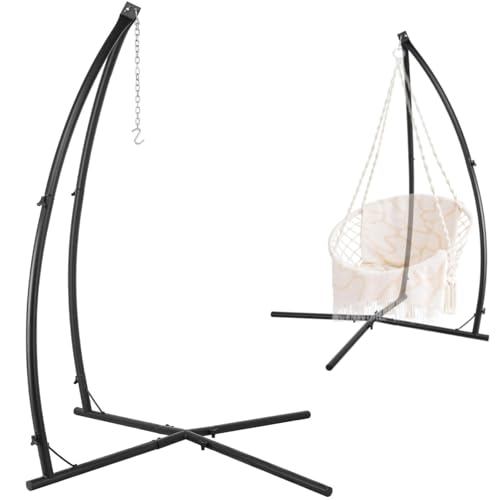
Hammock Chair Stand Buying Guide: How to Choose the Right Stand for a Hanging Chair
A hammock chair delivers the same weightless, back-and-forth comfort as a full hammock in a fraction of the space, and a hammock chair stand is what makes that possible almost anywhere. Instead of hunting for the perfect tree limb or drilling into a porch beam, a freestanding stand gives you a self-contained anchor that can move from patio to lawn to sunroom. This guide walks through the stand types, frame materials, weight ratings, and clearance requirements that matter most when you are researching a hanging chair with stand before you commit.
Readers who land on this page are usually past the curiosity stage. You already know you want a hammock swing stand, and you want a clear picture of how the pieces fit together: how much room the frame needs, how the suspension point affects the swing, and which builds hold up outdoors. Everything below is organized around those decisions so you can evaluate listings with confidence rather than guesswork.
Why a Dedicated Stand Matters
A hammock chair needs a single, stable overhead anchor. When that anchor is a stand, the setup becomes portable and independent of your home's structure. That is the core appeal of a freestanding hammock chair stand: no permanent modifications, no risk of damaging a load-bearing beam, and the freedom to reposition the chair with the seasons.
The trade-off is that the stand, not the house, carries the load. Every stand is engineered around a rated capacity, a specific suspension height, and a base geometry that resists tipping as the chair swings. Understanding those three variables is the whole game. If you also want to compare chair styles before pairing one with a frame, our overview of hammocks and the hammock on wooden stand option are useful companion reads.
Types of Hammock Chair Stands
Most hammock chair stand designs fall into four broad families. Each trades off between footprint, swing feel, and ceiling or wall clearance in a different way.
C-Stand (Crescent Base)
The C-stand, sometimes called a crescent or curved-base stand, has a frame that curves from a wide base up and over to a suspension point near the chair. The base often extends forward under the seat, which keeps the center of gravity low and the footprint compact. These stands are a good fit for smaller patios and balconies because the chair sits close to the ground and swings within a tight arc. The hammock camping chair style of seat pairs naturally with this frame because both favor compact setups.
Arc Stand (Cobra Frame)
An arc stand, occasionally called a cobra frame, uses a tall, sweeping curve that suspends the chair from a higher point. The result is a longer, more open swing that feels closer to a classic hammock. The trade-off is a larger footprint and a higher overall frame, so arc stands suit open decks and lawns better than tight urban balconies.
Frame Stand with Integrated Chair
Some packages combine the stand and seat in one product, which simplifies sizing because the manufacturer has already matched the suspension height to the chair. These are convenient for first-time buyers, though they limit your flexibility if you later want to swap in a different hanging chair. If you like the combined approach, it is worth looking at a hanging chair with stand or the hanging chair hammock category to see how seats and frames are bundled.
Hanging Swing Stand
A hammock swing stand is the broader category that includes frame stands designed for seat-style chairs rather than flat loungers. These frames tend to have a wider top beam or arched support so the chair can hang centrally without drifting. The hanging swing chair and hanging patio chair pages show the kinds of seats these stands are built for.
Quick rule of thumb: measure the base footprint and the assembled height before you buy. The chair may fit in your space, but the stand's legs and the frame's top curve often need more clearance than buyers expect.
Stand Types Compared
| Stand Type | Best For | Footprint | Notes |
|---|---|---|---|
| C-stand / crescent base | Small patios, balconies, compact decks | Compact | Low center of gravity; chair sits close to ground |
| Arc / cobra frame | Open decks and lawns | Generous | Higher suspension point; longer, smoother swing |
| Integrated chair + stand | First-time buyers | Varies by package | Pre-matched sizing; less flexibility to swap seats |
| Hanging swing stand | Seat-style hanging chairs | Medium to large | Wider top support keeps the chair centered |
Frame Materials and Weather Resistance
The frame material determines how the stand handles sun, rain, and repeated swinging. There are three common options, and the differences are meaningful over the life of the product.
Powder-Coated Steel
Steel is the most common frame material for a freestanding hammock chair stand because it is strong for its size and holds a stable shape under load. A powder-coated finish adds a durable, chip-resistant layer that resists rust. The best steel stands use a rust-proof finish and reinforced joints at the suspension point, since that is where stress concentrates. If the stand will live outdoors year-round, look for a heavy-duty build with sealed tubing ends.
Aluminum
Aluminum is lighter than steel, which makes the stand easier to move and store. It resists corrosion well and suits coastal climates where salt air is a factor. The trade-off is that aluminum frames sometimes feel less planted than steel, so check the base design and any included ground stakes or weighted feet.
Wood
Wooden stands, often in teak, acacia, or eucalyptus, bring a warmer look that pairs with garden furniture. They need periodic sealing to stay weather-resistant and are typically heavier to reposition. A wooden frame is a long-term investment in appearance more than portability, and it rewards buyers who are willing to maintain the finish.
Whichever material you choose, confirm that the finish is described as weather-resistant and that the stand is intended for outdoor use. For more on materials that survive the elements, the garden furniture that can be left outside all year guide is a helpful cross-reference.
Weight Capacity and Load Safety
Weight capacity is the single most important specification on a hammock chair stand, and it is also the one buyers misread most often. Two numbers matter: the rated capacity of the stand and the rated capacity of the chair. The effective limit is the lower of the two, minus a safety margin.
As a practical approach, look for a stand whose rated capacity comfortably exceeds the weight of the chair plus the heaviest person who will use it. Dynamic loads during swinging are higher than static weight, so headroom in the rating is not wasted. A mid-range model usually offers a more generous rating than an entry-level frame, and a premium or professional-grade stand typically adds thicker tubing, better welds, and a more stable base. Always check whether the stated capacity applies to the stand, the chair, or the complete set.
Sizing tip: a stand rated for a higher load is not automatically better for a small space. Match the capacity to your realistic use, then prioritize base stability and footprint within that tier.
Suspension Height and Swing Clearance
The suspension point sets the character of the swing. A lower hang keeps the chair close to the ground and limits the arc, which is safer in tight spaces. A higher hang allows a longer, smoother glide but demands more open room in every direction.
Before ordering, measure three things: the assembled height of the stand, the distance from the suspension point to the seat, and the total swing path of the chair. Then check that path against nearby walls, railings, and furniture. A stand that fits on paper can still feel cramped if the chair brushes a railing at the end of each swing. For a broader look at choosing hanging seats, the hanging egg chair with stand for two and hanging wicker egg chair pages illustrate how seat depth affects clearance needs.
Base Design, Stability, and Surfaces
Stability comes from the base, not the top of the frame. A wide, low base with feet that spread outward resists tipping far better than a narrow pedestal. Look for stands with non-slip feet or optional ground stakes, especially if you plan to use the chair on grass, gravel, or a sloped lawn.
On hard surfaces such as pavers or composite decking, rubber pads under the feet protect both the stand and the surface. On soft ground, stakes or weighted feet keep the frame from shifting as the chair swings. If your yard is exposed to wind, consider a stand with a heavier base or plan to reposition it during storms.
Assembly, Portability, and Storage
Most freestanding stands assemble with basic hand tools in under an hour, and many use tool-free locking pins for the main joints. If you plan to move the stand between seasons, prioritize a frame that breaks down into manageable sections and check the packed dimensions against your storage space.
Portability cuts both ways. A lighter frame is easier to move but may feel less planted. A heavier frame is more stable but harder to relocate. Decide which matters more for your routine before you commit, and confirm whether the stand ships with a carry bag or storage strap.
Indoor and Covered Use
Hammock chair stands are not limited to the outdoors. Many work well in a sunroom, bedroom, or reading corner, provided the ceiling height clears the frame. Indoors, the main concerns are floor protection and the swing path against walls and furniture. Use pads under the feet and leave extra room on the swing axis. Our guide to hammocks for indoors covers the room-by-room considerations in more detail.
Pairing a Stand with the Right Chair
The stand and the chair need to agree on suspension height, hardware, and load. Most stands include a hook or carabiner at the top, but the chair's own hardware and strap length determine the final seat height. A chair with a long spreader bar may need a wider top support, while a compact seat works with almost any frame.
If you are still choosing the seat, the hanging egg chair with stand and cushion and hanging egg chair with stand listings show how bundled packages handle the pairing for you. For a frame-first approach, the hammock chair stand category is the natural starting point, and the hammock swing stand page covers the wider swing-frame options.
What to Check Before You Buy
- Rated capacity: confirm the stand rating exceeds the chair plus user weight, with margin for swinging.
- Assembled dimensions: compare height and base footprint against your space and ceiling.
- Suspension hardware: verify the included hook or carabiner matches the chair's attachment point.
- Frame finish: look for powder coating or a sealed, weather-resistant finish.
- Base stability: prefer wide, low bases with non-slip feet or ground stakes.
- Assembly and storage: check the packed size and whether the frame breaks down.
If you are furnishing a broader outdoor area at the same time, it helps to see how a hanging chair fits alongside other pieces. Our garden chairs and hanging chair bed pages show complementary seating, while the garden furniture conversation sets guide covers grouping options for a full layout.
Frequently Asked Questions
Do I need a stand for a hammock chair?
A stand is essential unless you have a suitable overhead anchor point such as a strong tree limb, beam, or ceiling joist. A freestanding stand lets you place the chair anywhere on a patio, deck, or lawn without structural modifications.
What weight capacity should a hammock chair stand have?
Choose a stand rated well above the combined weight of the chair and the heaviest person who will use it. Look for a capacity that comfortably exceeds your expected load, and check that the rating applies to the stand rather than only the chair.
What is the difference between a C-stand and an arc stand?
A C-stand uses a curved base that wraps partway under the chair, keeping the footprint compact and the chair close to the ground. An arc stand uses a taller curved frame that suspends the chair from a higher point, giving a more open swing and a larger footprint.
Can a hammock chair stand be used indoors?
Yes, many freestanding stands work indoors provided the ceiling height and floor space allow for the frame and swing arc. Check the assembled height against your ceiling and protect hard floors with pads under the base feet.
How much space does a hammock chair stand need?
Allow clearance for both the stand base and the swing path of the chair. As a general rule, leave at least two feet of open space in front of and behind the chair, plus additional room for the base legs, which are often wider than the chair itself.
Are hammock chair stands weather-resistant?
Powder-coated steel and aluminum stands are typically the most weather-resistant, while wood stands need periodic sealing. Even weather-resistant stands benefit from being moved under cover or covered during long periods of harsh weather.
Final Thoughts
A hammock chair stand turns a single hanging seat into a flexible retreat you can set up almost anywhere. Focus on the three variables that drive satisfaction: a stable base, a capacity that leaves room for real-world swinging, and a suspension height that matches your space. Get those right and the chair becomes the easiest part of the decision.
When you are ready to compare specific models, review the recommended products below and check each listing against the capacity, footprint, and finish criteria in this guide. For related seating ideas, the hammock swing stand and hanging chair with stand categories are the best next stops.