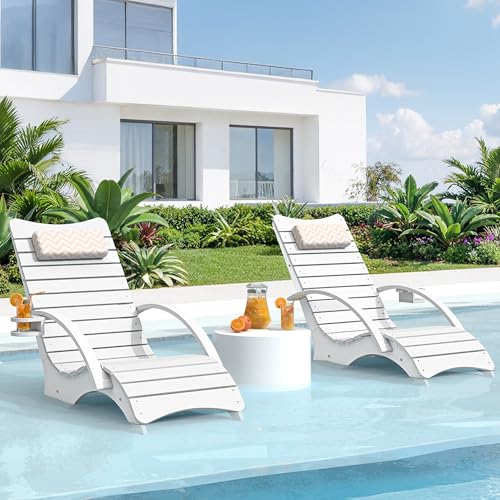
In-Pool Lounge Chairs: The Complete Buying Guide
Everything you need to know about built-in pool loungers, tanning ledge chairs, and underwater seating — from materials and water depth requirements to design integration and long-term care.
Explore Top PicksWhy in-pool lounge chairs matter: A tanning ledge or shallow shelf is one of the most used zones in any backyard pool, yet many homeowners leave it bare. Adding dedicated in-pool seating transforms that shelf into a genuine relaxation destination — a place to read, cool off, and socialize without fully submerging. This guide walks you through every decision point so you can choose with confidence.
What Are In-Pool Lounge Chairs?
In-pool lounge chairs — also called pool ledge loungers, tanning ledge chairs, or underwater loungers — are seating pieces designed to rest on the shallow shelf of a swimming pool. Unlike traditional pool loungers that sit on the deck, these chairs are placed directly in the water, typically on a tanning ledge with 8 to 12 inches of depth. The result is a comfortable, partially submerged reclining experience that keeps you cool while you sunbathe or socialize.
There are two broad categories. Weighted removable loungers are filled with water or sand and can be lifted out for cleaning, storage, or seasonal changes. Built-in loungers are integrated into the pool structure during construction — often molded into the gunite or fiberglass shell — and become a permanent architectural feature. Both approaches have distinct advantages, and the right choice depends on whether you are building a new pool or upgrading an existing one.
Most in-pool chairs are designed to complement the surrounding patio and pool deck. Manufacturers now offer a wide range of finishes, from textured resin that mimics natural stone to powder-coated aluminum frames that resist corrosion in chlorinated or saltwater environments.
Why Add In-Pool Seating to Your Pool?
In-pool lounge chairs solve a problem that many pool owners do not realize they have: the tanning ledge is often the most underutilized part of the pool. Without seating, it becomes a stepping area rather than a destination. Adding dedicated loungers delivers several practical benefits:
- Comfort in the water: Reclining partially submerged keeps your core cool while your upper body stays dry and sun-exposed — ideal for reading, conversation, or simply unwinding.
- Accessibility: In-pool seating provides a stable, comfortable spot for guests who prefer not to swim in deeper water, including older family members and young children under supervision.
- Social focal point: A row of in-pool loungers turns the ledge into a gathering space. Paired with a nearby patio side table with glass top, it becomes a natural spot for drinks and snacks.
- Design cohesion: When chosen to match your outdoor rug palette and surrounding furniture, in-pool seating visually ties the pool to the rest of your outdoor living area.
For homeowners designing a new pool, integrating in-pool loungers from the start is far simpler than retrofitting later. If your pool is already built, weighted removable loungers offer a practical retrofit path that requires no construction work.
Key Features to Evaluate Before You Buy
Not all in-pool loungers are built to the same standard. The following criteria separate a well-specified model from a generic one, and they matter far more than surface styling:
1. Water Displacement and Weighting System
Weighted loungers rely on a hollow cavity that you fill with water or sand after placing the chair on the ledge. A well-designed fill system should be easy to access, seal securely, and allow complete drainage so the chair does not become waterlogged or heavy to remove. Look for models with clearly marked fill ports and drain plugs. Entry-level models sometimes use a simple open cavity, while mid-range and premium models add baffles that keep the fill material stable when the chair is in use.
2. Material and Corrosion Resistance
Pool water is a demanding environment. Chlorine, salt, and constant UV exposure will degrade inferior materials quickly. The best in-pool chairs use high-density polyethylene (HDPE), marine-grade resin, or powder-coated aluminum with stainless-steel hardware. Avoid any model with untreated steel fasteners or painted metal components that can chip and rust. For a deeper look at material durability, see our guide to powder-coated aluminum outdoor furniture.
3. Recline Angle and Ergonomic Support
The recline angle determines how comfortable the chair is for extended use. A fixed 30- to 40-degree recline suits most lounging and reading positions. Adjustable-back models offer more flexibility but introduce additional joints that must be corrosion-resistant. Check the seat width and armrest height — narrow seats and low armrests make it difficult to get in and out of the water gracefully.
4. Drainage and Water Flow
Poor drainage leads to standing water inside the chair, algae growth, and unpleasant odors. Look for models with multiple drainage channels and a slatted or perforated seat surface that allows water to flow freely. This is particularly important in pools with limited circulation on the tanning ledge.
5. Footprint and Ledge Compatibility
Measure your tanning ledge carefully before ordering. In-pool loungers vary in length from roughly 48 to 72 inches and in width from 20 to 28 inches. A chair that overhangs the ledge edge can tip, while an oversized footprint may not fit between the pool wall and the ledge step. Confirm the maximum water depth the chair is rated for — most sit best in 8 to 12 inches, with some accommodating up to 18 inches.
6. UV Stability and Colorfastness
Resin and plastic loungers should be rated for UV stability. Without it, colors fade to chalky white within a few seasons. Premium models use color-through pigmentation rather than surface paint, so the color resists fading and scratches less visibly.
Comparing Product Tiers: What to Expect
In-pool loungers fall into three broad market positions. Understanding what each tier delivers helps you match the product to your expectations and how often you plan to use the pool. The descriptors below are relative and consistent across this guide.
Essential Tier
Simple molded-resin loungers with a fixed recline and basic fill cavity. Adequate for occasional use on a protected tanning ledge. Drainage is functional but basic, and UV stabilization may be limited. A solid starting point for homeowners testing whether in-pool seating suits their routine.
Balanced Tier
Better resin formulations with UV inhibitors, improved drainage channels, and a more comfortable recline curve. Adjustable-back options appear in this tier. Hardware is typically stainless steel, and the fill system is easier to access and drain. These models offer good value for regular weekly use.
Top-Tier
Commercial-grade resin or powder-coated aluminum frames, color-through pigmentation, and thoughtfully engineered drainage. Ergonomic contours are refined, and the weighting system is designed for easy seasonal removal. These are long-term investments for pools used daily through the season.
In general, moving from entry-level to mid-range yields the most noticeable improvement in comfort and durability. The jump from mid-range to premium is about longevity, finish quality, and refined ergonomics — worthwhile if the pool is a central part of your daily routine, but not strictly necessary for occasional use. For a broader perspective on material choices, our all-weather patio furniture guide covers similar durability considerations for deck-side pieces.
At-a-Glance Comparison by Use Case
| Tier | Best For | Durability Profile | Key Consideration |
|---|---|---|---|
| Entry-Level | Occasional weekend use, rental properties | Moderate — 2 to 3 seasons typical | Confirm UV stabilization before purchase |
| Mid-Range | Regular family use, daily summer lounging | Good — 4 to 6 seasons with care | Check drainage design and fill-port access |
| Premium | Daily use, high-end pool designs, commercial settings | Excellent — 7+ seasons with proper maintenance | Verify replacement-part availability |
Installation and Placement Considerations
Placement has a major impact on how much you actually use your in-pool loungers. A few practical guidelines:
- Sun orientation: Position loungers so the backrest faces away from the strongest midday sun if you plan to read, or toward the sun if tanning is the goal. Consider the shadow cast by nearby structures such as a pergola.
- Proximity to steps: Keep at least one lounger near the entry steps so guests can transition in and out comfortably.
- Ledge edge safety: Ensure the chair's footprint sits fully within the flat portion of the ledge, with no overhang beyond the drop-off into deeper water.
- Pairing with deck furniture: In-pool seating works best when it visually connects to the surrounding deck. A patio chairs set of 6 or a patio conversation set nearby creates a layered outdoor living zone.
- Drainage on the ledge: Confirm that the ledge itself drains properly. Standing water around the base of a lounger accelerates algae growth on both the chair and the pool surface.
If you are still in the planning stage for your outdoor area, our guides to outdoor small patio layouts and patio deck design offer useful context for how pool seating fits into the broader space plan.
Care and Maintenance for Long-Term Performance
In-pool loungers are exposed to water, chemicals, and sun every day they are in use. A simple maintenance routine extends their service life considerably:
- Rinse after each use: A quick freshwater rinse removes chlorine and salt residue that degrade resin and hardware over time.
- Deep clean monthly: Use a soft brush and mild soap to clean the seat surface and drainage channels. Avoid abrasive cleaners that dull the finish.
- Drain and store off-season: Remove weighted loungers from the pool before winter or extended downtime. Empty the fill cavity completely and store in a dry, shaded location.
- Inspect hardware seasonally: Check bolts, hinges, and adjustable joints for corrosion or loosening. Replace any stainless-steel fasteners that show pitting.
- Balance pool chemistry: Proper pH and chlorine levels protect both the lounger and the pool surface. For deck-side pieces, the same principles apply — see our outdoor weatherproofing guide.
Built-in loungers require less routine handling but benefit from the same cleaning discipline. Inspect the seal between the lounger and the pool shell annually for cracks that could harbor algae.
Buying Checklist: Before You Order
- Measure your tanning ledge length, width, and water depth precisely.
- Confirm the lounger's rated water depth range covers your ledge.
- Verify the frame and hardware materials are corrosion-resistant.
- Check that the fill cavity drains completely and is easy to access.
- Review the recline angle and seat dimensions for your body type.
- Confirm UV stabilization and colorfastness ratings.
- Check whether replacement parts (pads, plugs, hardware) are available.
- Plan storage space for off-season removal if you choose weighted models.
Frequently Asked Questions
What are in-pool lounge chairs?
In-pool lounge chairs are built-in or weighted underwater seating designed to be placed on a pool's tanning ledge or shallow shelf, allowing users to recline partially submerged in water.
How much water depth do in-pool loungers need?
Most in-pool lounge chairs require a water depth of 8 to 12 inches on a tanning ledge, though some models are designed for deeper ledges up to 18 inches. Always check the manufacturer's specifications before ordering.
Are in-pool lounge chairs removable?
Yes, most in-pool loungers are weighted and removable for cleaning and storage, while some are permanently built into the pool structure during construction. Removable models are the practical choice for existing pools.
Can in-pool loungers be used in saltwater pools?
Many models are rated for saltwater use, but you must verify this explicitly. Salt accelerates corrosion on inferior hardware, so choose a lounger with stainless-steel fasteners and a resin or powder-coated aluminum frame rated for salt environments.
How do I keep algae from growing on my in-pool lounger?
Choose a model with good drainage, rinse it after each use, deep clean monthly, and maintain proper pool chemistry. Removing the lounger from the pool during extended downtime also prevents algae buildup in the fill cavity and drainage channels.
Ready to Upgrade Your Pool Ledge?
Browse our curated selection of in-pool lounge chairs and compare features side by side. Each pick is evaluated on material durability, drainage design, and ergonomic comfort — no guesswork required.
View Recommended Models