Metal Outdoor Chairs: The Complete Guide
Everything you need to know about choosing durable, comfortable, and stylish metal seating for your patio, garden, or deck.
START THE GUIDEWhy metal outdoor chairs? Metal is one of the most durable and low-maintenance materials for outdoor seating. Whether you are furnishing a compact balcony or a full backyard dining area, understanding frame materials, finishes, and comfort features will help you make a confident long-term investment. This guide walks you through everything you need to know before you buy.
Why Metal Outdoor Chairs Make Sense
Metal outdoor chairs have earned their place as a staple of patio design for good reason. Unlike wood that can warp or plastic that may fade, a well-made metal chair is built to withstand sun, rain, and seasonal temperature swings. Modern manufacturing has also refined the look of metal furniture, so today you can find everything from industrial-inspired bistro sets to elegant metal outdoor dining chairs with cushions that feel right at home next to wood furniture.
Beyond durability, metal chairs are generally lighter than solid wood or concrete alternatives, which makes them easier to rearrange for gatherings or move out of the way when you need to clean the patio. Their slim profiles also suit smaller spaces, and many designs stack for simple off-season storage. If you are starting from scratch, exploring a full metal patio furniture collection can help you coordinate a cohesive look across chairs, tables, and benches.
Understanding Metal Frame Materials
The performance of any metal chair comes down to the alloy beneath the finish. Each material has a distinct personality when it comes to weight, weather resistance, and the feel of the seat.
| Material | Best For | Key Traits |
|---|---|---|
| Aluminum | Balconies, coastal areas, frequent rearranging | Lightweight, naturally rust-resistant, easy to move |
| Steel | Family patios, high-traffic seating | Heavy-duty strength, needs rust-proof coating to last |
| Wrought Iron | Traditional gardens, statement pieces | Very solid build, ornate detailing, heavier to reposition |
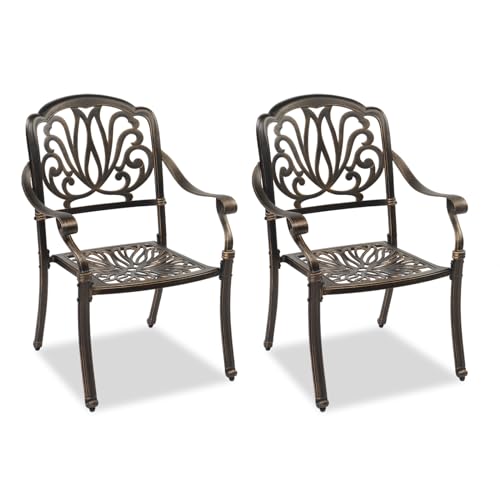
| Cast Aluminum | Classic or vintage-style patios | Intricate patterns, weather-resistant, substantial feel |
As a general rule, aluminum and cast aluminum are the most forgiving in humid or coastal climates, while steel and wrought iron are prized for their solid, grounded feel. If a chair is described as having a rust-proof finish or weather-resistant coating, that is a strong sign the manufacturer has addressed the main weakness of ferrous metals. For those who want the warm appearance of wood without the upkeep, there are also metal outdoor furniture pieces that look like wood, which can blend naturally into garden settings.
Popular Styles and Design Directions
Metal is incredibly versatile, which is why it appears in nearly every outdoor design language. Here are the most common directions you will encounter:
Classic Bistro & Café
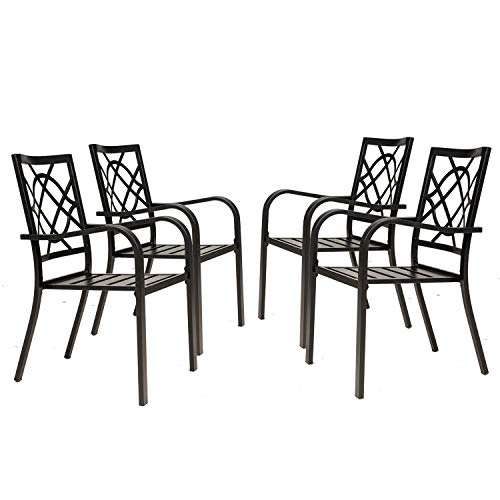
Slatted or mesh seats with curved backs, often paired with small round tables. Ideal for balconies and casual breakfast nooks.
Modern Minimalist
Clean lines, square frames, and powder-coated finishes. A great match for modern outdoor chairs and contemporary patios.
Cushioned Comfort
Metal frames wrapped with plush, weather-resistant cushions. The go-to choice for long dinners and relaxed lounging.
Ornate & Traditional
Cast aluminum or wrought iron with scrolling details and decorative backs. Adds character to classic gardens and porches.
If your patio leans toward a specific aesthetic, coordinating chairs with matching tables makes a big difference. For example, a metal outdoor table and chairs pairing creates a unified look, while a set that includes an umbrella is a practical choice for sunny locations.
Comfort: Cushions, Arms, and Ergonomics
Metal chairs are often judged by how they feel after an hour of sitting. The good news is that manufacturers have put far more thought into ergonomics in recent years. Look for the following comfort features:
- Contoured seats and backrests — subtle curves support the body far better than flat panels.
- Armrests — models with arms are easier to get in and out of and feel more relaxed for long conversations. Our guide to metal bar stools with backs and arms covers this in more depth for counter-height seating.
- Cushion-ready frames — chairs designed to accept seat and back cushions offer the best of both worlds. Browse metal chairs with cushions if plush seating is a priority.
- Breathable seat patterns — mesh or slatted seats allow air to circulate, which keeps you cooler in warm weather.
Cushion thickness and fabric quality matter just as much as the frame. Look for quick-drying foam and solution-dyed fabrics that resist fading, and store cushions during heavy rain to extend their lifespan.
Buying Checklist for Metal Outdoor Chairs
Before you commit, run through this practical checklist. It will help you compare options and avoid surprises after delivery.
- Measure your space — account for chair depth when pulled out from the table, plus clearance for walking behind seats.
- Check the frame material — aluminum for lightness and coastal climates, steel or wrought iron for a grounded feel.
- Inspect the finish — powder coating and rust-proof finishes add years of life; avoid bare-metal edges.
- Confirm weight capacity — heavier users should favor reinforced frames and solid welds.
- Test seat height — standard dining chairs sit around 17–18 inches from floor to seat; bar-height chairs are much taller.
- Decide on cushions — cushion-ready frames give you flexibility to change the look later.
- Consider storage — stackable or folding designs simplify winter storage.
- Plan the table pairing — a metal outdoor dining table and chairs from the same collection usually align in height and style.
Care and Maintenance Tips
Metal furniture is genuinely low-maintenance, but a little routine care goes a long way. Wipe frames with a damp cloth and mild soap every few weeks, and rinse after exposure to salt spray or pool water. Check for scratches in the coating — touching them up early prevents rust from spreading. During long stretches of wet weather, cover chairs or move them under shelter if possible.
For a deeper dive into protecting all your outdoor pieces, see our metal furniture guide and the broader weatherproofing guide. If you also own wooden benches nearby, the metal bench page offers complementary care notes.
Matching Chairs to the Rest of Your Patio
Chairs rarely live in isolation — they work as part of a larger composition. A few pairings that consistently work well:
- Pair metal patio chairs with a round bistro table for a compact breakfast setup.
- Combine metal lawn chairs with a low metal outdoor coffee table for a relaxed conversation zone.
- Add a metal outdoor rocking chair to create a reading corner.
- Anchor a large dining area with a metal outdoor dining table with an umbrella hole.
- For a classic garden look, a metal garden table and chairs set with cushions works beautifully alongside flowering borders.
If you prefer a uniform material palette, browsing the wider metal patio furniture category can help you coordinate chairs, tables, and storage in one go.
Frequently Asked Questions
Are metal outdoor chairs comfortable enough for long sitting sessions?
Yes — especially when they have contoured seats or are paired with cushions. Mesh and slatted designs provide some flex, and cushion-ready frames let you add plush padding for long dinners or lazy afternoons. Look for chairs with arms and a slight backward recline for the most relaxed posture.
Will metal chairs rust if left outside all year?
It depends on the metal and finish. Aluminum and cast aluminum are naturally rust-resistant, while steel and wrought iron rely on a protective powder coat or rust-proof finish. Even resistant metals benefit from occasional cleaning and a cover during extended wet seasons. Scratch touch-ups are the simplest preventive habit.
What is the difference between aluminum and steel outdoor chairs?
Aluminum is lighter and naturally resistant to rust, making it easier to move and well-suited to coastal or humid climates. Steel is heavier and often stronger per unit of thickness, giving a very stable feel, but it requires a reliable rust-proof coating to last outdoors. Both can be excellent choices depending on your climate and how often you rearrange furniture.
Can I mix metal chairs with a wooden table?
Absolutely — mixing materials is a common design technique that adds warmth and texture. A metal chair with a wood-look finish, or a matte black metal chair beside a timber table, can look intentional and refined. Just ensure seat heights match the table height for comfortable dining.
How many chairs should I plan for around a dining table?
A practical rule is to leave about 24 inches of table edge per diner. A 48-inch round table comfortably seats four, while a 60-inch round or a rectangular table of similar length can seat six. Always account for chair pull-out space behind each seat.
Do metal chairs get too hot in direct sun?
Dark metal surfaces can absorb heat in strong sunlight, so lighter-colored finishes or cushions help. Mesh and slatted seats also dissipate heat better than solid panels. Positioning chairs under an umbrella or pergola during peak sun is the simplest solution.
Ready to Choose Your Metal Outdoor Chairs?
Use the checklist above, think about your climate and seating goals, and pick a tier that matches how you plan to use your patio. Below are recommended options to explore further.
VIEW RECOMMENDED OPTIONS