No Cushion Outdoor Furniture: The Low-Maintenance Patio Guide
Skip the storage, the drying, and the fading. Learn how cushionless outdoor furniture delivers comfort and durability without the upkeep.
Why cushionless designs are worth considering: Cushions are the first thing to fade, mildew, or need replacing on any patio. Furniture designed without them removes that entire maintenance cycle. The trade-off is that comfort must come from the frame geometry and the seating surface itself — which means the quality of the build matters far more. This guide covers the design approaches, materials, and practical checks that make a no cushion set genuinely comfortable rather than just easier to clean.
What Counts as No Cushion Outdoor Furniture
No cushion outdoor furniture is seating or dining furniture where comfort is built into the frame and the seat surface rather than added through a removable cushion. The most common forms are sling chairs, webbed seats, contoured resin seats, metal slat benches, and Adirondack-style timber chairs with a shaped seat.
This category differs from a modern outdoor furniture set without cushions only in scope — that term usually describes a specific design style, while "no cushion" describes a construction approach that spans many styles. Either way, the underlying logic is the same: fewer removable parts, fewer things to store, fewer things to replace.
The main audience for this furniture is anyone who leaves seating outdoors year-round, lives in a humid or rainy climate, dislikes seasonal storage, or simply wants a patio that is ready to use without setup. If you have ever hauled cushions into a garage before a storm, you already understand the appeal.
Types of Cushionless Outdoor Seating
Sling Chairs and Sling Sofas
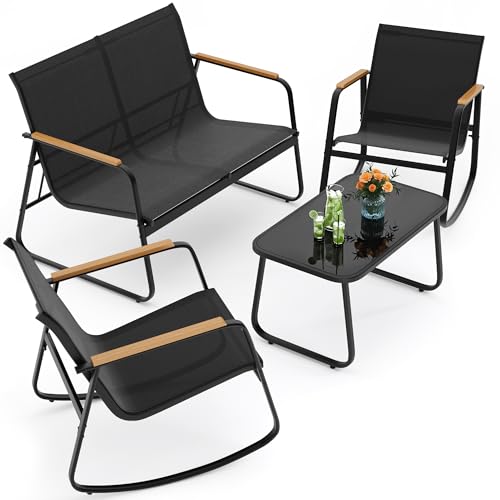
Sling seating uses a taut, suspended fabric panel stretched across a metal frame. The fabric itself acts as the seat and back, so there is no separate cushion. A quality sling chair uses a breathable, UV-stable fabric with reinforced edge seams; a poor one sags within a season. Sling designs pair naturally with a metal patio furniture frame and are the most common cushionless choice for dining and lounge sets.
Webbed Seating
Webbed chairs use interwoven straps or vinyl bands stretched across a frame. The weave provides support and a bit of give, and water drains straight through. This is a classic mid-century approach and works well with metal lawn chairs. Check the strap tension and attachment points — sagging webbing is the most common failure point.
Resin and Plastic Seats
Molded resin chairs are the most weatherproof option. A classic example is the plastic Adirondack chair with cup and phone holder, which combines a contoured seat with practical add-ons. Resin seats do not absorb water, do not fade quickly when UV-stabilized, and wipe clean easily. Comfort depends on the seat contour, so try before buying if possible.
Wooden Slat and Adirondack Seating
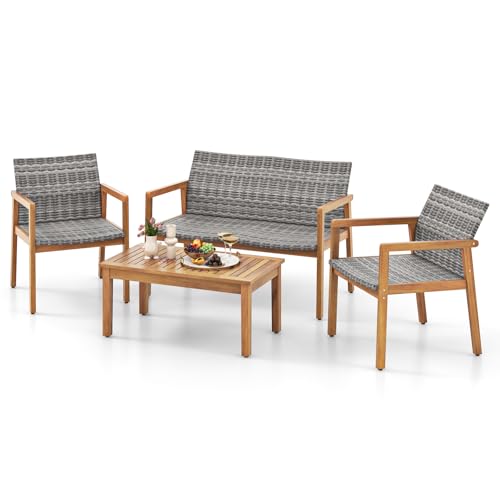
Timber chairs with shaped slats are comfortable without cushions because the slats are angled to support the body. A modern Adirondack chair is the reference design. Wood requires occasional sealing, so if minimal maintenance is the priority, resin versions of the same shape are the practical alternative.
Metal Benches and Slat Benches
Garden and park-style benches are naturally cushionless. A metal garden bench or a modern outdoor bench relies on shaped slats and back angle for comfort. These are excellent for entryways, garden paths, and as secondary seating near a dining set. A metal bench with a curved seat profile is noticeably more comfortable than a flat one.
Cushionless Lounge and Chaise Pieces
Loungers and chaise lounges are available in sling or slat constructions. A modern chaise lounge in a sling design drains quickly and needs no covers. For deep relaxation without cushions, a comfortable outdoor lounge chair with a shaped back and seat is the ideal reference point.
Materials and Construction That Work Without Cushions
Because there is no cushion to absorb shock and add softness, the frame and surface materials carry the full load of comfort and durability. The table below maps the common builds.
| Tier | Typical Construction | Best For |
|---|---|---|
| Essential tier | Basic resin or thin steel with standard sling fabric | Occasional use, balconies, splash-prone areas |
| Balanced tier | Powder-coated aluminium frame with UV-stable sling or webbing | Year-round patios, family use, mixed weather |
| Top-tier | Heavy-duty aluminium or stainless hardware, reinforced sling seams | Coastal areas, high-traffic patios, long-term use |
The frame is the most important single factor. Powder-coated aluminium resists rust and holds its shape across wide seat spans. A metal outdoor table and chairs set with a reinforced frame is typical of the balanced tier. Steel is generally heavier and more rigid, but chips in the coating are more consequential. For coastal or humid climates, a metal patio table that looks like wood combines the warmth of timber with rust-resistant construction.
The seat surface is the second factor. Sling fabric should be a solution-dyed material with reinforced edge stitching. Webbing should be a thick, tensioned strap rather than a thin band. Resin should be UV-stabilized; cheaper resin yellows and becomes brittle in strong sun. For a broader comparison of these material choices, our guide to the most comfortable outdoor furniture without cushions dives deeper into specific designs.
How to Evaluate Comfort Without Cushions
The question every buyer asks is whether cushionless furniture can actually feel comfortable. The answer is yes — when the geometry supports the body. Look for:
- Contoured seats: a slight dish or curve distributes weight; a flat seat concentrates pressure at the edges.
- Reclined back angle: a backrest angled 100–110 degrees from the seat is comfortable for long use; a fully upright back becomes tiring.
- Proper seat height: dining seats should sit so the tabletop is comfortable at the elbow; lounge seats should allow feet to rest flat.
- Support at the shoulder and lumbar: a shaped back that follows the spine's natural curve reduces fatigue.
- Armrests at the right height: armrests should let the shoulders relax when the forearms rest on them.
Sling and webbing seats provide a small amount of give that mimics a soft cushion. If you are used to a padded seat, this is the closest equivalent. If a firmer surface is acceptable, a contoured resin or timber seat is the more durable option. For readers who want comfort without giving up the flexibility of a cushion, our comparison of comfortable outdoor chairs without cushions covers the trade-offs in detail.
Cushionless vs Cushioned: The Practical Trade-offs
Choosing between cushionless and cushioned furniture is essentially choosing between two maintenance models.
A cushionless chair requires occasional cleaning and a check of frame welds once a season. It does not need covers, storage, or replacement cushions. A cushioned chair offers more plush support but adds an entire secondary maintenance burden: covers, washing, drying, and periodic replacement. In a rainy or humid climate, the cushion cycle is often more work than the extra comfort is worth.
There is also a styling consideration. Cushionless furniture tends to be more architectural — the frame is visible, and the seat is part of the silhouette. That matches a minimalist patio or a modern patio particularly well. Cushioned furniture feels softer and more residential. Neither is better; the choice depends on how you want to use the space and how much upkeep you are willing to take on.
Readers who want both — the visual clarity of a cushionless frame plus occasional softness — sometimes keep one or two cushions indoors and bring them out for guests. That hybrid approach keeps the patio ready for everyday use while still offering a softer option for longer gatherings. Our guide to comfortable outdoor cushions is useful if you want to add a few without committing to full-time cushion care.
Styling a Cushionless Patio
Because the frame is fully visible, the shape of each piece carries more of the visual load. That means layout and proportion matter more than in a cushioned setup. A few principles help:
- Vary the shapes: pair a curved sling chair with a straight-slat bench to keep the composition interesting.
- Keep the palette tight: two or three frame colors — a muted black, a warm bronze, a natural timber tone — are enough.
- Use a rug: a cushionless setup benefits from a rug to soften the transition between furniture and ground.
- Add texture elsewhere: planters, lanterns, and a soft throw can bring warmth that cushions would otherwise supply.
A cushionless dining set with a metal outdoor table and chairs with umbrella setup keeps the entire dining area weather-ready without any covers to manage. If the layout includes a bar area, metal bar stools with backs and arms are a natural cushionless companion. For a full dining look, a metal outdoor dining table with umbrella hole paired with sling chairs is the most practical configuration.
If you want to extend the design language to the wider space, a modern outdoor furniture collection built around cushionless frames will feel more coherent than mixing cushioned and uncushioned pieces.
Durability and Care
Cushionless furniture is designed to be left alone. That said, a little care extends its life significantly. Rinse powder-coated frames after chlorinated or saltwater exposure, and check the tension on sling and webbing surfaces twice a year. Tighten any loose bolts as soon as they appear — a loosened bolt on a wide-span sling seat accelerates fabric stress. Resin surfaces can be cleaned with a mild soap solution and a soft brush.
If your patio is in a coastal region, prioritize aluminium frames with stainless hardware. For mixed climates, a metal outdoor furniture set that looks like wood gives you a warmer visual tone without the maintenance of actual timber. For a deeper dive, see our weatherproofing guide and the broader outdoor care section.
Frequently Asked Questions
Is no cushion outdoor furniture comfortable?
Yes, when it is designed well. Contoured seats, a reclined back angle, and correctly placed armrests provide support without a cushion. Sling and webbed seats offer a small amount of give that many users find comfortable for hours.
Which cushionless material is the most durable outdoors?
Powder-coated aluminium with a UV-stable sling or webbing surface is generally the most durable combination. Resin seats are also highly weatherproof. Timber is comfortable but requires periodic sealing.
Can cushionless furniture be left outside all year?
Most cushionless frames are designed for year-round exposure. In heavy snow or extreme weather, bringing lightweight resin and sling chairs inside extends their life, but permanent outdoor placement is generally fine for balanced tier and top-tier designs.
Does cushionless furniture get too hot in the sun?
Metal frames can become warm in direct sun, but sling and webbed seats stay cooler than solid metal slats. Light-colored resin stays coolest. If sun exposure is a concern, look for light-toned frames and breathable seat materials.
How do I clean a cushionless outdoor chair?
Wipe the frame with a damp cloth, rinse the sling or webbing with mild soap and water, and let it air dry. Resin surfaces wipe clean with a soft brush. No covers or seasonal storage is required.