Outdoor Dining Swivel Chairs: The Complete Buying Guide
Everything you need to choose comfortable, durable, and space-smart swivel chairs for your patio dining table — from frame materials and swivel mechanics to sizing, cushion care, and top-tier recommendations.
View Recommended ChairsWhy swivel chairs belong at your outdoor dining table: A standard patio dining chair forces you to scoot backward before you can turn. A swivel chair lets you pivot in place — toward a conversation, a view, the grill, or a passing plate — without scraping legs across the deck. On compact patios, that single motion saves precious clearance space and makes the whole table feel more inviting. This guide walks you through every decision point so you can buy with confidence.
What Makes a Good Outdoor Dining Swivel Chair?
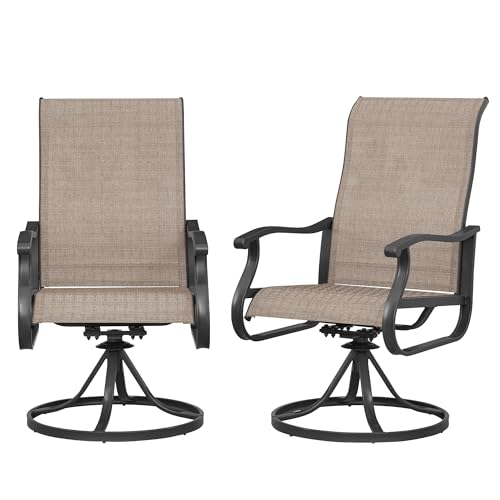
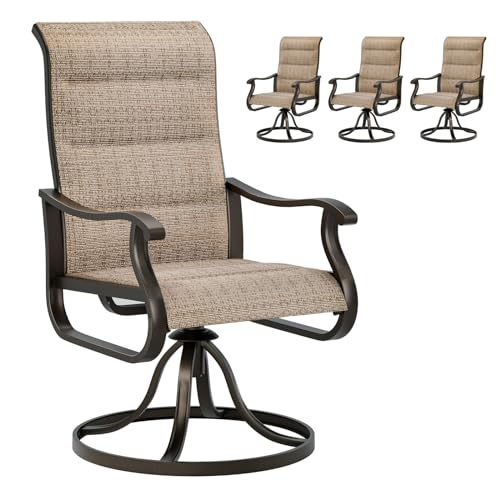
A swivel dining chair has to do two jobs at once: support a seated diner comfortably for a long meal, and rotate smoothly on a weather-exposed mechanism for years. The best models get three things right — the swivel base, the frame, and the seat geometry.
1. The Swivel Mechanism
The swivel ring is the heart of the chair. Entry-level models often use a simple nylon or Delrin ring sandwiched between steel plates; mid-range chairs upgrade to sealed ball-bearing swivel plates; premium and luxury tiers use stainless or reinforced bearing assemblies rated for continuous outdoor use. A good mechanism returns smoothly to center, has no lateral wobble, and is shielded from rain and grit. Look for a chair that swivels a full 360 degrees — partial-swivel models (typically 180 degrees) are fine for tight banquettes but less versatile at a freestanding table.
2. The Frame
Powder-coated aluminum is the workhorse of the category: light enough to move, rust-proof, and strong enough for a full-sized adult. High-grade stainless steel adds weight and rigidity but costs more in weight and maintenance attention. Woven resin wicker over an aluminum frame gives a softer, more traditional look — just confirm the weave is UV-stabilized. Solid teak and other dense hardwoods sit in the premium and luxury tiers; they age beautifully but need periodic sealing.
3. Seat Geometry and Cushions
A dining swivel chair should let your feet rest flat while your thighs stay parallel to the ground. Seat height typically falls between 17 and 19 inches for standard 28- to 30-inch dining tables. Cushions should be quick-dry foam wrapped in solution-dyed acrylic or olefin — the same performance fabrics used on high-end patio sofas. If your chairs use removable cushions, stock a cushion storage solution so the padding stays dry between meals.
Quality Tiers: How to Read the Market
Rather than shopping by number, shop by tier. The table below describes what you can reasonably expect from each level of the market so you can match the chair to how hard you plan to use it.
| Tier | Best For | Typical Characteristics |
|---|---|---|
| Entry-level | Occasional use, covered porches, first patio setup | Nylon swivel ring, thinner aluminum or steel tube, basic polyester cushions, simpler welds |
| Mid-range | Regular family dining, mixed sun and shade | Sealed bearing swivel, thicker powder-coated aluminum, quick-dry foam cushions, UV-stabilized fabric |
| Premium | Daily use, exposed decks, households that entertain often | Stainless-reinforced swivel assembly, reinforced joints, high-grade performance fabric, replaceable cushion covers |
| Luxury / commercial-grade | Full-sun installations, hospitality use, long-term ownership | Marine-grade hardware, solid hardwood or premium woven frames, commercial-rated swivel, tailored cushion construction |
Editorial tip: If your patio sits in full afternoon sun and you plan to leave the chairs out year-round, jump straight to the premium tier. The difference between an entry-level and premium swivel mechanism becomes obvious after two or three seasons of grit and UV exposure — a mid-range chair is a solid choice for the tier, but a premium chair is the more efficient option in the long run for exposed sites.
Sizing and Layout: Getting the Clearances Right
Swivel chairs need more breathing room than fixed dining chairs because the whole seat rotates. Plan for the chair's full rotation footprint, not just its seated footprint, and account for the table edge as well.
Clearance Rules of Thumb
- Table edge per chair: at least 24 inches of table edge per diner so elbows have room.
- Behind the chair: 30 to 36 inches from the table edge to the nearest wall, railing, or planter so the chair can swivel and push back.
- Between chairs: 6 to 8 inches of gap between adjacent chair arms once the chairs are tucked in.
- Under the table: confirm the chair arm height clears the table apron or support beam when rotated inward.
How Many Chairs Fit?
A 48-inch round table comfortably seats four swivel chairs; a 60-inch round or a 72-inch rectangular table seats six; a 96-inch rectangular table seats eight. If your dining area is tight, consider a four-person dining set with swivel chairs or a six-person set with swivel chairs that bundles the table and chairs together so the proportions are already matched.
Frame Materials Compared
Powder-Coated Aluminum
The default choice for most buyers. Aluminum does not rust, the powder coat resists chipping and UV fading, and the finished chair is light enough for one person to move. Mid-range and premium chairs typically use thicker-gauge aluminum tubing for a stiffer, wobble-free seat.
Stainless Steel
Heavier and more rigid than aluminum, stainless steel suits windy sites and larger diners. Marine-grade 304 or 316 stainless is the premium and commercial-grade benchmark. Standard steel is usually a sign of an entry-level chair — confirm it has a rust-proof finish and inspect welds carefully.
Woven Resin Wicker
Resin wicker over an aluminum frame delivers a warm, traditional look without the maintenance of natural rattan. UV-stabilized weaves hold color for years. Check that the weave is tight and the frame is aluminum, not steel, underneath.
Solid Hardwood (Teak, Eucalyptus, Acacia)
Teak sits at the top of the hardwood category thanks to its natural oils and density; eucalyptus and acacia are mid-range and premium options that need annual sealing in exposed sites. Hardwood swivel chairs are heavier to move but feel substantial at the table.
Cushion Fabrics
Solution-dyed acrylic and olefin are the performance standards — they resist fading, mildew, and staining. Quick-dry foam cores let water drain instead of soaking in. If you already own patio seating, keep your new chairs color-coordinated with your outdoor couch cushions and outdoor cushions for a unified look.
Swivel Chairs vs. Fixed Dining Chairs
Fixed dining chairs are lighter and usually simpler to store. Swivel chairs trade a little extra weight and mechanism complexity for a much more relaxed dining experience. They shine when:
- The table sits near a view, a fire feature, or a conversation area you want to pivot toward.
- You entertain often and guests need to get in and out easily.
- The patio is compact and you want to avoid scraping chairs backward on every exit.
- You mix dining and lounging in one zone — a swivel chair can turn to face a conversation set with dining table when the meal is over.
If your priority is stackability and minimal storage space, fixed or stackable dining chairs remain the practical choice. For everything else, swivel wins on comfort.
Pairing Swivel Chairs with the Rest of Your Patio
Swivel dining chairs rarely live alone. They usually anchor a dining zone that connects to a lounging or entertaining area. A few combinations that work well:
Dining + Conversation Zone
Pair a six-seat swivel dining set with an outdoor conversation set with swivel chairs nearby. The shared swivel motion keeps the two zones visually and functionally connected.
Dining + Fire Feature
If you want the table to double as an evening gathering point, look at an outdoor dining set with fire pit table. Swivel chairs let diners turn toward the flames as the evening cools.
Dining + Shade
Most swivel dining sets are compatible with a center umbrella; confirm the table has an umbrella hole and that the chair backs clear the pole when swiveled. An outdoor dining set with umbrella is the simplest way to guarantee a matched fit.
Underfoot and Overhead
Finish the zone with an outdoor rug to define the dining footprint and to cushion the swivel base against the deck surface. If your patio is exposed, a covered patio structure will dramatically extend the life of the swivel mechanism.
Care and Maintenance for Swivel Dining Chairs
Swivel chairs ask for a little more attention than fixed chairs because of the mechanism. A simple seasonal routine keeps them turning smoothly for years.
Routine Care
- Weekly: wipe the frame with a damp cloth; rinse grit from the swivel base with a garden hose on low pressure.
- Monthly: vacuum cushion seams and flip cushions if the manufacturer allows it.
- Seasonally: apply a silicone-based lubricant to the swivel ring; inspect bolts and tighten as needed; deep-clean cushions per the fabric care label.
- Before winter: store cushions indoors and cover the chairs with breathable furniture covers. A cushion storage box keeps padding dry and out of the way.
What to Avoid
- Pressure-washing directly into the swivel mechanism.
- Harsh solvents or abrasive pads on powder-coated or stainless surfaces.
- Leaving cushions out in prolonged rain — even quick-dry foam benefits from being brought in.
- Dragging chairs across rough concrete; lift the chair slightly when repositioning to protect the base.
Pro tip: A drop of silicone lubricant on the swivel ring at the start of each season is the single highest-impact maintenance step. It prevents the squeak-and-stick cycle that ruins the swivel experience.
Quick Buying Checklist
Before you commit, run through this list:
- Measure the table edge per chair (24 in. minimum) and the clearance behind the chair (30–36 in.).
- Confirm the chair's swivel range — full 360 degrees is the most versatile.
- Check the weight capacity rating against your heaviest household member.
- Verify the frame material and finish: powder-coated aluminum, stainless, UV-stabilized wicker, or sealed hardwood.
- Read the cushion fabric label: solution-dyed acrylic or olefin, quick-dry foam.
- Confirm the swivel mechanism is sealed or shielded from rain and grit.
- Check whether cushion covers are removable and washable.
- Review the warranty on the swivel mechanism specifically — it is the part most likely to fail first.
- Plan for off-season storage: covers, a cushion box, or indoor storage.
If you are still comparing chair types, our outdoor dining chairs overview and outdoor dining set buying guide cover the broader category, while the outdoor cushion guide helps you pick the right fabric and foam.
Frequently Asked Questions
What are the benefits of outdoor dining swivel chairs?
Swivel chairs allow you to turn freely without scooting the chair, making it easier to get in and out of a dining table. They also let you pivot to face conversations, views, or the grill without moving the entire chair, which is especially helpful on cramped patios.
How do I measure for swivel chairs around a dining table?
Allow at least 24 inches of table edge per chair and 30 to 36 inches of clearance behind each chair so it can swivel and recline without hitting walls, railings, or planters. Measure the chair's full rotation footprint, not just its seated footprint.
Are swivel patio chairs stable and safe?
Yes. Quality swivel chairs use a weighted base or a wide, low-profile pedestal that keeps the center of gravity low. Look for a smooth, sealed swivel mechanism and a weight capacity rating appropriate for your household.
What materials work best for outdoor swivel dining chairs?
Powder-coated aluminum and high-grade stainless steel resist rust, while woven resin wicker over an aluminum frame offers a natural look with strong weather resistance. Teak and other dense hardwoods are premium options that age gracefully with proper sealing.
How do I maintain the swivel mechanism?
Rinse away grit and debris from the base regularly, and apply a silicone-based lubricant to the swivel ring once or twice a season. Avoid harsh solvents and never pressure-wash directly into the mechanism.
Related Reading
- Outdoor dining sets with 6 swivel chairs — a matched-table solution for larger patios.
- Outdoor dining set for 4 with swivel chairs — compact layouts and balcony-friendly options.
- Outdoor counter-height swivel bar stools — the bar-height cousin of the dining swivel chair.
- Outdoor dining chairs with 300 lb weight capacity — for households that need extra support.
- Outdoor dining chair cushions — replacement and upgrade cushions for swivel frames.
- Outdoor conversation sets — pair a dining zone with a matching lounge area.