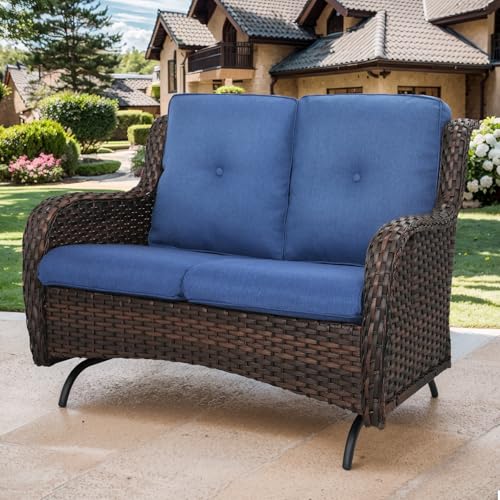
Outdoor Loveseat Glider: The Complete Buying Guide
Everything you need to know about choosing a two-seat glider that delivers comfort, durability, and effortless motion for your porch, deck, or patio.
START READINGWhy an outdoor loveseat glider? A loveseat glider pairs the close seating of a two-seater with the gentle, soothing glide of a rocking chair. It is one of the most relaxing pieces you can add to an outdoor living space, ideal for morning coffee, evening conversations, and quiet reading. This guide walks you through every consideration so you can choose confidently.
What Is an Outdoor Loveseat Glider?
An outdoor loveseat glider is a two-seat patio seat mounted on a fixed gliding mechanism. Instead of rocking on curved runners like a traditional rocker, the seat travels smoothly forward and backward along a track or bearing system. This controlled motion is gentler and more stable than rocking, which makes gliders a favorite for porches, screened-in decks, and patios where you want relaxation without tipping.
Unlike a standard outdoor loveseat, which is stationary, a glider adds motion and a stronger sense of leisure. Many buyers compare it to an outdoor rocker glider, which combines rocking and gliding in a single-seat frame. The loveseat glider is the two-person version of that experience, making it a natural centerpiece for conversation areas.
Most models pair a powder-coated metal, aluminum, or poly frame with removable cushions. Fabric choice matters as much as the frame: look for solution-dyed acrylic or similar performance fabrics that resist fading and moisture. Our guide to outdoor furniture fabric explains what to look for in weather-ready textiles.
Key Benefits and Use Cases
A loveseat glider earns its place because it solves several outdoor seating needs at once. It seats two closely, which suits couples and small households, and the gliding motion is soothing for all ages, from children to grandparents. Because the base stays flat on the ground, it is more stable than a rocker on uneven deck boards, and the footrest-free design makes it easy to get in and out of.
Advantages
- Gentle, stable gliding motion that is easy on joints
- Seats two people closely, ideal for conversation
- Flat base works well on decks and patios
- Wide range of styles, from farmhouse to modern
- Many models include weather-resistant cushions
Considerations
- Needs clearance around the frame for full glide travel
- Mechanism can collect debris if not maintained
- Heavier than a basic stationary loveseat
- Some assembly is typically required
- Large models can overwhelm a small balcony
Common placements include a front porch where it becomes a morning ritual spot, a screened-in deck where it pairs with a side table, and a patio conversation zone where it sits opposite a patio couch. If your space is small, look for compact gliders or pair the loveseat with a conversation set for small spaces to keep the layout balanced.
Frame Materials and Construction
The frame determines how long your glider lasts and how much care it needs. Here is how the main options compare:
| Material | Durability | Maintenance | Best For |
|---|---|---|---|
| Powder-Coated Steel | High strength, rust-resistant when coated | Low; touch up chips promptly | Starter and mid-range gliders |
| Aluminum | Lightweight and naturally rust-resistant | Very low | Humid and coastal climates |
| Poly Lumber | Weatherproof and colorfast | Minimal; soap and water | Low-maintenance households |
| Wicker and Rattan | Classic look, needs protection | Moderate; cover in off-season | Porch and cottage styling |
| Teak and Hardwood | Long-lived with sealing | Moderate; annual treatment | Premium and luxury tiers |
If you prefer wood-toned looks without the upkeep, poly furniture and a dedicated poly glider deliver the same visual warmth with far less maintenance. For metal frames, check that welds are smooth and joints are reinforced. A rust-proof finish and stainless hardware are strong indicators of build quality.
Gliding Mechanisms Explained
The glide quality separates a good loveseat from a great one. Most models use one of three systems: sealed ball bearings, nylon bushings, or a pivoting linkage. Ball-bearing tracks deliver the smoothest, quietest motion and hold up best over time. Nylon bushings are common at the entry-level and mid-range and perform well when kept clean. Pivoting linkages hang the seat from arms above the base; they feel slightly different but are robust and easy to service.
When shopping, sit on the glider and glide it through its full travel. Listen for squeaks or grinding, and check that the motion stops without a hard bump at either end. A quality mechanism should feel consistent from the first inch to the last. Lubricate moving parts once or twice a season according to the manufacturer's guidance.
Cushions, Comfort, and Ergonomics
Comfort comes from three things: seat depth, back height, and cushion quality. Deep seats with supportive back cushions suit lounging, while shallower seats make it easier to stand up. Look for high-resilience foam wrapped in a moisture-resistant barrier, and removable, washable covers. If your glider's cushions wear out, outdoor furniture cushions and patio furniture seat cushions are affordable ways to refresh the seat.
Armrests should be wide enough for a mug or book, and the glider should allow your feet to rest flat on the ground or on a small outdoor ottoman. Test the back angle: a slight recline is relaxing, but too much lean makes conversation and getting up harder.
Quality Tiers at a Glance
Rather than shopping by numbers, think about where a glider sits in the market. The tiers below describe relative positioning and typical characteristics so you can match the product to your needs.
| Tier | Typical Frame | Glide Mechanism | Best For |
|---|---|---|---|
| Entry-Level | Steel with basic powder coat | Nylon bushings, simple track | Occasional use and starter setups |
| Mid-Range | Aluminum or upgraded steel | Sealed bearings or reinforced bushings | Everyday use in most climates |
| Premium | Poly lumber or high-grade aluminum | Smooth ball-bearing glide | Frequent use and low maintenance |
| Luxury | Teak, premium wicker, custom finishes | Precision bearing system with warranty | Design-led patios and long-term investment |
Mid-range models usually offer noticeably smoother glide action than entry-level options, and premium tiers add better cushions and finishes. If you plan to use the glider daily, it pays to step up one tier for the mechanism and frame quality.
Sizing and Placement
Measure your space before you shop. A standard loveseat glider is roughly the width of a two-seat sofa but needs extra room front and back for the glide travel. As a rule, leave at least 18 inches of clearance on all sides so the seat can move freely and no one pinches fingers against a wall or railing.
Consider the surrounding layout. A glider works well as a standalone anchor on a porch or paired with a outdoor side table for drinks and a small outdoor shade solution overhead. On a larger patio, it can join a patio conversation set or sit near a lounge furniture grouping. Keep walkways clear so the glider's motion does not block traffic.
If your outdoor room is screened, our guide to outdoor furniture for a small screened-in porch offers layout ideas that make a glider the focal point without crowding the space.
Buying Checklist
- Measure the footprint and add clearance for glide travel
- Confirm the frame material suits your climate
- Test the glide for smoothness, quietness, and a soft stop
- Check cushion thickness, cover removal, and fabric rating
- Verify the weight capacity and seat depth for your household
- Review the warranty on the frame and mechanism
- Plan for assembly tools and time, or choose white-glove delivery
- Confirm touch-up paint or replacement parts are available
Maintenance and Care
Simple habits keep a glider gliding for years. Wipe the frame with mild soap and water monthly, and clean the glide track so grit does not wear the bearings. Apply a manufacturer-approved lubricant to moving parts at the start and end of the season. During storms or winter, cover the glider or store cushions indoors.
If you notice rust spots, address them early with a rust-removal treatment and a matching touch-up coat. Cushions last longer when they are brought inside during heavy rain and stored in a dry place. A weatherproof cover is a worthwhile accessory if your glider stays outdoors year-round.
Frequently Asked Questions
What is an outdoor loveseat glider?
It is a two-seat patio chair that glides smoothly back and forth on a fixed base. It combines the intimacy of a loveseat with the soothing motion of a glider, making it ideal for porches, decks, and patios.
What materials are best for an outdoor loveseat glider?
It depends on your climate and maintenance preference. Powder-coated steel and aluminum offer durability and rust resistance. Poly lumber delivers weatherproof, low-maintenance performance. Wicker and rattan provide classic style but require more care. Teak and other hardwoods age gracefully with proper sealing.
How do I choose the right size loveseat glider?
Measure your outdoor space and leave at least 18 inches of clearance around the glider for smooth movement. Standard models seat two adults comfortably, while oversized models offer extra room. Remember that the gliding mechanism's footprint extends beyond the seat dimensions.
Do outdoor loveseat gliders require assembly?
Most require some assembly, typically attaching the glider base to the seat unit and installing the backrest and armrests. Assembly usually takes 30 to 90 minutes with basic tools. Some premium models arrive fully assembled or offer white-glove delivery.
How do I maintain an outdoor loveseat glider?
Wipe down the frame with mild soap and water, lubricate the gliding mechanism periodically, and store or cover the glider during harsh weather. Clean cushions according to the fabric care instructions and bring them indoors when not in use.
Ready to Choose Your Loveseat Glider?
Browse our recommended outdoor loveseat gliders below and compare features, materials, and glide systems side by side.
VIEW RECOMMENDATIONS