Patio Conversation Set with Dining Table: The Complete Buying Guide
One coordinated outdoor arrangement that handles relaxed conversation and full meals. Learn how combined conversation-and-dining sets are built, which materials hold up, and how to size the layout before you commit.
Jump to the Buying ChecklistWhat a Patio Conversation Set with Dining Table Actually Is
A patio conversation set with dining table is a coordinated outdoor furniture grouping built around one shared surface. The seating pieces — typically a sofa, loveseat, or paired club chairs — face inward toward a central table. That table is either set at full dining height or engineered as a dual-purpose surface that works for both lounging and meals.
This category sits between two familiar products. A pure patio conversation set usually pairs low club chairs with a coffee table, which is comfortable for drinks and talk but awkward for plated food. A dedicated outdoor wicker dining table with glass top handles meals well but feels formal for casual lounging. The combined set resolves that tension by treating dining and conversation as one continuous use case.
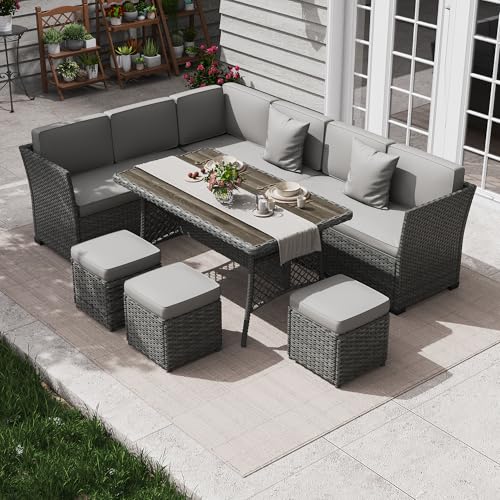
In practice, most combined sets follow one of three patterns: a dining-height table surrounded by lounge-depth chairs, a standard dining set with broad cushioned seats, or a modular sectional wrapped around a large square or rectangular table. Each pattern changes how the space feels and how many people it realistically serves.
Key distinction: the table height determines the primary use. Dining-height tables (roughly 28 to 30 inches) prioritize meals. Lounge-height or dual-height tables prioritize conversation. Confirm which mode you will use more often before comparing individual models.
Why Buyers Choose a Combined Layout
Buyers researching this category usually have a specific constraint: limited square footage or a single patio zone that must serve multiple functions. A combined set delivers several practical advantages.
- One footprint, two uses. Instead of dedicating separate zones to a lounge group and a dining group, a single arrangement covers both. On a compact outside patio, that consolidation is often the difference between a usable space and a crowded one.
- Coordinated design. Frames, finishes, and cushion fabrics arrive matched, so the space reads as intentional rather than assembled from unrelated pieces.
- Fewer purchases to research. One set replaces what would otherwise be a sofa, two chairs, a coffee table, and a dining table bought separately.
- Better entertaining flow. Guests can move from seated conversation to a plated meal without relocating to a second area. Our guide to outdoor dining setup explains how this flow affects hosting.
- Simplified storage. Fewer individual pieces mean fewer items to cover or stow, and cushion management becomes a single routine rather than several.
The trade-off is specialization. A combined set rarely matches a purpose-built lounge group for deep reclining comfort or a purpose-built dining set for formal table service. Buyers who entertain large dinner parties regularly may still prefer two distinct zones if the patio allows it.
Common Configurations and Seating Counts
Combined sets generally fall into four configuration families. Each suits a different patio shape and hosting style.
L-Shaped or Corner Arrangement
A sectional or corner sofa wraps two sides of a square or rectangular table, with one or two loose chairs completing the third side. This is the most space-efficient layout for square patios and comfortably seats five to seven. Wicker sectionals are the most common base for this pattern; see our notes on outdoor wicker sectional construction for what to inspect on frames and connectors.
Sofa Plus Paired Chairs
A three-seat sofa faces two club or swivel chairs across a rectangular table. This classic arrangement seats five and reads well on long, narrow patios. Swivel chairs add flexibility because occupants can turn toward the table for a meal or outward for conversation — a detail covered in our guide to conversation sets with swivel rockers.
Four-Chair Dining-Centric Set
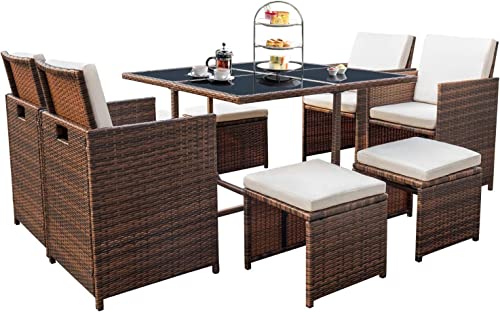
A dining-height table with four broad, cushioned chairs. Seating depth is usually shallower than a lounge chair, so it favors meals and shorter conversational sessions. This is the most compact option and the easiest to place on a balcony or small deck.
Modular or Expandable Set
Individual modules — corner units, armless chairs, ottomans — connect around a large table and can be reconfigured seasonally. Modular sets serve the widest range of patio shapes but require more assembly and more careful measuring.
| Configuration | Typical Seating | Best For | Space Shape |
|---|---|---|---|
| L-shaped / corner sectional | 5 to 7 | Square patios, family gathering | Square to slightly rectangular |
| Sofa plus paired chairs | 5 | Long narrow patios, mixed hosting | Rectangular |
| Four-chair dining-centric | 4 | Balconies, meals-first households | Compact and square |
| Modular / expandable | 4 to 8 | Changing layouts, irregular patios | Any |
Materials: Wicker, Aluminum, Wood, and Steel
Frame material and weave type determine how a combined set survives weather, how much maintenance it needs, and how long it stays visually consistent. The table below summarizes the practical differences.
| Material | Weather Resistance | Maintenance | Typical Market Position |
|---|---|---|---|
| Powder-coated aluminum with HDPE wicker | High — rust-proof finish, UV-stable weave | Low — rinse and cover seasonally | Mid-range to premium |
| Steel frame with resin weave | Moderate — welds and joints need inspection | Moderate — touch up chips promptly | Entry-level to mid-range |
| Teak and dense hardwoods | High when sealed; silvering is cosmetic | Moderate — annual sealant recommended | Premium to luxury |
| Reinforced steel, commercial-grade | High with proper coating | Moderate — scheduled hardware checks | Professional-grade to commercial-grade |
| Acacia or eucalyptus | Moderate — needs sealing in wet climates | Higher — seasonal oiling | Entry-level to mid-range |
Wicker and Resin Weave
High-density polyethylene (HDPE) wicker over an aluminum frame is the dominant construction in this category. It resists moisture, does not splinter, and holds color under UV exposure. Lower-tier sets sometimes use PVC weave, which becomes brittle in cold weather. For a deeper comparison of weave types, see our notes on outdoor wicker chairs and how frame quality varies across the market.
Aluminum vs Steel
Aluminum is lighter, will not rust, and is easier to reposition for cleaning. Steel is heavier and more rigid, which some buyers prefer for large sectionals, but welds and powder coating must be inspected. If you are weighing these directly, our wicker deep seating patio furniture overview covers how frame choice affects seating depth and stability.
Wood Frames and Tabletops
Teak is the reference standard for outdoor wood because of its natural oil content. Acacia and eucalyptus are common in entry-level and mid-range sets and require more frequent sealing. Wood tabletops pair naturally with a wood dining table with umbrella hole if you plan to add shade. Our guide to outdoor wood tables explains how grain orientation and joinery affect long-term stability.
Upholstery and Cushions
Cushion fabric matters as much as the frame. Solution-dyed acrylic and olefin resist fading and mildew; polyester blends are common in entry-level sets. Quick-dry foam cores prevent waterlogging after rain. If you expect to replace covers later, note that conversation set replacement cushions are widely available for standard frame sizes but harder to source for unusual modular shapes.
Table Design: Dining Height vs Dual-Purpose
The table is the deciding component in a combined set, so it deserves separate attention.
Full Dining Height
Tables at roughly 28 to 30 inches work with standard dining chairs and allow comfortable upright eating. In a combined set, these tables are usually paired with broad, cushioned chairs rather than slim dining chairs. A glass top reflects light and visually lightens the arrangement; a slatted or solid top hides water marks better. See our guide to wicker dining tables with glass tops for the trade-offs.
Dual-Purpose and Lift-Top Tables
Some sets use a table that adjusts between lounge and dining height, or a two-tier design with a lower conversation surface and a raised dining ledge. These are practical on tight patios but add mechanical parts that need periodic inspection. Buyers considering this route should read our overview of the conversation set with fire pit table, which applies the same dual-function logic to heating.
Umbrella Compatibility
If the set will sit in direct sun, confirm the table has a pre-drilled umbrella hole and a weighted base option. Sets without a hole force a freestanding umbrella, which consumes floor space. Our guides to outdoor patio umbrellas and parasols explain base weighting for different table sizes.
Table Shape
Rectangular tables seat more people per unit of floor area and suit narrow patios. Square tables create more even conversation distance and work well with corner sectionals. Round tables soften tight corners but waste space against straight walls. An oval outdoor dining table is a useful compromise for long patios because it removes hard corners without losing seating length.
Sizing and Space Planning
Most returns and disappointing installations in this category come down to measurement, not quality. Work through the numbers before choosing a configuration.
Clearance Rules
- 24 to 30 inches between the table edge and any wall or railing — enough for a chair to pull out without colliding.
- 36 inches between the table edge and a traffic path so people can pass behind seated guests.
- 18 inches of table edge per seated diner is the practical minimum; 24 inches is comfortable.
- 30 to 36 inches between the sofa and the table for legroom when the sofa is used for lounging.
Minimum Footprints by Configuration
| Configuration | Suggested Minimum Patio Area | Notes |
|---|---|---|
| Four-chair dining-centric | 8 x 8 feet | Works on large balconies |
| Sofa plus two chairs | 10 x 10 feet | Rectangular layout preferred |
| L-shaped sectional set | 10 x 12 feet | Square patios ideal |
| Modular expandable | 12 x 12 feet | Allow room for reconfiguration |
Measuring the Delivery Path
Measure gates, stairwells, elevator interiors, and doorway widths before ordering. Large sectionals often ship in multiple boxes, but individual sofa sections can still exceed a narrow garden gate. If your only access is through the house, confirm that boxed components clear interior doorways.
Practical tip: mark the proposed footprint on the patio with painter's tape and live with it for a day. Walking around the taped outline reveals clearance problems that a floor plan hides.
Quality Tiers Explained
Combined conversation-and-dining sets span a wide range of construction quality. Rather than quoting figures, it helps to understand what each tier typically delivers so you can match the set to how heavily it will be used.
Starter Tier
Steel or light aluminum frames with PVC or thin resin weave. Cushions are usually polyester with standard foam. Suitable for covered porches and light seasonal use; expect to replace cushions or tighten hardware within a few seasons.
Balanced Tier
Powder-coated aluminum frames with HDPE wicker and solution-dyed acrylic cushions. Good value for its tier, with rust-proof finishes and replaceable covers. The most common choice for year-round outdoor use in mild climates.
High-End Tier
Thicker aluminum extrusions, hand-finished weave, high-density quick-dry foam, and teak or engineered stone tabletops. Better hardware and tighter joinery reduce wobble over time. A long-term investment for daily use.
Flagship Tier
Solid teak or marine-grade aluminum, custom upholstery, and precision joinery. Designed for permanent installation and heavy entertaining. Usually offered with extended structural warranties and replacement-part programs.
Professional-Grade
Reinforced steel or heavy aluminum rated for hospitality use, with commercial-grade fabrics and impact-resistant tabletops. Overbuilt for residential patios but useful in high-traffic households or rental properties.
Across tiers, the most reliable quality signals are consistent: welded rather than screwed frame joints, weave that is tightly tensioned with no visible gaps, zippers with covered pulls on cushion covers, and tabletops that are sealed on all faces. A mid-range set with these details usually outlasts an entry-level set with decorative extras.
Care, Covers, and Long-Term Protection
A combined set has more exposed surfaces than a single-purpose group, so routine care pays off quickly.
Routine Cleaning
- Rinse frames and weave monthly with a hose; use mild soap for sticky residue and a soft brush on textured weave.
- Brush or vacuum cushion seams before they collect debris, and stand cushions on edge to drain after rain.
- Wipe glass tabletops with a non-ammonia cleaner to protect edge seals.
- Inspect bolts and connecting brackets at the start and end of each season.
Covers and Storage
Fitted covers are the single most effective protection for a combined set because they shield the table, seating, and cushions at once. Breathable, vented covers prevent condensation and mildew. During extended off-season storage, move cushions indoors or into a waterproof storage box for cushions. If the patio lacks a cabinet, a weatherproof outdoor storage box keeps covers and small accessories dry.
Material-Specific Care
Wood tabletops need resealing every one to two years depending on exposure; teak can be left to silver if you prefer the weathered look. Steel frames require prompt touch-up of chips to prevent corrosion. Our guide to waterproof material for garden furniture explains coating types in more detail, and our weatherproofing guide covers seasonal schedules.
Buying Checklist
Use this list to evaluate any combined set before ordering. Each item addresses a failure mode that is common in this category.
- Confirmed table height matches your primary use (dining or lounge)
- Measured patio footprint against the configuration's minimum area
- Checked clearance for chair pull-out and walkways
- Verified delivery path through gates and doorways
- Confirmed frame material and joint construction
- Checked weave type (HDPE preferred over PVC)
- Reviewed cushion fabric and foam type
- Confirmed umbrella hole and base compatibility, if needed
- Checked replacement cushion and cover availability
- Reviewed warranty terms on frame and fabric separately
- Planned cover or storage strategy for off-season
- Read assembly requirements and tools needed
Ready to Compare Models?
Our recommended list below is filtered to combined conversation-and-dining sets so you can compare construction, configuration, and tier at a glance.
View Recommended SetsFrequently Asked Questions
What is a patio conversation set with dining table?
It is a coordinated outdoor furniture grouping that pairs lounge-style seating with a dining-height or dual-purpose table, allowing one patio zone to serve both relaxed conversation and full meals.
How much space does a conversation set with dining table need?
Plan for at least 10 by 12 feet of usable patio area for a four-to-six seat arrangement. Leave 24 to 36 inches of clearance around the table edge for chair pull-out and walkways, and keep 18 inches of table edge per seated diner.
Which materials work best for a combined conversation and dining set?
Powder-coated aluminum frames with HDPE wicker are the most weather-resistant mid-range choice. Teak and dense hardwoods suit premium and luxury tiers, while reinforced steel serves heavy-duty and commercial-grade settings.
Can a conversation set with dining table stay outside all year?
Most weather-resistant sets can remain outdoors year-round in mild climates. In freezing or storm-prone regions, use fitted breathable covers and move cushions into waterproof storage during the off-season.
Should I choose a dining-height or dual-purpose table?
Choose dining height if meals are the priority and you want upright seating. Choose a dual-purpose or lift-top design if you need both lounge comfort and dining in a tight footprint, but inspect the mechanism for long-term reliability.
How many people does a typical set seat?
Four-chair dining-centric sets seat four. Sofa-plus-two-chairs arrangements seat five. L-shaped sectionals typically seat five to seven, and modular sets can seat four to eight depending on configuration.
Before you buy: confirm the table height, measure your clearance, and check that replacement cushions are available for the frame shape. These three checks prevent most post-purchase regret in this category.