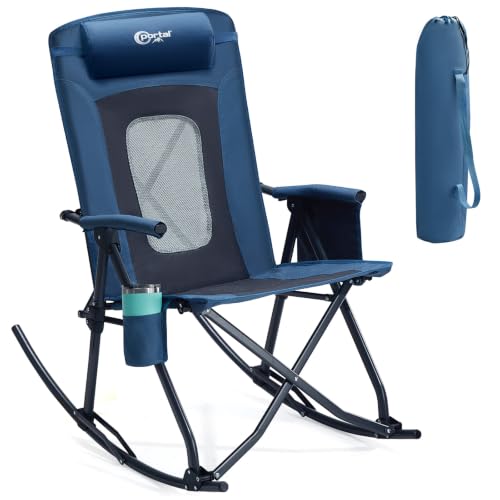
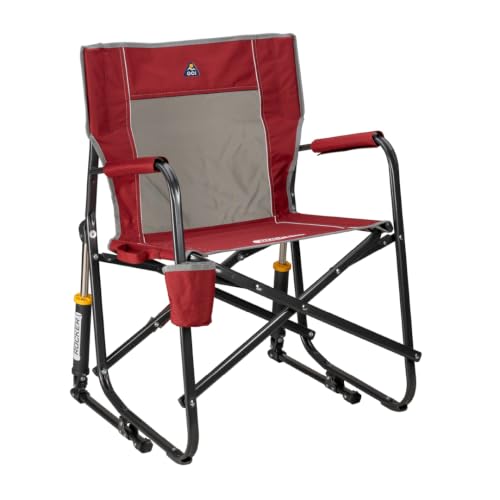
Portable Folding Rocking Chair: The Complete Buying Guide
Everything you need to know before choosing a foldable rocking chair for camping, the porch, the patio, or travel. Learn how frames, fabrics, rocker geometry, and safety features work together so you can pick the right chair for the way you actually relax outdoors.
Start the GuideWhat Is a Portable Folding Rocking Chair?
A portable folding rocking chair is a collapsible outdoor seat that combines the soothing motion of a traditional rocking chair with the packability of a camp chair. Instead of a solid wooden frame, these chairs use lightweight metal frames, curved rocker rails, or spring-based rocking mechanisms, and a fabric seat that folds flat into a compact carry bag.
The category sits at the intersection of three product families: portable chairs, porch rocking chairs, and portable folding chairs. Unlike a fixed porch rocker that stays on a deck, a folding rocker is designed to be carried to a campsite, a tailgate, a beach house rental, or a small balcony where space is limited.
Because the chair folds, the frame has to be engineered carefully: the rocker rails must remain rigid when deployed, the hinge points must lock securely, and the fabric must resist stretching. That engineering is what separates a stable, long-lasting chair from one that wobbles after a few seasons.
Quick definition: If a chair folds into a bag, has curved rails or a spring rocker, and can be carried with one hand, it belongs in this category — whether you call it a camping rocking chair, a foldable rocker, or a travel rocking chair.
Why Choose a Portable Folding Rocking Chair?
The appeal is simple: you get the calming rocking motion without committing permanent floor space to a heavy piece of furniture. But the practical benefits go further than that.
- Packability: Most models fold into a slim carry bag that fits in a car trunk, a closet, or an RV storage bay.
- Multi-location use: The same chair can serve a campsite on Saturday, a patio on Sunday, and a guest room when relatives visit.
- Small-space friendly: Apartment balconies and compact porches benefit from furniture that disappears when not in use. See our small patio ideas for layout context.
- Soothing motion: The rocking action is genuinely helpful for reading, feeding a baby, or simply unwinding after a long day.
- Travel convenience: Lightweight frames make these chairs realistic to bring to rental cabins, beach houses, and family gatherings.
If you mainly need a chair that stays put on a porch, a dedicated porch glider or a full-size porch swing may be a better fit. The folding rocker wins when mobility matters.
Anatomy of a Folding Rocking Chair
Understanding the parts helps you evaluate quality quickly, even before you sit down. Every portable folding rocking chair is built from the same core components:
1. Frame and Hinge System
The frame is usually aluminum or powder-coated steel, connected by folding hinges. Good hinges lock firmly with a audible click and show no side-to-side play when the chair is deployed. Weak hinges are the most common failure point in entry-level chairs.
2. Rocker Rails or Rocking Mechanism
Two designs dominate. The first uses curved rails at the base that contact the ground directly. The second uses a spring or pivot mechanism that lets the seat rock while the base stays flat. Rail-based chairs feel more like a classic rocker; spring-based chairs tend to be more compact when folded.
3. Seat and Back Fabric
Fabric is typically solution-dyed polyester, oxford cloth, or a mesh blend. Higher-tier chairs use reinforced stitching, double-layer fabric at stress points, and breathable mesh panels for hot weather.
4. Armrests and Cup Holders
Many models include molded armrests with an integrated cup holder — a detail that matters more than it sounds when you are holding a drink and trying to rock.
5. Carry Bag and Folded Profile
The carry bag should have a reinforced bottom and a shoulder strap. Check the folded length against your car trunk and closet dimensions before ordering.
Field tip: When a chair arrives, unfold and lock it, then push down firmly on the armrests and rock side to side. Any creaking or flex at the hinges is a warning sign worth addressing with the retailer immediately.
Frame Materials: Aluminum vs. Powder-Coated Steel
Frame material drives weight, durability, and corrosion resistance. Here is how the main options compare.
| Material | Weight | Durability | Best For |
|---|---|---|---|
| Aluminum | Lightest | Good; rust-resistant | Camping, hiking, frequent transport |
| Powder-coated steel | Moderate to heavy | Very good; needs coating intact | Patio and porch use, longer sitting sessions |
| Reinforced aluminum | Light | Excellent | Premium travel and multi-season use |
| High-grade steel | Heavy | Excellent | High-weight users, permanent-ish placement |
Aluminum is the default choice for anyone who will carry the chair more than a few steps. Powder-coated steel is a solid pick if the chair will mostly live on a patio or porch. For a deeper look at coating quality, see our guide to powder-coated outdoor furniture and powder-coated aluminum patio furniture.
Regardless of material, inspect the welds and the coating at every joint. Chipped coating is where rust begins, especially on steel frames.
Fabric, Padding, and Comfort
Fabric quality determines how the chair feels in year two, not just week one. Look for these signals:
- Solution-dyed polyester: Color is set into the fiber, so it resists fading better than surface-dyed fabric.
- Oxford cloth: Dense weave with good tear resistance; common in mid-range and premium chairs.
- Mesh panels: Improve airflow in hot climates and dry quickly after rain.
- Reinforced stitching: Double-stitched seams at the seat corners and back attachment points.
- Padding: Some models add a thin foam layer in the seat; this improves comfort but slows drying.
Comfort is also about geometry. A deeper seat suits taller users; a higher back supports the shoulders. If you plan to sit for hours, prioritize a chair with a contoured back and a seat height that lets your feet rest flat on the ground.
For wider context on outdoor fabrics and cushion care, our outdoor cushion guide is a useful companion read.
Rocking Mechanisms Explained
Curved Rocker Rails
This is the classic design: two curved rails run along the ground, and the chair rocks as the rails roll forward and back. It delivers the most authentic rocking feel and is very stable on flat surfaces. The trade-off is that rails need a firm, level surface — they do not perform well on soft sand or uneven grass.
Spring-Based Rocking
A spring or pivot assembly connects the seat to a flat base. The base stays still while the seat rocks. These chairs fold more compactly and work on slightly uneven ground, but the motion feels different from a traditional rocker — more of a gentle sway than a full rock.
Hybrid Designs
Some premium models combine short rocker rails with a stabilizing frame, aiming for the classic feel with better portability. These tend to be the most versatile option if you split time between patio and travel.
Which should you pick? Choose rails if the chair will mostly live on a deck or patio. Choose a spring mechanism if portability and uneven-ground performance matter more. Choose a hybrid if you want one chair for both.
Quality Tiers: Entry-Level, Mid-Range, and Premium
Rather than thinking in numbers, think in tiers. Each tier represents a different balance of materials, engineering, and expected lifespan.
Entry-Level Tier
Basic aluminum or steel frame, single-stitch fabric, simple hinge locks. Suitable for occasional use — a few weekends a season. Expect a shorter service life and less refined rocking motion.
Mid-Range Tier
Reinforced frame, double-stitched fabric, smoother hinges, and often a cup holder and padded armrests. A solid choice for regular patio and camping use. This tier usually offers the best balance of features and longevity.
Premium Tier
High-grade aluminum or steel, weather-resistant coating, contoured seating, and precision hinges. Built for frequent use across multiple seasons. A long-term investment for households that sit outside often.
Mid-range models typically offer a noticeably smoother rocking motion than entry-level chairs, while premium models add refinements in fabric and frame tolerances that matter most to heavy users. If you sit outside several times a week, the mid-range tier is usually the sweet spot.
Safety and Stability
Rocking chairs move, so stability deserves careful attention — especially with children, pets, and older adults in the household.
- Weight capacity: Always check the manufacturer's stated limit and stay well within it. Capacities vary by tier; premium frames generally support more.
- Locking hinges: Confirm the chair locks fully open. A partially locked hinge can collapse under load.
- Anti-tip design: Wider rocker rails or a low center of gravity reduce tipping risk.
- Surface awareness: Use rails on flat, firm ground. On decks, check that the rails will not catch on gaps between boards.
- Children and pets: Supervise use, and keep fingers away from hinge points during folding.
For broader outdoor safety guidance, see our outdoor safety tips. If the chair will be used near a pool, review our pool lounge chairs that don't rust for material considerations.
Portability, Folding, and Storage
A folding rocking chair is only as portable as its folded profile. Before choosing, measure three things: your car trunk, your closet shelf, and the path from storage to the spot where you will use it.
- Folded length: Shorter folded lengths fit in compact car trunks and apartment closets.
- Carry weight: Aluminum models are easiest to carry one-handed; steel models are better suited to short moves.
- Carry bag quality: Look for a reinforced base, a shoulder strap, and a drawstring or zipper closure.
- Setup time: Most chairs deploy in under 30 seconds; practice the fold-unfold sequence before your first trip.
If you are building a broader portable seating kit, pair this chair with a portable camping chair for a second guest seat, or consider a portable hammock chair for a different kind of lounging.
Best Use Cases
Camping and RV Travel
Lightweight aluminum frames and compact folded profiles make these chairs well suited to campsites. Choose a model with mesh panels for ventilation and a carry bag with a shoulder strap.
Patio and Porch
On a covered patio or porch, a steel-framed chair with padded armrests and a cup holder feels more like permanent furniture. Pair it with a small porch table for drinks and a book.
Small Balconies and Apartments
Folding rockers are an excellent solution for balconies where space is tight. See our balcony decor guide for layout inspiration.
Beach House and Rental Properties
Because they fold away, these chairs are easy to store between guests. Pair with a portable umbrella stand for shade.
Tailgating and Events
A rocking chair stands out at tailgates and outdoor gatherings. Choose a mid-range or premium model with a cup holder and a sturdy carry bag.
Care and Maintenance
Simple habits keep a folding rocking chair working smoothly for years.
- Clean fabric regularly: Rinse with mild soap and water, then air dry fully before folding. Never fold a wet chair — trapped moisture causes mildew and frame corrosion.
- Inspect hinges: Lubricate metal hinges with a silicone spray once or twice a season if they start to squeak.
- Check the coating: Touch up chips on powder-coated steel frames with a matching paint pen to prevent rust.
- Store dry: Store folded and dry in a garage, closet, or shed. Avoid leaving it outside in rain or snow for extended periods.
- Mind the sun: UV exposure fades fabric over time. Store out of direct sun when not in use.
For more detailed maintenance guidance, see our weatherproofing guide and rust removal tips.
Final Buying Checklist
Use this checklist before you complete your order:
- Frame material matches your primary use (aluminum for travel, steel for patio).
- Weight capacity comfortably exceeds the heaviest expected user.
- Hinges lock securely with no side-to-side play.
- Fabric is solution-dyed and double-stitched at stress points.
- Rocker rails or spring mechanism suit your typical surface.
- Folded dimensions fit your trunk and storage space.
- Carry bag has a reinforced base and shoulder strap.
- Cup holder and armrests match your sitting habits.
- Warranty terms are clear and the retailer has a returns process.
- Chair is stable on the surface where you will actually use it.
If you are comparing this category against other portable seating, explore our portable folding chairs and portable recliner chair guides.
Ready to Choose Your Chair?
Browse our curated selection of portable folding rocking chairs below. Every recommendation is chosen for build quality, stability, and real-world portability — so you can relax with confidence wherever you sit.
Explore Top PicksFrequently Asked Questions
What is a portable folding rocking chair?
A portable folding rocking chair is a lightweight, collapsible outdoor chair with curved rocker rails or a spring-based rocking mechanism. It folds flat for transport and is designed for camping, patios, porches, and travel.
How much weight can a portable folding rocking chair hold?
Weight capacities vary by model and tier. Entry-level chairs typically support around 250 pounds, while mid-range and premium models often support 300 pounds or more. Always check the manufacturer's stated capacity before use.
Are portable folding rocking chairs safe on uneven ground?
Rocking chairs perform best on flat, stable surfaces. On uneven ground, choose models with wide rocker rails, anti-tip design, or a locking mechanism. Avoid rocking on steep slopes or soft sand without a stabilizing base.
Can I leave a portable folding rocking chair outside?
Most portable folding rocking chairs are weather-resistant but not fully weatherproof. Leaving them outside for extended periods can degrade fabrics and frames. Store them under cover or bring them indoors when not in use to extend their lifespan.
What frame material is best for a portable folding rocking chair?
Aluminum frames are lightweight and rust-resistant, making them ideal for travel and camping. Powder-coated steel offers durability at a slightly higher weight. Premium models often use reinforced aluminum or high-grade steel with rust-proof finishes.