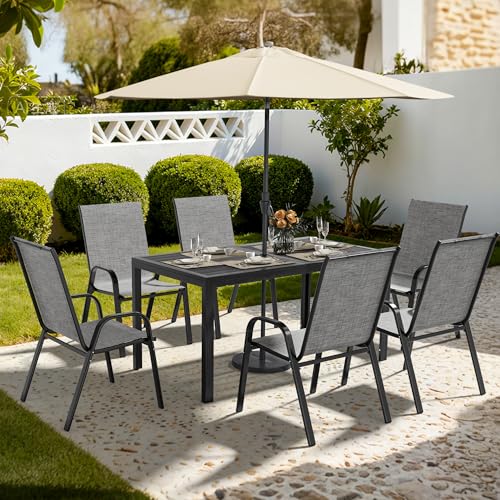
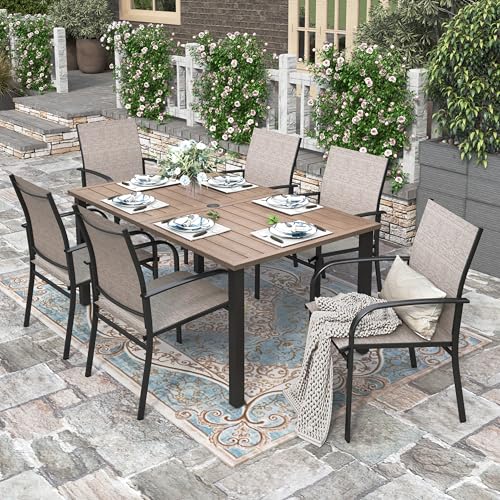
Rectangle Patio Table and Chairs with Umbrella: The Complete Buying Guide
A rectangular dining set with a built-in umbrella is the workhorse of the backyard: it seats more people per square foot than a round set, shades the whole table, and anchors the patio with a clean, linear silhouette. This guide walks you through sizing, materials, umbrella choices, and care so you can choose with confidence.
Explore Recommended SetsWhy Choose a Rectangular Patio Table and Chairs with Umbrella
Rectangular dining sets are the most space-efficient way to seat a group outdoors. Because people sit shoulder to shoulder along the long sides, a rectangular table fits more diners against a wall, fence, or railing than a round table of similar footprint. That makes these sets especially practical for narrow patios, covered porches, and decks where every inch matters.
The umbrella is the second half of the equation. A center-hole umbrella shades the middle of the table where food and drinks sit, while a cantilever or offset umbrella can shade the entire set without a pole blocking sightlines. Together, a rectangular table and a well-matched umbrella create a genuine outdoor dining room that works for breakfast, dinner, and everything in between.
This format also plays well with modular layouts. Pair a rectangular dining set with lounge pieces like a rattan outdoor furniture set or a rattan sofa to create distinct zones on a single patio. If your seating needs skew toward casual lounging, a rattan patio set can complement a dining table nicely.
Sizing: Matching Table, Chairs, and Umbrella
Getting the proportions right is the single most important decision. A table that is too small feels cramped; one that is too large leaves no room for chairs and walkways. Use the guidelines below as a starting point.
Table dimensions by seating capacity
| Seating | Typical Table Length | Typical Table Width | Best For |
|---|---|---|---|
| 4 people | 48–60 in | 30–36 in | Small patios, balconies, couples |
| 6 people | 60–72 in | 36–40 in | Families, standard backyard dining |
| 8 people | 72–84 in | 36–40 in | Entertaining, larger decks |
| 10+ people | 84 in and up | 40 in | Hosting, long covered porches |
Umbrella sizing rules
Match the canopy to the table length and the number of chairs you want shaded:
- 48–60 inch table: a 9-foot umbrella canopy is the standard match.
- 60–72 inch table: a 10-foot umbrella covers the table and most chairs.
- 72–84 inch table: an 11–13-foot canopy, or two smaller umbrellas with a double-hole table.
- No center hole: choose a cantilever or offset umbrella with a weighted base.
Tabletop and Frame Materials
Outdoor dining tables face sun, rain, and temperature swings, so material choice determines both longevity and maintenance effort.
Aluminum and cast aluminum
Aluminum frames are lightweight, rust-resistant, and easy to move for cleaning or seasonal storage. Cast aluminum tops add visual weight and intricate detailing without the rust risk of steel. Look for powder-coated finishes and stainless hardware for the best weather resistance.
Steel and wrought iron
Steel offers a solid, heavy feel that resists tipping in wind, but it requires a rust-proof coating and periodic touch-ups. Wrought-iron styles suit classic and cottage aesthetics but are the heaviest option to reposition.
Glass tops
Tempered glass tops bring a bright, modern look and are easy to wipe clean. They pair naturally with an umbrella hole but need careful handling during moves and storage. If you like the glass look, a rectangle glass patio table with umbrella hole is a straightforward option.
Resin, HDPE, and composite
High-density polyethylene and composite tops resist moisture, insects, and fading. They are a strong pick for coastal or humid climates and need minimal upkeep beyond routine cleaning.
Wood and teak
Teak and acacia bring warmth and age gracefully, but they need periodic sealing or oiling. Wood tables are heavy and should be covered during off-season months in harsh climates.
Umbrella Types and Bases
The umbrella is what makes a rectangular set genuinely usable on sunny afternoons. There are three main configurations to consider.
Center-pole umbrellas
The classic choice: the pole passes through a hole in the table and into a base. Center-pole umbrellas are stable, easy to crank open and close, and compatible with most rectangular tables that include an umbrella hole. Choose a table with a reinforced collar around the hole to prevent wobble.
Cantilever and offset umbrellas
Cantilever umbrellas hang the canopy from a side arm, keeping the space under the canopy completely free of poles. They are ideal for tables without a center hole or for shading a full seating group. These models require a heavy, wide base to counterbalance the offset load. A rectangular cantilever patio umbrella with lights is a popular choice for evening entertaining.
Lighted and solar umbrellas
Integrated LED or solar lighting extends the usable hours of your patio without separate string lights. Solar models charge during the day and illuminate the table after dusk. Consider a rectangular patio umbrella with solar lights if you frequently dine late.
Base weights and stability
Match the base to the canopy size. A 9-foot center-pole umbrella typically needs a base weighing 50–80 pounds filled with water or sand, while cantilever models often require 100 pounds or more. Keep the umbrella closed during high winds and storms.
Chair Styles and Comfort
Chairs complete the set, and the right choice depends on how long you plan to sit. A few common pairings:
- Stacking chairs: lightweight and easy to store, ideal for small patios and seasonal use.
- Sling chairs: breathable fabric seats that dry quickly and require little maintenance.
- Armchairs with cushions: the most comfortable for long dinners; choose quick-dry foam and UV-resistant fabrics.
- Benches: a bench on one long side seats more people and tucks neatly under the table. See rectangle dining table with bench and chairs for hybrid layouts.
If you prefer a coordinated look, a complete rectangular patio dining set takes the guesswork out of matching chairs, table, and umbrella hole placement.
Placement and Layout
Where you place the set matters as much as what you buy. A few practical guidelines:
- Keep the table at least 36 inches from walls, railings, and the edge of the deck.
- Orient the long axis parallel to the house or fence to save space on narrow patios.
- Position the umbrella so the canopy shades the seating side, not just the tabletop.
- Leave a clear path to the grill, kitchen door, and any lounge zone.
- On a covered porch, check ceiling height against the umbrella's open height before buying.
For mixed-use patios, pair the dining set with a smaller occasional piece like a rattan side table near the lounge area to keep drinks and plates off the dining table.
Care and Weatherproofing
A rectangular dining set is an investment, and routine care keeps it looking sharp for years.
- Weekly: wipe the tabletop with mild soap and water; shake out cushions.
- Monthly: inspect frame welds, umbrella cranks, and base weights; tighten bolts.
- Seasonally: touch up scratches on metal frames with matching paint; oil wood surfaces.
- Off-season: cover the set or store it in a dry space; remove and store cushions and the umbrella canopy.
- Before storms: close the umbrella and, if possible, lay it flat or remove the canopy.
If your chairs have removable fabric, replacement covers extend the life of the frame. For similar upkeep tips on woven pieces, see our guide to replacement cushions for rattan furniture.
Quality Tiers at a Glance
Instead of focusing on numbers, compare sets by their position in the market. Use this tier system to align expectations with construction quality and intended use.
| Tier | Typical Construction | Best For | Expected Lifespan |
|---|---|---|---|
| Entry-level | Powder-coated steel or lightweight aluminum; sling or basic cushions; thinner umbrella canopy | Occasional use, renters, small balconies | A few seasons with care |
| Mid-range | Rust-resistant aluminum or resin; quick-dry cushions; crank-and-tilt umbrella with a weighted base | Everyday family dining, standard backyard patios | 5–8 years with routine maintenance |
| Premium | Cast aluminum or high-grade HDPE; solution-dyed acrylic fabrics; reinforced umbrella hole and collar | Frequent entertaining, exposed patios, coastal climates | 8–12 years with proper care |
| Luxury | Teak, marine-grade stainless, or commercial-grade aluminum; custom canopies and integrated lighting | Full outdoor kitchens, high-use commercial-grade settings | 12+ years with seasonal upkeep |
Ready to Furnish Your Patio?
Browse our curated selection of rectangular patio tables, chairs, and umbrellas below, or explore our patio essentials checklist to plan the full layout before you commit.
Frequently Asked Questions
What size rectangle patio table and chairs with umbrella should I choose?
For four people, a 48–60 inch rectangular table is comfortable; six diners need roughly 60–72 inches. Allow about 24 inches of table width per person and keep at least 36 inches of open space around the set for chairs and walkways.
What umbrella size fits a rectangular patio dining table?
Match the canopy to the table length: a 9-foot umbrella suits 48–60 inch tables, a 10-foot canopy works for 60–72 inch tables, and longer tables need an 11–13 foot canopy or two smaller umbrellas with a double-hole table. Cantilever styles are ideal when the table lacks a center hole.
Which tabletop material is best for an outdoor umbrella table?
Aluminum, cast aluminum, and high-density resin tops resist rust and weathering with minimal upkeep. Glass and stone tops offer premium looks but need careful handling. Whichever you choose, look for a reinforced umbrella hole and a rust-proof finish.
How do I secure an umbrella on a windy patio?
Use a weighted base rated for your canopy size, close the umbrella during high winds, and consider a cantilever model with a heavy offset base. A center-pole umbrella should sit in a reinforced hole with a stabilizing collar.
How do I maintain a rectangle patio table and chairs with umbrella?
Clean frames weekly with mild soap and water, touch up metal scratches, store cushions when not in use, and cover the set during off-season months. Inspect the umbrella canopy and crank mechanism regularly for wear.