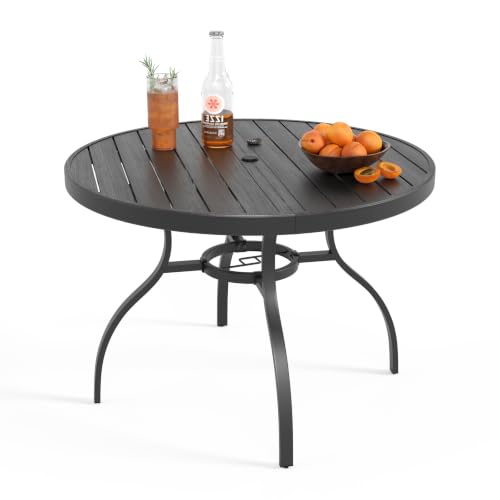
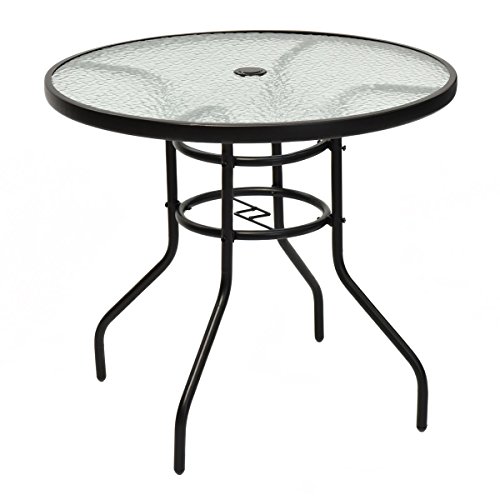
Round Patio Table with Umbrella: The Complete Buying Guide
Everything you need to know before choosing a round outdoor dining table with a built-in umbrella hole — sizing, materials, umbrella stability, seating capacity, and long-term care.
Why Choose a Round Patio Table with Umbrella?
A round patio table with an umbrella is one of the most practical and social outdoor dining solutions you can own. Unlike rectangular tables, a round top places every seat at a similar distance from the center, which makes conversation flow naturally and prevents anyone from feeling stuck at a corner. That circular geometry is also ideal for umbrella placement: a single central pole serves the whole table evenly, so shade is distributed fairly rather than favoring one side.
From a space-planning perspective, round tables are forgiving. They can sit in a square nook, on a compact balcony, or at the center of a larger deck without awkward overhangs. The absence of sharp corners also makes them safer in households with children and easier to walk around in tight traffic zones. When you add a built-in umbrella hole, you gain shade without dedicating floor space to a freestanding umbrella base — a meaningful advantage on smaller patios.
If your outdoor area is on the compact side, you may also want to explore broader ideas for an outdoor small patio layout, or compare a round table against a more traditional patio table and chairs with umbrella configuration. Both approaches work, but the round format usually wins on social flow and shade balance.
Sizes and Seating Capacity
The first decision is diameter, because it determines how many people you can seat comfortably and how much clearance you need around the table. As a rule of thumb, allow roughly 24 inches of table edge per diner and about 30 to 36 inches of clearance between the table edge and any wall, railing, or grill so chairs can pull out without collision.
| Table Diameter | Comfortable Seating | Best For |
|---|---|---|
| 30–36 inches | 2 people | Balconies, breakfast nooks, coffee-and-reading setups |
| 40–48 inches | 4 people | Standard family patio dining, small decks |
| 54–60 inches | 4–6 people | Entertaining, larger decks, poolside dining |
| 60–72 inches | 6–8 people | Hosting, extended family, covered porches |
Two secondary measurements matter just as much as diameter. First, the umbrella hole diameter — most standard poles are 1.5 inches, but some sets use 1.75 or 2 inches, so confirm compatibility before mixing a table with a separate umbrella. Second, table height: standard dining height is around 28 to 30 inches, counter height around 36 inches, and bar height around 40 to 42 inches. Chairs and umbrella poles must be matched to that height, or the shade will sit too low or too high.
If you are building a full dining zone, a dedicated round outdoor dining table set with swivel chairs can simplify the shopping process because the seating geometry is already engineered for the round top. For larger gatherings, the principles in a patio table and 8 chairs guide are useful for understanding clearance and traffic flow.
The Umbrella System Explained
The umbrella is not an accessory — it is a structural system, and it needs to be planned as one. Four components determine whether your shade stays put on a windy afternoon: the table's umbrella hole, the table's center support, the umbrella pole and canopy, and the base or weighted anchor.
The Umbrella Hole and Table Support
A proper round table with an umbrella hole has a reinforced ring at the center so the hole does not crack or deform under pole pressure. Higher-quality tables add an internal cross-brace or a welded collar beneath the top, which keeps the table rigid when the umbrella is tilted or caught by a gust. Entry-level tables sometimes rely on a simple drilled hole with no reinforcement — workable in sheltered spots, but less confidence-inspiring in exposed locations.
Pole and Canopy
Standard market umbrellas use a 1.5-inch pole in aluminum or steel. Aluminum resists rust and is lighter to reposition; steel is stronger but needs a rust-proof finish to survive seasons outdoors. Canopy fabric is usually solution-dyed polyester or acrylic. Acrylic holds color longer and resists fading; polyester is widely used and performs well in mid-range sets. Crank-and-tilt mechanisms are worth prioritizing if your patio receives low-angle afternoon sun.
Base and Weighting
This is where many buyers get caught out. A table-mounted umbrella still needs a weighted base or a through-table base plate, because the table alone is not designed to resist wind leverage on a large canopy. Options include a simple weighted plate that sits under the table, a heavier free-standing base positioned over the pole, or a sand-and-water-filled base for temporary setups. Choosing the right foundation is covered in depth in our guide to patio umbrella bases, and you can compare canopy styles in the general patio umbrella overview.
Materials and Durability
Round patio tables are built from a handful of core materials, and each has a distinct personality in terms of weight, maintenance, and longevity. Understanding the trade-offs helps you match the table to your climate and storage habits.
Powder-Coated Aluminum
The most common frame material for modern round tables. Aluminum is lightweight, will not rust, and accepts a powder-coated finish in a wide range of colors. It is easy to move for cleaning and resists corrosion in coastal air. The main caveat is that very lightweight aluminum can feel less planted in strong wind, so look for thicker gauge tubing and a solid tabletop attachment. Our overview of powder-coated aluminum outdoor furniture explains how the finish is applied and why it matters.
Cast Aluminum
Cast aluminum tables are heavier and often feature decorative detailing that is molded rather than welded. They feel substantial and resist wobble well, which suits exposed patios. The trade-off is weight — moving a large cast table is a two-person job. See powder-coated cast aluminum patio furniture for the finish and care specifics.
Wicker and Rattan
All-weather wicker over an aluminum frame gives a warmer, more textured look. Synthetic wicker resists fading and moisture far better than natural rattan. Round wicker tables pair naturally with the relaxed styling seen in a outdoor wicker bistro set, though for full dining you will want a larger diameter and a reinforced umbrella hole.
Glass, Slate, and Composite Tops
Tempered glass tops are easy to wipe down and visually lighten a small space. Slate and stone-composite tops resist scratching and add a premium feel, but they are heavier. Resin and high-density polyethylene tops are the most weather-tolerant and require almost no maintenance. If you ever need to swap a damaged top, our notes on round patio table top replacement and round tempered glass for patio tables cover compatibility considerations.
Wood and Teak
Teak and other hardwoods age gracefully and develop a silver patina outdoors. They need periodic sealing or oiling to prevent cracking, and they are heavier than aluminum. Wood suits a classic or rustic design language, while metal and wicker suit contemporary and coastal settings.
Whichever material you choose, the broader principles in all-weather patio furniture will help you judge whether a set is genuinely built for year-round exposure.
Quality Tiers at a Glance
Rather than chasing numbers, it helps to understand where a given set sits in the market. The table below uses universal quality tiers so you can compare sets on construction and intended use.
| Tier | Typical Construction | Best For |
|---|---|---|
| Entry-level | Thinner aluminum or resin frame, basic drilled umbrella hole, polyester canopy | Sheltered balconies, seasonal use, first outdoor setup |
| Mid-range | Reinforced hole ring, thicker tubing, crank-tilt umbrella, acrylic-blend fabric | Family patios, regular weekend dining |
| Premium | Cast aluminum or heavy-gauge frame, internal cross-brace, solution-dyed acrylic canopy | Exposed decks, entertaining, long-term outdoor use |
| Luxury | Stone or composite top, commercial-grade frame, wind-rated umbrella system | Design-led spaces, hospitality-level durability |
A mid-range set usually offers the smoothest balance for most households: the umbrella mechanism is noticeably more refined than entry-level, and the frame will not flex under normal wind. Premium and luxury tiers make sense when the table will stay outside year-round or when the patio is the primary entertaining space.
Choosing the Right Configuration
Once you know your diameter and tier, the remaining decision is how the set is packaged. There are four common configurations, and each fits a different lifestyle.
Table and Chairs as a Complete Set
Buying a matched set removes compatibility guesswork. Chairs are already sized for the table height, and the umbrella hole is drilled to the included pole. A complete round patio table and chairs with umbrella is the simplest path for most buyers. Larger families can look at a round patio table and chairs for 8, while compact households can compare against the general round patio table and chairs category.
Table Only, With Existing Chairs
If you already own comfortable chairs, a table-only purchase lets you reuse them. Just confirm that your chairs fit the table's apron height — some round tables have a deeper apron that blocks armrests from sliding underneath. A 60-inch round patio table and chairs is a common sweet spot for four to six diners.
Bistro and Balcony Scale
For two-person setups, a bistro-scale round table is more proportionate than a full dining table. The design logic is similar to a outdoor wicker bistro set, but with an umbrella hole added for sun protection. These work well on apartment balconies and small porches.
Fire Pit and Umbrella Hybrids
Some round tables integrate a fire pit in the center instead of an umbrella hole. That is a different use case — warmth and ambiance rather than shade. If your priority is evening entertaining, review a round fire pit table with hidden propane tank before committing to a shade-first design. A standard umbrella table is the better choice when midday sun is the main problem.
Accessories and Adjacent Furniture
Round dining tables rarely stand alone. A patio side table with glass top can hold drinks and a lantern between the dining zone and the seating area. A patio dining set with umbrella often pairs well with a patio dining set with umbrella that seats 6 if you are furnishing a larger space. For layout planning across the whole yard, the patio overview is a good starting point, and a patio deck guide helps with surface and placement decisions.
Care and Weatherproofing
A round umbrella table is exposed to sun, rain, and wind all season, so a small maintenance routine goes a long way. The good news is that most of the work takes minutes per week.
Weekly Routine
- Wipe the tabletop with mild soapy water and a soft cloth; avoid abrasive pads on glass and coated metal.
- Check the umbrella pole for wobble and tighten the base collar if it has loosened.
- Clear debris from the umbrella hole so water drains freely instead of pooling at the center.
Seasonal Tasks
- Close and secure the umbrella during storms, or remove the canopy if high winds are forecast.
- Inspect the frame for paint chips; touch up with a matching rust-proof coating to prevent corrosion.
- Store fabric canopies dry to prevent mildew, and clean them with a fabric-safe cleaner before storing.
- Apply a wood sealer annually if you own a teak or hardwood table.
For a deeper treatment of finishes and protective covers, see the full outdoor weatherproofing guide. If your table sits on stone or composite paving, a outdoor rug underneath protects the surface and defines the dining zone, while patio lighting extends usable hours after sunset.
Frequently Asked Questions
What size round patio table seats four comfortably?
A 40 to 48 inch diameter round table seats four adults comfortably. If you entertain often or use larger chairs, move up to 54 inches for extra elbow room.
Do I need a separate umbrella base if the table has a hole?
Yes. The table hole holds the pole upright but does not resist wind leverage. A weighted base plate or through-table base is required for safe use, especially on exposed decks.
Can a round table fit on a small balcony?
Yes — a 30 to 36 inch round table is a common balcony choice because it has no corners and leaves walkway space. Verify railing clearance before ordering.
Is aluminum or cast aluminum better for windy locations?
Cast aluminum is heavier and resists wobble better in wind. Lightweight aluminum works well when paired with a weighted base and a properly tensioned canopy.
How do I know if an umbrella fits my table?
Match the pole diameter to the hole diameter — 1.5 inches is standard, but measure both before buying. Also check that the canopy height clears the table surface and seated diners.
What is the difference between dining height and counter height round tables?
Dining height is roughly 28 to 30 inches and uses standard chairs. Counter height is around 36 inches and requires taller stools. Umbrella poles must be matched to the table height so the canopy sits at a usable level.