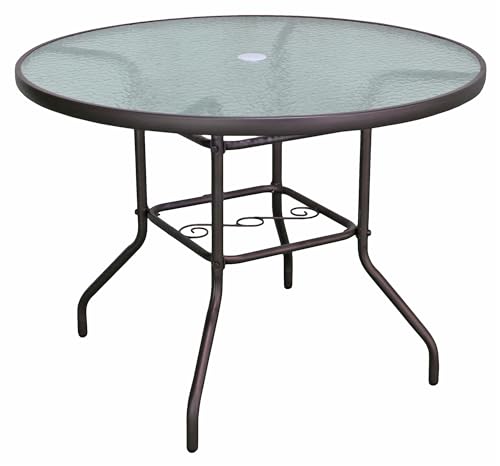
What Is Round Tempered Glass for a Patio Table?
Round tempered glass for a patio table is a heat-treated glass top that has been processed to be significantly stronger than standard annealed glass. The manufacturing process involves heating the glass to a very high temperature and then cooling it rapidly. This creates internal compressive stress that gives the glass its strength and its characteristic safety behavior: when it breaks, it shatters into small, blunt granules instead of sharp, dangerous shards.
Unlike a flat rectangular top, a round glass top is typically cut and finished to fit a circular or oval metal, wood, or wicker frame. The glass may be supplied as a standalone replacement piece or as part of a complete patio dining set. Many frames are designed to accept a glass top with a center hole for an umbrella, making the round glass top a versatile option for shaded outdoor dining.
Homeowners often encounter this product in two situations. First, when shopping for a new table and comparing glass against other materials. Second, when a existing glass top has chipped, cracked, or become cloudy, and the frame is still in good condition. In the second case, a replacement glass top can extend the life of an otherwise sound table.
Why Choose a Round Glass Top for Your Patio Table?
Round tables have a natural social advantage: everyone seated at the table can see and talk to everyone else. A glass top amplifies that benefit by keeping the surface visually light and open, so a small patio feels less crowded. Here are the main reasons homeowners choose round tempered glass for outdoor tables.
Visual lightness and space efficiency
Glass reflects the surrounding sky, foliage, and lighting, which helps it blend into the outdoor environment. On a compact balcony or a tight small patio, a glass top can make the dining area feel less bulky than a solid wood or stone surface. The transparency also lets you see the table frame beneath, which is useful if your frame has decorative details worth showing.
Easy cleaning and hygiene
Glass is non-porous. Spilled drinks, sauces, and bird droppings wipe away easily with a damp cloth and a mild cleaner. Unlike porous stone or unfinished wood, glass does not absorb stains or harbor bacteria in surface pores. For families who entertain often, this is a practical everyday advantage.
Weather resistance
Tempered glass is unaffected by rain, humidity, and typical outdoor temperature swings. It does not warp, rot, or rust. Combined with a powder-coated aluminum or cast aluminum frame, a glass top forms a highly weather-resistant combination that handles year-round exposure well.
Reflective ambiance
Glass catches and reflects outdoor lighting in a way that solid surfaces cannot. If your patio has outdoor lighting or string lights, a glass top adds a subtle sparkle to evening gatherings without additional decor.
Thickness and Diameter: Matching Glass to Your Table
The two most important measurements for any round glass patio table top are the diameter and the glass thickness. Getting either wrong can mean a top that does not fit the frame or is not strong enough for the table's intended use. The table below summarizes common specifications by market tier. It uses relative quality tiers rather than specific figures tied to any currency.
| Tier | Typical Glass Thickness | Common Diameters | Best For |
|---|---|---|---|
| Entry-level | 5–6 mm | 30–36 inches | Small bistro tables, two-person setups, light use |
| Mid-range | 8 mm | 40–48 inches | Four-person dining, everyday family use |
| Premium | 10 mm | 48–54 inches | Six-person dining, frequent entertaining |
| Commercial-grade | 10 mm+ | 54–60 inches and larger | Heavy use, hospitality settings, large round tables |
Thicker glass is not automatically better for every situation. The frame's design and the table's support structure determine how much glass it can safely carry. A heavy 10 mm top on a lightweight frame may stress the welds. Conversely, thin glass on a large diameter table may flex under weight. Always match the replacement glass to the original specification or the frame manufacturer's recommendation.
Diameter matters for comfort as well as fit. A 48-inch round table comfortably seats four adults. A 54-inch round table can seat six with careful chair placement. If you are pairing the table with a dining set with umbrella, confirm that the umbrella base and pole clear the glass hole and that chairs have enough pull-out space.
For large round tables seating six to eight, many homeowners prefer frames with additional center support. If your goal is a complete set, browse options like the round patio table and chairs for 8 to compare how different diameters translate into seating capacity.
Edge Finishes Explained: Flat Polish, Bevel, and Pencil Edge
The edge finish of a glass top is both a safety feature and a design choice. Untreated cut glass edges are sharp and vulnerable to chipping. Manufacturers therefore grind and polish the edge during production. The three most common finishes for patio table glass are:
Flat polish
The most common and versatile finish. The edge is ground flat and polished to a smooth, slightly rounded profile. It looks clean and modern, is comfortable to lean against, and is the standard choice for most outdoor dining tables. Flat polish suits both traditional and contemporary frames.
Pencil edge
A pencil edge has a small, rounded profile that resembles a pencil's side. It is slightly softer in appearance than flat polish and is often used on entry-level and mid-range glass tops. It is comfortable and safe but offers less visual definition than a bevel.
Beveled edge
A bevel creates an angled facet along the edge, catching light and giving the glass a more refined, premium look. Beveled glass tops are typically found on high-end tier tables. The angled surface also adds a bit of visual thickness to the edge. Bevels are more complex to produce and are best sourced from a specialist glass supplier.
Umbrella Hole Options: When and Why You Need One
Many round patio tables are designed for a center umbrella. If your frame has a built-in center support, the glass top should have a matching umbrella hole. The hole is typically 1.5 to 2 inches in diameter, sized to clear a standard umbrella pole, and finished with a polished or grommet-lined edge to prevent chipping.
An umbrella hole changes the structural behavior of the glass. The center opening concentrates stress around the hole, which is why the surrounding edge must be properly polished and the glass thick enough for the diameter. For this reason, umbrella-hole glass tops should be sourced from suppliers who specialize in patio table glass rather than generic glass cutters.
If you use a center umbrella, pair the glass with a stable patio umbrella and a weighted umbrella base. The glass top supports the umbrella pole but not the full wind load of the canopy; the base does that job. If you prefer a solid top, you can still add shade with a cantilever or offset umbrella that does not pass through the table.
Round glass tops with umbrella holes are commonly paired with frames like the round patio table with umbrella or the round patio table and chairs with umbrella. If you already own the frame and only need the top, double-check the hole diameter and its exact position before ordering.
Safety and Heat Resistance: What You Should Know
Tempered glass is the safest practical choice for a glass patio table top. Its key safety properties include:
- Break pattern: Tempered glass breaks into small, granular pieces rather than large, sharp shards, reducing the risk of deep cuts.
- Impact strength: It withstands significantly more impact than standard glass of the same thickness, which matters in outdoor settings with wind-blown objects.
- Thermal shock resistance: Tempered glass handles the temperature changes of direct sun and cool evenings better than annealed glass. It is not, however, immune to extreme localized heat.
Heat resistance deserves a specific caution. Placing a hot grill pan, a portable fire pit bowl, or a hot fire pit table insert directly on glass can create a localized temperature differential that may cause breakage. Always use heat-resistant mats or trivets under hot items, and keep open flames away from the glass surface.
Another safety consideration is the frame. A glass top should sit flush in its frame, with no rocking or overhang. If the frame has bent or lost its original shape, the glass may not seat correctly and could be under uneven stress. Inspect the frame before ordering a replacement top.
Finally, consider wind. In exposed locations, a lightweight glass table can catch wind under the top. Secure the table, close or remove the umbrella during storms, and use a fitted round patio table cover with umbrella hole when the table is not in use.
How to Measure Your Table for a Replacement Glass Top
Measuring for a replacement round glass top is straightforward if you follow a consistent process. Accuracy matters because glass is custom-cut and cannot be adjusted after production.
- Measure the frame opening, not the old glass. Use a metal tape measure across the widest inside point of the frame where the glass sits. Measure in at least two directions (front-to-back and side-to-side) to catch any out-of-round frame.
- Measure the old glass if available. If the original top is intact, measure its diameter across the center. Compare it with the frame measurement; the glass should be slightly smaller than the frame opening to allow for expansion and seating.
- Confirm the thickness. Use a caliper or a ruler against the edge of the old glass. If you do not have the old top, check the frame's lip depth and the manufacturer's specification. Never exceed the depth the frame can safely hold.
- Measure the umbrella hole. If applicable, measure the diameter of the hole in the frame's center support and the distance from the hole to the edge. The glass hole must align exactly with the frame's hole.
- Choose the edge finish. Note whether the old glass had a flat polish, pencil edge, or bevel, and match it for visual consistency.
- Check for a rim or lip. Some frames have a small lip that holds the glass; others rely on weight and clips. Understand how your frame retains the glass before ordering.
If you are replacing the entire table rather than just the top, compare complete sets such as the 60-inch round patio table and chairs or the round outdoor dining table set with swivel chairs. These listings usually specify the glass thickness and diameter, which you can use as a reference point for replacement sourcing.
Round Tempered Glass vs Other Patio Table Top Materials
Glass is one of several common patio table top materials. Understanding the trade-offs helps you decide whether glass is the right choice for your space or whether another surface suits your habits better.
| Material | Strengths | Considerations | Best For |
|---|---|---|---|
| Tempered glass | Easy to clean, non-porous, reflects light, does not warp | Can break under extreme localized heat or heavy impact; heavier than resin | Covered patios, everyday dining, modern and transitional styles |
| Powder-coated metal | Very durable, rust-resistant, low maintenance | Can get hot in direct sun; less visually light than glass | High-use family tables, windy locations |
| Wood | Warm appearance, natural texture | Requires sealing and seasonal care; can warp if neglected | Rustic and farmhouse styles, covered porches |
| Stone or tile | Heavy, stable, heat-resistant | Very heavy; porous stone needs sealing; harder to move | Permanent dining areas, large round tables |
| Resin or composite | Lightweight, weather-resistant, easy to move | Less premium feel; can fade over years in strong sun | Balconies, rental patios, casual setups |
Glass pairs especially well with metal frames because the metal provides the structural rigidity while the glass provides the easy-clean, light-reflecting surface. For a full set that combines these benefits, explore outdoor dining furniture sets and compare how glass tops are paired with different frame materials.
If your outdoor space is a patio deck or a screened porch, glass is often the most practical choice because it handles humidity well and wipes clean quickly. On a windy, fully exposed site, some homeowners prefer metal or resin tops for peace of mind.
Care and Maintenance for a Long-Lasting Glass Top
Round tempered glass tops are low maintenance, but a few habits will keep them looking clear and performing well for years.
- Clean with mild soap and water. Avoid abrasive pads and harsh chemicals that can scratch the surface or leave residue. A microfiber cloth works well for streak-free drying.
- Use coasters and trivets. Prevent water rings and protect the glass from localized heat. This is especially important if you serve hot dishes outdoors.
- Inspect the edge regularly. Look for chips or small cracks along the rim and around the umbrella hole. Address any damage promptly, as chips can propagate into cracks.
- Cover during storms. A fitted cover protects the glass from flying debris and keeps the table clean between uses. During high winds, remove or lower the umbrella.
- Avoid dragging objects across the surface. Sand and grit can scratch glass. Lift chairs and decor rather than sliding them across the top.
- Check the frame seasonally. A stable frame keeps the glass evenly supported. Tighten loose bolts and address rust early, especially on weatherproofing checks before winter.
If your table sits on a hard surface, consider pairing it with an outdoor rug to protect both the glass and the floor from chair movement and dropped items. For a cohesive look, browse patio rugs and weatherproofing resources to plan your seasonal setup.
Buying Checklist: What to Confirm Before You Order
Use this checklist to verify every detail before purchasing a round tempered glass patio table top or a complete table. It is designed for the research stage, when you have a shortlist and need to confirm compatibility and quality.
- Diameter: Measured across the frame opening in two directions and compared with the old glass.
- Thickness: Matches the frame's capacity and the table's intended use (5–6 mm entry-level, 8 mm mid-range, 10 mm premium, 10 mm+ commercial-grade).
- Edge finish: Flat polish, pencil edge, or bevel, fully polished with no chips.
- Umbrella hole: Correct diameter and position, with a polished or grommet-lined edge if applicable.
- Tempering verification: Supplier confirms the glass is tempered and provides safety documentation.
- Frame compatibility: The frame is stable, the retaining lip or clips are intact, and the glass seats flush.
- Delivery and handling: Confirm packaging, liftgate service, and inspection instructions on arrival.
- Warranty and returns: Understand the supplier's policy on chips, cracks, and fit issues.
If you are buying a complete table rather than a replacement top, compare complete sets like the 5-piece cast aluminum patio dining set, the hexagon glass patio table with 6 chairs, or the round outdoor table tops with umbrella hole. These listings typically include the glass specifications, which you can use as a benchmark for quality and compatibility.
For additional context on similar products, browse the round patio table top replacement and round tempered glass for patio table resources. If you are refreshing the whole dining area, pair your glass top with patio table and chairs for 4 or explore outdoor table and chair sets that match your frame style.
Frequently Asked Questions
What thickness should round tempered glass for a patio table be?
Most round patio tables use tempered glass between 5 mm and 10 mm thick. Entry-level tables often use 5–6 mm, mid-range tables typically use 8 mm, and premium or commercial-grade tables often use 10 mm or more for added rigidity. Always match the replacement glass to the frame's specification.
Is tempered glass safe for outdoor patio tables?
Yes. Tempered glass is significantly stronger than standard glass and breaks into small, blunt granules rather than sharp shards. It is the standard choice for outdoor patio table tops, though it should still be protected from extreme localized heat and heavy impact.
Can I replace a round patio table glass top myself?
Yes, in most cases. Measure the frame opening and the glass diameter carefully, confirm the thickness the frame supports, and choose the correct edge finish and umbrella hole size. A replacement top is a practical way to refresh an existing table frame without replacing the entire set.
Do I need an umbrella hole in the glass top?
Only if you plan to use a center umbrella through the table. If your frame has a center support for an umbrella, choose a glass top with a matching hole and a polished edge around the opening. If you never use a center umbrella, a solid top is simpler and slightly stronger.
How do I clean a tempered glass patio table top?
Use mild soap and water with a soft cloth or microfiber towel. Avoid abrasive pads and harsh chemicals. Dry with a clean microfiber cloth to prevent streaks, and use coasters and trivets to protect the surface from rings and heat.
Ready to Compare Your Options?
Our curated product section below lets you explore round tempered glass patio table tops and complete dining sets by tier, frame material, and feature set. Use the checklist above to confirm compatibility before you decide.
Explore Options