Patio Rugs: The Complete Buying Guide
Transform your outdoor space with durable, weather-resistant flooring. Learn how to choose the right size, material, and style for your patio.
EXPLORE TOP PICKSWhy patio rugs matter: A well-chosen outdoor rug anchors your furniture layout, protects the patio surface, and adds warmth to hard flooring. This guide walks you through materials, sizing, maintenance, and styling so you can buy with confidence.
Why Invest in a Patio Rug?
A patio rug is one of the most versatile upgrades you can make to an outdoor living area. It defines a conversation zone, softens the look of concrete or decking, and reduces glare from hard surfaces underfoot. Beyond aesthetics, a quality outdoor rug protects your patio from furniture scratches and provides a comfortable surface for bare feet.
Unlike indoor rugs, patio rugs must withstand sun exposure, rain, humidity, and foot traffic. Choosing the right material is the single most important decision you will make. Synthetic fibers such as polypropylene and recycled PET dominate the outdoor market because they resist moisture, mildew, and UV fading. If you are still planning your overall outdoor layout, our patio design resources can help you coordinate furniture and flooring before you buy.
Key Factors When Choosing a Patio Rug
Before you browse product listings, narrow down your requirements using these five criteria. They will help you filter options quickly and avoid common mistakes.
1. Material and Weather Resistance
Material determines durability, comfort, and maintenance needs. Here is how the most common options compare:
| Material | Best For | Tier | Notes |
|---|---|---|---|
| Polypropylene | Full sun, high-traffic patios | Essential to mid-tier | Moisture-resistant, fade-resistant, easy to rinse clean |
| Recycled PET | Eco-conscious buyers, covered patios | Mid-tier | Soft feel, good UV resistance, made from recycled bottles |
| Polyester | Shaded or covered areas | Starter tier | Colorfast but less water-resistant than polypropylene |
| Jute / Sisal | Covered porches, natural styling | Mid to premium tier | Natural texture, must stay dry, not for exposed patios |
| Wool | Enclosed sunrooms only | Luxury tier | Soft and plush but not weather-resistant for open patios |
For exposed patios, stick with synthetic options. If your area is covered by a pergola or awning, you have more flexibility to use natural fibers. Pairing a rug with the right weatherproofing strategy will extend its lifespan significantly.
2. Size and Shape
Rug size is a common source of buyer confusion. The general rule: the rug should be large enough that all furniture legs rest on it, or at least the front legs. Here are practical guidelines:
- Conversation seating: The rug should extend 12 to 24 inches beyond the seating group on all sides.
- Dining sets: Add at least 24 inches beyond the table edge so chairs remain on the rug when pulled out.
- Small patios: A round or square rug in a compact size works better than a large rectangle that crowds the space. See our small patio layout ideas for space-saving tips.
- Rectangular patios: Align the rug with the patio edges for a clean, architectural look.
Measure your furniture footprint before ordering. A rug that is too small makes the seating area feel disconnected, while an oversized rug on a small patio can feel overwhelming.
3. Style and Color
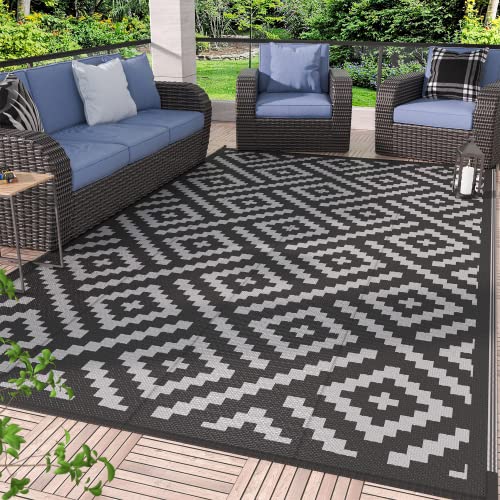
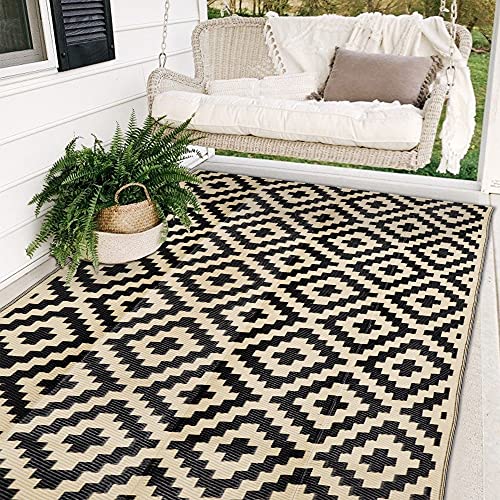
Outdoor rugs come in a wide range of patterns, from geometric weaves to subtle stripes and solid tones. Choose a palette that complements your furniture and the surrounding landscape. Neutral tones such as sand, charcoal, and sage green are safe choices that work across seasons. Bold patterns can define a focal point and hide stains better than solid light colors.
If you are still deciding on the overall look, our guides to outdoor rug styling and seasonal decor offer inspiration for refreshing your patio throughout the year.
4. Pile Height and Texture
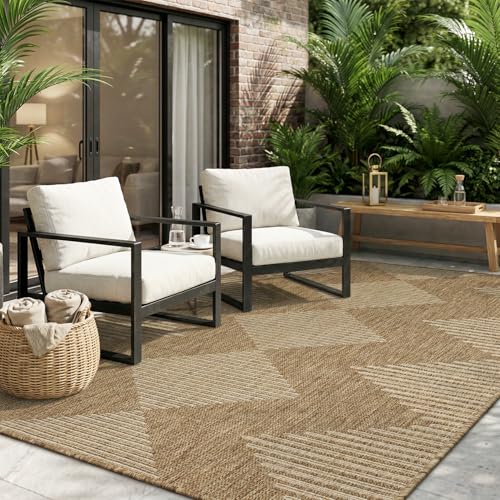
Low-pile and flat-weave rugs are the most practical for outdoor use. They dry quickly, resist dirt, and are easy to sweep or hose down. High-pile rugs trap moisture and debris, making them unsuitable for uncovered patios. Textured flat-weaves add visual interest without compromising drainage.
5. Care and Maintenance
Even the most durable patio rug needs periodic care. Basic maintenance includes:
- Shaking or vacuuming loose debris weekly.
- Rinsing with a hose and mild soap every few weeks during heavy use seasons.
- Air-drying completely before replacing furniture.
- Rolling or hanging the rug during extended wet periods or winter storage.
For deeper cleaning methods and protective treatments, see our weatherproofing guide.
How to Layer a Patio Rug with Your Furniture
A patio rug works best when it is integrated into the overall furniture plan. Consider these pairing ideas:
- Dining zones: A rectangular rug beneath a patio dining set creates a defined eating area. Ensure the rug extends far enough for chairs to slide in and out comfortably.
- Lounge areas: Pair a large rug with an outdoor sectional sofa or conversation set to anchor the seating group.
- Small spaces: Use a round rug under a small outdoor table to create an intimate bistro feel.
- Poolside: Choose a quick-drying synthetic rug near pool loungers to prevent slipping and protect the deck.
Layering also helps define transitions between zones on a larger patio deck. A runner between a seating area and a dining area, for example, guides foot traffic and visually connects the spaces.
Common Mistakes to Avoid
Buying a patio rug seems straightforward, but a few missteps can lead to disappointment:
- Choosing an indoor rug for outdoor use. Indoor rugs absorb moisture and degrade quickly when exposed to the elements.
- Ignoring drainage. A rug placed on a surface that traps water will develop mildew underneath. Ensure water can drain away freely.
- Buying too small. Undersized rugs make furniture feel cramped and fail to define the space.
- Skipping a rug pad. A pad improves grip, extends rug life, and adds comfort underfoot.
- Overlooking sun exposure. Even fade-resistant rugs will show wear over time in full sun. Rotate the rug periodically to even out exposure.
Frequently Asked Questions
What material is best for a patio rug?
Polypropylene and recycled PET are excellent choices for most patios because they resist moisture, fading, and mildew. For covered areas, natural fibers like jute or sisal can work well, while high-traffic zones benefit from durable woven synthetics.
How do I choose the right size patio rug?
Measure your seating or dining zone and add a border of 12 to 24 inches so chairs stay on the rug when pulled out. For dining sets, the rug should extend at least 24 inches beyond the table edge on all sides.
Can patio rugs be left outside in the rain?
Many synthetic patio rugs are designed for outdoor use and tolerate rain, but standing water shortens their lifespan. Ensure good drainage beneath the rug and roll or hang it to dry after heavy downpours.
How do I clean an outdoor patio rug?
Shake off loose debris, then rinse with a hose and mild soap. Use a soft brush for stubborn spots, rinse thoroughly, and air-dry completely before placing furniture back on the rug.
Ready to Upgrade Your Patio Flooring?
Browse our curated selection of top-rated patio rugs below and find the perfect match for your outdoor space.
VIEW RECOMMENDED RUGS