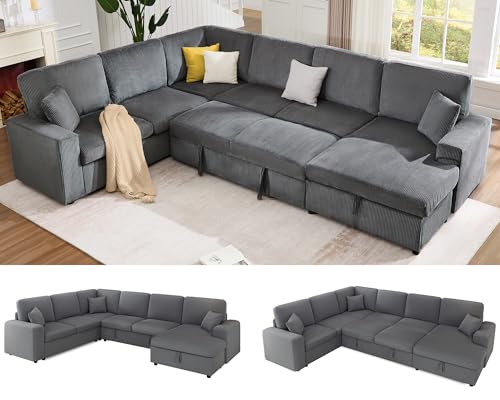
Sectional with Storage and Pull Out Bed: The Complete Buying Guide
Everything you need to know before choosing a multi-function sectional that seats your guests, hides your clutter, and sleeps overnight visitors — without compromising your room layout.
Explore Top PicksWhy this guide matters: A sectional with storage and pull out bed is one of the most versatile furniture investments you can make. It solves three problems at once — seating capacity, clutter management, and guest sleeping arrangements. But not all sleeper sectionals are built the same. Mechanism quality, mattress thickness, storage accessibility, and frame durability vary dramatically across tiers. This guide walks you through every decision point so you can buy with confidence.
What Is a Sectional with Storage and Pull Out Bed?
A sectional with storage and pull out bed is a multi-function sofa that combines three features in one footprint: an L-shaped or U-shaped seating configuration, a hidden storage compartment (usually built into the chaise or under the main seats), and a fold-out sleeping surface that converts the sofa into a bed. These pieces are popular in apartments, guest rooms, home offices, and multi-purpose living areas where floor space is limited and furniture needs to work harder.
The storage component is typically integrated into the chaise section, offering a lift-up lid or a pull-out drawer. The pull out bed mechanism deploys from the main frame, either as a fold-out metal platform, a trundle-style pull-out, or a click-clack hinge system. The best models balance all three functions without making the sofa feel bulky or the bed feel like an afterthought.
Key Configurations: L-Shaped, U-Shaped, and Chaise Models
The shape of your sectional determines how it fits your room and how the bed and storage functions operate. Here are the most common configurations:
- L-shaped sectional with storage chaise and pull out bed: The most popular layout. The chaise provides the storage compartment, while the main sofa section houses the pull out bed. This configuration works well in corner placements and open-plan living rooms. See our guide to a sectional with storage chaise and pull out for layout diagrams and clearance requirements.
- Small sectional with storage and pull out: Designed for compact rooms, these models reduce the overall footprint while retaining both functions. They often use a narrower chaise and a thinner mattress. If space is tight, compare options in our small sectional with storage and pull out guide.
- Small couch with chaise and pull out bed: A hybrid between a loveseat and a sectional, this configuration seats two to three people and still offers a compact sleeping surface. It is a good fit for studio apartments and guest rooms. See small couch with chaise and pull out bed for size comparisons.
- Small sectional couch with pull out bed: A more traditional two-piece sectional that prioritizes seating over chaise length. These models often have a simpler storage drawer rather than a lift-up chaise lid. Explore small sectional couch with pull out bed options for narrow rooms.
- Small L-shaped couch with pull out bed: A compact L-shape that fits into corner nooks and smaller living rooms. The pull out bed often deploys from the longer section. See small L-shaped couch with pull out bed for corner-friendly layouts.
How the Pull Out Bed Mechanism Works
The quality of the pull out mechanism is the single biggest factor in long-term satisfaction. There are three main types:
- Fold-out metal frame with thin mattress: The most common design in mid-range and premium models. A reinforced steel frame unfolds from the sofa base, and a foam or innerspring mattress rests on top. Look for smooth-gliding tracks, a locking mechanism, and a frame that sits flush with the sofa seat when closed.
- Trundle-style pull-out platform: A separate platform slides out from under the sofa, often at a lower height. This design is common in compact models and can be easier to deploy in tight spaces, but the sleeping surface may be lower and less supportive.
- Click-clack hinge system: The backrest folds flat to create a sleeping surface. This is the simplest mechanism and is common in entry-level models. It requires no separate mattress but offers a firmer, less cushioned sleep surface.
When comparing models, test the mechanism in person if possible. A mid-range model typically offers a smoother glide and a more stable frame than an entry-level unit, while premium and luxury tiers often include reinforced steel frames, anti-slip surfaces, and mattress-to-frame integration that prevents sagging.
Mattress Types and Comfort Tiers
The mattress inside a sleeper sectional is often the weakest link in lower-tier models. Here is how mattress types compare across quality tiers:
| Tier | Typical Mattress Type | Best For | Comfort Notes |
|---|---|---|---|
| Entry-level | Thin foam or click-clack flat surface | Occasional guests, short stays | Firmer feel; may require a mattress topper for extended use |
| Mid-range | Memory foam or basic innerspring | Regular overnight guests | Better contouring and support; thicker mattress profile |
| Premium | Gel-infused memory foam or hybrid | Frequent use, guest rooms | Cooler sleep surface, less motion transfer, durable foam |
| Luxury | High-density hybrid or air-over-coil | Primary sleeping arrangements | Near-traditional mattress feel; adjustable firmness in some models |
For a deeper comparison of sleeper configurations, see our guide to a sleeper sectional sofa with storage chaise. If you prefer a memory foam sleeping surface, the sleeper sectional with memory foam mattress guide covers cooling properties, foam density, and durability expectations.
Storage Compartment Design: What to Look For
The storage compartment is where many sleeper sectionals fall short. A well-designed storage area should be easy to access, protect stored items, and not interfere with the bed mechanism. Key considerations:
- Access style: Lift-up chaise lids offer generous capacity but require clearance above the sofa. Pull-out drawers are easier to access in tight spaces but typically offer less volume. Some models combine both.
- Lining and ventilation: A fabric-lined compartment protects stored linens and throws from dust and scratches. Ventilation holes or breathable lining help prevent musty odors in humid climates.
- Weight capacity: If the storage lid doubles as a seating surface, check the manufacturer's weight rating. Premium models reinforce the lid with a metal frame and soft-close hinges.
- Divided compartments: Some high-end models include dividers or removable bins, making it easier to organize bedding, throws, and pillows separately.
If storage is your primary concern, also consider a dedicated small sectional sleeper sofa with storage that prioritizes compartment volume over chaise length.
Materials, Frame Construction, and Durability
The frame and upholstery determine how well your sectional withstands daily use and frequent bed conversions. Here is what to prioritize:
- Frame material: Hardwood (kiln-dried) and engineered wood frames offer the best balance of strength and stability. Metal frames are common in sleeper mechanisms and should be powder-coated or rust-resistant. Entry-level models may use particle board, which is less durable under repeated conversion.
- Upholstery: Performance fabrics (solution-dyed acrylic, polyester blends, or treated cotton) resist stains and fading better than standard fabrics. If the sectional will be placed near windows, look for UV-resistant upholstery. For outdoor-adjacent spaces, consider weather-resistant covers.
- Cushion foam: High-density foam (1.8 lb/ft³ or higher) retains shape better than low-density foam. Premium models often use wrapped foam or pocket-coil cushions for a balance of support and softness.
- Mechanism reinforcement: Look for steel or heavy-duty aluminum frames in the pull out mechanism, with smooth-gliding tracks and a locking latch. Reinforced corners and cross-bracing reduce wobble over time.
If your sectional will live on a covered patio or in a sunroom, review our weatherproofing guide before selecting upholstery and frame materials.
Measuring Your Space: Clearance and Layout Tips
A sectional with storage and pull out bed requires more clearance than a standard sofa because the bed extends into the room. Before you buy, measure carefully:
- Sofa footprint: Measure the length and depth of the sectional in its closed position. Add 6 inches on each side for arm clearance and easy access to the storage compartment.
- Bed extension: When fully deployed, most pull out beds extend 6 to 7 feet from the sofa front. Ensure there is enough open floor space and that the extension does not block doorways, traffic paths, or heating vents.
- Storage clearance: If the storage lid lifts upward, allow at least 2 feet of clearance above the chaise. If it slides out, ensure the drawer path is unobstructed.
- Room proportions: In smaller rooms, a compact L-shaped model or a small sectional with storage and pull out keeps the room from feeling crowded. Pair it with a small outdoor side table or a side table for a balanced layout.
Pro Tip: Test the Conversion Path
Before purchasing, walk through the conversion process in your mind (or in the showroom): clear the coffee table, unfold the bed, access the storage, and fold everything back. If any step feels awkward or requires moving other furniture, the sectional may not be the right fit for your layout.
Indoor vs. Outdoor Use: What to Know
Most sectional with storage and pull out bed models are designed for indoor use. However, some outdoor-rated versions exist with weather-resistant frames, quick-dry foam, and marine-grade upholstery. If you plan to place the sectional on a covered porch or sunroom, verify the following:
- Frame is powder-coated aluminum or treated hardwood rated for outdoor use.
- Cushions use quick-dry foam and solution-dyed acrylic fabric.
- Storage compartment has drainage or ventilation to prevent moisture buildup.
- Pull out mechanism is stainless steel or rust-proof coated.
For outdoor seating inspiration, explore our small outdoor patio set and small patio furniture collections. If you are furnishing a balcony, the small balcony furniture sets guide covers compact configurations that pair well with a storage sofa.
Who Should Buy a Sectional with Storage and Pull Out Bed?
This furniture category is ideal for:
- Apartment dwellers who need seating, storage, and a guest bed in one piece.
- Guest room hosts who want a comfortable sleeping surface without dedicating a full room to a bed.
- Home office owners who need a dual-purpose piece that converts from workspace seating to overnight accommodation.
- Small living room residents who want to maximize seating without cluttering the space.
- Vacation rental hosts who need durable, multi-function furniture that guests can use easily.
If you are furnishing a compact dining area alongside your living space, our small dining table with bench and chairs and small kitchen table with bench and 2 chairs guides can help you coordinate the layout.
Common Mistakes to Avoid
- Ignoring the mattress thickness: A thin mattress may feel fine for one night but becomes uncomfortable for extended stays. Check the mattress depth and foam density.
- Underestimating clearance: Failing to account for the extended bed footprint can leave you with a sectional that blocks traffic or cannot fully deploy.
- Choosing storage over mechanism quality: A large storage compartment is useless if the pull out bed is flimsy or difficult to operate.
- Overlooking fabric durability: Standard upholstery may fade or stain quickly in high-use households. Prioritize performance fabrics.
- Skipping the warranty review: Frame and mechanism warranties vary significantly. A longer warranty on the pull out mechanism is a good indicator of build quality.
Frequently Asked Questions
What is a sectional with storage and pull out bed?
A sectional with storage and pull out bed is a multi-function sofa that combines an L-shaped or U-shaped seating configuration with a hidden storage compartment and a fold-out sleeping surface. The storage is typically built into a chaise or under-seat compartment, while the pull out bed deploys from the main frame.
How does the pull out bed mechanism work?
Most pull out beds use one of three mechanisms: a fold-out metal frame with a thin mattress, a trundle-style pull-out platform, or a click-clack hinge system. Mid-range and premium models usually feature a reinforced metal frame with smooth gliding tracks, while entry-level models may use a simpler folding hinge.
What mattress types are used in sleeper sectionals?
Sleeper sectionals typically use memory foam, innerspring, or air-over-coil mattresses. Memory foam is common in mid-range to premium models for comfort and packability. Innerspring mattresses offer traditional support, while some high-end models use hybrid or gel-infused foam for cooling and durability.
Can a sectional with storage and pull out bed be used outdoors?
Most models are designed for indoor use. However, some outdoor-rated versions exist with weather-resistant frames and cushions. Always check the manufacturer's specification for outdoor suitability, as indoor fabrics and frames may degrade quickly when exposed to moisture and UV light.
How much floor space does a sleeper sectional need?
A standard sectional with storage and pull out bed requires enough clearance for both the sofa footprint and the extended bed. Plan for at least 6 to 7 feet of depth when the bed is fully deployed, plus walking clearance around the extended frame.
What should I look for in the storage compartment?
Look for a storage compartment with a sturdy base, smooth-gliding hinges or lift mechanisms, and a lining that protects stored items from dust and moisture. Premium models often include divided compartments, soft-close lids, and ventilation.
Ready to Choose Your Sectional?
Compare the best sectional with storage and pull out bed options in our curated product selection below. Each pick is evaluated for mechanism quality, storage design, and long-term durability.
See Recommended Models