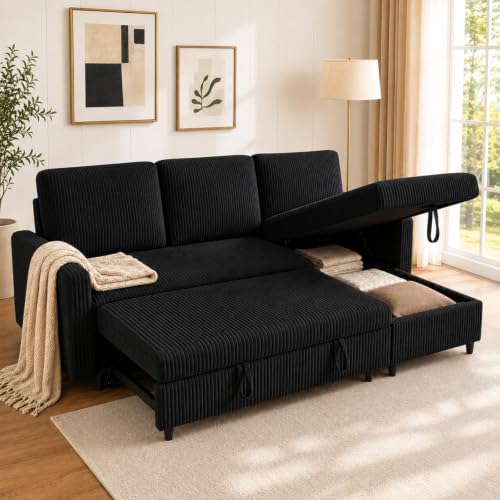
Small Sectional Sleeper Sofa with Storage: The Complete Buyer's Guide
Everything you need to know about choosing a compact sleeper sectional with hidden storage — from mattress types and frame construction to layout planning and everyday comfort.
Start ExploringWhy this guide matters: A small sectional sleeper sofa with storage solves three problems at once — limited floor space, occasional overnight guests, and the need for organized living. But not all models are created equal. This guide walks you through the key decisions so you can choose a piece that fits your room, your lifestyle, and your long-term needs.
What Is a Small Sectional Sleeper Sofa with Storage?
A small sectional sleeper sofa with storage is a multi-functional furniture piece that combines three elements in one compact footprint: an L-shaped or U-shaped seating configuration, a pull-out or fold-out bed mechanism, and built-in hidden compartments for storing bedding, pillows, or everyday items. These sectionals are engineered for space-conscious homes — apartments, studios, guest rooms, and open-plan living areas where every square foot counts.
Unlike a standard sleeper sofa, a sectional version typically includes a chaise section that can double as a lounging spot during the day and part of the sleeping surface at night. The storage component is usually located under the chaise, beneath the main seating area, or inside an ottoman section. Some models feature lift-up seats with gas-lift hinges, while others use pull-out drawers or zippered compartments.
If you are exploring related configurations, you may also want to look at a small sectional couch with pull-out bed or a sectional with storage and pull-out bed for additional layout options.
Why Choose a Compact Sleeper Sectional with Storage?
The appeal of this furniture category comes down to efficiency and versatility. Here are the main benefits that make it a smart choice for modern living:
- Triple functionality: One piece of furniture serves as a sofa, a guest bed, and a storage unit — reducing clutter and maximizing utility.
- Space efficiency: A compact sectional often fits into corners and awkward wall configurations better than a traditional sofa plus separate bed plus storage cabinet.
- Guest readiness: A pull-out bed means you are always prepared for overnight visitors without dedicating an entire room to a guest bedroom.
- Everyday organization: Hidden storage keeps blankets, pillows, remote controls, and seasonal items out of sight and within reach.
- Design cohesion: A single coordinated piece tends to look more polished than a collection of mismatched furniture.
Key Buying Factors to Consider
Before you commit to a model, evaluate these critical dimensions of the product. Each factor directly affects comfort, durability, and how well the sofa integrates into your home.
Frame Construction
Look for solid hardwood or high-grade steel frames. Plywood and engineered wood are common in entry-level models, while mid-range and premium tiers typically use kiln-dried hardwood or reinforced metal. A solid build is the foundation of long-term durability.
Mattress Quality
Memory foam and high-density foam mattresses are popular for sleeper sectionals because they fold compactly and offer good support. Innerspring options exist but tend to be bulkier. A mattress thickness of at least 4.5 inches is a reasonable benchmark for overnight comfort.
Storage Mechanism
Lift-up seats with gas-lift hinges offer easy access and large capacity. Pull-out drawers are convenient for smaller items. Zippered under-seat compartments are common in entry-level models. Consider how often you will access the storage and what you plan to keep there.
Upholstery & Fabric
Performance fabrics, microfiber, and leather-air blends offer stain resistance and easy cleaning. Premium tiers often feature removable, washable covers. If the sofa will see heavy daily use, prioritize a durable, tightly woven fabric with a high rub count.
Dimensions & Fit
Measure your wall length, room depth, and the clearance needed for the bed to fully extend. Also account for doorways and walkways. A common guideline is to leave at least 18 inches of walking clearance around the sofa. Compact models typically range from 70 to 90 inches in width.
Assembly & Delivery
Some sectionals ship fully assembled, while others require partial assembly. Check whether the model fits through your doorways and stairwells. White-glove delivery is available for many mid-range and premium models and can simplify the setup process.
Tier Comparison: What to Expect at Each Level
To help you set expectations, here is a comparison of what different market tiers typically offer. This is a relative comparison — not an absolute ranking — and the best choice depends on your specific needs.
| Feature | Entry-Level | Mid-Range | Premium / Luxury |
|---|---|---|---|
| Frame Material | Plywood or engineered wood | Solid hardwood or reinforced metal | Kiln-dried hardwood or heavy-duty steel |
| Mattress Type | Basic foam, 3–4 inches | High-density foam or memory foam, 4.5–5.5 inches | Premium memory foam or hybrid, 5.5+ inches |
| Storage Access | Zippered under-seat compartment | Lift-up seat with gas-lift hinge or pull-out drawer | Multiple compartments with soft-close hardware |
| Upholstery | Standard polyester blend | Performance fabric or microfiber | Premium stain-resistant fabric or leather-air blend |
| Cushion Support | Standard foam | High-resilience foam or pocket coil | High-resilience foam with pocket coil or gel-infused foam |
| Assembly | Partial assembly required | Minimal assembly or tool-free setup | White-glove delivery and full assembly |
| Best For | Occasional use, starter apartments | Daily use, guest rooms, family homes | Heavy daily use, primary living spaces |
Layout and Space Planning Tips
A small sectional sleeper sofa with storage works best when it is placed with intention. Here are practical tips to get the layout right:
- Corner placement: An L-shaped sectional naturally fits into a corner, freeing up the center of the room for a coffee table or open floor space.
- Bed extension clearance: The pull-out bed needs clear space in front of the sofa. Measure the full extension length and ensure no furniture blocks the path.
- Traffic flow: Leave at least 18 inches of walking clearance around the sofa. In tighter rooms, consider a chaise-only configuration or a small L-shaped couch with pull-out bed for a more compact footprint.
- Storage access: If the storage compartment opens from the front or side, make sure you can reach it without moving other furniture.
- Visual balance: Pair the sectional with a small side table or a small deck box for additional surface and storage without overwhelming the space.
For rooms with very limited square footage, a small space patio furniture approach — prioritizing multi-functional pieces and vertical storage — translates well to indoor living rooms as well. If you are also outfitting an outdoor area, a small outdoor patio set or a small balcony furniture set can complement the same space-saving philosophy.
Materials and Construction: What to Look For
The longevity of a sleeper sectional depends heavily on the materials used in its frame, mattress, and upholstery. Here is a closer look at each component:
Frame
Solid hardwood frames — particularly kiln-dried hardwood — resist warping and hold up well under repeated use of the sleeper mechanism. Metal frames are also durable and often lighter. Plywood and engineered wood are common in entry-level models and can be adequate for occasional use, but they may not withstand years of daily conversion between sofa and bed.
Sleeper Mechanism
The pull-out mechanism is the most heavily stressed component of a sleeper sofa. Look for powder-coated steel or reinforced metal frames with smooth-glide tracks. Some premium models feature a “click-clack” mechanism that folds flat without a separate mattress, while others use a traditional pull-out with a folded foam mattress. Test the mechanism in person if possible, or read detailed reviews about its smoothness and durability.
Upholstery
Performance fabrics — such as solution-dyed acrylic, polyester blends with stain guards, and microfiber — are practical choices for sleeper sectionals because they resist spills and clean easily. Leather and leather-air blends offer a sleek look and are simple to wipe down. If you have pets or children, prioritize tightly woven fabrics with a high rub count and consider removable, washable covers.
Storage Compartment
Storage compartments vary widely in size and accessibility. Lift-up seats with gas-lift hinges offer the easiest access and typically hold the most volume. Pull-out drawers are convenient for smaller items but may have weight limits. Zippered compartments under the seat are common in entry-level models and are best for lightweight bedding and pillows. Consider what you plan to store and choose a mechanism that matches your usage.
Who Is This Furniture For?
A small sectional sleeper sofa with storage is particularly well-suited to:
- Apartment dwellers who need a living room that doubles as a guest room.
- Studio residents looking for a single piece that handles seating, sleeping, and storage.
- Homeowners with a spare room that serves multiple purposes — office, den, or guest quarters.
- Families who want a comfortable, durable sofa with hidden storage for blankets and games.
- Frequent hosts who want to be ready for overnight guests without a dedicated guest bedroom.
If your space is particularly tight, you might also consider a small couch with chaise and pull-out bed or a sleeper sectional sofa with storage chaise for a slightly different configuration. For those who prioritize mattress comfort, a sleeper sectional with memory foam mattress is worth exploring.
Common Mistakes to Avoid
- Not measuring the bed extension: The pull-out bed needs significantly more floor space than the sofa itself. Measure the full extension before you buy.
- Overlooking the storage access: If the storage compartment is difficult to reach, you will not use it. Choose a mechanism that fits your daily routine.
- Choosing fabric without considering lifestyle: A delicate fabric in a high-traffic living room will show wear quickly. Match the upholstery to your household.
- Skipping the mattress test: A sleeper sofa is only as good as its mattress. If possible, test the mattress or read detailed reviews about its comfort and thickness.
- Ignoring assembly requirements: Some sectionals are difficult to maneuver through narrow doorways or stairwells. Check the shipping dimensions and assembly requirements before ordering.
Frequently Asked Questions
What is a small sectional sleeper sofa with storage?
A small sectional sleeper sofa with storage is a multi-functional furniture piece that combines compact seating, a pull-out bed mechanism, and built-in hidden compartments. It is designed for space-conscious homes such as apartments, studios, and guest rooms.
How do I measure my space for a small sectional sleeper?
Measure the full wall length where the sectional will sit, the depth of the room, and the clearance needed for the pull-out bed to fully extend. Also account for doorways, walkways, and any adjacent furniture. A common guideline is to leave at least 18 inches of walking clearance around the sofa.
What mattress type should I look for in a sleeper sectional?
Memory foam and high-density foam mattresses are popular choices for sleeper sectionals because they offer good support and fold compactly. Innerspring mattresses are also available but tend to be bulkier. Look for a mattress thickness of at least 4.5 inches for comfortable overnight sleeping.
Where is the storage usually located on these sectionals?
Storage compartments are typically located under the chaise section, beneath the main seating area, or inside the ottoman portion. Some models feature lift-up seats, pull-out drawers, or zippered under-seat compartments.
Can a small sectional sleeper sofa with storage be used daily?
Yes, but the frequency of use should influence your choice. Entry-level models are typically suited for occasional use, while mid-range and premium tiers are built for daily conversion between sofa and bed. If you plan to use the sleeper function every day, prioritize a model with a heavy-duty mechanism and a high-density foam or memory foam mattress.