Small Outdoor Sectional with Dining Table: The Complete Buying Guide
Maximize a compact patio, deck, or balcony with a space-saving sectional that seats a crowd and doubles as a dining area. Learn how to size, style, and choose the right configuration before you commit.
Start ReadingWhy Choose a Small Outdoor Sectional with Dining Table?
A small outdoor sectional with dining table solves one of the most common backyard dilemmas: how to fit comfortable lounge seating and a proper eating surface into a footprint that simply doesn't allow for two separate furniture groups. Instead of sacrificing one function for the other, a combined unit gives you both in a single, space-efficient arrangement.
These hybrid sets are particularly valuable for apartment balconies, compact decks, townhome patios, and any outdoor area where every square foot counts. By sharing a footprint between the sofa and the table, you free up walkway space and keep the layout feeling open rather than cluttered.
The concept has grown popular because it matches how people actually use outdoor spaces: a morning coffee at the table, an afternoon lounge session on the sofa, and an evening meal with friends — all without rearranging furniture. If you are still exploring broader small-space solutions, browse our small space patio furniture collection for complementary ideas, or compare configurations in our small patio furniture guide.
How to Measure Your Space Before You Buy
Measurement errors are the number one reason outdoor furniture gets returned. Before you shop, map out your available area with painter's tape on the ground so you can physically walk around the proposed footprint.
Step-by-step measuring checklist
- Measure the total length and width of your patio, deck, or balcony.
- Subtract at least 24 inches (about 60 cm) of clearance on every side used for walking.
- Account for door swing paths and any steps.
- Note the position of railings, walls, and built-in planters.
- Check whether an umbrella or pergola needs clearance above the dining table.
- Confirm the sofa back height does not block a view or a railing.
For a true dining experience, allow roughly 24 to 30 inches of table edge per seated diner, plus 12 to 18 inches between the table edge and the nearest wall or railing. On a tight balcony, our small balcony furniture sets guide offers additional layout tactics that pair well with sectional configurations.
If your space is especially narrow, a small outdoor patio set may be a better starting point than a full sectional. But if you have an L-shaped corner available, a compact sectional will almost always deliver more seating per square foot.
Configuration Types: Which Layout Fits Your Patio?
Not every small sectional with dining table is built the same way. The three most common configurations each suit a different room shape and usage pattern.
1. L-shaped corner sectional with a drop-leaf or integrated table
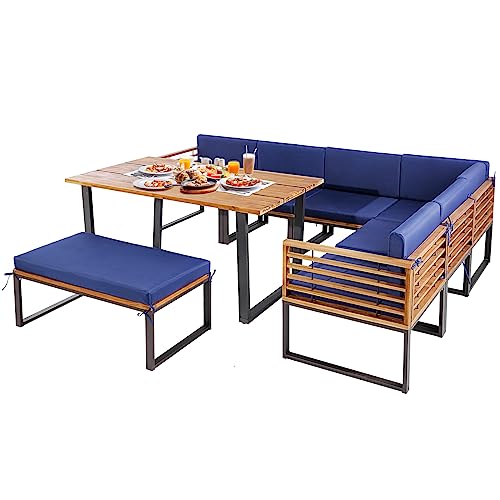
This is the most space-efficient design. The sofa wraps a corner, and a compact table nests into the inner angle or attaches to one arm. It works beautifully on square patios and corner balconies. Look for models where the table can be removed or folded down when you want pure lounge space.
2. Straight sofa with an attached end table / dining extension
A linear sofa with a table module on one end is ideal for narrow, rectangular decks. It preserves a clear walking path along the front and keeps the dining surface at the end rather than in the middle. This layout pairs well with small outdoor table and chairs for 2 if you occasionally need a separate dining spot.
3. Modular pieces that reconfigure between lounge and dining modes
Modular sets let you slide the table section out, flip a backrest, or rearrange ottomans to switch functions. These are the most versatile option but require more assembly and typically sit in a higher quality tier. If modular flexibility appeals to you, our small outdoor sectional with dining table overview covers the trade-offs in detail.
Frame and Fabric Materials: What Lasts Outdoors
The frame determines structural longevity, while the fabric determines comfort and colorfastness. Both matter enormously for a piece that lives outside year-round.
Frame materials compared
| Frame Material | Durability | Weight | Best For | Maintenance |
|---|---|---|---|---|
| Powder-coated aluminum | High — rust-proof finish | Light | Balconies, humid climates | Wipe clean; check coating annually |
| High-grade steel | Very high — heavy-duty | Heavy | Windy decks, permanent setups | Touch up scratches to prevent rust |
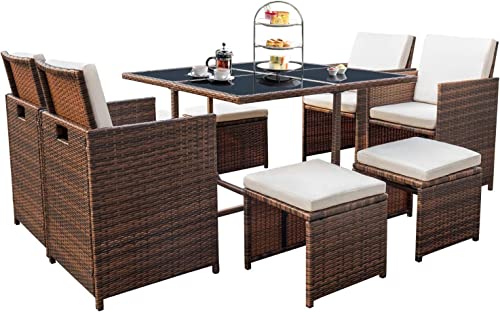
| Wicker / rattan (all-weather) | Moderate to high | Light to moderate | Covered patios, coastal styles | Rinse and dry; avoid prolonged moisture |
| Solid wood (teak, acacia) | High with sealing | Heavy | Traditional and rustic settings | Re-oil or seal annually |
| Resin / plastic | Moderate | Very light | Occasional use, easy storage | Soap and water |
Fabric and cushion considerations
Look for solution-dyed acrylic or olefin fabrics rated for outdoor use. These resist fading and mildew far better than indoor upholstery. Quick-dry foam cores prevent cushions from staying soggy after rain. For a deeper dive into cushion selection, see our set of 4 outdoor patio chair cushions guide, which explains fill types and cover construction.
If your patio is fully exposed, prioritize a rust-proof finish and UV-resistant fabric. Covered porches allow more flexibility with wicker and wood.
The Dining Table Component: What to Look For
The table is what separates a sectional-with-dining combo from a plain outdoor sofa. Its size and height determine how usable the eating function really is.
- Height: Standard dining height is around 28 to 30 inches; counter height is about 36 inches; bar height is roughly 40 to 42 inches. For a combined unit, standard dining height is the most comfortable for mixed-age groups.
- Shape: Round or square tables fit tighter corners than rectangular ones and allow diners to face each other. A small round patio table with 4 chairs offers a useful reference for seating capacity per diameter.
- Umbrella compatibility: If you want shade, confirm the table has a pre-drilled hole and that the base will not interfere with sofa legs. A small outdoor dining table with umbrella hole is the standard solution.
- Surface material: Tempered glass, powder-coated metal, and high-density composite are all common. Composite and metal handle weather better on exposed patios; glass requires gentler care.
- Removability: Tables that detach or fold away let you reclaim lounge space when entertaining a larger group.
Cushions and Comfort: Don't Overlook the Details
A sectional is only as comfortable as its cushions. For small outdoor sectionals, cushion thickness matters because deeper cushions eat into valuable floor space. A 4- to 6-inch thick seat cushion is usually the sweet spot between comfort and compactness.
Consider these comfort factors:
- Seat depth: 20 to 24 inches is comfortable for most adults; deeper seats suit lounging but reduce walkway clearance.
- Back height: Higher backs support the shoulders but may block views on a balcony. Low-profile backs keep sightlines open.
- Cushion ties or grips: Prevent cushions from sliding on windy days.
- Removable, washable covers: Essential for long-term hygiene and color refresh.
If you plan to add matching pieces, our guide to a set of 2 patio chairs with cushions explains how to coordinate fabric and fill across a set. And if you need extra seating for guests, a small lounge chair can slot in beside the sectional without overwhelming the layout.
Storage and Versatility: Making Every Inch Work
Small outdoor spaces benefit enormously from built-in storage. Some sectional-with-dining sets include under-seat compartments, lift-up chaise storage, or a table with a shelf. These features keep cushions, throws, and tableware out of the weather and reduce clutter.
If your chosen sectional lacks storage, pair it with a compact outdoor storage box or cabinet. Our small outdoor storage box and small outdoor storage cabinet with shelves guides cover options that fit beside a sectional without crowding the patio.
For multi-use spaces, look at sectionals that convert into a sleeper or include a pull-out section. A small sectional couch with pull-out bed can turn a patio into a guest-ready outdoor room. Similarly, a sectional with storage chaise and pull-out combines three functions in one footprint.
Weather Resistance and Long-Term Care
Even a small sectional represents an investment, so protect it. The care routine depends on your climate and whether the patio is covered.
- Exposed patios: Use a fitted cover during off-season and heavy rain. Choose rust-proof finishes and quick-dry cushions.
- Covered porches: Less weather stress, but still clean fabric seasonally and check for mildew in humid months.
- Coastal areas: Salt air accelerates corrosion. Rinse metal frames monthly and prioritize aluminum over steel.
- Winter: Store cushions indoors and cover frames. Our weatherproofing guide walks through a full seasonal routine.
Inspect joints and fasteners twice a year, and touch up any scratches on painted metal promptly to prevent rust from spreading.
Quality Tiers Explained: Choosing the Right Level for You
Outdoor furniture is commonly grouped into quality tiers. Understanding these helps you set expectations for durability, finish, and features — without relying on numeric figures.
| Tier | Typical Characteristics | Best For | Expected Lifespan |
|---|---|---|---|
| Entry-level | Lightweight frames, basic fabric, simple assembly | First apartment, occasional use, seasonal setups | 2–4 seasons with care |
| Mid-range | Powder-coated aluminum or steel, solution-dyed fabric, thicker cushions | Year-round use on covered patios, family homes | 5–8 seasons |
| Premium | Heavy-duty frames, high-grade steel or premium wicker, reinforced joins | Exposed patios, coastal climates, daily use | 8–12 seasons |
| Luxury | Commercial-grade construction, designer fabrics, modular engineering | Permanent outdoor living rooms, high-traffic entertaining | 12+ seasons |
Mid-range models usually offer the best balance for most homeowners: they are well-specified for the category and hold up to regular use without the jump to luxury construction. Entry-level sets make sense for renters or temporary setups, while premium and luxury tiers are worthwhile for exposed locations and long-term outdoor living rooms.
Layout Ideas for Tight Spaces
Great layouts start with circulation. Aim for a clear path between the patio door and the seating area, and avoid blocking steps or railings.
- Corner anchor: Place the L-shaped sectional in the corner furthest from the door, with the dining table on the open side. This preserves the widest walkway.
- Wall-hugging straight run: Push a straight sofa against the house wall and extend the dining table at one end. Ideal for narrow balconies.
- Floating arrangement: On larger patios, float the sectional in the center with the table behind it, creating a casual room-within-a-room.
- Fire pit pairing: If you have a fire feature, angle the sectional toward it and keep the dining table to the side. Our small outdoor patio set with fire pit guide shows compatible arrangements.
- Balcony micro-layout: Use a two-seat sectional with a tiny bistro table. A small outdoor bistro table and 2 chairs can supplement dining capacity when guests arrive.
If your space is a true balcony, review our small chair and table set for balcony ideas before committing to a sectional. And for porch settings, the small table and chair set for porch guide offers complementary layout advice.
Frequently Asked Questions
Most compact sectional-with-dining sets need a footprint of roughly 6 by 6 feet to 8 by 8 feet, plus at least 2 feet of clearance on walkways. Measure your space with tape on the ground before shopping to confirm the fit.
Yes, if the balcony is at least 6 feet deep and 6 feet wide. Choose an L-shaped or modular configuration with a compact table, and verify that the sectional back does not exceed the railing height. Balcony-specific sets are often shallower than full-size patio models.
Aluminum is lighter and rust-proof, making it ideal for balconies and humid climates. Steel is heavier and sturdier, which suits windy decks and permanent placements. For exposed coastal areas, aluminum with a powder-coated finish is usually the safer choice.
Most compact configurations seat 3 to 4 people on the sofa and 2 to 4 at the table, depending on table size. A 4-person table paired with a 3-seat sectional is a common balance for small patios.
A cover is strongly recommended if the set is exposed to rain, leaves, or off-season weather. Choose a breathable, water-resistant cover that fits without pooling water. Cushions should be stored indoors during extended wet or cold periods.
Yes, provided you leave at least 3 feet of clearance between the fire feature and furniture, and more for open-flame units. A small propane or smokeless fire pit works well in compact layouts. See our smokeless tabletop fire pit guide for low-clearance options.
Remove covers if they are machine-washable, or spot clean with mild soap and water. Rinse thoroughly and air-dry upright. Avoid harsh bleach on solution-dyed fabrics, and never store cushions damp.
Ready to Choose Your Set?
Use the sizing, material, and layout guidance above to narrow your options. Then compare the recommended products below to find the configuration that fits your patio best.
View Recommended Sets