Outdoor Furniture for Restaurants and Cafes
Everything hospitality owners need to choose commercial-grade patio furniture that survives daily service, delights guests, and elevates your street presence.
START THE GUIDEWhy this guide matters: Restaurant and cafe patios are not residential decks. They face constant foot traffic, spilled drinks, sun exposure, rain, and sometimes theft. Choosing the right outdoor furniture for restaurants and cafes is a commercial decision that directly affects guest satisfaction, maintenance labor, and long-term durability. This guide walks you through every decision point — from material and tier selection to layout, safety compliance, and seasonal care.
Why Commercial Outdoor Furniture Is Different
Residential patio furniture is designed for occasional, gentle use. Restaurant and cafe furniture must withstand dozens of seating cycles per day, repeated cleaning, food and beverage spills, and year-round weather. The difference shows up in frame wall thickness, weld quality, fabric abrasion ratings, and powder-coating thickness.
Commercial-grade pieces typically use reinforced joints, higher-density foam that resists compression, and solution-dyed acrylic or PVC-coated fabrics that hold color under UV exposure. If you are outfitting a hospitality venue, prioritizing outdoor furniture that can withstand weather and heavy use is not optional — it is the foundation of your investment.
Key Factors When Choosing Restaurant & Cafe Patio Furniture
1. Durability and Materials
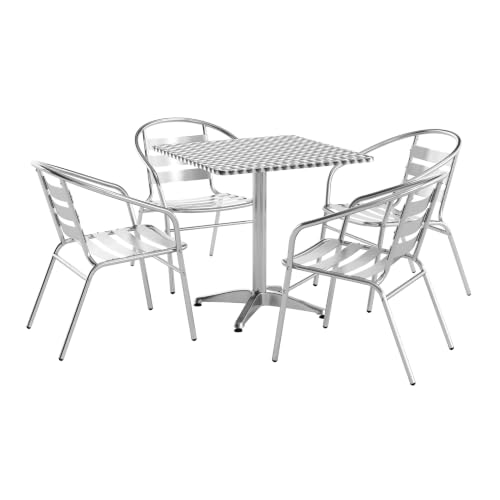
The frame material determines how long your furniture survives. Powder-coated aluminum is the most common choice for commercial patios because it is lightweight, rust-resistant, and easy to move. High-grade stainless steel offers superior strength for high-wind areas but costs more at the top tier. Synthetic wicker wrapped over aluminum frames delivers the warm look of natural rattan without the maintenance.
For venues that want a natural aesthetic, outdoor furniture wooden table and chairs can work well if you select teak, acacia, or other rot-resistant hardwoods with proper sealing. Avoid untreated softwoods, which warp and split under commercial cleaning routines.
2. Tier Classification for Commercial Furniture
Rather than thinking in price terms, hospitality buyers should think in tiers of durability and service life. The table below classifies commercial outdoor furniture into three consistent tiers used throughout this guide.
| Tier | Best For | Typical Characteristics |
|---|---|---|
| Essential tier | Small cafes, seasonal pop-ups, low-traffic patios | Entry-level aluminum frames, basic powder coating, simplified cushion construction. Suitable for sheltered locations and limited hours. |
| Balanced tier | Busy cafes, mid-size restaurants, year-round patios | Heavier-gauge aluminum or steel frames, reinforced welds, solution-dyed acrylic cushions, UV-stable finishes. The most common choice for daily-service venues. |
| Commercial-grade / top-tier | High-volume restaurants, rooftop bars, exposed locations | Heavy-duty welded frames, high-grade stainless hardware, commercial-rated fabrics with high abrasion cycles, stackable or nestable designs for fast turnover. |
For most hospitality operators, the balanced tier delivers the best value for its tier — it handles daily service without the extreme durability overhead of top-tier pieces. High-volume venues and exposed locations should move up to commercial-grade construction.
3. Seating Types That Work for Service
Different seating types serve different functions on a restaurant patio. Consider mixing categories rather than buying one uniform set.
- Dining tables and chairs — the core of most cafe patios. Square and round tables are easiest to reconfigure for parties of different sizes. See our guide on outdoor furniture round table and chairs for compact layouts.
- High-top tables and bar seating — ideal for maximizing capacity in narrow footprints and encouraging faster table turnover. Review outdoor furniture high-top table and chairs options for bar-style patios.
- Lounge seating — loveseats and conversation sets suit evening service, cocktail hours, and waiting areas. Consider outdoor furniture loveseat pieces that use commercial-grade cushions.
- Flexible folding seating — useful for overflow during peak hours. Browse outdoor dining table with folding chairs combinations for versatile event seating.
4. Shade, Heat, and Comfort
Guests will not linger on a sun-baked patio. Shade is a core part of the furniture plan, not an afterthought. Umbrellas, pergolas, and awnings should be selected together with seating so that shade coverage is even and does not obstruct service paths.
For venues that extend service into cooler evenings, outdoor fire pit dining table and chairs setups create a focal point and extend usable hours. If you prefer the warmth without open flame, outdoor electric fire table options are increasingly common in hospitality settings and simplify compliance in some jurisdictions. Always confirm local fire codes before adding any heat source to a commercial patio.
5. Layout and Capacity Planning
A practical planning rule is 10 to 15 square feet per guest, including table footprint and circulation space. Service staff need at least 36 inches of clear path between tables for trays and carts. Stackable and nestable furniture makes it easy to reconfigure the floor plan between lunch and dinner service.
If your patio is tight, prioritize outdoor furniture set configurations that combine compact tables with chairs, and keep at least one flexible zone open for larger parties. For mixed-use spaces such as patios attached to retail or event venues, outdoor furniture for restaurants and cafes selections should always account for quick reconfiguration.
6. Weather Protection and Cushion Management
Cushions are the first component to fail in a commercial setting. Use outdoor furniture with waterproof cushions where possible, and invest in outdoor furniture cushion storage so cushions can be brought in overnight or during storms. This single practice can dramatically extend cushion lifespan.
For venues that prefer to skip cushions entirely to reduce maintenance, outdoor furniture that doesn't need cushions — such as sling chairs and solid-surface benches — is a practical, wipe-clean alternative.
Comparing Popular Commercial Furniture Configurations
Below is a comparison of common configurations used by restaurants and cafes. Use this to match your venue's service style with the right furniture categories.
| Configuration | Best For | Key Advantage |
|---|---|---|
| Outdoor dining table with bench and chairs | Casual cafes and family-style restaurants | Seats more guests per table with a mix of bench and chair flexibility |
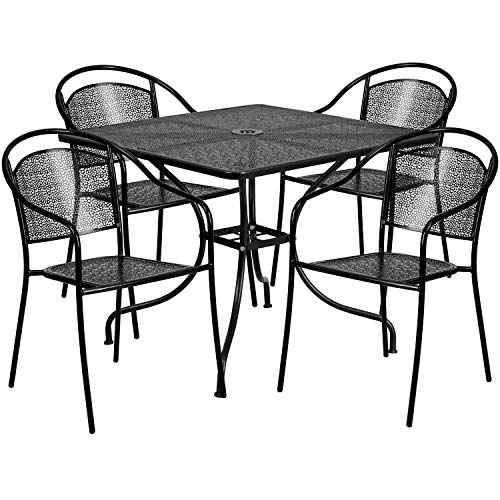
| Outdoor dining table with umbrella hole and chairs | Sunny patios needing built-in shade | Umbrella pole is anchored by the table for stable overhead coverage |
| Outdoor furniture conversation sets with fire pit | Evening cocktail service and lounge areas | Creates a social anchor point that extends evening hours |
| Outdoor furniture 2 chairs and small table | Narrow sidewalks and compact cafe fronts | Minimal footprint that maximizes sidewalk capacity |
| Outdoor furniture table and chairs with umbrella | Mid-size patio with uniform shade needs | All-in-one package simplifies ordering and setup |
Safety, Code, and Operational Considerations
Hospitality patios are regulated spaces. Before placing any order, confirm the following with your local authority having jurisdiction:
- Flammability standards for cushions and upholstered pieces, especially if fire pits or heaters are present.
- Egress and aisle width requirements — furniture cannot block emergency exits or accessible paths.
- Anchor requirements in high-wind or elevated locations. Some codes require furniture to be secured, which is where outdoor furniture that can be bolted down becomes relevant.
- Accessibility — ensure at least one accessible seating option with adequate knee clearance at tables.
- Open flame restrictions — many jurisdictions restrict or ban open-flame fire pits on commercial patios. Check before investing in any fire feature.
Operationally, plan for daily wipe-downs, weekly deep cleans, and seasonal inspection of welds, fasteners, and coating integrity. Small repairs early prevent full replacements later.
Budgeting and Sourcing Without the Guesswork
Instead of framing your planning around a single number, build a tiered procurement plan. Start with the essential tier for overflow and secondary areas, then allocate the balanced or commercial-grade tier to your primary dining footprint where guest first impressions are formed. This approach keeps your patio cohesive while managing capital outlay across phases.
If you are outfitting a patio that must survive coastal salt air, extreme sun, or freezing winters, review outdoor furniture that is weather resistant and outdoor furniture that can withstand weather before finalizing materials. For hospitality operators who want a residential aesthetic on a commercial patio, outdoor furniture that looks like indoor can be a strong differentiator — provided the pieces are rated for commercial use.
Frequently Asked Questions
What is the most durable material for restaurant outdoor furniture?
Powder-coated aluminum and high-grade stainless steel offer the best balance of durability, weather resistance, and ease of maintenance for commercial outdoor settings. Synthetic wicker over aluminum frames is also a strong choice for aesthetic appeal combined with longevity.
How many seats should a cafe patio have?
A practical rule is to plan for roughly 10 to 15 square feet per guest, including table space and circulation paths. A 300-square-foot patio can comfortably seat 20 to 30 guests depending on layout and furniture footprint.
Do restaurant patios need fire-resistant furniture?
Commercial outdoor furniture should meet local fire safety codes. Many jurisdictions require fire-retardant cushions and frames that comply with flammability standards. Always verify compliance with your local fire marshal before purchasing.
How do I protect outdoor cafe furniture from theft and weather?
Choose stackable or nestable furniture for easy evening storage, use heavy-duty covers, and consider furniture with anchor points or locking mechanisms. Commercial-grade covers and routine maintenance extend lifespan significantly.
Should I mix furniture tiers on one patio?
Yes, mixing tiers is a practical strategy. Use balanced or commercial-grade pieces in your primary dining zone and essential-tier pieces in overflow or secondary areas. This keeps the guest-facing experience strong while controlling capital outlay.
Ready to Equip Your Patio?
Explore our recommended commercial and commercial-grade outdoor furniture picks below, selected for durability, service practicality, and guest comfort.
VIEW RECOMMENDED PRODUCTS