Outdoor Restaurant Seating: The Complete Buying Guide
Everything you need to furnish a commercial patio with confidence — from durable chairs and tables to shade, layout planning, and safety essentials that keep guests comfortable all day.
EXPLORE SEATING OPTIONSWhy this guide matters: Outdoor restaurant seating is a long-term investment that directly shapes guest experience, table turnover, and maintenance routines. Commercial patios demand furniture that handles continuous use, weather exposure, and frequent sanitizing — far beyond what residential patio pieces are built for. Below, we break down materials, configurations, layout planning, and practical buying criteria so you can specify the right setup for your venue.
Commercial-Grade vs. Residential Outdoor Seating
The first decision in any outdoor restaurant seating project is recognizing that commercial furniture operates under very different demands than residential pieces. A busy patio may see dozens of guests per table each day, repeated cleaning cycles, and constant exposure to sun, rain, and temperature swings. Commercial-grade seating is engineered around those realities.
Built for Continuous Use
Restaurant chairs and tables are reinforced at joints, weld points, and stress areas. Frames are heavier, fasteners are corrosion-resistant, and weight capacities are typically higher than residential equivalents.
Commercial Safety & Code Compliance
Many jurisdictions require furniture that meets commercial fire, stability, and accessibility standards. Confirming compliance before purchase protects your business and simplifies inspections.
Sanitation-Friendly Finishes
Non-porous surfaces, sealed seams, and removable or quick-dry cushions make daily cleaning faster. Smooth powder-coated finishes resist staining and wipe down easily between services.
Designed for Reconfiguration
Stackable chairs, nesting tables, and modular seating allow operators to shift between lunch, dinner, and event layouts without heavy lifting or downtime.
Core Categories of Outdoor Restaurant Seating
A balanced patio layout typically combines several seating types. Each serves a different guest intent and space requirement, and choosing the right mix is as important as choosing individual pieces.
Dining Chairs and Armchairs
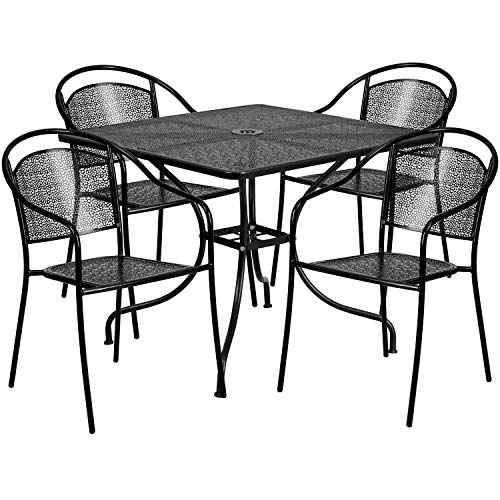
The workhorse of any patio, dining chairs should balance comfort, stackability, and durability. Look for commercial-grade aluminum or powder-coated steel frames, reinforced stacking glides, and seats that drain quickly after rain. Many operators pair standard side chairs with a smaller number of armchairs for guests who prefer extra support. If you are planning a full dining footprint, our guide to outdoor dining chairs covers frame types, weight ratings, and stacking considerations in more detail.
Dining Tables and Table Tops
Table choice drives layout flexibility. Round tables encourage conversation and ease circulation, while rectangular tables maximize covers in tighter footprints. Commercial tops are commonly available in compact laminate, powder-coated metal, and high-pressure laminate over marine-grade substrates. When you need built-in shade, consider tables designed around an umbrella hole, which keeps the shade centered and stable. Bar-height and high-top options add variety and work well for casual, quick-service areas.
Bar and High-Top Seating
High-top configurations increase standing capacity and create a lively, social atmosphere. A dedicated high-top table and two-chair setup is a practical starting point for small patios, while larger venues often mix bar tables with standard dining to accommodate different guest preferences. High-top chairs should include footrests and non-tip bases for safety.
Shade and Umbrellas
Shade is not optional on a commercial patio. For restaurant environments, a dedicated restaurant table with umbrella combines table and shade in a single spec, simplifying layout and procurement. When choosing shade, prioritize wind-rated frames, weighted or in-ground bases, and fade-resistant canopy fabric. Our broader guide to outdoor shade solutions explains how to match shade type to patio exposure and wind conditions.
Lounge and Waiting Areas
Not every guest wants a dining table. A small lounge zone with sofas or sectionals gives waiting guests a comfortable option and can increase dwell time. Explore outdoor lounge furniture for commercial-appropriate sofas and sectionals, and consider storage-integrated seating to keep cushions protected between services.
Materials: What Holds Up on a Commercial Patio
Material selection is the single biggest factor in long-term durability, maintenance load, and guest comfort. The table below summarizes how common commercial materials compare across the factors that matter most to restaurant operators.
| Material | Tier | Best For | Weather Resistance | Maintenance Notes |
|---|---|---|---|---|
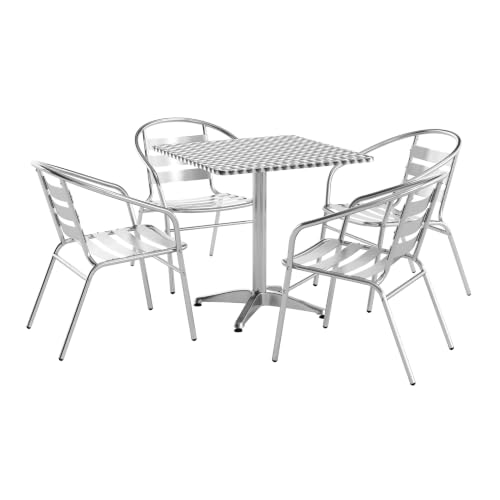
| Powder-coated aluminum | Mid-tier | High-volume dining chairs and tables | Excellent rust resistance; lightweight | Wipe clean; touch up chips promptly |
| High-grade stainless steel | High-end tier | Coastal venues and heavy-use patios | Superior corrosion resistance | Periodic passivation recommended |
| Commercial-grade resin | Essential tier | Quick-service and family-friendly patios | UV-stabilized; resists moisture | Soap-and-water cleaning; easy to stack |
| Teak and poly lumber | Premium | Upscale dining and hospitality venues | Natural weather tolerance; needs sealing | Annual oiling or sealing for teak |
| Wicker and rattan (synthetic) | Mid-range | Lounge and bistro-style seating | Good when UV-stabilized | Inspect weave for loosening seasonally |
For operators comparing upholstery and top materials in more depth, our reference on outdoor furniture fabric explains solution-dyed acrylics, vinyl-coated polyesters, and quick-dry foams — all of which matter for commercial cushions that see frequent cleaning. If you expect to replace cushions between seasons, replacement dining cushions are a practical way to refresh seating without replacing frames.
Layout Planning for Outdoor Restaurant Seating
Even premium furniture underperforms if the layout is cramped. Circulation, server access, and comfort clearances should be planned before any furniture is specified.
- Space per guest: Plan for roughly 15–18 square feet per diner to allow chair pull-out, table spacing, and server movement. High-top and bar seating can be slightly denser, while lounge areas need more generous clearances.
- Aisle widths: Keep main circulation paths at least 36–48 inches wide so servers can carry trays and guests using mobility aids can pass comfortably.
- Zoning: Separate dining, bar, and lounge zones with planters, low dividers, or changes in furniture height. This improves flow and gives each area a distinct atmosphere.
- Shade planning: Map sun exposure during service hours. Umbrella placement should cover the highest-traffic tables first, and shade structures should account for wind corridors.
- Storage and off-hours protection: Stackable chairs, folding tables, and dedicated storage cabinets make evening pack-down faster. Weatherproof storage solutions also extend furniture life in mixed climates.
For venues with limited footprints, our guide to outdoor settings and compact configurations can help identify space-efficient seating arrangements that maintain comfort. Small patios often benefit from a mix of two-top tables, high-tops, and a compact lounge corner rather than a single large dining grid.
Popular Seating Configurations for Restaurants
The right configuration depends on service style, menu, and patio size. Below are the most common commercial setups and where each tends to perform best.
Two-Top and Four-Top Dining
The most flexible layout for full-service restaurants. Pairs of small tables can be combined for larger parties or split for quick turnover. Works well with standard dining chairs and round or square tables.
- Best for full-service dining
- Easy to reconfigure
- Pairs well with umbrellas
High-Top and Bar Seating
Encourages casual dining, drinks, and shorter dwell times. Often placed along railings or walls to preserve center circulation. Requires stable bases and footrest-equipped chairs.
- Best for bars and bistros
- Space-efficient
- Social atmosphere
Lounge and Waiting Areas
Sofas, sectionals, and lounge chairs create a relaxed zone for waiting guests or after-dinner drinks. Use weather-resistant cushions and storage-friendly designs for easier maintenance.
- Best for upscale venues
- Increases dwell time
- Softens the patio aesthetic
Communal and Long Tables
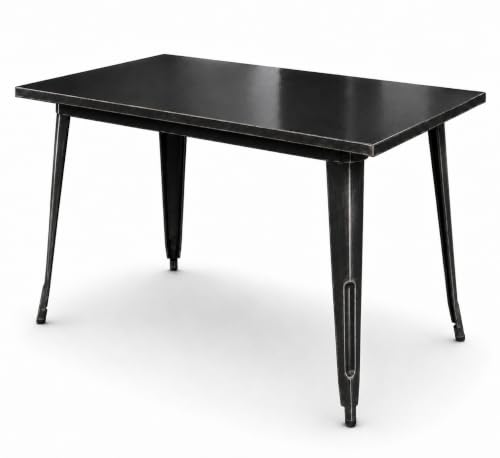
Long tables support group dining, events, and shared plates. They reduce the number of individual tables needed and can simplify service logistics for large parties.
- Best for breweries and event patios
- High seat density
- Encourages social dining
Practical Buying Criteria for Commercial Seating
When comparing products, focus on the specifications that predict real-world performance rather than surface-level styling. These criteria help separate furniture that will last from furniture that will need frequent replacement.
- Weight capacity and frame construction: Confirm each chair's rated capacity and inspect weld quality, joint reinforcement, and leg bracing. Commercial pieces typically publish these specs openly.
- Stack ratings: If chairs will be stored nightly, verify how many units can stack safely and whether stacking glides are replaceable.
- Weather-resistant coatings: Powder coating, e-coating, and rust-proof finishes should be specified for frames. For coastal venues, stainless hardware is strongly preferred.
- Cushion and fabric specification: Solution-dyed acrylics and quick-dry foams handle cleaning and moisture better than standard upholstery. Removable covers simplify replacement.
- Stability and safety: Check for leveling glides, anti-tip bases on high-tops, and stable table bases rated for the top's diameter.
- Cleaning and sanitation: Smooth, non-porous surfaces reduce cleaning time. Avoid deep textures that trap debris in food-service environments.
- Replacement part availability: Glides, feet, and cushions should be replaceable. Long-term maintainability reduces downtime and extends the useful life of the furniture.
Operators furnishing mixed-use spaces may also want to review outdoor patio furniture options for residential-adjacent areas such as rooftop lounges or hotel terraces, where a softer aesthetic is appropriate while durability expectations remain high.
Maintenance and Seasonal Care
Commercial patios see year-round exposure. A simple maintenance routine protects both the furniture and the guest experience.
- Daily: Wipe tables and chair frames between services. Check umbrellas for wind damage and secure bases before peak wind hours.
- Weekly: Inspect chair glides, table bases, and umbrella hardware for looseness. Clean cushion surfaces according to fabric guidelines.
- Monthly: Deep-clean frames, check for coating chips, and touch up any exposed metal to prevent corrosion. Verify storage cabinets and covers are functioning properly.
- Seasonally: Re-seal wood furniture, store or cover cushions during off-season, and review stackable chair storage to prevent frame stress. For venues in mixed climates, plan a full pack-down protocol for severe weather.
For venues with on-site storage, weatherproof cabinets and vertical storage units keep cushions and small accessories protected between shifts. Our overview of patio furniture with cushion storage covers options that integrate storage into seating footprints.
Explore Related Buying Guides
Use these focused guides to drill into specific product categories as you finalize your patio specification.
Frequently Asked Questions
What makes outdoor restaurant seating different from residential patio furniture?
Commercial-grade seating is engineered for continuous daily use, higher weight capacities, reinforced frames, and superior weather resistance. It also meets commercial safety and fire codes, whereas residential furniture is designed for lighter, occasional use.
Which materials are best for outdoor restaurant chairs and tables?
Powder-coated aluminum, high-grade stainless steel, commercial-grade resin, and teak or poly lumber are top choices. These materials resist rust, UV fading, and heavy foot traffic while remaining easy to sanitize and maintain.
How many square feet per guest should outdoor restaurant seating allow?
A common rule is 15 to 18 square feet per guest for comfortable dining, including chair pull-out and server access. High-top or bar seating can use slightly less space, while lounge-style setups require more generous clearances.
Are stackable chairs a good choice for commercial patios?
Yes. Stackable commercial chairs simplify evening storage, weather protection, and seasonal layout changes. Look for reinforced stacking glides and a stack rating that matches your daily volume needs.
Ready to Specify Your Patio Seating?
Review our recommended commercial-grade seating selections below. Each option is chosen for durability, weather resistance, and suitability for outdoor restaurant environments.
VIEW RECOMMENDED SEATING