Outdoor Storage Containers: The Complete Buying Guide
Protect cushions, grill tools, toys and textiles from rain, sun and pests. Learn which deck box, waterproof cabinet or storage bench fits your patio, how to judge weather resistance, and what to check before you commit.
Why storage deserves a place in your patio plan: Outdoor storage containers are the quiet workhorses of a well-run backyard. They keep cushions dry, extend the life of textiles, clear clutter from walkways and make seasonal setup faster. This guide breaks the category down by type, material and climate so you can choose with confidence.
Start With What You Need to Store
The most common mistake is choosing a container by external size rather than by what actually goes inside. Before comparing models, list your contents and measure them stacked as they would sit in storage.
- Lounge and dining cushions: bulky, deep and often the deciding factor. These need a large-capacity box, typically a deck box or cushion-specific container with generous internal depth.
- Throw pillows and small textiles: fit comfortably in a mid-size bench box or an outdoor storage ottoman that doubles as seating.
- Grill tools, fuel and accessories: better served by a dedicated grill accessory storage cabinet with shelves and doors rather than a deep chest.
- Kids' toys and garden games: a rugged outdoor toy storage unit with a wide opening and simple latch works well for daily use.
- Pool and spa items: towels, floats and chemicals each prefer separate, well-ventilated storage to avoid moisture buildup.
Once you know your largest item, add a few inches on every side for airflow. Tight packing traps humidity, and humidity is what causes mildew even inside a waterproof box.
The Main Types of Outdoor Storage Containers
Each format solves a different problem. The table below compares the categories by tier and best use, without tying any recommendation to a specific figure.
| Type | Tier in Category | Best For | Watch Out For |
|---|---|---|---|
| Deck box / storage chest | Essential to mid-range | Cushions, pool gear, bulky items | Check internal depth and lid seal |
| Waterproof storage cabinet | Mid-range to premium | Tools, chemicals, organized shelves | Assembly effort and door alignment |
| Storage bench | Essential to balanced tier | Porches, small decks, dual seating | Seating load rating |
| Storage bin / tote | Starter tier | Small items, seasonal rotation | UV fading and lid security |
| Tall cabinet with shelves | Premium to high-end tier | Vertical spaces, narrow walls | Stability in wind |
Deck Boxes and Storage Chests
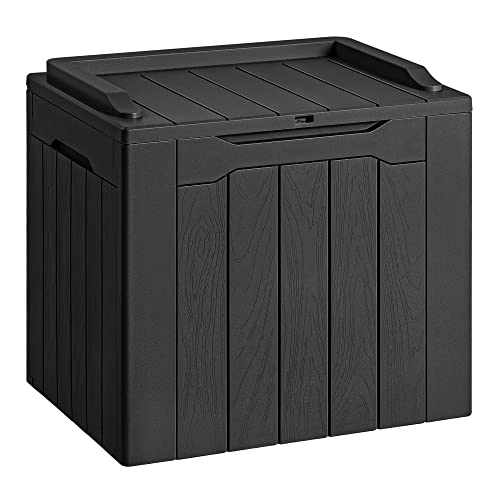
The classic cushion solution. A well-built deck box offers generous capacity, a hinged lid and a lockable latch. Mid-range models usually add reinforced bases and better lid seals, which matter more than decorative trim.
Storage Benches
Ideal where floor space is limited and you want seating plus storage. Confirm the bench is rated for both contents and body weight, and prefer models with a reinforced frame if it will be used daily.
Waterproof Cabinets
Shelves and doors make cabinets the most organized option for tools, grill accessories and chemicals. A waterproof storage cabinet with sealed doors is the better long-term investment where rain is frequent.
Bins, Totes and Ottomans
Light, flexible and easy to relocate. Use them for seasonal rotation or overflow, and treat them as secondary storage rather than primary protection for expensive textiles.
Materials: What Holds Up Outdoors
Material choice drives maintenance more than any other decision. There is no universally best option, only the right match for your climate and tolerance for upkeep.
- Resin and high-grade plastic: the lowest-maintenance choice. Weather-resistant coating is standard, colors hold reasonably well, and there is no rust risk. Ideal for coastal and humid areas.
- Powder-coated metal: suits modern designs and offers a solid build. Inspect hinges and fixings periodically, and choose a rust-proof finish if the container sits in constant rain.
- Wood: warm and traditional, but needs sealing every season or two. Prefer FSC-certified timber and a sealed lid to reduce warping.
- Wicker and rattan-style: attractive on covered porches. Natural versions require more care; synthetic weaves over a metal frame behave more like plastic.
Across all materials, the details that predict longevity are consistent: sealed lids, raised feet, rust-proof hardware and a base that does not sit directly on wet paving.
Weather Resistance: What the Labels Really Mean
"Waterproof" is used loosely in this category. In practice, containers fall into three rough bands:
- Water-resistant: sheds rain from the lid but is not designed for sustained exposure. Fine under a covered patio.
- Waterproof: sealed lids and gaskets resist direct rain. Still benefits from a sheltered position and a raised base.
- Weatherproof / all-season: the highest tier, usually combining UV-stabilized materials, sealed closures and corrosion-resistant hardware.
Whatever the label, siting matters. A container placed where water pools will eventually let moisture in, regardless of construction quality. A cushion storage box designed for waterproof use placed on a slightly raised surface will outperform a premium cabinet sitting in a puddle.
Pre-Purchase Checklist
- Measure internal dimensions, not just external ones
- Confirm the lid seal type and whether it is gasketed
- Check the seating load rating if you are choosing a bench
- Look for raised feet or a base that lifts the unit off paving
- Verify hardware is rust-proof or stainless
- Consider assembly time and tools required
- Check wind stability for tall cabinets in exposed positions
- Confirm whether a lock or child latch is included
Matching Storage to Your Space
Storage should fit the layout you already have rather than force a redesign. On a compact balcony, a vertical tall storage cabinet with shelves uses wall height that would otherwise go unused. On a pool deck, a low chest keeps sightlines open and doubles as a surface.
If your patio is still taking shape, it helps to plan storage alongside seating and shade. Our guides on outdoor setting arrangements and outdoor shade solutions explain how to lay out zones so storage lands where it is actually convenient, not where it happens to fit.
For larger collections of cushions and textiles, a multi-purpose outdoor storage container or a storage chest generally provides the best balance of capacity and access. Where you need organized compartments, a cabinet with shelves and doors keeps small items from disappearing into a deep box.
Keeping Contents Dry and Fresh
Even the best container needs sensible habits. These small routines prevent the most common failures:
- Store cushions fully dry; a single damp cushion can fog an entire box
- Place the container on feet or a slight rise so water cannot pool beneath it
- Add a moisture absorber in humid climates, especially in tightly sealed boxes
- Clean and dry the interior at the start and end of each season
- Leave a small ventilation gap if the lid seals very tightly
- Avoid storing chemicals and textiles in the same compartment
If your priority is cushion care specifically, our patio furniture cushion storage guide goes deeper on rotation, cleaning and seasonal packing.
Compare Outdoor Storage Containers
Browse curated options across deck boxes, waterproof cabinets, benches and bins. Filter by type, capacity and material to shortlist the formats that suit your patio.
Explore Storage OptionsCommon Mistakes to Avoid
- Buying by external size: internal capacity is what determines whether cushions actually fit.
- Ignoring drainage: a flat base sitting directly on wet paving invites moisture from below.
- Overlooking wind: tall, light cabinets need anchoring in exposed positions.
- Skipping the seal check: a lid without a gasket will let driven rain in during storms.
- Storing damp textiles: the fastest route to mildew, regardless of container quality.
Frequently Asked Questions
What size outdoor storage container do I need for patio cushions?
Measure your largest cushion set stacked as you would store it, then add a few inches on every side for airflow. A deck box sized for full lounge cushions is generally deeper and longer than a standard bench box, so confirm internal dimensions rather than external ones before choosing.
Are waterproof outdoor storage containers truly weatherproof?
Most containers labeled waterproof resist rain and splashes but still benefit from a raised base and a sheltered position. Look for sealed lids, gaskets and rust-proof hardware, and check whether the manufacturer specifies a rating for sustained rain versus occasional exposure.
Can I use an outdoor storage bench as seating and storage?
Yes. A storage bench is a practical dual-purpose choice for porches and small decks, but the load rating matters. Confirm the bench is rated for seating weight as well as contents, and choose a model with a reinforced frame if it will be used daily.
How do I keep moisture out of an outdoor storage box?
Place the container on a slight rise or feet so water cannot pool underneath, store items fully dry, and add a moisture absorber or ventilation gap if the lid seals tightly. Avoid packing damp cushions, which trap humidity and encourage mildew.
What material is best for outdoor storage containers?
Resin and high-grade plastic offer the lowest maintenance and good weather resistance. Powder-coated metal suits modern designs but needs rust checks, while wood and wicker-style builds look warm but require sealing and more frequent care.
Final Take
Outdoor storage containers are a long-term investment in the comfort of your patio. Choose by contents first, then material and seal quality, then position. A well-specified mid-range deck box placed thoughtfully will usually outperform a top-tier cabinet shoved into a corner where water collects.
If storage is part of a wider refresh, pair this guide with our recommendations on outdoor side tables and outdoor string lights to complete a functional, comfortable layout before the season starts.