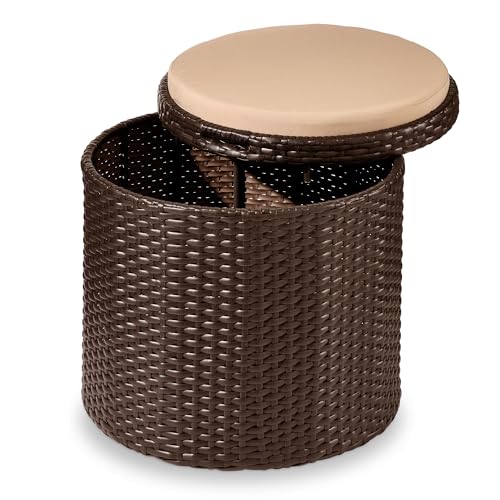
Outdoor Storage Ottoman: The Ultimate Space-Saving Solution
Combine comfort, convenience, and clutter-free living with a patio storage ottoman that protects your essentials while elevating your outdoor space.
Explore the GuideWhy an outdoor storage ottoman? It's the rare piece of patio furniture that solves two problems at once: it gives you a comfortable place to sit or rest your feet, and it hides away cushions, toys, towels, and tools that would otherwise clutter your deck. For anyone serious about outdoor setting design, it's one of the smartest additions you can make.
What Is an Outdoor Storage Ottoman?
An outdoor storage ottoman is a weather-resistant, upholstered or hard-shell piece of furniture with a hollow interior and a lift-off or hinged lid. Unlike a basic outdoor stool, it provides enclosed storage space — typically accessed from the top — while functioning as a footrest, extra seat, or even a casual side surface. The concept borrows from indoor storage furniture but adapts materials and construction to survive sun, rain, humidity, and temperature swings.
Most homeowners discover they need one after buying a patio set: cushions, throws, and small accessories pile up with nowhere to go. Rather than adding a separate outdoor storage box that takes up floor space, an ottoman integrates storage directly into your seating arrangement. It's a particularly elegant answer for small patios, balconies, and decks where every square foot matters.
In this guide, we'll walk through the materials, construction features, sizing considerations, and practical use cases that separate a good outdoor storage ottoman from one that fails after a single season. By the end, you'll understand exactly what to look for — and which tier of product suits your space and habits.
Key Benefits of a Patio Storage Ottoman
Dual-Purpose Functionality
Every inch of patio space earns its keep when a single piece serves as seating, footrest, and concealed storage. This is especially valuable for compact areas where a dedicated outdoor storage cabinet would overwhelm the layout.
Protection From the Elements
Quality ottomans use weather-resistant liners, sealed seams, and UV-stable fabrics to keep contents dry and safe from sun damage. This makes them ideal for storing outdoor throw pillows and cushions that would otherwise fade or mildew.
Instant Clutter Control
Toys, gardening tools, pool towels, and grill accessories disappear in seconds. A quick lift of the lid restores a tidy appearance before guests arrive — no more scrambling to stash things in the garage.
Design Flexibility
Available in wicker, rattan, metal, wood, and fabric-wrapped styles, an ottoman can match nearly any patio aesthetic. It slots naturally into a outdoor sofa set arrangement or stands alone as a accent piece.
Materials and Construction: What to Look For
The lifespan of an outdoor storage ottoman is determined almost entirely by its materials. Here's how the main options compare:
- Wicker and rattan (natural or synthetic): The classic patio look. Synthetic resin wicker is far more weather-resistant than natural rattan and won't crack or fade as quickly. Look for tightly woven strands and a powder-coated aluminum frame underneath. These pair beautifully with outdoor sofas and lounge groupings.
- Powder-coated steel or aluminum: The most durable structural option. Aluminum resists rust better than steel and is lighter to move. Check that welds are smooth and that any exposed hardware is stainless steel. A rust-proof finish is essential for coastal or humid climates.
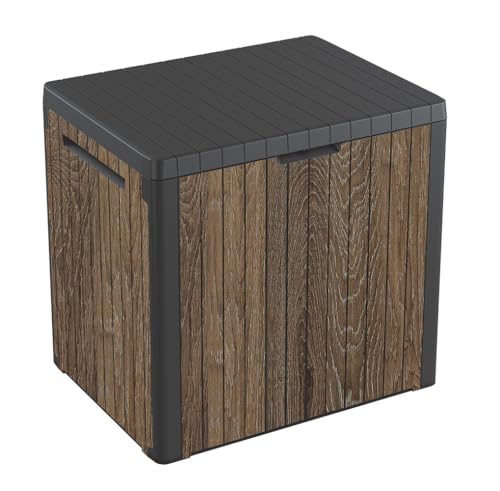
- Solid or engineered wood: Teak, acacia, and eucalyptus offer natural warmth and can last for years with proper sealing. Avoid untreated softwoods. Wood ottomans often feature slatted or paneled construction that sheds water well.
- Fabric-wrapped with weatherproof covers: Solution-dyed acrylic or polyester fabrics resist fading and mildew. The critical detail is the inner liner — a waterproof liner or sealed interior is what actually keeps contents dry. Without it, a fabric ottoman is decorative but not protective.
- Polyethylene resin (plastic): The entry-level workhorse. UV-stabilized resin is lightweight, easy to clean, and genuinely weatherproof. It won't win design awards, but it performs reliably in exposed locations.
Sizing and Placement: Getting the Proportions Right
An outdoor storage ottoman that's too small becomes a decorative afterthought; one that's too large dominates the patio and blocks circulation. Use these guidelines to find the right balance:
- As a footrest: The top surface should sit at roughly the same height as your seat cushion — typically 16 to 18 inches for most patio chairs and sofas. An ottoman that's taller than the seat is uncomfortable to use as a rest.
- As an extra seat: Look for models rated for adult weight (check the manufacturer's stated capacity) and with a reinforced lid. A 20-inch height works well beside a standard dining chair; 16 to 18 inches suits lounge seating.
- As a coffee-table substitute: A large, flat-topped ottoman can anchor a conversation area when paired with a outdoor sofa. Choose one with a firm lid and a tray-friendly surface. Many buyers use a tray to convert the ottoman into a stable surface for drinks and snacks.
- For storage capacity: Measure what you plan to store before buying. A set of four chair cushions folded flat typically needs at least 20 inches of internal width and 10 inches of depth. If you're storing a full outdoor sofa with chaise cushion set, consider a larger outdoor storage chest instead.
Comparing Tiers: Entry-Level to Premium
Outdoor storage ottomans fall into predictable quality tiers. Understanding what each tier delivers helps you match the product to your usage pattern — a lightly used balcony ottoman doesn't need the same construction as one on an exposed pool deck.
| Tier | Best For | Typical Construction | Durability Notes |
|---|---|---|---|
| Entry-Level | Covered porches, seasonal use, light storage | UV-stabilized resin or basic polyester fabric over a lightweight frame | Weather-resistant but not fully waterproof; expect 2–3 seasons in exposed conditions |
| Mid-Range | Most patios, regular use, cushion storage | Synthetic wicker over aluminum frame; solution-dyed acrylic covers; waterproof inner liner | Solid build with good UV and moisture resistance; 5+ seasons with basic care |
| Premium | Exposed decks, coastal climates, daily use | High-grade steel or aluminum frame; premium weather-resistant fabrics; sealed seams and rust-proof hardware | Heavy-duty construction designed for year-round outdoor exposure |
| Luxury | Design-forward spaces, integrated furniture sets | Teak or marine-grade materials; custom-fit cushions; precision hardware | Flagship-tier longevity with aesthetic refinement; often part of a coordinated set |
In practice, the mid-range tier offers the best balance for most homeowners. It delivers genuine weather protection and structural integrity without the flagship-tier outlay of luxury models. If your ottoman will live under a covered pergola, entry-level may be entirely sufficient; if it faces full sun and driving rain, invest in premium or luxury.
Practical Use Cases: Where an Ottoman Earns Its Place
- Cushion and pillow storage: The most common use. Storing outdoor swing cushions and throw pillows inside an ottoman keeps them dry and extends their life. It's a cleaner solution than stacking them in a corner.
- Toy and pool accessory storage: Families with young children appreciate a dedicated place for outdoor toy storage that's accessible but out of sight. Pool towels, goggles, and inflatables fit neatly in a large ottoman near the water.
- Grill and cooking accessories: If your outdoor kitchen is adjacent to seating, an ottoman can hold tongs, grill brushes, and fuel. For larger collections, a dedicated outdoor storage cabinet for grill accessories may be more practical.
- Tabletop serving station: With a sturdy tray on top, an ottoman becomes a buffet or drink station during gatherings. Place it beside a outdoor side table for a layered, functional arrangement.
- Balcony and small-space storage: On a tight balcony, an ottoman may be the only storage furniture that fits. Look for narrow, tall models that hug the railing without blocking walkways.
Care and Maintenance: Making It Last
Even the best-built ottoman benefits from routine care. These habits add years to its service life:
- Empty and air it out seasonally. Remove contents and leave the lid open on a dry, sunny day to prevent trapped moisture and musty odors.
- Clean according to material. Wipe resin and metal with mild soap and water; brush wicker with a soft brush to dislodge debris; treat wood with a appropriate sealant annually.
- Check the liner. The waterproof inner liner is the weakest link in fabric ottomans. Inspect it for tears and replace or repair promptly — a compromised liner defeats the purpose of the storage.
- Use a cover during off-season. A fitted cover protects against pollen, leaves, and prolonged UV exposure. If you're storing cushions inside over winter, add a moisture absorber packet.
- Store on a dry surface. Standing water under the ottoman can wick into the base. Elevate it slightly or ensure the patio drains well.
Ready to compare specific models? Browse our curated selection of outdoor storage solutions below. If you're still mapping out your full patio layout, start with our guide to outdoor storage to see how an ottoman fits into a complete storage strategy alongside benches, bins, and cabinets.