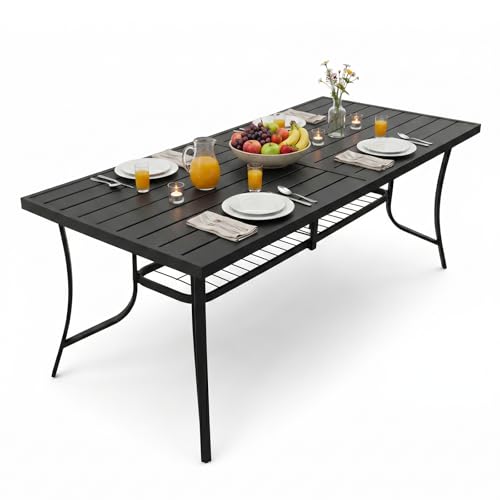
Rectangular Patio Dining Table with Umbrella Hole
Everything you need to know before choosing an outdoor dining table that seats a crowd, anchors your shade, and stands up to the seasons. Compare dimensions, materials, and features with confidence.
Why this guide matters: A rectangular patio dining table with an umbrella hole is one of the most practical purchases for a backyard. The elongated shape fits more diners than a round table of similar footprint, the umbrella hole lets you add shade exactly where it is needed, and the flat tabletop works for meals, crafts, and entertaining. The challenge is choosing the right dimensions, material, and build quality so the table serves you for years. This guide walks you through the decisions that matter most.
Why Choose a Rectangular Table with an Umbrella Hole?
Rectangular dining tables are the workhorse of outdoor entertaining. Unlike round tables, which tend to waste space at the corners, a rectangular top distributes seating evenly along the long sides, making it easier to fit six or eight diners without pushing chairs into walkways. That makes a rectangular table a strong fit for long patios, narrow decks, and screened porches.
The umbrella hole is the feature that turns a dining table into a shaded gathering space. Instead of positioning a freestanding umbrella beside the table, the pole passes through the center, so shade lands directly over food and guests. This arrangement also frees up floor space around the table and keeps the umbrella from tipping in light breezes when paired with a weighted base.
If your outdoor area is compact, explore small patio layout ideas before committing to a large table. For a broader overview of outdoor dining configurations, see our patio dining set guide.
Choosing the Right Size for Your Space
Table size is the first decision to lock in. Too small, and you will run out of seats during gatherings. Too large, and you will struggle to walk around it. The table below maps seating capacity to typical table lengths and the clearance you should budget around the table.
| Seating Capacity | Typical Length | Typical Width | Clearance per Side | Best For |
|---|---|---|---|---|
| 4 diners | About 60 inches | 36 to 38 inches | 36 inches | Compact patios, couples, small families |
| 6 diners | About 72 inches | 38 to 40 inches | 36 inches | Everyday family dining, weekend guests |
| 8 diners | 84 to 96 inches | 40 to 44 inches | 36 to 42 inches | Frequent entertaining, large families |
A useful rule of thumb: allow at least 24 inches of table edge per diner and 36 inches of clearance behind each chair so guests can push back without hitting a wall or planter. If your patio is tight, consider a compact table and chairs set or browse four-seat configurations. For larger households, a table with eight chairs may be the better fit.
Understanding the Umbrella Hole
The umbrella hole is a small detail with outsized impact. Most patio dining tables use an opening between 1.5 and 2 inches in diameter, sized to accept a standard umbrella pole. Before you buy, confirm three things: the hole diameter matches your umbrella pole, the hole is reinforced with a metal grommet or plastic ring, and the table is compatible with the umbrella base you plan to use.
Reinforcement matters because a bare hole in a thin tabletop can crack over time, especially on glass tops. A fitted grommet also reduces wobble and keeps rainwater from pooling around the pole. If you have not yet chosen an umbrella, review our guide to the rectangle patio umbrella and the patio umbrella essentials. Stability ultimately depends on the base, so read up on umbrella bases before finalizing your setup.
Some tables combine an umbrella hole with a lazy Susan or an ice bucket insert. These features are convenient but add complexity, so weigh them against how often you plan to use the umbrella.
Tabletop and Frame Materials Compared
Material choice determines how much maintenance the table needs and how well it survives sun, rain, and temperature swings. The table below compares common options using a consistent tier system so you can match material to your climate and care routine.
| Material | Market Tier | Weather Resistance | Maintenance | Best For |
|---|---|---|---|---|
| Powder-coated aluminum | Mid-range | High; rust-resistant | Low; wipe clean | Year-round outdoor use, humid climates |
| Powder-coated cast aluminum | Premium | Very high; heavy-duty | Low | Windy sites, long-term investment |
| Teak or dense hardwood | Luxury | High; needs periodic sealing | Moderate | Classic style, covered patios |
| Tempered glass top | Mid-tier | Moderate; handle with care | Low; streak-free cleaner | Modern look, sheltered spaces |
| Slatted resin or plastic | Entry-level | Moderate; UV fading possible | Very low | Casual use, seasonal setups |
| High-grade stainless steel | Top-tier | Excellent; commercial-grade | Low; occasional polish | Coastal areas, heavy use |
For most homeowners, powder-coated aluminum hits the sweet spot. It is light enough to move, resists rust, and holds color well. Cast aluminum costs more but stays put in gusty weather. Wood brings warmth and character, though it needs annual attention. Glass looks sleek but should be paired with a reinforced umbrella hole and placed away from heavy foot traffic. Learn more about powder-coated aluminum outdoor furniture and cast aluminum options, or check our all-weather furniture guide for climate-specific advice.
Frame Construction and Stability
The frame carries the load, so look for welded joints, a reinforced center hub around the umbrella hole, and legs that splay slightly outward for lateral stability. A table with cross-bracing underneath will feel far more solid than one held together by bolts alone.
Weight matters too. Heavier tables resist wind uplift and stay steady when guests lean on the edge, but they are harder to relocate. If you plan to reconfigure your patio often, look for a table with wheels or a lighter aluminum build. If you want a table that doubles as a conversation piece, compare table and umbrella bundles to simplify the decision.
Matching Table, Umbrella, and Base
Three pieces must work together: the table, the umbrella, and the base. Start with the table, confirm the hole diameter, then select an umbrella whose canopy spans the seating area. As a general guide, an umbrella canopy should extend roughly 2 feet beyond each edge of the table for reliable shade.
Choose a base rated for the umbrella canopy size. A small base under a large canopy creates a tipping risk on breezy days. For a cohesive look, consider a dining set with umbrella included or a coordinated furniture and umbrella package. If you are furnishing a larger space, browse six-seat sets with umbrella and larger umbrella dining arrangements.
Care, Storage, and Weatherproofing
A rectangular patio dining table with an umbrella hole will last longer with a simple care routine. Wipe spills promptly, rinse pollen and bird droppings with mild soap and water, and avoid abrasive pads on painted or coated surfaces. During off-season months, store cushions indoors and consider a fitted cover that accommodates the umbrella pole.
Inspect the umbrella hole grommet each season. Replace worn rings before cracks develop in the tabletop. Tighten frame bolts at the start of summer and again before winter. For a deeper maintenance plan, see our outdoor weatherproofing guide. Pair the table with an outdoor rug to protect the surface beneath and define the dining zone.
Buying Checklist
Before You Order, Confirm These Details
- Measure your patio and confirm at least 36 inches of clearance on all sides.
- Verify the umbrella hole diameter matches your pole, typically 1.5 to 2 inches.
- Check that the hole is reinforced with a metal or durable plastic grommet.
- Confirm the seating capacity you need: four, six, or eight diners.
- Choose a material tier that matches your climate and maintenance preference.
- Select an umbrella base rated for your canopy size.
- Check assembly requirements, warranty terms, and delivery access.
- Confirm the table height matches your existing dining chairs, usually 28 to 30 inches.
Common Mistakes to Avoid
Ignoring walkway space. A table that fits the patio but leaves no room to walk forces guests to squeeze past seated diners. Measure both the table and the chair pull-out zone.
Skipping the base. The umbrella base is not an accessory; it is a safety component. A properly weighted base keeps the canopy stable and protects both the umbrella and the table.
Overlooking the grommet. A bare hole in a thin top invites cracking. A reinforced hole costs little and prevents a common failure point.
Mismatching table and umbrella scale. An undersized canopy leaves the ends of a long table in the sun. Match canopy size to table length for even shade.
Neglecting seasonal care. Even weather-resistant furniture benefits from cleaning and off-season storage. A little upkeep extends service life considerably.
If you are still deciding between shapes, compare rectangular dining tables with round patio tables with umbrella. Each has trade-offs in seating efficiency and visual balance.
Related Outdoor Dining Configurations
Once the table is set, consider the surrounding pieces. A side table with a glass top keeps drinks within reach, while a serving station and storage cabinet keeps plates and linens organized. For larger gatherings, a table with eight chairs or an eight-seat dining arrangement keeps the whole group at one table.
If your space allows for lounging as well as dining, review conversation sets and outdoor sectional sofas to create a complete outdoor room. For a shaded dining nook with a different footprint, compare round dining sets with swivel chairs.
Frequently Asked Questions
What size rectangular patio dining table with umbrella hole should I choose?
For four diners, a table around 60 inches long and 36 to 38 inches wide works well. For six diners, look for roughly 72 inches in length. For eight diners, plan for 84 to 96 inches. Always leave about 36 inches of clearance around the table for chairs to pull out comfortably.
What is the standard umbrella hole diameter on a patio dining table?
Most patio dining tables use a 1.5-inch to 2-inch umbrella hole. Confirm the opening size against your umbrella pole diameter before purchasing, and choose a table with a fitted grommet or ring to reduce wobble and water intrusion.
Which tabletop material is best for a rectangular patio dining table?
Powder-coated aluminum and high-grade steel offer the best balance of durability and low maintenance. Teak and other dense hardwoods are premium options that require periodic sealing. Tempered glass and slatted resin tops are mid-range choices that suit covered patios particularly well.
How do I keep a patio dining table with an umbrella hole stable in wind?
Use a weighted umbrella base rated for your canopy size, close the umbrella during high winds, and avoid cantilever umbrellas on lightweight tables. A table with a reinforced center hub and a snug grommet adds meaningful stability.
Bottom line: A rectangular patio dining table with an umbrella hole is one of the most versatile outdoor purchases you can make. Prioritize correct dimensions, a reinforced umbrella opening, and a material tier that suits your climate. When those three pieces align, the table becomes the natural center of backyard meals, celebrations, and quiet weekday dinners for years to come.