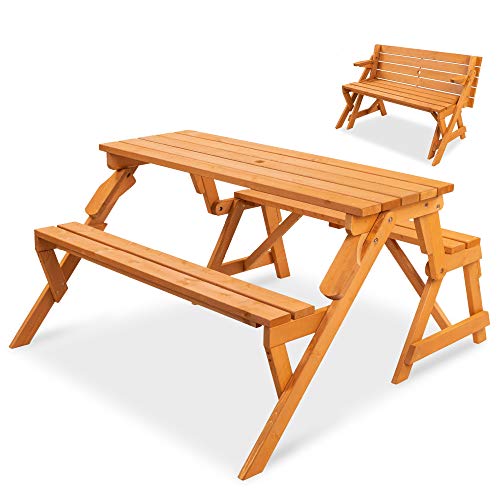
Wooden Bench That Turns Into a Picnic Table
One piece of furniture, two functions. Explore how convertible wooden benches transform from seating into a full dining surface, and learn what to check before choosing one for your patio or garden.
Explore Buying GuidePatioFocus Insight: A wooden bench that turns into a picnic table solves a common outdoor problem — limited space with multiple needs. This guide walks you through how the conversion works, which wood species perform best outdoors, and how to match a convertible design to your yard, deck, or balcony.
What Is a Wooden Bench That Turns Into a Picnic Table?
A wooden bench that turns into a picnic table is a hybrid outdoor furniture piece designed for flexibility. In its bench configuration, it offers comfortable seating for two to three people. When converted, the backrest folds down or unfolds to form a flat tabletop, while the seat planks often reposition into two facing benches — creating a complete picnic setup from a single unit.
These convertible designs are especially useful for homeowners with compact patios, balconies, or garden corners where a permanent wood picnic table would take up too much room. They also appeal to campers and tailgaters who want one portable piece that covers both seating and dining.
The conversion mechanism is the heart of the design. Most models use a hinged backrest with locking pins or latch systems. Some premium units add gas-assist struts or smooth-slide rails so one person can switch configurations in under a minute. The best examples combine this mechanical simplicity with the durability you would expect from a wood outdoor dining set.
How the Conversion Mechanism Works
Understanding the mechanism helps you evaluate quality before buying. There are three common designs:
1. Fold-Down Backrest
The backrest hinges downward to rest flat on the seat frame, becoming the table surface. The seat planks remain in place as a single bench. This is the simplest and most common entry-level design. It works well for two people and is easy to operate, but the tabletop is narrower than a full picnic table.
2. Unfolding Tabletop With Split Benches
The backrest unfolds outward and the seat planks separate or slide outward to form two facing benches. This mid-range and premium design creates a more authentic picnic table experience with seating on both sides. The mechanism is more complex and requires sturdier hardware, but the result is a true dining surface.
3. Rotating or Flipping Panel
Some designs use a rotating panel that flips from a vertical backrest to a horizontal tabletop. These are often the most compact when folded and work well for balconies. However, the seating position is usually one-sided, so they suit casual use rather than full family meals.
Regardless of design, check for reinforced hinges, rust-proof finishes, and locking pins that hold the table firmly in place. A wobbly tabletop ruins the experience, so hardware quality matters as much as the wood itself.
Best Wood Types for a Transforming Picnic Bench
The wood you choose determines how long the bench lasts and how much maintenance it needs. Here is a comparison of common species used in convertible outdoor furniture:
| Wood Type | Best For | Durability | Maintenance |
|---|---|---|---|
| Teak | Premium and luxury tiers | Excellent natural rot resistance | Low — occasional oiling |
| Cedar | Mid-range to premium | Good moisture resistance | Moderate — annual sealant |
| Acacia | Mid-tier solid wood options | Strong and dense | Moderate — seal annually |
| Pressure-Treated Pine | Entry-level and starter tier | Decent with proper sealing | Higher — inspect yearly |
Teak and cedar are the standout choices for long-term outdoor use. They resist moisture and insects naturally, which matters because a convertible bench exposes more surface area to the elements when in table mode. If you choose a softer wood, invest in a quality wood sealant and reapply it every season.
For a broader look at material options across outdoor furniture, see our wood furniture care guide, which covers cleaning routines and seasonal protection for solid wood pieces.
Where a Convertible Bench Fits Best
These dual-purpose benches shine in specific outdoor settings. Here is where they make the most sense:
- Small patios and balconies: One unit replaces a bench and a table, freeing up floor space. Pair it with a compact wooden garden table or use it alone as the centerpiece.
- Garden corners: Place it near a wooden arbour for garden to create a quiet reading spot that doubles as a lunch table.
- Decks with limited storage: The convertible design means fewer pieces to store in winter. Look for models that fold flat for easy storage.
- Camping and tailgating: Portable wooden versions with folding legs are popular for outdoor events.
If your space leans toward traditional seating, a wooden garden bench might be a better fit. But if you frequently host casual meals outdoors, the convertible option offers more utility per square foot.
Buying Guide: What to Check Before You Choose
Convertible benches vary widely in build quality and mechanism smoothness. Use this checklist to evaluate options across tiers:
Entry-Level Tier
Simple fold-down backrest, pine or basic hardwood construction, basic hinges. Best for occasional use and light-duty seating. Expect to seal the wood more often.
Mid-Range Tier
Cedar or acacia build, smoother hinge action, locking pins, and a wider tabletop. Good balance of durability and ease of conversion for regular family use.
Premium Tier
Teak or high-grade hardwood, precision hardware, one-person conversion, and reinforced joints. Designed for daily use and long-term outdoor exposure.
Luxury / Commercial-Grade
Flagship construction with marine-grade hardware, weather-resistant coating, and tested load ratings. Suitable for heavy use in hospitality or community settings.
Key Features to Evaluate
- Hinge quality: Look for stainless steel or galvanized hardware. Cheap hinges are the first failure point.
- Locking mechanism: The tabletop must lock firmly in place. Test the latch or pin system before buying.
- Weight and portability: Solid wood benches are heavy. If you plan to move it often, consider a lighter hardwood or a folding-leg model.
- Seating capacity: Confirm how many people the bench seats in each mode. Some models seat two as a bench but four as a table.
- Surface finish: A smooth, sealed surface is easier to clean and resists food stains from picnic use.
- Assembly: Most ship partially assembled. Check whether tools are included and how complex the setup is.
For related dining configurations, you may also want to compare a wooden table and bench set or a wood dining table with bench if you prefer a fixed setup.
Setup and Conversion Tips
Getting the most from a convertible bench comes down to placement and routine care:
- Place it on level ground. Uneven surfaces stress the hinge mechanism and make the tabletop wobble. A patio slab or compacted gravel base works best.
- Practice the conversion. Learn the sequence before guests arrive. Most models have a specific order — unlock, fold, lock — that becomes intuitive after a few tries.
- Keep hinges clean. Debris and grit wear down moving parts. Wipe the mechanism monthly and lubricate with a silicone spray annually.
- Use a cover in winter. Even rot-resistant wood benefits from protection during harsh months. A fitted cover prevents moisture buildup in the folded joints.
- Inspect locking pins. Before each use in table mode, confirm the pins are fully engaged. This is a safety check, not just a comfort one.
If you are outfitting a full outdoor dining area, consider pairing the bench with a wooden garden furniture set or a wooden garden table and chairs for a cohesive look.
Common Mistakes to Avoid
Buyers often overlook a few details that affect long-term satisfaction:
- Ignoring the conversion weight limit. Check the load rating for both bench and table modes. They are not always the same.
- Skipping the sealant. Even premium wood needs protection in wet climates. Plan for annual sealing.
- Choosing based on looks alone. A beautiful bench with weak hinges will disappoint. Prioritize mechanism quality.
- Underestimating storage needs. If you plan to store it indoors in winter, measure doorways and storage space first.
For a fixed alternative that still offers classic charm, a wooden park bench or a wooden bench with back for dining table may suit your needs better. But if flexibility is the priority, a convertible design is hard to beat.
Frequently Asked Questions
Final Thoughts
A wooden bench that turns into a picnic table is a smart investment for anyone who values flexibility in a compact outdoor space. The key is to focus on mechanism quality, wood durability, and the right tier for your usage level. Whether you choose an entry-level fold-down model or a premium teak convertible, you get two pieces of furniture in one footprint — a practical win for patios, gardens, and decks alike.
For more outdoor dining inspiration, explore our guides on wooden outdoor chairs and wooden dining table with bench and chairs to complete your setup.