Plastic Outdoor Chairs: The Complete Buying Guide
Everything you need to know before choosing weatherproof, low-maintenance seating for your patio, deck, or garden. Compare materials, styles, and tiers to find the right fit for your outdoor space.
Start Your ResearchWhy Plastic Outdoor Chairs Deserve a Place on Your Patio: Plastic outdoor chairs have evolved far beyond the flimsy white monobloc of decades past. Today's resin and polymer chairs offer impressive durability, UV resistance, and design versatility. They are lightweight enough to rearrange for gatherings, stackable for compact storage, and engineered to handle rain, sun, and temperature swings with minimal upkeep. For homeowners who want dependable outdoor seating without the maintenance routine of wood or the weight of metal, plastic chairs are a smart, practical choice. This guide walks you through materials, styles, seating capacity, and tier-based recommendations so you can buy with confidence.
Why Plastic Outdoor Chairs Are a Smart Choice
Plastic outdoor chairs are built for real-world outdoor living. Unlike wood that requires sealing and staining, or metal that can rust if the finish chips, modern plastic chairs are engineered to shrug off the elements. High-density polyethylene (HDPE) and UV-stabilized polypropylene resist fading, cracking, and moisture absorption. They won't splinter, peel, or rot, and most models wipe clean with soap and water. This makes them an excellent option for families with children, pet owners, and anyone who prefers spending time relaxing rather than maintaining furniture.
Another advantage is portability. Plastic chairs are significantly lighter than their wood or metal counterparts, so you can easily move them from patio to lawn or pack them away for the season. Many designs are stackable, which is a major benefit for smaller spaces. If you're outfitting a compact balcony or a small deck dining area, stacking plastic chairs keep your footprint tidy while providing flexible seating when guests arrive.
Advantages
- Weather-resistant and UV-stabilized for long outdoor life
- Lightweight and easy to rearrange or relocate
- Stackable designs save storage space
- Low maintenance — just soap and water
- Won't rot, splinter, or rust
- Available in a wide range of colors and styles
Considerations
- Lighter weight can mean less stability in high winds
- Entry-level polypropylene may feel less substantial
- Some designs can look utilitarian without cushions or styling
- Heavy-duty HDPE models are heavier to move
Plastic Chair Materials: Polypropylene vs. HDPE vs. Resin
Not all plastic is created equal. The material composition directly affects durability, weight, feel, and how well the chair holds up over seasons of use. Understanding the three main categories helps you match the chair to your climate and usage patterns.
Polypropylene is the most common material for entry-level and mid-range stacking chairs. It's lightweight, resistant to moisture and chemicals, and holds color well when UV-stabilized. Polypropylene chairs are ideal for occasional seating and easy storage. If you're exploring stackable outdoor chairs, polypropylene is the typical construction.
High-Density Polyethylene (HDPE) is denser and heavier than polypropylene, giving chairs a more solid, furniture-like feel. HDPE is highly resistant to UV degradation and temperature extremes, making it a top choice for premium Adirondack-style chairs and heavy-duty outdoor seating. These chairs often mimic the look of painted wood while offering superior weather resistance. Explore plastic Adirondack chairs for a classic silhouette in this durable material.
Resin is a broad term often used interchangeably with plastic in outdoor furniture marketing. Resin chairs typically refer to molded polymer designs, including wicker-look patterns and textured finishes. Resin can be formulated for various durability levels, so check the specific polymer type (polypropylene or HDPE) when comparing options. For a broader look at weatherproof synthetic furniture, see our guide to plastic outdoor furniture.
Popular Styles of Plastic Outdoor Chairs
Plastic chairs come in a surprising variety of shapes and silhouettes. The right style depends on your patio layout, the look you want to achieve, and how you plan to use the seating. Here are the most common categories:
Adirondack chairs feature a distinctive sloped back, wide armrests, and a deep seat. They're designed for lounging and are a staple of relaxed outdoor living. Many modern plastic versions include cup holders and phone slots for added convenience. If that appeals to you, look at plastic Adirondack chairs with cup holders for a practical upgrade.
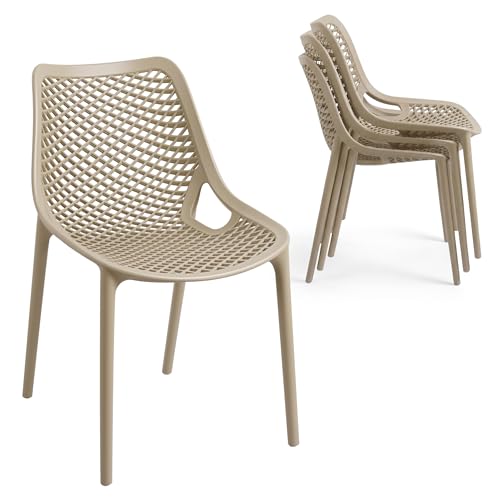
Stacking chairs are the workhorses of outdoor seating. They're lightweight, easy to store, and often sold in sets. Stacking chairs pair well with dining tables and are ideal for households that entertain frequently. Browse stackable Adirondack chairs for a hybrid of comfort and convenience.
Rocking chairs bring a touch of tradition and relaxation to the porch or patio. Plastic rocking chairs are weatherproof and smooth-gliding, offering the soothing motion of a classic rocker without the maintenance of wood. See our selection of plastic rocking chairs for models that blend comfort with durability.
Dining chairs are designed to pair with outdoor tables. They typically have a more upright seat and may include armrests or be armless for tucking under the table. Plastic dining chairs are a practical match for a plastic outdoor dining table with umbrella hole, creating a cohesive, low-maintenance dining set.
Comparing Plastic Outdoor Chair Tiers
To help you navigate the market, we've organized plastic outdoor chairs into three broad quality tiers. These descriptors reflect relative positioning, construction quality, and intended use — not specific figures. Use this table as a framework for comparing options as you shop.
| Tier | Typical Materials | Best For | Durability Notes |
|---|---|---|---|
| Entry-Level / Starter Tier | Polypropylene, basic resin | Occasional seating, small balconies, temporary setups | Lightweight and stackable; good weather resistance for mild climates |
| Mid-Range / Balanced Tier | UV-stabilized polypropylene, reinforced resin | Everyday patio use, family dining, moderate sun exposure | Thicker walls and improved UV protection; better color retention |
| Premium / High-End Tier | Heavy-duty HDPE, commercial-grade polymer | Full-sun exposures, year-round outdoor use, heavy users | Dense construction, superior fade resistance, higher weight capacity |
When comparing tiers, consider how often the chairs will be used and how much direct sun and weather they'll face. A mid-range chair is often the sweet spot for residential patios, offering a good balance of durability and ease of handling. Premium HDPE chairs are a long-term investment for homeowners who want furniture that stays put and looks good season after season.
Key Factors When Buying Plastic Outdoor Chairs
Weight capacity and stability: Check the manufacturer's weight rating. Heavy-duty and commercial-grade chairs are reinforced at the legs and joints to support higher weights. A wider base and non-slip feet improve stability on smooth surfaces like composite decking or paver patios.
UV protection: Look for chairs labeled UV-stabilized or UV-resistant. This prevents fading and embrittlement over time. Premium HDPE chairs are typically the most UV-resistant option available.
Stackability and storage: If space is tight, stackable chairs are a practical choice. They can be nested and stored in a shed or plastic outdoor storage box during off-seasons. For larger collections, a plastic outdoor storage cabinet keeps cushions and small accessories organized alongside your chairs.
Comfort and ergonomics: Sit in the chair if possible, or read reviews about seat depth, back angle, and armrest height. Adirondack chairs offer a reclined lounging position, while dining chairs are more upright. Consider adding cushions for extended comfort — patio table chair cushions can transform a basic plastic chair into a cozy seat.
Style and color: Plastic chairs come in neutral tones, bright colors, and wood-look finishes. If you want the warmth of wood without the upkeep, plastic outdoor furniture that looks like wood offers a convincing alternative. Coordinate with your patio style for a cohesive look.
Ready to Explore Plastic Outdoor Chair Options?
Browse our curated selection of top-rated plastic chairs and find the perfect fit for your outdoor space.
View Recommended ChairsPairing Plastic Chairs with Tables and Accessories
Plastic outdoor chairs are versatile enough to pair with a variety of table styles. A set of stackable chairs around a plastic outdoor table creates a cohesive, weatherproof dining area. If you have a rectangular table with an umbrella, a plastic folding patio table with umbrella hole offers flexibility for shaded dining. For smaller spaces, a patio table and chairs for two paired with compact plastic chairs makes an efficient bistro setup.
Don't overlook shade and comfort accessories. A patio umbrella that won't blow over keeps your seating area comfortable on sunny afternoons. For evening ambiance, consider adding string lights or other outdoor lighting to make your plastic chair arrangement feel warm and inviting. A patio side table between chairs gives guests a place to set drinks and snacks.
Caring for Plastic Outdoor Chairs
One of the biggest advantages of plastic chairs is their low maintenance. Regular cleaning with mild soap and water is usually sufficient. For textured surfaces or stubborn spots, a soft-bristle brush and a diluted vinegar solution work well. Avoid abrasive pads and harsh chemical cleaners that can dull the finish. During winter or extended periods of non-use, stack chairs in a sheltered area or cover them to minimize exposure to debris and moisture. If you notice a chair wobbling, check the feet and tighten any accessible fasteners — many plastic chairs have replaceable glides or caps.
Frequently Asked Questions
Are plastic outdoor chairs durable in harsh weather?
Yes, modern plastic outdoor chairs are engineered with UV-stabilized resins that resist fading, cracking, and warping. High-density polyethylene (HDPE) and polypropylene are the most durable materials, designed to withstand sun exposure, rain, and temperature fluctuations for many seasons. Premium HDPE chairs offer the highest level of weather resistance in the plastic category.
What is the difference between polypropylene and HDPE plastic chairs?
Polypropylene chairs are lightweight, stackable, and offer good general weather resistance. HDPE chairs are denser and heavier, providing superior durability and a more substantial feel. HDPE is often used in premium Adirondack-style chairs, while polypropylene is common in entry-level to mid-range stacking chairs. Your choice depends on how much use the chairs will see and how much direct sun they'll face.
How do I clean and maintain plastic outdoor chairs?
Clean plastic outdoor chairs with a mixture of mild dish soap and warm water. Use a soft-bristle brush for textured surfaces. Avoid abrasive cleaners or pressure washing at close range, which can damage the finish. For stubborn stains, a diluted vinegar solution works well. Store or cover chairs during extended off-seasons to prolong their lifespan.
Can plastic outdoor chairs support heavy weight?
Most quality plastic outdoor chairs support between 250 and 350 pounds. Heavy-duty and commercial-grade models are reinforced with thicker walls, cross-bracing, and wider legs to support higher weight capacities. Always check the manufacturer's weight rating before purchasing, especially for larger users. If you need extra reassurance, look for chairs described as heavy-duty or commercial-grade.
Can I leave plastic chairs outside all year?
UV-stabilized and HDPE chairs are designed to stay outdoors year-round in most climates. However, extreme temperature swings and prolonged exposure to intense sun can eventually take a toll. To maximize lifespan, cover chairs or store them during harsh winter months. Even weatherproof chairs benefit from a little protection during off-seasons.