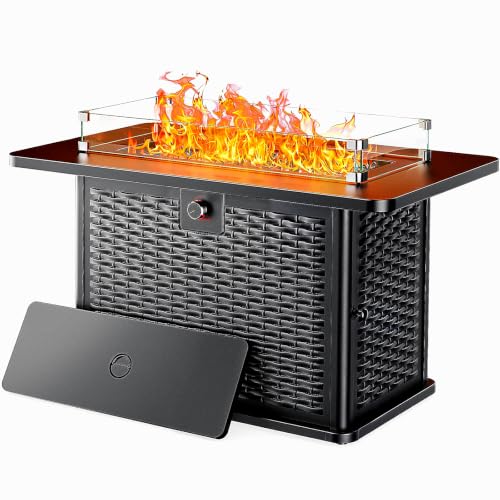
Gas Fire Table Buying Guide: Warmth, Ambiance & Smart Setup
Everything you need to know before choosing a gas fire table for your patio. Compare fuel options, table styles, safety features, and placement strategies so you can create a cozy outdoor focal point with confidence.
Explore Top PicksWhy a gas fire table? A gas fire table combines the warmth of a fire pit with the practicality of a patio table. Unlike wood-burning options, gas models light instantly, produce no ash, and can be placed on decks and patios with proper clearance. This guide walks you through the research phase so you can pick a model that matches your space, your lifestyle, and your safety requirements.
What Exactly Is a Gas Fire Table?
A gas fire table is a dual-purpose outdoor furnishing: the top functions as a table surface for drinks, snacks, or decor, while the center houses a burner that produces a controlled flame. Most models run on propane cylinders or natural gas lines. The design has evolved from simple metal boxes into refined pieces that rival conventional patio furniture in style.
Buyers typically fall into two groups: those replacing a traditional wood fire pit with a cleaner, smoke-free alternative, and those adding a focal point to a new patio layout. Both benefit from understanding the differences between fuel systems, burner types, and table materials before committing.
If you are still comparing formats, our fire pit table guide covers the broader category, while this page focuses specifically on gas-powered tables. For propane-specific models, see the propane fire pit table breakdown.
Propane vs. Natural Gas: Which Fuel Fits Your Patio?
Fuel choice is the first decision that shapes everything else — portability, installation, and long-term convenience. Here is how the two main options compare:
Propane (Portable)
Tank-based models can be moved freely around the yard. Ideal for renters or patios without a gas line. Most entry-level and mid-range fire tables use a standard 20 lb tank, often stored inside the base.
Natural Gas (Fixed)
Connects directly to a home gas line for a continuous supply. Best for permanent installations where a licensed professional can run the line. Premium and luxury tiers favor this setup.
Hidden Tank Designs
Models with a concealed compartment keep the cylinder out of sight. Explore fire pit tables with hidden propane tank inside for a cleaner look.
Built-In Tank Designs
Some tables integrate the tank access door into the side panel. See fire tables with built-in propane tank for integrated convenience.
If you want the flexibility to reposition the table for parties or seasonal changes, propane is the practical choice. If your patio is a permanent extension of your home and you prefer not to swap tanks, natural gas is the long-term investment.
Table Styles: Match the Fire Table to Your Patio Design
The table's shape and finish should complement your existing furniture and the architecture of your home. Consider these popular directions:
- Rectangular tables — Great for anchoring a seating group along a wall or defining a dining zone. See rectangular fire pit tables for layout ideas.
- Modern minimalist — Clean lines, concrete or metal finishes, and a low profile. Our modern fire table guide covers design-forward options.
- Coffee table height — Lower tables work well with lounge seating and deep sofas. Explore fire pit coffee tables.
- Dining height — Pair with dining chairs for meals beside the flame. See fire pit dining tables.
- Chat sets — Integrated seating around the fire. Compare fire pit chat sets with swivel chairs.
For a complete outdoor room concept, a fire table patio set bundles the table with coordinating seating. If you already own lounge chairs, a standalone table like a fire table top can retrofit an existing base.
Features That Matter: What to Compare Before You Commit
Beyond looks, these functional details separate a satisfying purchase from a regretful one:
1. Burner Quality and Flame Control
Stainless steel burners resist corrosion and distribute flame evenly. Look for adjustable flame height and a push-button ignition. Entry-level models may have basic controls; mid-range and premium tiers usually add finer flame modulation and wind guards.
2. Heat Output and Coverage
Heat output is measured in BTU. Entry-level tables typically produce enough warmth for a small seating circle; high-end tier and commercial-grade models push more heat across a wider radius. Match the output to your seating distance rather than assuming bigger is better.
3. Table Material and Finish
Powder-coated steel, cast aluminum, and fiberglass-reinforced concrete are common. Heavy-duty construction with a rust-proof finish extends lifespan, especially in humid climates. Pair the table with a backyard fire table layout that accounts for wind and sun exposure.
4. Safety Certifications
Check for CSA or ANSI certification. A flame-sensing thermocouple that shuts off gas if the flame goes out is a standard safety feature on reputable models. Never compromise on this — it is the single most important spec on the box.
5. Access and Maintenance
Consider how easily you can reach the tank compartment, clean the burner, and replace lava rock or fire glass. Models with a side door or lift-top panel are easier to service over time.
Market Tiers: A Relative Comparison
To help you calibrate expectations, here is how fire tables generally differ across market positions. Use this as a reference for what each tier typically delivers — not as an absolute rule.
| Tier | Best For | Typical Characteristics |
|---|---|---|
| Entry-level | First-time buyers, casual use | Basic burner, simple ignition, lighter frame, standard finishes |
| Mid-range | Regular entertaining, family patios | Improved burner control, weather-resistant coating, concealed tank access |
| Premium | Design-conscious homeowners | Heavy-duty materials, refined flame control, integrated storage, wind guards |
| Luxury / commercial-grade | High-end outdoor rooms, hospitality | Architectural finishes, high heat output, robust safety systems, long lifespan |
Mid-range models usually offer the most balanced feature set for a typical residential patio, while premium tiers shine when aesthetics and long-term durability are the priority.
Placement and Safety: Getting the Setup Right
Proper placement protects your home and keeps the flame performing as intended:
- Keep at least 3 feet of clearance from walls, railings, and combustible surfaces. Check your local code for exact requirements.
- Place on a level, non-combustible surface such as concrete, stone, or a fire-resistant patio mat.
- Never use a propane fire table indoors, in a garage, or under an enclosed structure without ventilation.
- Position the table away from high-traffic walkways and out from under low-hanging branches or fabric awnings.
- If you have a deck, confirm the load rating and use a heat-resistant barrier beneath the table.
For layout inspiration, see how a fire table fits into a backyard plan and how a fire pit in the backyard can anchor a seating zone. If you are building from scratch, the fire pit build guide covers structural considerations.
Pairing Your Fire Table with Seating
The table is only half the composition. Seating choice determines comfort and how many people can gather around the flame:
- Swivel chairs — Let guests turn toward the fire and the conversation. See fire pit seating ideas.
- Adirondack chairs — A classic, casual look. Explore fire pits with Adirondack chairs.
- Benches — Space-efficient for narrow patios. Browse fire pit benches.
- Full sets — A firepit table and chairs combo or a five-piece patio set with fire pit simplifies coordination.
If you prefer a lounge arrangement, a fire table patio set often includes low sofas and a matching table, creating a cohesive outdoor living room.
Quick Buying Checklist
Before you finalize a choice, run through this list:
- Confirm fuel type: propane tank, hidden tank, built-in tank, or natural gas line.
- Measure your patio and seating circle — the table should leave 18–24 inches of legroom per seat.
- Verify safety certification and flame-sensing shutoff.
- Check material finish against your climate (humidity, salt air, freeze-thaw cycles).
- Decide whether you need a cover, wind guard, or fire glass upgrade.
- Review the assembly requirements and whether professional installation is recommended.
For related propane setups, compare fire table propane tank configurations and fire pit tables with propane tank inside to see which storage style suits your space.
Frequently Asked Questions
Can a gas fire table be used on a wooden deck?
Yes, with precautions. Use a heat-resistant barrier underneath, maintain the manufacturer's clearance from railings and walls, and confirm your local building code. Never place it directly on a combustible surface without a protective base.
How long does a propane tank last?
Runtime depends on flame height and burner output. A standard tank typically supports several evenings of moderate use. Keep a spare tank on hand for gatherings, and check the tank connection for leaks before each season.
Do gas fire tables produce smoke or ash?
No. Gas combustion produces a clean flame with no ash and minimal smoke, which is a major advantage over wood-burning fire pits. This makes gas models suitable for patios where cleanup matters.
What is the difference between a fire pit table and a fire table?
The terms are often used interchangeably. Generally, a fire pit table emphasizes the table function with an integrated burner, while some fire tables are lower lounge pieces. Our fire pit table guide explains the distinctions in detail.
Can I convert a propane table to natural gas?
Some models offer conversion kits, but not all. Check the manufacturer's documentation before purchasing. Converting without an approved kit voids safety certifications and may be unsafe.
How do I clean a gas fire table?
Let the unit cool completely, then wipe the table surface with a mild detergent. Remove fire glass or lava rock periodically to clear debris from the burner ports. Avoid harsh abrasives that could damage the finish.
Final Takeaway
A gas fire table is a worthwhile investment for homeowners who want year-round outdoor ambiance without the hassle of wood fires. Prioritize safety certification, match the fuel system to your patio's permanence, and choose a table material that suits your climate. Whether you lean toward a compact gas fire table for a balcony or a full gas fire pit arrangement for a large yard, the right model will become the gathering point of your outdoor space.