Outdoor Chairs with Ottoman: A Complete Buying Guide
An outdoor chair with ottoman turns a simple patio seat into a proper lounge setup. This guide covers frame materials, cushion options, matching styles, and placement so you can choose a chair-and-ottoman pair that fits your space and your routine.
Why this matters: A lounge chair on its own is comfortable, but adding an ottoman transforms the experience. Legs are supported, posture relaxes, and the chair becomes a place to read, nap, or watch the evening settle in. Choosing a chair with a matching ottoman is easier than buying separately, because seat height, style, and finish are already coordinated.
Why a Chair and Ottoman Pair Works Better Together
Comfort is not only about the seat. When legs are supported, the lower back relaxes and the body settles into a reclined position naturally. That is what an ottoman provides, and it is why chairs paired with matching ottomans feel more comfortable than chairs alone.
A matched set also solves a practical problem: style and proportions already coordinate. The ottoman is the right height, the cushions use the same fabric, and the frame finish matches the chair. That coordination matters on a patio, where mismatched furniture can feel unresolved.
The pairing also improves the way you use the space. A chair and ottoman can be pulled apart for conversation or pushed together for reading. That flexibility makes a lounge setup feel more useful than a fixed deep-seat sofa. For a look at how these chairs fit into a broader seating arrangement, our outdoor chairs overview and outdoor chairs with ottoman hub are useful references.
Frame Materials: What Lasts on a Patio
The frame determines how long the chair and ottoman last and how well they handle sun, rain, and temperature swings. The table below compares the most common outdoor frame materials using a consistent tier system.
| Frame Material | Tier | Durability | Best For |
|---|---|---|---|
| Powder-coated steel | Entry-level | Solid build; touch-ups needed over time | Covered patios, occasional use, starter lounge setups |
| Aluminum | Mid-range | Rust-proof finish; lightweight and easy to move | Open patios, decks, households that rearrange seating |
| Reinforced aluminum with cushions | Mid-range | Very good; supports deeper upholstery | Everyday lounge seating, family patios, year-round use |
| Teak or sealed hardwood | High-end tier | Excellent; needs periodic resealing | Rustic and farmhouse patios, long-term ownership |
| Marine-grade metal or composite | High-end tier | Excellent; engineered for wet environments | Coastal homes, poolside patios, high-humidity climates |
Aluminum is the most popular choice for chairs with ottomans because it is light enough to reposition the ottoman, strong enough to support the chair, and resistant to rust. Powder-coated steel is a solid entry-level option for covered spaces. Teak and marine-grade composites are worthwhile investments if the setup stays out all year. Our recycled plastic outdoor chairs guide is a good comparison point if you are considering alternative frame materials.
Comfort: Cushions, Recline Angle, and Ottoman Height
Comfort in a chair-and-ottoman setup comes from three coordinated factors: seat cushion support, back angle, and ottoman height. When these work together, the chair feels comfortable for hours instead of minutes.
Seat and back cushions
A mid-range high-density foam wrapped in polyester fiber is the most reliable cushion build. The dense core prevents bottoming out, while the fiber wrap adds softness at contact points. Solution-dyed acrylic and performance polyester fabrics breathe better than coated fabrics, which matters on warm patios.
Back recline
A back angle of 100 to 110 degrees supports lounging without causing the body to slouch. A deeper recline suits reading, while a more upright angle suits conversation.
Ottoman height
The ottoman surface should sit slightly below the seat height so the legs rest at a natural angle. A difference of one to three inches is typical and comfortable. If the ottoman is much taller or shorter, the chair will feel awkward to use.
Cushion care matters
Cushions that are stored properly last far longer and stay comfortable. Our guide to the most comfortable outdoor furniture cushions and the waterproof outdoor chair cushion set overview show how to choose fabrics that resist moisture and keep their shape.
For deeper lounge options, the most comfortable outdoor lounge chair guide and lounge chair with ottoman overview cover related categories. If your seating area includes a mix of chairs, the set of four outdoor chair cushions guide helps keep the aesthetic consistent.
Popular Styles of Outdoor Chairs with Ottoman
Style affects both look and feel. The main categories below cover most of what you will find in stores and online catalogs.
Modern lounge chair and ottoman
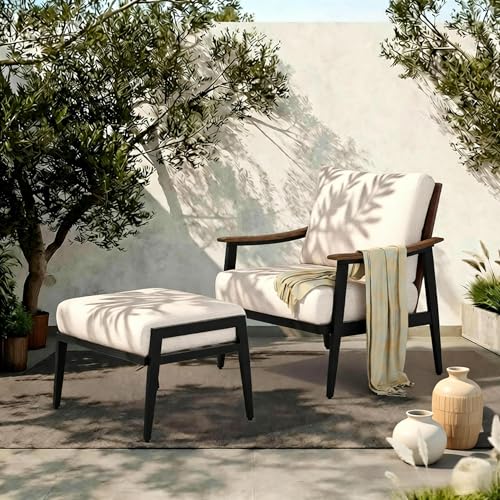
Clean lines, open frames, and low profiles define this style. It fits contemporary patios, and the ottoman is often visually integrated with the chair. Our modern outdoor chairs guide and lounge chair with ottoman overview show how these pieces look in a coordinated setup.
Mid-century style lounge chair
Tapered legs, a sculpted seat, and a matching ottoman create a mid-century look that works on both patios and screened porches. Our mid-century style lounge chair guide and mid-century modern outdoor furniture overview cover this style in more depth.
Wicker and rattan chair with ottoman
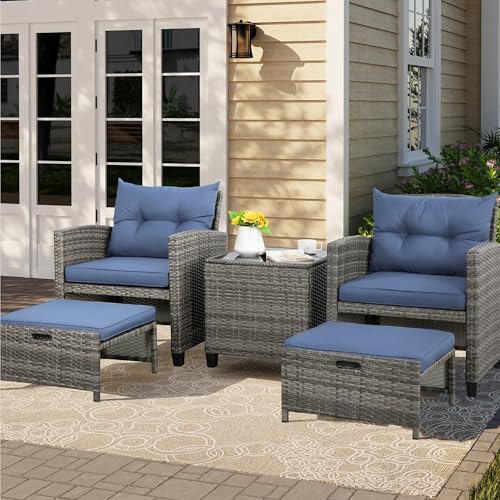
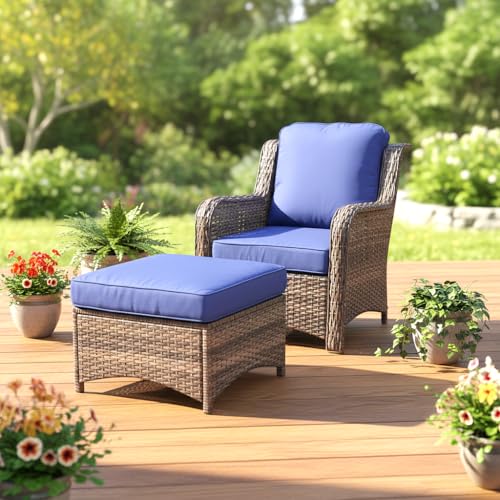
Natural and synthetic wicker chairs pair well with woven ottomans for a softer, more relaxed look. Our most comfortable outdoor wicker furniture guide and old rattan chair overview are useful comparisons if you are weighing wicker against metal.
Adirondack chair with ottoman
Adirondack chairs have a distinct sloped seat, and a matching footrest or ottoman extends the comfort. Our outdoor Adirondack chair guide and Adirondack chair with cup holder overview are helpful references.
Rocking chair with matching footrest
A rocking chair with a coordinating ottoman or footrest supports the body during motion and makes longer sessions more comfortable. Our chairs with ottoman hub and ottoman that slides underneath guide show how space-saving designs work.
Placement: Where a Chair and Ottoman Work Best
A chair-and-ottoman setup needs more floor space than a chair alone, so placement is as important as style. Plan for roughly 30 to 36 inches of width and 55 to 65 inches of combined depth when the ottoman is extended.
Living room style patios and decks
Place the chair at an angle to other seating, with the ottoman in front. Add a small side table for a drink or book. Our outdoor accent tables guide and small outdoor table overview are useful references for pairing side tables with lounge chairs.
Covered patios and screened porches
Under a cover, the setup is protected from rain and sun, which extends the life of both cushions and frame. Our outdoor chairs for fire pit guide and lanai patio ideas overview show how to place lounge chairs near a fire feature or covered area.
Poolside and sunbathing areas
For poolside setups, choose a chair and ottoman with quick-drying materials. The outdoor chaise lounge guide and chaise lounge chair overview are good comparisons if the primary use is sunbathing rather than reading.
Small patios and balconies
An ottoman that tucks under the chair saves space when not in use. Our ottoman that slides underneath guide and chair with ottoman overview cover compact solutions.
Care and Maintenance for Chairs with Ottoman
A chair-and-ottoman pair needs the same care as any outdoor furniture, with a few extra steps for the cushion. A short routine keeps the frame stable and the cushions comfortable.
- Rinse the frames with a hose and mild detergent at the start of each season.
- Dry frames thoroughly after cleaning, especially around welds and joints.
- Inspect for scratches and touch up chipped paint or powder coating promptly.
- Bring cushions inside during heavy rain or store them in a waterproof box.
- Fluff cushions regularly to keep the fill responsive and prevent flat spots.
- Tighten hardware on the ottoman legs and chair joints once a year.
- Use covers during long periods of disuse, especially in coastal or snowy climates.
Cushion storage is one of the most important habits for a long-lasting setup. Our large waterproof cushion storage box guide shows how to protect cushions during the off-season. For a wider maintenance framework, the outdoor chair cushions overview and outdoor care hub cover cleaning and weatherproofing routines.
Frequently Asked Questions
What should I look for in an outdoor chair with ottoman?
Look for a weather-resistant frame, a supportive seat cushion, and an ottoman that is stable and the right height for your legs. Aluminum, powder-coated steel, and high-density resin are reliable outdoor materials, and a rust-proof finish is essential.
Do outdoor chairs with ottoman need cushions?
Most outdoor chairs with ottoman are more comfortable with cushions, especially for longer sessions. Choose removable, quick-drying cushions with solution-dyed acrylic or performance polyester fabric so they resist moisture and fading.
How much space does a chair with ottoman need?
Plan for roughly 30 to 36 inches of width and a combined depth of 55 to 65 inches when the ottoman is extended. Leave at least 24 inches of walking space around the setup so the chair remains easy to use.
Can an outdoor chair with ottoman stay outside all year?
Yes, if the frame is weather-resistant and the cushions are stored during wet or cold seasons. A cover protects the frame during long periods of disuse, and bringing cushions inside prevents mildew and fading.
Find the Right Outdoor Chair with Ottoman
Explore our curated selection of outdoor chairs with ottomans. Compare frame materials, cushion styles, and space-saving options to find the lounge setup that fits your patio.
Explore Options